
Locating the owner of a vehicle using a license plate can be essential for various reasons, such as resolving accidents, addressing parking disputes, or simply uncovering information about a vehicle of interest. This guide outlines the lawful methods to achieve this responsibly. In the first chapter, we will explore how to effectively contact local authorities to assist in locating vehicle owners when necessary. Next, we’ll delve into government platforms that can provide assistance without invasive measures. Finally, we’ll cover legal procedures that are available for those facing more complex situations, ensuring that all actions remain within the bounds of the law. By understanding these methods, readers will be equipped with the knowledge to responsibly address their inquiries regarding vehicle ownership.
Tracing Plates Within the Law: How to Locate a Vehicle’s Owner Through Official Channels
When a license plate appears in a moment of need—whether a fender bender on a rain-slick avenue, a vehicle left blocked in a busy loading zone, or a mystery encounter at the edge of a curb—many people instinctively search for the owner, the person behind the plate that has become an obstacle or a clue. Yet the path from plate to person is not a free-for-all. Personal data linked to vehicles is protected by privacy laws designed to balance public safety with individual rights. The tension between practical necessity and privacy is real, and it shapes every step of the journey. What follows is a narrative about respecting those boundaries while pursuing legitimate aims. It is a guide that respects the architecture of modern information access: the doors are there, but they are guarded, and they require proper authorization, justification, and documentation to open. The aim is not to bypass rules but to illuminate the channels through which a responsible, lawful request can be evaluated and, when justified, acted upon by the right authorities at the right time. In China, as in many other jurisdictions, this balance rests on the Civil Code and a framework of privacy protections that recognize how a vehicle’s registration ties to its owner. Article 1032 of the Civil Code, among other provisions, articulates the rights of individuals to privacy and the conditions under which information about them may be accessed. Those protections are not simply legal ornament; they are practical guardrails that keep people and communities safer by ensuring that information is used for legitimate purposes and that data is not disclosed inappropriately. Understanding this legal context is not a luxury but a prerequisite for anyone who might need to act when a plate becomes a focal point of a safety concern or a dispute. The first realization is that private individuals cannot ordinarily reach out directly to a registered owner simply by knowing the plate number. That knowledge does not grant permission to contact, harass, or uncover personal details. The owner’s name, phone number, and address are precious pieces of data that require a legitimate purpose and a formal process to access. This is not a bureaucratic hurdle to be endured for convenience; it is a shield that protects people from misuse, from scams, and from the hazards of misidentification. Yet the same structure that protects privacy also provides clear, workable routes for those who have a rightful need—such as reporting a parking obstruction, addressing a safety concern, or advancing an insurance claim—to connect with the owner through official channels. The path is designed to be efficient, predictable, and auditable. The structural idea is straightforward: the plate number identifies a registered vehicle in the records; the records are held by public or semi-public authorities who maintain registries for legitimate purposes; and access to those records is controlled, logged, and contingent on a justifiable reason that the authorities can verify. With that foundation, the practical question becomes: what are the legitimate ways to initiate a request that could lead to contact with the owner, without compromising the privacy rights of the individual? One way is to escalate the matter directly to the authorities who manage road safety and vehicle compliance. In the scene of a traffic incident, the fastest and most dependable option is often to summon professional responders who have the authority to gather information and coordinate next steps. The emergency-style route is not about fishing for personal contact details; it is about ensuring safety and accountability. In many locales, a traffic accident hotline exists precisely for this purpose. In the context described here, the designated number for traffic accident reporting is dialed to report the incident and to request that the appropriate officers locate the owner so that the vehicle can be moved or the investigation can proceed. Such calls are not demands for private data; they are requests for the authorities to initiate contact using internal channels that are designed to protect privacy while achieving public safety goals. The operator will gather essential information—license plate number, color, make and model of the vehicle, time and exact location, and a concise description of the incident or obstruction. The goal is to provide enough context for the authorities to locate the vehicle and to determine whether the situation requires an immediate intervention to restore traffic flow or safeguard property. The process, while simple in its outward form, rests on a foundation of verified procedures and secure data access. In practice, once the plate is identified within the official system, the owner’s contact is not exposed to the caller. Instead, the system notifies the owner through official channels—commonly an automated SMS or an app-based message—informing them that their vehicle needs to be moved or that a request has been logged. The owner then receives instructions or an opportunity to respond through the same secure channel. This mechanism preserves privacy while enabling timely action. A critical point is that this notification system is designed for speed and reliability, but it does not circumvent consent; it relies on the owner responding through the appropriate channels and on the ability of the authorities to verify that the request has a legitimate basis, such as safety concerns or blocking traffic. Alongside the emergency-style hotline, there is a non-emergency but equally useful platform that embodies a modern, citizen-centric approach to vehicle management: a government-backed app that handles non-urgent requests with the same respect for privacy. In the scenario described, the application is built to handle “One-Click Move Vehicle” requests. The user signs in, enters the obstructing license plate, selects the location, and uploads photographic evidence. The system then routes the request to the appropriate local authorities and triggers automated notices to the vehicle owner. The design deliberately avoids exposing personal information. The owner is alerted to the issue and given a path to respond, while the person who made the request can see that the matter is being addressed. This approach offers a blend of speed and privacy: speed for the caller in getting an issue resolved promptly, and privacy for the owner by not publishing private contact details publicly. The lessons embedded in this approach reach beyond technology: they reflect a carefully calibrated policy stance. The goal is to prevent misuse of plate data while enabling legitimate, safety-focused actions. The system is built to work within data protection regulations, with oversight and traceability. It is worth noting that this route is designed for non-emergency situations, such as a car blocking a driveway, a vehicle stuck in a no-parking zone, or a temporary obstruction. It is not a general directory for finding the owner of any vehicle at any time. The subtle but important distinction is that the platform is aimed at facilitating resolution of concrete problems in a timely way, while still upholding the privacy and civil rights of vehicle owners. If the obstruction or issue introduced by the vehicle escalates—perhaps because a refund of damages is needed after a minor collision, or because there is a dispute about liability—the next steps involve bringing formal evidence and a legitimate claim to the appropriate authorities. In such circumstances, a visit to the vehicle administration office or a call to the appropriate police or traffic authority can help move the process from notification to documentation, from inquiry to an official determination. An in-person visit typically requires the applicant to bring a valid form of identification, supporting documents, and a clear explanation of the basis for requesting owner information. This is not a casual inquiry; it is a formal request built on a specific factual scenario, such as an accident report, a relocation dispute, or a violation that has impacted property or safety. In many jurisdictions, the vehicle administration office, sometimes known as the car management bureau, acts as a custodian of the registration data tied to a given license plate. A staff member will verify the legitimacy of the request by reviewing the facts, corroborating the incident details, and confirming the requester’s authority to access the information. The process may involve a formal application form, an assessment of whether the requested disclosure is necessary and proportionate, and, in some cases, a verification of the claimant’s claim or legal interest. Fees may apply for processing or retrieval of data, and data may be redacted to protect privacy where appropriate. The important point in this thread is that even when direct owner contact is involved, it occurs within a legally authorized framework that governs what information can be shared and how. If the situation involves an accident or potential fraud, another pathway is the insurance company. The existence of an insurance policy associated with a plate number can sometimes serve as a conduit for legitimate information exchange. If you know the insurer, you can contact their customer service and explain the situation, providing the license plate and the location of the incident. The insurer may participate in coordinating contact with the owner, particularly if there is a valid claim or a safety concern that requires attention. Insurers, however, do not disclose personal information without lawful authorization or a formal claim process. They function as trusted intermediaries, ensuring that information sharing aligns with policy coverage, legal requirements, and privacy protections. This channel highlights a practical point: often the most efficient path to resolution is to work through the safety and insurance ecosystem that already exists around motor vehicles. The aim is not to pry into private lives but to marshal the system’s authority to address the specific problem at hand. In more complex cases—where accidents involve disputes about liability, fraud, or the proper use of a vehicle’s information—legal channels become the definitive recourse. A court, together with the assistance of a lawyer, can obtain records through subpoenas or investigation orders when there is a legitimate, lawful interest to be served, such as resolving a dispute or verifying a claim. The process here is more formal and more time-consuming, but it exists precisely to prevent the misuse of personal data and to ensure that the rights of the vehicle owner are respected even while a resolution is pursued. The path from license plate to owner may thus be seen as a ladder: first, attempt rapid, privacy-preserving channels that address immediate concerns; second, escalate through official offices where legitimate, auditable requests can be made; and third, rely on legal processes when a dispute requires more than administrative action. This layering reflects a system designed to move quickly when safety is at stake, while preventing abuse in the name of expediency. To keep this path practical, a few guiding principles can help anyone navigate it without crossing lines. Do not attempt to bypass privacy protections or access private information through unauthorized means. The temptation to search for a quick private contact must be resisted, because it often crosses into illegal activity, and the consequences can be serious. Do not use data for purposes outside the legitimate reason presented to authorities. For instance, a request aimed at resolving a traffic obstruction should not morph into a broader search for personal information. Do not misrepresent facts to obtain access to data; a factual, verifiable justification improves the chances that a request will be processed fairly. Do collect and preserve evidence that supports your case, such as time-stamped photos, location details, and a clear timeline of events. This evidence helps authorities assess the urgency and the legitimacy of the request. Do keep in mind that privacy protections apply to all parties. The owner’s data should be treated with care, and any information obtained through official channels should be used only to address the issue at hand and not to expose or share it beyond what is necessary for resolution. A note on practical expectations helps prevent disappointment. Even when a request is lawful and justified, the owner may not respond immediately, or the information may be transmitted in a protected way that requires the owner’s action or consent to proceed. A well-structured case with clear documentation can expedite the process, but it cannot guarantee instant results. Patience, combined with adherence to official procedures, is often essential. In this landscape, the role of public faith and trust cannot be overstated. The public depends on officials to enforce privacy protections while enabling critical safety operations. Citizens, too, have a role: they must act in good faith, provide accurate information, and respect the boundaries of what is permissible under the law. If someone questions the legitimacy of a request, the proper response is to pause, review the applicable rules, and, if necessary, seek counsel or clarification from the relevant authority. The process is designed to be transparent and accountable, with traceable steps that can be reviewed if needed. As a closing reflection, consider the broader purpose that drives these procedures. Vehicles are, after all, not merely machines on wheels; they are conduits of daily life, commerce, and safety. The systems that govern access to the data behind a plate are not a barricade to human connection but a framework that preserves dignity while enabling accountability. By embracing official channels—hotlines, apps, in-person offices, and, when necessary, legal processes—you can resolve plate-related concerns without compromising personal privacy or corporate and state obligations to protect data. It is a pathway that honors both the need to act quickly in the interest of safety and the imperative to protect the rights of individuals. For readers seeking further practical grounding, one can consult official guidance on how these processes are implemented in the national traffic management infrastructure. The dedicated platform for traffic management, which streamlines non-emergency actions and ensures compliant notification to vehicle owners, stands as a practical example of how modern governance can support citizens in everyday challenges while honoring privacy norms. The platform’s architecture—secure authentication, evidence-based routing, and automatic owner notification—offers a model for how similar systems can balance speed, transparency, and privacy across contexts. Engaging with these processes requires not only patience but also a careful, principled approach to information handling. The result is not just a resolution to a specific incident but a reinforced trust in the institutions that manage transportation safety and public welfare. For readers who want to explore related considerations about how licensing and data protection interact in broader terms, a related discussion on how state rules influence driver licensing provides context about the regulatory environment that shapes access to information. state rules impact on driver licensing. External resources also guide practical, up-to-date practices. For official guidance and secure access, rely on government platforms like the national traffic management system. https://jtjg.122.gov.cn
A Path Through Official Channels: Locating Vehicle Owners by License Plate While Upholding Privacy and Law
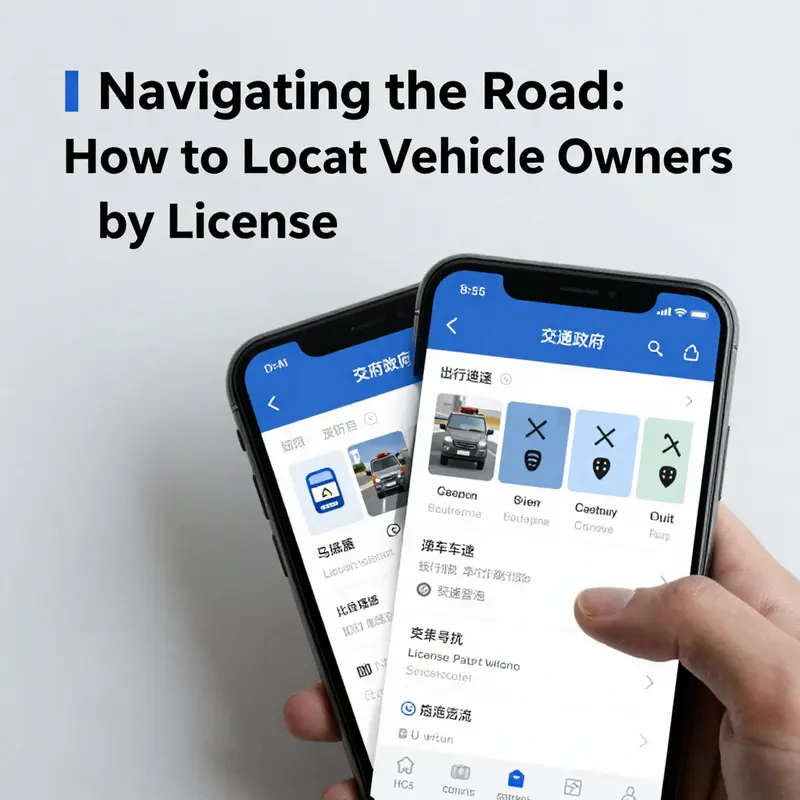
When urgency meets policy, the desire to identify who owns a vehicle by its license plate can clash with the strict protections around personal data. In many jurisdictions, including China, direct access to a vehicle owner’s private information is tightly regulated to protect individuals from unwanted intrusion. Yet there are legitimate, legally sanctioned avenues that enable authorities and private parties with proper cause to obtain vehicle registration details or to contact the owner through appropriate channels. This chapter weaves together the rationale, the available official pathways, and the practical steps for navigating them in a way that respects both public safety needs and privacy protections. The core message is simple: if you need to locate a vehicle owner for a valid reason—such as a collision, obstruction, or a safety concern—you should rely on official mechanisms designed to preserve privacy while facilitating legitimate action. That discipline is not merely a procedural hurdle; it is a safeguard that helps prevent misuse, fraud, and the kind of privacy violations that can haunt individuals long after an incident has been resolved.
At the heart of legal access to vehicle ownership information lies a balance. Privacy laws are not obstacles to justice; they are filters that ensure requests are grounded in necessity and accountability. In China, for example, the Traffic Management Bureau and related public security organs hold the official vehicle registration databases. Access to those records is restricted and typically requires a formal justification, such as investigation of a crime, a pending civil dispute arising from an accident, or a safety-related concern that warrants ensuring compliance with traffic laws. This is where the concept of a legitimate purpose becomes crucial. Without a demonstrable, lawful purpose, attempting to extract owner information would be both unethical and illegal. The overarching rule is straightforward: pursue information through official channels, with documentation and a valid legal basis, rather than through guesswork, third-party apps, or unverified websites that promise to reveal private data for a fee.
Among the legitimate options, the most prominent and user-friendly is a government-endorsed platform designed to manage everyday traffic needs while safeguarding personal data. The Traffic Management 12123 app, operated by the Ministry of Public Security’s Traffic Management Bureau, offers a streamlined method for situations that block access or impede mobility—situations that are non-emergency yet require prompt resolution. The app’s feature known as One-Click Vehicle Relocation (一键挪车) is deliberately structured to avoid exposing owners’ contact details. Instead, it files an anonymous notification to the registered owner, requesting movement of the vehicle, through a system-generated SMS or automated call. The process does not reveal the owner’s private information to the requester, aligning with privacy protections while supporting timely resolution of the issue. The design intention is clear: empower users to address everyday blockages—such as cars parked in front of a driveway or a fire lane—without compromising personal data, and to do so in a manner that preserves the integrity of the registration database.
To engage this pathway, a user begins by opening the Traffic Management 12123 app and selecting the One-Click Vehicle Relocation service. The required inputs are precise: the target vehicle’s license plate number, the outward indicators such as color, and the vehicle’s current location. The system then dispatches an anonymous notification to the vehicle’s owner, explaining that the car needs to be moved to relieve the obstruction. The owner receives no information about the requester and does not see the requester’s private contact details. This layer of anonymity is not a loophole; it is a protective measure designed to reduce unnecessary contact while ensuring the owner is informed of the situation and can respond quickly if they choose to relocate the vehicle. In practice, this mechanism has proven efficient for non-emergency contexts, where time sensitivity is important but the initiating party’s need does not rise to the level of an investigation or formal claim.
The operational steps are straightforward. First, locate the One-Click Vehicle Relocation feature within the app. Then input the license plate, confirm the vehicle color for accuracy, and specify the exact location where the vehicle is blocked. The system will then generate a notification to the registered owner. The notification status can be tracked in the app, letting the requester know that the owner has been notified and that a response is expected. The beauty of this approach lies in its privacy-preserving architecture. The owner’s name, phone number, and medical or financial data remain shielded from the requester, while the public safety goal—clearing a blocked lane or driveway—receives attention promptly. This design not only respects the vehicle owner’s privacy but also reduces the potential for harassment or misuse of the system.
Recognizing the boundaries of the platform helps prevent a host of missteps. For instance, this method is explicitly described as non-emergency. It is not a tool for ongoing surveillance, for investigating a suspected theft, or for initiating a private contact. If your reason falls into those categories, the official path shifts toward more formal channels. In such cases, the process requires a legal basis that can be supported by documentation and, if necessary, court orders or subpoenas. The distinction matters because it reflects how governance and privacy law interact with everyday traffic management. The very existence of the One-Click Vehicle Relocation service signals a policy emphasis on speed and privacy: speed for non-emergency, privacy for personal data, and formal processes for sensitive or high-stakes inquiries. For readers seeking to understand how this works in practice, the app’s instructions are explicit about the boundaries, and the steps are designed to reduce friction for legitimate users.
Beyond non-emergency scenarios, legitimate needs—such as a traffic collision, a dispute over ownership, or possible criminal activity—involve more formal channels. Local public security traffic management departments, including the traffic police detachment or the vehicle administration office, are the gatekeepers of the official records. To engage these channels, you typically need to present valid identification and documentation that demonstrates your legitimate interest or legal right to access vehicle registration information. This could include a police report, a court order, documentation of a dispute or claim, or other evidence that ties your request to a lawful objective. The staff may verify the incident details, confirm the vehicle’s registration status, and determine whether disclosure is permissible under the relevant laws. In many cases, these interactions involve a formal audit trail, and there may be fees associated with processing requests or copying records.
To illustrate how to think about this pathway, envision a scenario in which a hit-and-run incident occurred, or a car parked across a critical access point that endangers others. The simplest route begins with police contact. Law enforcement has the authority to initiate inquiries into registration details when they are necessary to investigate a crime or to assist in ensuring public safety. A requester would provide the license plate, a description of the vehicle, the time and location of the incident, and any other information that corroborates the need for disclosure. The authorities then determine whether there is a permissible basis to release owner information. If the case moves toward civil or criminal proceedings, the relevant court or legal officer may issue a subpoena or an investigation order. A lawyer can then guide the client through the legal process, help prepare the necessary documentation, and advocate for the release of records under the authority of the court. In this context, the vehicle registration data is not handed over casually; it is provided under strict oversight, with an explicit legal justification, and usually with a clear audit record to prevent abuse.
A parallel track involves visiting the vehicle administration office in person. If you have a legitimate dispute—such as a dispute over ownership, an incident report, or a breach of contract related to a vehicle—staff at the Car Management Bureau can verify registration details and advise on the appropriate next steps. Bringing a valid form of ID, the incident report or documentation, and any other supporting materials helps the staff assess the legitimacy of the request. Fees may apply for processing copies of records, and the office may require additional steps, such as submitting a formal written request, completing specific forms, or obtaining a referral from another authority. This process underscores the principle that access to personal data is not a right granted on demand; it is a privilege granted under the rules that govern privacy, data protection, and judicial oversight.
Insurance companies also have a role, though with constraints. If the request is connected to an insurance claim arising from an accident, you might contact the insurer carrying the policy associated with the license plate. In practice, insurers typically do not disclose personal information without a formal claim process or a court order. They are more likely to cooperate by confirming coverage, associated policy numbers, and other data relevant to the claim, rather than sharing the owner’s contact details directly. If you have a legitimate claim that necessitates identifying the vehicle owner—for example, to verify the responsible party in a collision—the insurance company can guide you through the appropriate legal channels or coordinate with the authorities to facilitate a lawful data release.
In any discussion of obtaining ownership information, one central refrain must be repeated: do not rely on unauthorized online platforms, private investigators, or third-party services that promise to reveal owner details in exchange for a fee. These avenues often operate outside privacy laws, expose individuals to scams, and can land the requester in legal jeopardy. The Personal Information Protection Law and related regulations provide the backbone for these protections. They make clear that personal data cannot be accessed or disseminated without proper authorization, a legitimate purpose, and a secure administrative process. As a practical rule, if a service or app asks you to pay for owner data or to bypass official channels, walk away. The risk of fraud and the potential legal consequences are high, and the system’s integrity relies on your adherence to sanctioned routes.
Given the complexity and seriousness of data access, it is wise to approach the matter with careful preparation. Gather any available evidence that supports your legitimate interest, such as photographs of the obstruction, timestamps, location coordinates, witness statements, or police reports. If your objective is to prevent harm, document the safety risk and communicate it clearly to the authorities. When you navigate the official channels, you are not just performing a bureaucratic task; you are participating in a framework that upholds public safety while protecting individual privacy. This framework is the backbone of how modern traffic management operates in a privacy-conscious society. It ensures that while the public can seek redress and relief for traffic-related issues, the personal information of vehicle owners remains shielded from indiscriminate access.
The practical takeaway is that locating a vehicle owner by license plate, in the sense of obtaining personal contact information, is governed by procedural gates. The quickest route for non-emergency, practical needs is the one-click relocation service in the Traffic Management 12123 app, which preserves privacy while enabling prompt action. For more serious concerns, escalate through formal channels: law enforcement, vehicle administration offices, or court-directed processes. The common thread across all routes is clarity of purpose and adherence to lawful procedures. Requests should be grounded in public safety, legal obligations, or legitimate civil interests rather than curiosity or vindictive motives. The more precisely you can articulate the legitimate purpose, the smoother the process tends to be, and the less friction you will encounter from authorities who must weigh privacy against the needs of the public.
In the spirit of responsible practice, it is also helpful to be aware of how policy environments shape these mechanisms. The balance of privacy protections with accessibility to necessary information is not static; it evolves with changes in data protection law, regulatory guidelines, and the practical experiences of traffic authorities. This ongoing tension informs how platforms like Traffic Management 12123 are structured, what information they collect, and how they communicate with the vehicle owner. It also informs how courts, lawyers, and agencies approach requests for vehicle registration data during disputes, investigations, or regulatory actions. A nuanced understanding of these dynamics helps readers discern when a request is appropriate, which path to pursue, and how to present it in a way that aligns with both legal standards and ethical expectations. As you consider the broader implications, you may encounter discussions of how privacy rules intersect with other regulatory domains, including the broader landscape of driver licensing and vehicle oversight. For readers who want to explore these intersections further, there are related discussions about how state rules impact driver licensing and the management of vehicle-related data. state rules impacting driver licensing.
Ultimately, the aim of the official channels is not mere compliance but practical public safety outcomes. The One-Click Vehicle Relocation feature embodies that aim by enabling swift action without exposing sensitive data. It also demonstrates how modern governance can reconcile the public’s need for timely information with the citizen’s right to privacy. When a situation requires deeper access to records, the proper steps involve formal requests, documentation, and, if appropriate, judicial authorization. The path may be longer and heavier with process, but it is precisely this careful architecture that protects individuals and supports legitimate interests alike. By grounding actions in legitimate purposes and using the official channels that are designed for this purpose, you maintain the integrity of the data ecosystem while still achieving practical, real-world outcomes. This approach ensures that locating a vehicle owner by license plate, when required, remains a lawful and privacy-preserving endeavor rather than a rushed or unlawful one.
For readers seeking direct access to the official platform discussed here, the government’s Traffic Management 12123 portal remains the authoritative resource. It consolidates non-emergency vehicle relocation needs in a manner that respects privacy and streamlines routine traffic management tasks. As you prepare to engage any of these channels, keep in mind the importance of accurate information, clear justification, and a willingness to follow formal processes where required. The result is a balanced approach that protects individuals while supporting public safety and orderly traffic flow. In the pages that follow, you will encounter more detailed scenarios and checklists that further illuminate how these channels operate in practice, reinforcing the message that legal and authorized procedures are the correct path to locating vehicle ownership information when it is truly warranted.
External resource: For official access and up-to-date procedures, refer to the government platform here: https://jtjg.122.gov.cn
Locating a Vehicle Owner by License Plate: Navigating Legal Pathways and Privacy Safeguards
When a license plate becomes more than just a number on metal and begins to carry questions about responsibility, safety, or accountability, the impulse to uncover who owns the vehicle can be strong. Yet behind every plate lies a core principle that governs modern traffic administration: personal data linked to vehicles is protected by privacy laws designed to prevent misuse. The aim here is not to bypass those protections but to illuminate the legitimate, regulated routes that permit inquiries when there is a lawful purpose—such as a traffic incident, a safety concern, or a dispute over liability. The landscape is careful and procedural, not permissive. A direct, private lookup is not available to the general public, and attempting to obtain owner information through unofficial channels can expose individuals to penalties and organizations to legal jeopardy. In this sense, locating an owner by license plate is less about hunting down a name and more about navigating a system that balances accountability with rights to privacy, a balance that varies by jurisdiction but follows broadly similar patterns across mature traffic governance frameworks.
To understand how to pursue such inquiries properly, it helps to anchor the discussion in the notion that authorization, documentation, and a valid reason are prerequisites, not optional extras. In practical terms, this means that if you witnessed a collision, experienced harassment linked to a particular vehicle, or are pursuing a legitimate safety concern, you should begin by assessing whether the situation qualifies for an official review. The threshold for what counts as legitimate varies by place, but common elements recur: a documented incident, a clear link between the plate and a concrete event, and a purpose that serves public safety, legal accountability, or an insured dispute. That is the shape of the boundary that keeps data protection intact while enabling resolution for those with a legitimate stake. The result is not a simple, direct reveal of a name; it is a careful, traceable process that channels requests through the right offices and tools.
One of the most reliable anchors in this process is proximity to authority. Local law enforcement agencies and traffic authorities are trained and empowered to handle inquiries that meet the criteria of necessity and relevance. If you are involved in a traffic incident, for example, reporting details to the police or the traffic management body is not only prudent but often required. A typical request from a private citizen in such a context will begin with a formal report, a description of the incident, and the license plate in question. The officer or investigator then reviews supporting details—such as eyewitness accounts, dash-cam footage, or a police report—and determines whether there is a basis to proceed with identifying the vehicle owner. The information released to the requester is usually restricted and mediated. In many jurisdictions, the result is not the owner’s personal contact details but confirmation of the ownership status or registration information, issued under proper authorization. This design protects the owner’s privacy while enabling the requester to move ahead with legitimate actions, such as filing a claim, pursuing restitution, or coordinating safety measures.
Beyond the police route, official government platforms exist in many regions to streamline non-emergency processes that touch on vehicle management and enforcement. A representative example is the type of centralized service portals that allow related actions—such as reporting illegal parking, requesting vehicle relocation, or initiating a formal inquiry—without exposing private contact details. In these systems, you typically enter the license plate and provide a rational basis for the request. The system then routes the matter through the appropriate authority and may notify the vehicle owner through automated channels like SMS or an outbound call. Importantly, this notification mechanism is designed to alert the owner to actions that affect the vehicle (for example, relocation or a parking violation) rather than to publish the owner’s personal data. The emphasis is on timely, responsible communication that serves public or individual safety without breaching privacy. This approach helps to resolve situations more efficiently while preserving the right to privacy for vehicle owners who may not have any direct relationship with the requester.
For individuals who need to verify or contest a particular registration detail, another legitimate channel is to visit the vehicle administration office, sometimes called the car management or motor vehicle bureau, with appropriate identification and documentation. A private citizen can bring a government-issued ID, a police report, an incident number, or other official documents to support a request. Staff at these offices are trained to handle ownership verification or to facilitate lawful access to certain registration details when justified by the circumstances. The outcome typically includes confirmation of ownership status or details about the registration that are essential for dispute resolution or claim processing. Fees may apply, and the scope of information released will conform to privacy statutes and agency policies that govern data sharing.
Insurance companies play a particular role in this ecosystem as intermediaries who may have access to registration data in the context of a claim. If the license plate is connected to an active insurance claim or a legally recognized dispute, the insurer can initiate a process to verify ownership or confirm coverage status. However, insurers do not disclose personal information beyond what is necessary to adjudicate a claim, and they require legal authorization or a formal claim process. The careful orchestration of data sharing through insurers, police, and government agencies reflects the careful calibration of privacy protections against legitimate needs for accountability and safety. It is a reminder that even when a request originates from a concerned private citizen, the data pathways are purpose-bound and regulated, not exploratory or recreational.
In some situations, private individuals consider engaging intermediaries such as licensed investigators to assist with a legitimate case. When contemplating this route, it is crucial to recognize that such intermediaries must operate strictly within legal boundaries. A licensed investigator can help gather corroborating evidence, assemble documentation, and ensure that requests are properly framed in accordance with privacy laws, but they cannot, on their own, compel access to private data or bypass statutory processes. The ethical and legal integrity of the inquiry depends on adherence to the rule of law, the underlying purpose of the inquiry, and the safeguards that limit disclosure to what is legally permissible and necessary.
A recurring theme across these pathways is the insistence on compliance with local laws and jurisdictional variance. Even when a request seems straightforward, the exact procedures, allowed types of information, and the required documentation can differ widely among countries, states, or provinces. The configuration of these rules is not arbitrary; it reflects a long-standing effort to balance two essential aims. One is the protection of individuals’ privacy and personal information in an age of data abundance. The other is the public and private interest in accountability, safety, and informed dispute resolution. Shaping this balance is the job of lawmakers, regulatory agencies, and courts, whose guidance helps determine what is permissible in a given context and what remains off-limits for private citizens.
Within this framework, the recommended approach for those with a valid reason is to pursue a formal request through the appropriate authority rather than attempting to obtain data by informal means. In many jurisdictions, this means initiating procedures through the relevant department—such as the motor vehicle agency or the department that oversees traffic enforcement—and providing documentation that substantiates the legitimacy of the inquiry. Police reports, documented correspondence about a dispute, or a formal claim submission are typical forms of evidence that support the request. The process is designed to be transparent and auditable; it creates a trail that a reviewing official can follow to verify that every step was conducted with proper authorization and that data access remained consistent with legal constraints.
To connect these procedural threads to practical outcomes, consider the idea of an official inquiry as a chain of checks and balances. A person who has a legitimate interest submits a carefully prepared request, backed by documents such as incident reports or affidavits. A responsible agency then assesses the justification, verifies the incident details, and determines whether disclosing owner-related information is permissible under applicable privacy and data-protection rules. If disclosure is approved, it may be in the form of registration status, ownership confirmation, or other data that directly support the legitimate objective of the inquiry without revealing private contact information. If a direct disclosure is not allowed, the agency might provide alternative forms of assistance, such as facilitating a formal claim process, issuing notices to the vehicle owner about violations, or offering guidance on next steps in dispute resolution. This approach keeps the process accountable, traceable, and bounded by law while still delivering meaningful outcomes for those who bear a justified interest in the vehicle’s ownership.
A practical note for readers is the importance of starting with publicly available information from official sources. Local government portals, motor vehicle department sites, and recognized regulatory bodies often publish guidance on how to request information, what documentation is required, and what the expected timelines look like. These pages help potential inquirers prepare a complete submission and avoid common missteps that can delay resolution or trigger privacy concerns. They also clarify what sorts of information can or cannot be released and under what circumstances. For individuals seeking a reliable starting point, it is wise to identify the relevant authority for your jurisdiction and review any official checklists, forms, or instructions before initiating contact. In many places, there is also a public-facing contact number or email channel designed to answer questions about the process and to guide applicants through the proper channels.
In planning an inquiry, a subtle but important consideration is understanding the boundaries set by data protection regulations. Even when a legitimate purpose exists, the data that can be accessed or released is often narrowly defined. That narrowness is not a weakness but a safeguard. It ensures that personal data does not become a tool for harassment, doxxing, or vigilantism. The careful, regulated approach protects both the requester and the vehicle owner, reducing the risk of misuse and creating a lawful path forward when disputes or safety concerns arise. When privacy principles are respected, the process remains credible and enforceable, and the outcomes are more likely to hold up under scrutiny if challenged in court or in an administrative review. This long view is essential for maintaining trust in the system that governs vehicle data and helps keep roads safer through appropriate accountability.
In mapping these ideas to concrete steps, it is useful to view the journey as a sequence rather than a single leap. The initial step is to verify whether the situation qualifies as a legitimate inquiry in your jurisdiction. If it does, gather all relevant documentation: dates, times, locations, the license plate number, descriptions of the vehicle, and any corroborating statements or evidence. Then contact the appropriate authority, whether it is the local police department, the traffic management bureau, or the motor vehicle agency. Present your documentation in a clear, organized way and state the purpose of your request succinctly. Be prepared for a possible verification step in which an official may cross-check records for accuracy or request additional documentation. Throughout this process, maintain a precise and respectful tone, avoid confrontational language, and follow the official channels exactly as directed. The aim is to cooperate with authorities to achieve a lawful resolution that addresses the original concern—whether it is enabling a claim, clarifying responsibility, or ensuring that safety measures can be pursued without exposing private data indiscriminately.
A note about the use of digital tools in this process is appropriate here. Many jurisdictions now provide online portals that can expedite formal inquiries. These platforms often require you to register, demonstrate your legitimate interest, and upload scanned documents. They also typically provide status updates and an audit trail, which adds credibility to the inquiry and helps ensure that the process remains transparent and compliant. If you use such a platform, keep copies of all submissions and confirmations. Should there be any delays or questions about the outcome, these records serve as essential references for follow-up with the agency. The layering of digital and in-person steps reflects a broader trend in public administration toward accessible yet controlled data sharing. It also reinforces the principle that access to vehicle owner information is not a right granted to private individuals by default but a privilege conferred through formal, accountable processes designed to protect the privacy of vehicle owners and the safety of the public you share the road with.
In closing this overview, the practical reality remains: locating a vehicle owner by license plate is not a casual search but a carefully regulated procedure. The pathways described here—law enforcement involvement, designated government platforms, official vehicle administration offices, insurance processes, and, where appropriate, licensed intermediaries—work together to balance competing interests. They aim to resolve incidents and safety concerns while preserving privacy and safeguarding data. The key for anyone pursuing such an inquiry is to anchor actions in legitimate purpose, document thoroughly, engage through the proper channels, and respect the jurisdictional rules that govern data access. In doing so, you preserve the integrity of the process and ensure that the outcomes you seek are grounded in law and enforceable in a fair and orderly manner. If you are uncertain about the particular requirements in your area, refer to local guidance on how licensing and data access are regulated, and consider consulting a qualified professional who can help interpret the rules and advocate on your behalf within the bounds of the law. For additional context on how regulatory frameworks shape driver licensing and related inquiries, you can explore further insights through the resource that discusses state rules impacting driver licensing. state rules impacting driver licensing.
For continued scholarly and practical clarity, it is worth noting that the ultimate aim of these processes is not to intrude on private life but to support accountability, protect public safety, and enable fair resolution of disputes. When you approach the task with patience, preparation, and respect for legal boundaries, the path from a license plate to the appropriate authority becomes not a maze but a guided sequence that serves justice without compromising civil liberties. The regulatory landscape may seem intricate, but it is designed to ensure that legitimate inquiries advance with integrity and that any information shared is necessary, proportionate, and legally permissible. In a modern society that prizes both safety and privacy, such balance is not only prudent but essential for the legitimacy and effectiveness of traffic governance. External resources are available to illuminate the current standards and procedures for different jurisdictions, and readers are encouraged to consult official channels as they navigate their specific circumstances.
External resource: https://www.dot.gov/vehicle-ownership-inquiry
Final thoughts
Understanding how to locate the owner of a vehicle by license plate is pivotal for responsible drivers and vehicle owners. Throughout this guide, we have discussed effective methods ranging from engaging local law enforcement to utilizing official government platforms and navigating legal representations for more complex inquiries. Each method ensures that individuals can address vehicle-related issues within a framework that prioritizes legal compliance and respect for privacy. As you venture into the world of driving and vehicle ownership, remain informed about your rights, responsibilities, and available resources. This knowledge empowers you to navigate potential challenges efficiently and legally.