
Owning a vehicle can be exciting and essential, whether for personal use or as a cherished asset. However, many prospective and current vehicle owners wonder if it’s possible to own a vehicle without holding a valid driver’s license. This question has significant implications for new drivers and learners, existing drivers, vehicle owners, and auto dealerships alike. In this article, we will delve into the nuances of vehicle ownership without a driver’s license, starting with the foundational aspects of ownership rights. We will explore the legal implications of such ownership, including responsibilities and liabilities. Furthermore, we will examine essential insurance considerations that owners should be aware of, ensuring their assets are protected. Lastly, we will dive into practical scenarios that illustrate when and how an individual might own a vehicle without the ability to drive it legally. By the end of this discussion, readers will gain a comprehensive understanding of this important topic.
Own the Car, Not the Keys: Navigating Vehicle Ownership Without a Driver’s License
When a car sits in a driveway, the obvious question is whether the owner must hold a driver’s license. The answer is often more nuanced than a simple yes or no. Across many jurisdictions, you can own a vehicle without holding a license, because ownership and driving eligibility are legally distinct concepts. Ownership is the title to possess, use, benefit from, and dispose of a vehicle. Driving privileges, by contrast, are permissions granted by law that authorize a person to operate a vehicle on public roads. This separation exists because the safety concerns surrounding operating a motor vehicle are separate from the broader rights to own property. A person may have a stake in a car without ever being cleared to drive it, and that distinction shapes both everyday life and the bigger questions people face when they inherit or purchase a vehicle they cannot legally operate.
This distinction is not merely theoretical. It has practical consequences for how people acquire vehicles, how they manage them, and where liability rests if something goes wrong. The core idea is straightforward: ownership confers rights and responsibilities—title transfer, taxes, insurance, maintenance, and disposal—while driving privileges determine who may translate those rights into on-road action. In other words, you can fund, register, insure, and store a car even if you cannot legally turn the key and drive it on public streets. This arrangement aims to protect safety on the roads by ensuring that those who operate vehicles have demonstrated the requisite knowledge, skill, and responsibility. It also means that the person listed on the vehicle’s title remains the legal owner with broad duties, even if someone else has the license to drive.
A helpful way to understand the practical landscape is to separate the act of registration from the act of operation. Registration is the formal process by which a vehicle is tied to an individual or entity in the state’s or country’s records. The paperwork required for registration typically centers on identity, proof of purchase, and the vehicle’s compliance with local standards. In many places, the license to drive is not a prerequisite for registration. The implications are concrete: a person may walk into a registration office with a valid ID, the necessary purchase documents, and the required insurance, and walk out as the registered owner of a vehicle that they themselves are not legally allowed to drive.
A concrete example helps crystallize the point. In some jurisdictions, including certain parts of China, the law explicitly permits someone without a driver’s license to be the registered owner of a car. The registration authority reviews documents such as a national ID, a purchase invoice, a certificate of conformity, proof of vehicle purchase tax payment, and compulsory insurance. If these documents are complete and genuine, the vehicle can be registered in the buyer’s name, regardless of whether that person holds a license to drive. The license is not a gating item for ownership; rather, it remains a separate, essential credential for operating on public roads. The registration process is designed to verify the vehicle’s legality and the buyer’s identity, not to assess driving fitness. This separation embeds a fundamental principle into many regulatory frameworks: ownership and use are governed by different rules, with use on public roads requiring a driver’s license.
The practical implications of this separation are multifaceted. First, you can own a car without driving it, which means you can benefit from the vehicle’s value, use it for storage or investment, or hold it as part of a business asset. Second, if you ever intend to drive, you must obtain a valid driver’s license or designate another licensed individual to operate the vehicle legally. Third, and crucially, the owner remains legally responsible for the vehicle’s actions when someone else drives it. If a relative, friend, or hired driver uses the car and is involved in an incident, the owner can be held liable for damages, injuries, or legal violations arising from that operation. Liability is a central thread weaving through ownership, insurance, and permitted use, and it underscores why owners must exercise caution when entrusting the vehicle to another driver.
A further layer of complexity arises in cities or regions with strict vehicle quota systems and licensing constraints. In places with highly regulated plate allocation or limited-license areas, even ownership does not guarantee a path to operation. You might own a car, but the region’s rules could impede you from obtaining the license plate or the necessary authorization to drive on public roads. In such environments, owning a vehicle becomes a strategic decision as much as a legal one. It can influence how you employ the vehicle, how you insure it, and how you plan for its use in daily life. The consequences extend beyond personal convenience to public policy and urban planning, where lawmakers balance mobility, safety, and the environmental impacts of vehicle ownership.
To navigate these realities successfully, it helps to keep a few practical considerations in view. Insurance, for instance, is not merely a cost but a safety mechanism that binds ownership to accountability. The owner typically bears the primary responsibility for arranging insurance coverage and for ensuring that any driver who uses the vehicle is appropriately insured and legally permitted to operate it. If you rely on a licensed driver, you should ensure that the driver’s license is valid, that the insurance policy recognizes the driver as an authorized operator, and that coverage limits align with the vehicle’s value and use. Insurance policies are designed to extend protection to third parties and the owner in the event of a crash, theft, or other losses; however, coverage can be complicated by unlicensed operation or by lapses in documentation. Understanding the structure of coverage—comprehensive, third-party liability, and any collision or theft components—helps clarify what is protected and where gaps might exist. In some regulatory environments, there are additional requirements, such as mandatory liability insurance that is directly tied to the vehicle rather than the driver, reinforcing the owner’s ongoing role in maintaining risk management.
From a regulatory perspective, the ownership-versus-operation distinction also shapes how authorities enforce traffic laws and how penalties are assessed. Driving without a license is a serious violation in most places, not simply a minor infraction. The penalties can include fines, temporary detention, or even impoundment of the vehicle. These consequences reflect a public safety calculus: operating a vehicle without proven competence or authorization increases the risk to the driver, passengers, pedestrians, and other road users. As an owner, you must consider that if someone uses your vehicle without proper licensing or if you permit a violation of the rules, you bear responsibility for the resulting legal and financial outcomes. The policy intent is to make ownership compatible with safety and accountability, not to discourage the legitimate practice of owning a vehicle while not driving.
The narrative of ownership without driving also invites reflection on personal circumstances and choices. Some people inherit a vehicle from a relative who never learned to drive or who left the car in the family for others to use. Others purchase a vehicle for storage, for business purposes, or as a collector’s item, without any intention of driving it on public roads. In such cases, the car can remain in excellent condition, be maintained, serviced, and even sold, all while the owner continues to rely on licensed drivers for on-road use. This reality reveals how a society can accommodate diverse needs and circumstances while preserving clear boundaries around who may actually operate a vehicle and where responsibility lies when things go wrong.
For those who seek deeper answers about the intersection of rules and rights, consider the broader regulatory landscape. In some regions, owners may be required to register the vehicle in their name for tax or liability purposes, even if the car is primarily driven by someone else. The ownership record can influence how maintenance, insurance, and legal responsibilities are managed. It also raises questions about who bears the burden of enforcement if the vehicle is used in a manner that violates licensing or registration requirements. While the specific rules vary by jurisdiction, the underlying theme remains universal: ownership and use are governed by different gateways, and understanding that distinction helps individuals make informed, safer choices about how they acquire, hold, and deploy a vehicle.
In the context of this chapter, it is especially relevant to note that official guidance in certain jurisdictions emphasizes the clarity of these boundaries. The official guidelines issued by the regulatory authorities provide the definitive statements about what is required to register a vehicle, what documentation is necessary, and how liability is allocated in various scenarios. When you read these materials, you begin to see the architecture behind the everyday practice of owning a car while not driving it. The guidelines reinforce that while license status governs the act of driving, it does not automatically govern ownership. This separation empowers individuals to structure their affairs in ways that fit their personal and financial realities, while still upholding public safety and accountability. For further context on how state rules can shape driver licensing, see the linked discussion on state rules impacting driver licensing.
To close this thread, it is worth acknowledging that the landscape is not uniform. Across borders, cultures, and legal systems, the interplay between ownership rights and driving permissions evolves with technology, traffic volumes, and social norms. What remains constant is the core principle: you can hold title to a vehicle without holding a license to drive it, but you cannot legally operate it on public roads without meeting the licensing requirements. This distinction helps prevent risk from translating into avoidable harm, while still allowing individuals to own, manage, and plan for transportation in ways that reflect their unique situations. In the pages that follow, the discussion will turn toward the broader implications of ownership without driving, including practical steps for securing insurance, managing liabilities, and understanding how local rules may affect your ability to use the vehicle you own.
External resource for official guidelines: https://www.mps.gov.cn/n2253534/n2253569/c7105485/content.html
Owning Without Driving: Navigating Liability, Insurance, and Law When You Don’t Hold a Driver’s License
In many places, the act of owning a car exists independently of the right to drive it. The law often draws a clear line between ownership and operation, a distinction more consequential than it might appear at first glance. You can buy, title, register, and insure a vehicle even if you do not possess a valid driver’s license. The practical upshot is straightforward: ownership does not confer a license to operate on public roads. This separation is rooted in safety logic. Licensure programs exist to certify that a person understands traffic laws, can judge speeds and distances, and can respond to complex on-road situations with a measured, predictable approach. When those prerequisites are not met, society assigns responsibility to the driver who is behind the wheel and, crucially, to the owner who bears liability for the vehicle’s use. The result is a delicate, sometimes frustrating balance of rights and duties that can differ from one jurisdiction to another, but the overarching framework remains consistent: owning a car is not a license to drive it on public streets.
To begin with, the ownership side of the equation is practical and familiar. A car can be bought outright or financed, inherited, or gifted, and the transferee can be placed on the vehicle’s title and registered with the relevant motor vehicle department. Insurance follows the asset, but not automatically the act of driving. Here, the concept of primary operator becomes central. If you own the car but do not drive, you must arrange for coverage that reflects who will be behind the wheel. Most insurers require that the person who will regularly operate the vehicle hold a valid license. If the owner is unable or unwilling to drive, the policy will typically designate another licensed driver as the primary operator. This shift is not merely a formality. It has real consequences for premium cost, coverage limits, and the scope of any legal obligations that arise if an accident happens. If the person who drives is licensed in one jurisdiction and the owner resides in another—or if the driver’s license is temporarily suspended—the policy must navigate these cross-jurisdictional sensitivities. The insurance contract becomes a ledger of who is responsible for the vehicle’s use, and the owner’s status is defined by the liability that accrues from the vehicle’s operations, not the act of ownership itself.
The broader legal landscape reinforces this separation. Ownership can be independent of the right to operate, but the law also anchors accountability. If a person with no driver’s license allows another party to operate the vehicle, the owner can still face liability for damages, harm, or regulatory breaches that occur during that operation. This principle flows from the recognition that a vehicle, while an inanimate object, becomes a vehicle for risk the moment it is used on public roads. Liability may travel beyond the person who actually drives, extending to the owner who permitted operation, the person who loaned the vehicle, or even the lender if the vehicle is subject to a financing agreement. The liability calculus is not only civil; it can attract criminal overtones if the activity contravenes traffic laws. Driving without a license commonly triggers penalties that include fines, potential imprisonment for severe offenses, and license-related sanctions that can complicate future efforts to obtain licensure.
Within this framework, practical questions arise that shape daily decisions. For instance, the registration and title process typically does not require the driver’s license of the registrant. If the owner can demonstrate lawful possession and insurable interest, the vehicle can be registered in the owner’s name even if the owner cannot legally operate it. Yet the same process often assumes a legally permissible use of the car on public roads. Thus, the act of registering a vehicle while not intending to drive it is not a loophole to be exploited; it is a functional arrangement that acknowledges a difference between ownership and operation. The owner may need to maintain a separate plan for the vehicle’s use, such as transferring responsibility to a licensed driver or arranging secure storage that minimizes risk while the car is not being used. In some places, special considerations apply to stored vehicles, such as requirements for periodic inspection or proof of insurance, even when the car is not on the road. The interaction of storage, insurance, and registration underscores the layered nature of vehicle regulations. The law does not simply permit ownership and silence on operation; it requires a coherent approach to risk, coverage, and responsibilities, no matter how the vehicle is poised to be used.
The insurance dimension, in particular, deserves careful attention. Insurance contracts are designed to reflect actual risk, and when the named driver lacks a license, insurers often seek assurance that someone else with a valid license will operate the vehicle. This expectation is not merely about premiums; it is about the integrity of the policy’s risk assessment. If the owner remains a non-driver but allows another licensed person to drive, the policy may be structured to designate that driver as the primary operator. This designation can affect who is covered in the event of an accident and how claims are evaluated. Complications arise when the vehicle is used by a person who is not properly licensed or when the driver’s license status changes during the policy term. In such cases, insurers may refuse coverage for certain incidents or impose sublimits and exceptions that invalidate protections the owner presumed would exist. Because insurance is the practical shield against financial exposure arising from driving, getting this piece wrong can turn a seemingly straightforward ownership scenario into a costly, protracted dispute after a collision or other incident.
Beyond insurance, the legal penalties for driving without a license are both real and widely enforced. The core idea remains consistent: driving a vehicle without proper licensure is not only illegal but also dangerous. The consequences can include civil liability for damages and injuries caused in accidents, along with potential criminal charges for more serious offenses such as reckless driving or hit-and-run scenarios depending on the jurisdiction. The guidance circulating in 2026 reinforces these points, emphasizing that individuals caught behind the wheel without a license face consequences that are not limited to fines; criminal implications can follow, and the social and legal costs can extend to future attempts to obtain licensure. This powerfully signals a public policy stance: if you cannot demonstrate the knowledge, skill, and responsibility required to drive, the state will not permit you to operate on public roads. The implication for owners is clear—if you want to avoid legal trouble, you must ensure that any driving performed under your roof is carried out by a properly licensed person who meets the jurisdiction’s safety standards.
What, then, should a person who owns a car but cannot drive do to navigate this landscape responsibly? The answer lies in a practical, well-informed approach that foregrounds compliance and risk management. First, seek clarity about local rules. While ownership is often permitted, operation is not. The precise rules for registration, insurance, storage, and allowed uses of the vehicle are shaped by local statutes and regulations. In some areas, you may need to provide additional documentation to show that the vehicle is being stored securely or is not being operated on public roads, which can include proof of non-usage, a valid parked-storage permit, or proof of continuous insurance with a designated driver. Second, engage with reputable professionals. A licensed auto dealer or a legal professional familiar with vehicle law can explain the nuances of your local regime, identify any loopholes that might tempt you, and help you structure a compliant plan that minimizes liability. Third, align ownership with a clear operational plan. If the intent is to lend the car to a licensed friend or family member, ensure that the insurance and registration reflect that arrangement and that all parties understand their duties and exposures. If you anticipate a future where you hope to drive again, prepare for licensure by taking the required steps to obtain a driver’s license, as the most straightforward path to seamless operation is to meet the licensure requirements rather than to navigate a patchwork of exemptions and temporary arrangements.
In exploring these themes, it is useful to connect to broader discussions about how licensing, ownership, and operation intersect in the real world. For a deeper look at how state rules shape licensure in practice, see the article on state rules impact on driver licensing. This resource contextualizes how different jurisdictions balance the rights to own with the responsibilities of driving, highlighting the variations that can complicate a unilateral plan to own a car without a license: state-rules-impact-on-driver-licensing.
The bottom line remains consistent and principled. Ownership is available to a wide range of people, including those who do not hold a driver’s license. The legal space accommodates that reality, but it does not permit driving without meeting licensure standards. The practical path, therefore, centers on mitigating risk through compliant insurance, careful designation of drivers, and a transparent, lawful approach to use. This means recognizing the owner’s liability, ensuring the vehicle is properly insured under terms that reflect who will drive, and avoiding any use that could contravene traffic laws. It also means recognizing the limits of one’s own situation and seeking professional guidance when in doubt. As with any complex regulatory framework, the value of taking a careful, informed approach cannot be overstated.
External resource: For a broader perspective on owning a car without a driver’s license and the associated regulatory considerations, see Can a Person Without a Driver’s License Own a Car? – CarInterior. https://www.carinterior.com/owning-a-car-without-a-driver-license/
Owning Without Driving: Navigating Insurance, Liability, and the Quiet Boundaries of a Car You Can’t Legally Drive
Owning a motor vehicle without holding a valid driver license sits at the intersection of law, finance, and everyday life. It is one thing to own a car as an asset, and another to put it behind the wheel on public roads. The distinction matters profoundly when it comes to insurance, liability, and the realities of ownership. In many jurisdictions ownership can exist without permission to operate; you may own a car, store it, and even lend it to someone who is licensed, while still carrying the responsibilities that come with owning a vehicle. Insurance meanwhile is built on the premise that driving involves risk and that risk should be allocated to those who are legally prepared to assume it. This separation ownership versus operation creates a set of considerations for the unlicensed owner that ripple through premiums, coverage, and what happens when the car is used in ways not anticipated by the policy.
This is not merely a technicality. It translates into real world consequences whenever the car is on the road. If you as the owner drive without a license, the penalties can be severe, and the insurance system has a similar memory. Driving without a license is a violation that can lead to fines, possible jail time, and vehicle impoundment. Even more consequential is how the insurance responds: if you drive without a license, you are typically uninsured by your own policy, and coverage may be denied if the policy excludes the unlicensed driver. The practical upshot is clear: you can own the car and insure it, but the coverage exists to manage risks associated with permitted drivers, not unlawful unaided driving.
When another person operates the car, the coverage dynamics shift. A licensed driver who is properly authorized and listed as a permitted driver can trigger coverage for the vehicle, within the policy terms. If a driver is unlicensed, suspended, or not designated, many policies treat the incident as excluded or high risk. The standard model is a permitted driver approach: only those who are licensed and named on the policy will drive. If someone else drives, a policy might apply a higher deductible, deny or limit a claim, or provide no coverage at all. These realities emphasize that insurance is not a blanket shield for illegal operation but a contract designed around who is legally allowed to drive.
For owners who do not drive, several practical options help manage risk while keeping the asset protected. Parking or storage insurance focuses on non-driving hazards like theft, vandalism, or weather; it is not a substitute for on-road coverage. Transferring ownership to a licensed family member can simplify enforcement of terms, though it changes ownership and can have tax and liability implications. The overarching theme is that owning a car without a license is permissible in most places, but operation on public roads requires licensing and appropriate coverage.
The practical takeaway is to align policy terms with how the car is used. Engage a licensed insurance professional, disclose who will drive, how often, and what rights and responsibilities apply in the event of a claim. Transparency helps avoid disputes and clarifies who is protected. In short, ownership without driving is possible, but it requires careful risk governance to ensure coverage matches reality and to protect the asset and others on the road.
Owning Without Driving: A Thorough Exploration of Vehicle Ownership Without a License
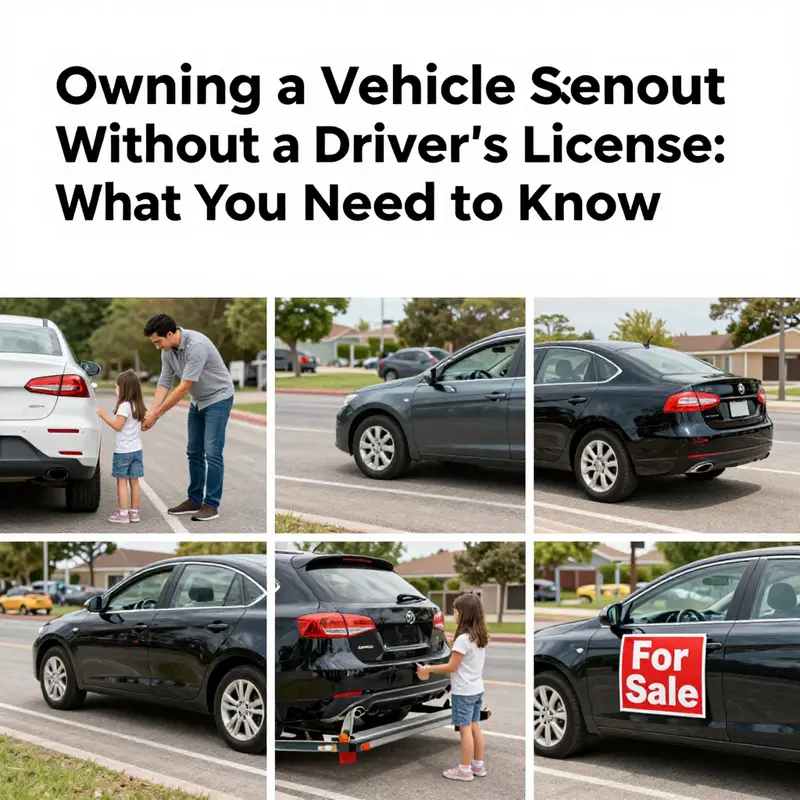
Across the globe, many observers assume that license status dictates who may own a car. Yet ownership and operation sit on different rails. You can hold title, store a vehicle, or plan for its future use without ever earning a driver’s license. This separation arises from the broader aim of road safety and the recognition that ownership is primarily a financial and administrative matter, while driving remains a skilled activity regulated by knowledge, judgment, and training. Understanding this distinction matters for families, small business owners, and investors who see potential in vehicles beyond immediate use. It also means that the legal and practical responsibilities associated with ownership still hover over the car even if no one at the moment is legally allowed to drive it on public roads. The nuance matters because it shapes decisions about what to buy, how to insure it, and who should be allowed to operate it in different contexts.
One of the most common paths to ownership without driving requires looking at family dynamics with care and clarity. Parents frequently purchase a car for their teenage children before the teen has earned a license. The parents retain title and ultimate legal responsibility for the vehicle, while the child may gain access under strict supervision. In such arrangements, the vehicle serves as a starting point for practical mobility—school, sports, after-school activities—even as the family navigates the guardrails that separate ownership from operation. The parent’s control translates into a structured environment in which the teen learns about maintenance, safety, and responsible use before stepping behind the wheel unsupervised. The legal framework in most places makes this cooperative approach possible, but it also emphasizes that the parent, as owner, remains accountable for every mile driven by the adolescent and for any consequences that may arise during supervised or supervised-with-approval use.
Consider also the situation of individuals who hold restrictions on their driving privileges. Medical conditions, legal penalties, or regulatory suspensions can temporarily or permanently bar someone from operating a vehicle. Yet life’s logistical needs persist: commuting to work, transporting family members, or managing property. In these cases, ownership can still exist with a plan for operation by a licensed person. The car becomes an asset that a trusted driver uses on the owner’s behalf. This arrangement demands careful coordination among the owner, the driver, and any insurers or employers involved. It also hinges on clear boundaries: who may drive, under what conditions, and when the vehicle may not be used at all. The liability picture remains central. If an accident occurs while another person is at the wheel, the owner’s liability does not vanish merely because the operator is licensed. Insurance policies, conditioning clauses, and local laws often require explicit permissive-use provisions, ensuring that the person who drives is authorized to do so and that the owner has a defined framework for accountability and financial responsibility.
Beyond personal circumstances, ownership for investment or resale illustrates another facet of the landscape. Some buyers approach vehicles as assets rather than as daily transportation. A classic car, a vintage model, or a high-demand model may be purchased for storage and future sale, with ownership secured long before any intention to drive. In these cases, the owner’s motives are financial, not practical—from preserving a collectible to capitalizing on market demand. Operation becomes optional or seasonal, and maintenance takes precedence over miles logged. The car’s value can be tied to its condition, authenticity, and historical significance, all of which depend less on current operability and more on preservation. Yet even in investment-oriented scenarios, the ownership structure carries responsibilities: routine maintenance, secure storage, compliance with keepers’ requirements, and the ever-present obligation to prevent damage or loss. Insuring such vehicles often looks different from standard auto coverage, focusing on storage protection and comprehensive coverage against the specific risks of a stored asset.
Another common pathway involves a licensed family member or employee who is the regular driver, while the non-licensed owner maintains title. In households or small businesses where one person drives by necessity, ownership can be separated from operation without contravening the letter of the law. The owner’s role centers on stewardship, budgeting for maintenance, and overseeing insurance arrangements. The driver, in turn, assumes the practical duty of getting behind the wheel and navigating traffic laws. This dynamic frequently requires clear agreements about permissive driving, schedule coordination, and liability sharing. From an insurance perspective, the policy often needs to reflect the actual operator’s status, including named drivers and any drivers who may occasionally use the vehicle. Without appropriate documentation, an insurer could question coverage in the event of a claim, potentially complicating compensation for damages or injuries.
Leasing and financing introduce yet another layer to ownership without immediate driving. In some scenarios, individuals become the legal owner through leasing arrangements or financing structures that may take effect long before the vehicle is regularly operated. Even if the purchaser does not drive, the financing agreement can place responsibility on the owner for making payments and maintaining the vehicle. In other cases, the owner’s status is linked to a longer-term plan to transfer ownership to a licensed individual at a later date. This pathway requires thorough due diligence: ensuring that registrations reflect the true ownership chain, confirming who is authorized to drive, and securing appropriate insurance that aligns with the anticipated operator. When viewed in this way, a car becomes a financial instrument as much as a passage for daily travel, with ownership serving as the anchor while operation follows a separate timetable.
Technology is steadily reshaping what it means to own a vehicle without truly driving it. The rise of automated assistance and self-driving features offers a glimpse of a future where ownership may outlast the traditional need to operate. Some contemporary models provide advanced driver-assistance systems that can handle stretches of highway with minimal human intervention. While these features do not yet equate to full autonomy in every jurisdiction, they begin to blur the line between ownership and operation. In such cases, a non-driver might still own a car whose primary value lies in its potential for automated navigation, remote monitoring, or storage as a platform for future mobility. Even as the technology evolves, the core principle remains: ownership does not grant universal permission to operate on public roads. Legal status, insurance coverage, and local rules determine whether the vehicle may be driven, and by whom, at any given time.
The twin pillars of safety and accountability underpin the practical approach to owning without driving. A prudent owner learns to synchronize legal compliance with everyday practicality. That means inspecting titles and registrations to ensure they accurately reflect ownership, verifying that insurance policies cover permissive use, and maintaining records that delineate who is authorized to operate the vehicle. When a non-driver is the owner, every decision about storage, maintenance, and use should be guided by a careful assessment of risk: where the vehicle is kept, how it is protected from theft and vandalism, and how it is maintained to prevent mechanical issues that could escalate into safety hazards once someone does drive it. The owner, in effect, assumes the role of custodian, balancing financial interests with civic responsibilities. This is not a paradox but a practical arrangement that recognizes that ownership and operation are connected through a shared ledger of risk, liability, and protection.
In practice, the path to responsible ownership without a license often benefits from consultative steps that help align expectations with local law. Before purchasing, an owner may examine the regulatory framework that governs both title transfer and vehicle registration. In many areas, the vehicle can be titled and registered without a licensed driver at the wheel, yet the process may require a licensed purchaser or the involvement of a licensed custodian. Insurance considerations are equally critical. The owner may need to secure an insurance policy that accommodates permissive use or that makes space for a non-driving owner who still holds the asset. Financial planning should include maintenance reserves, storage costs, and the possibility of periodic inspections to ensure the vehicle remains in a safe, roadworthy state, should it someday be operated again. The interplay of registration, ownership, and insurance underscores a simple truth: ownership without driving is not a loophole to bypass rules. It is a deliberate configuration that acknowledges the separation between owning a machine and commanding it on public streets.
For readers seeking to navigate these waters with more clarity, an accessible way to understand the regulatory contours is to explore how different jurisdictions frame driver licensing relative to ownership. Consider the broader context of state rules and the impact on licensing decisions, which can illuminate why a person might own a vehicle without holding a license, and how such ownership can be managed safely and legally. See the discussion on state rules impact on driver licensing for a practical overview of how these rules play out in everyday life. state rules impact on driver licensing.
As the landscape of mobility continues to evolve, it is natural that new scenarios will emerge. Some households may rely on a single licensed driver who can operate multiple vehicles owned by the family, while others may acquire vehicles for investment and never intend to drive again. The driverless horizon promises further shifts, though it is wise to note that regulatory acceptance of autonomous operation varies by jurisdiction and remains a work in progress. In this unfolding context, the core question remains stable: owning a vehicle does not automatically confer the right to operate it on public roads. The responsibility for ensuring lawful use, maintaining safety, and bearing liability rests with the owner, even when the driver’s seat is currently vacant. What changes are most likely, then, are the tools and processes—insurance arrangements, registration details, and oversight of who may drive under what conditions—that allow a non-driver to retain ownership while still meeting the obligations that come with vehicle custody.
This broader view helps connect the practical day-to-day choices with the larger arc of vehicle mobility. A parent considering buying a car for a teen, a person under restriction seeking continuity in daily life, a collector pursuing a rare model for investment, or a business owner structuring a fleet—all can proceed with confidence when they understand that ownership and operation require different licenses, different permissions, and different kinds of preparation. The distinction is not merely theoretical; it informs how you plan, what you insure, and who you appoint as the operator when the moment arrives for legitimate driving. As the chapter turns toward the next discussion in this article, the thread remains clear: owning a vehicle without a license is feasible, but operate only within the boundaries that the law and your insurer establish. An informed approach turns potential risk into a disciplined framework for managing a valuable asset.
External resources can help you translate these ideas into concrete steps. For readers seeking practical guidance on how to navigate the purchasing process without a license, a detailed external guide offers actionable insights and stepwise considerations: https://www.carinterior.com/blog/how-to-buy-a-car-without-a-license.
Final thoughts
The intricacies of vehicle ownership without a driver’s license reveal a landscape filled with legal, insurance, and practical considerations. It is possible to own a vehicle without a license; however, the implications are significant. Vehicle owners must stay informed about their responsibilities and liabilities while ensuring their assets are properly insured. Practical scenarios often illustrate the real-world applications of these laws and considerations, emphasizing the importance of understanding one’s rights and obligations. Ultimately, while owning a vehicle without a driver’s license remains a viable option, it requires careful navigation of the associated regulations and legalities to protect both the individual and the asset.