
Understanding the nuances of vehicle registration without a driver’s license is crucial for new drivers, vehicle owners, and dealerships. Vehicle registration is a vital step in vehicle ownership that involves legal processes distinct from driving regulations. This article unravels the complexities surrounding the ability to register a vehicle without possessing a driver’s license. We will delve into the legal framework governing these registrations, the required documentation, implications for driving, benefits and risks associated with this practice, and the variations in regulations across different regions. Being informed about these aspects can empower vehicle owners and dealerships to navigate the registration process effectively and avoid potential pitfalls.
Registration Without a Driver’s License: Navigating Ownership, Paperwork, and the Road Ahead
The question of whether you can register a vehicle without a driver’s license often surfaces in conversations about ownership and practical mobility. The short answer is that registration is not the same as the legal right to drive. You can establish and prove ownership, and you can satisfy the administrative requirements for putting a vehicle on the books, even if you do not hold a valid license to operate it. This distinction matters because it frames a set of concrete steps that focus on identity, ownership, and compliance, rather than on the ability to operate a car on public streets. In practice, the process is designed to separate the question of ownership from the question of operation, ensuring that a vehicle can be legally registered under a person’s name while still requiring a license to drive it. That separation is not merely bureaucratic; it reflects the multiple layers of accountability that govern motor mobility. A registration record is a public acknowledgment of who owns the vehicle and that the vehicle meets basic standards and tax obligations. Driving, by contrast, is a regulated activity that requires proof of skill and fitness to be behind the wheel. Understanding this distinction helps you navigate the system with clarity and purpose, especially when you are trying to register a vehicle on your own terms or through an agency representative who may act on your behalf.
From the first moment you engage with the process, the emphasis is on documentation rather than driving ability. Most jurisdictions treat registration as a contract between the owner and the state or province in which the vehicle is registered. The core goal is to establish who holds the title, who is financially responsible for the vehicle, and who is accountable for compliance with safety, tax, and insurance requirements. The practical implication is that you can complete the registration by demonstrating ownership and providing the necessary identity papers and vehicle paperwork, even if you do not possess a current driver’s license at the time of application. The line between ownership and operation remains clear: ownership can be transferred or established, while operation is a separate, license-bound activity that accompanies the right to use the public road network.
To understand what this means in concrete terms, consider the typical documents that most registration offices require when initiating or transferring a vehicle registration. A standard package usually begins with proof of identity. This may be a government-issued ID or passport, plus any supplementary documents that confirm your name, date of birth, and current address. Then comes the vehicle’s origin and ownership trail. A title or certificate of ownership demonstrates that you have the legal right to register the vehicle in your name. In many systems, a purchase invoice or another proof of origin is also requested to verify that you acquired the vehicle through legitimate means and that the ownership chain is intact. A certificate of conformity for the vehicle’s factory release or an import certificate can be required for certain vehicles, ensuring that the vehicle conforms to safety and regulatory standards for the jurisdiction in question. While these items are standard in many places, the exact list can vary; nevertheless, none of these basic documents inherently require a valid driver’s license to complete registration. The purpose is to establish identity and ownership, not to assess whether you can drive.
Taxation and insurance form another essential pillar of the registration framework. Proof that vehicle purchase tax has been paid, or a valid exemption certificate, is typically required to confirm that the vehicle has fulfilled its fiscal obligations. Similarly, proof of compulsory traffic accident liability insurance is commonly demanded to ensure that, in the event of a collision, there is a financial backstop to cover damages or injuries. These financial safeguards are designed to protect the public and other road users, signaling that the owner bears responsibility for the vehicle’s use and for any incidents that may occur. In many jurisdictions, governments also require proof of payment or exemption of vehicle and vessel taxes, which reinforces the ongoing obligation of ownership beyond the initial registration. Taken together, these documents anchor the vehicle in the regulatory landscape, making the vehicle a traceable asset with defined responsibilities and protections, regardless of the owner’s driving status.
It is important to recognize that the presence or absence of a driver’s license affects what you can legally do with the vehicle, not whether you can be listed as the owner. You can register a vehicle in your name, but you cannot legally operate it on public roads without a valid license. Driving without a license is a serious offense in most places and can lead to fines, impoundment, or detention. The regulatory logic here is simple yet consequential: ownership and operation are governed by different rules because the act of driving involves a broader set of safety and skill requirements. If you are the vehicle owner and you are temporarily without a license, you should avoid driving; instead, consider using alternative arrangements for moving or transporting the vehicle until you regain licensure. This nuance underscores a practical truth: the road is a regulated space, and licensure is tied to the privilege of operating a vehicle, not to the right to possess or register one.
Because regulations do vary by jurisdiction, it is crucial to consult the relevant local authority to understand the exact requirements in your area. In the United States, state motor vehicle agencies, commonly known as the DMV, set the rules for registration and licensing. While many states require a valid driver’s license as part of the registration process, several programs and statutory provisions allow ownership-based registration in the absence of a license. In some cases, a licensed agent or proxy can act on behalf of someone who does not hold a license, enabling registration in the owner’s name with proper authorization. This pathway can be especially relevant for family members or legal guardians who manage the registration and compliance responsibilities for a non-licensed owner. The exact mechanics—who may act as a proxy, what documents are needed to authorize that person, and how the ownership transfer is recorded—are all defined by state policy. The key takeaway is that a lack of licensure does not automatically bar you from registering a vehicle; it simply changes the set of permissible pathways and requires careful adherence to the documentation and authorization rules that your jurisdiction puts in place.
As you navigate registration without a license, you should anticipate some common but important checks that the motor vehicle office may perform. First, confirm that you have a clear title in your name or have a proper transfer document if you are purchasing the vehicle from someone else. If a loan or lease underpins the vehicle, you may need to provide a lender’s lien release or other proof that you are authorized to register the vehicle. Next, ensure that your proof of identity and address information is up to date and matches the documents you present. Any mismatch can trigger delays or the need for additional verification. Insurance is another area that requires attention. Even if you cannot drive the vehicle legally without a license, many jurisdictions still require evidence of insurance before registration can be completed. The policy may need to name the owner as the insured or designate other parties who will be responsible for the vehicle’s coverage. In some states, the insurance requirement is paired with a verification process that confirms the policy is in force and will remain active.
The variability across jurisdictions can feel daunting, and that is why the recommended action is to consult your state’s DMV or equivalent authority for precise guidelines. It is not enough to rely on general descriptions; you should read the official guidelines and, if possible, speak with a knowledgeable staff member who can walk you through your specific situation. For readers who are exploring cross-border possibilities or different regional practices, it is helpful to recognize that the underlying principle—separating ownership from operation—applies broadly, but the exact procedures can differ significantly from one place to another. In many places, the rules are designed to be practical and fair, allowing non-driver owners to establish lawful ownership while ensuring that the act of driving remains tightly regulated for public safety.
If you are seeking deeper insight into how these rules interact with broader driver licensing policies, you can explore discussions about how state rules impact driver licensing. This topic overlaps with the registration question because licensing determines how and when you may operate the vehicle. For further reading on that intersection, you can refer to resources that discuss how licensing policies shape registration and car ownership in practice. State rules impact on driver licensing.
The practical upshot is straightforward: you can establish and record ownership through the registration process even if you do not hold a driver’s license, as long as you can satisfy the document and authorization requirements and you respect the limits that apply to driving. The moment you intend to operate the vehicle on public roads, a valid license becomes non-negotiable. In other words, the system is designed to separate two essential rights and responsibilities—ownership and operation—so that individuals can manage one without the other, within a framework of safety and accountability. This distinction also helps minimize confusion in households or situations where a vehicle is owned by someone who cannot or does not drive. It can enable smoother transfers, more straightforward title management, and clearer responsibility for insurance and taxes, while ensuring that the privilege to drive remains tightly regulated.
For readers seeking formal guidance or who want to verify specific steps in a particular state, official sources remain the best reference. The California DMV, for example, provides a comprehensive overview of vehicle registration procedures, including scenarios where a license may not be required for the act of registration itself. While this chapter uses general principles applicable to many regions, the most reliable information will always come from the official motor vehicle agency in your jurisdiction. The path from ownership to registration is navigable with careful preparation, and it is possible to complete the registration process even without a driver’s license when you follow the correct procedures and present the right documents. The broader takeaway is that the system exists to document who owns the vehicle, ensure compliance with safety and tax obligations, and set the stage for lawful operation once licensure is obtained.
External resource: For official guidance on regional registration practices and to see how a state may handle ownership without a license, consult the California DMV portal at https://dmv.ca.gov/portal/.
Influencing considerations about licensure and registration also surface in discussions about how policies evolve and how individuals navigate changes in their own circumstances. If you are managing someone else’s vehicle or acting as a representative, the process becomes more complex and requires clear authorization and transparency in documentation. The key is to approach the task with a thorough checklist: confirm ownership, gather identity documents, assemble proof of origin, secure insurance, verify tax compliance, and understand the specific rules around proxies or guardianship in your jurisdiction. By keeping the focus on these elements, you can register a vehicle in your name confidently, even if you do not currently hold a license to drive. The road ahead remains governed by the same principle: registration is a record of ownership and obligation, while driving remains a privilege earned through licensure and ongoing compliance.
Registering a Vehicle Without a Driver’s License: Navigating Identity, Ownership, and Rules Across Jurisdictions
Registering a vehicle without a driver’s license involves ownership, identity verification, and safety rules that vary by jurisdiction. In many places, vehicle registration is a formal acknowledgment of ownership, tax compliance, and insurance status, separate from the ability to operate the vehicle on public roads. You can often complete registration without a license if you can prove ownership, residency, and insurance, but driving still requires licensing. Commonly required documents include a title or bill of sale, proof of insurance, a completed registration form, payment of fees and taxes, and proof of local residency; additional items such as lien releases or emissions certificates may be needed depending on the state. The process emphasizes ownership and accountability for the vehicle while leaving licensing as a separate hurdle for operation. If you are registering for someone else or a business, you may need a power of attorney or entity documentation. Rules evolve, so consult the official state DMV or equivalent agency for the most accurate guidance. The bottom line is that possession of a driver’s license is not always required to own or register a vehicle, but operating it on public roads almost always requires meeting licensing requirements; for the most precise guidance, refer to official jurisdictional resources such as state DMV pages or country-specific vehicle registration guidance.
Registering a Vehicle Without a License: Ownership, Compliance, and the Road You Can’t Legally Drive
Registration and licensing exist in the same ecosystem of road use, yet they serve different purposes. The act of registering a vehicle—often described colloquially as putting the plate on a car—establishes who owns the vehicle, confirms the vehicle’s legal status, and enables it to be recorded in government systems. A driver’s license, by contrast, is a credential that proves the operator’s capability to control a vehicle on public roads. It is entirely possible to own and even register a vehicle without holding a driver’s license, and this separation is deliberate: ownership and operation are two distinct rights that can be separated by law, policy, and practical consequence. When you consider the practical realities of vehicle ownership, the distinction becomes clearer. A person might purchase a car for storage, for a project, for someone else to drive, or for future use. In those situations, the registration process functions as a watermarked record of ownership and accountability, independent of whether the vehicle will ever be driven by the registrant personally. The registration system is designed to ensure that the vehicle can be identified, taxed, insured, and tracked for safety and regulatory purposes. The very idea that a license is not a prerequisite for registration emphasizes an important boundary: ownership and the right to possess a vehicle can exist without immediate authorization to operate it on public space. This boundary is not a loophole but a practical framework that can be found across multiple regulatory environments, where the detailed paperwork of registration is aimed at confirming identity, provenance, and tax or fee compliance rather than validating driving competence. It is this boundary that often surprises those new to the formalities of vehicle administration, and it also explains why the question, “Can I register a vehicle without a license?” frequently comes up in discussions about ownership, financing, and long-term storage of an automobile. The documents that regulators emphasize for initial registration are oriented toward establishing a clear chain of ownership and ensuring the vehicle’s legal status within the system. The Motor Vehicle Registration Regulations, as outlined in Ministry of Public Security orders, provide a framework for what is required at the outset. Among the standard documents you will typically need are proof of identity, which confirms who is applying; the vehicle’s purchase invoice or other proof of origin, which establishes how the vehicle entered the owner’s possession; and a certificate of conformity or an import certificate, which guarantees that the vehicle meets applicable standards. In addition, you will often need proof of payment of the vehicle purchase tax or a tax exemption certificate, an insurance policy that meets compulsory coverage requirements, and proof of payment or exemption of vehicle taxes. Crucially, none of these items requires a driver’s license. The registration process, then, is about the vehicle’s legal status, not the operator’s capability. It is this separation that allows a non-driving owner to complete the necessary steps to achieve legal ownership on paper, even if the vehicle will be operated solely by someone who has a valid license. Yet the same documents that confirm ownership and legal existence of the vehicle do not confer the right to drive it on public roads. Driving without a valid license is a separate offense, a prohibition that anchors itself in traffic enforcement and road safety. If the vehicle is used on public roads without a licensed driver, the operator faces fines, potential vehicle impoundment, and other penalties. The regimental logic behind this rule is straightforward: the vehicle may be registered, taxed, and insured, but the responsibility for safe and competent operation lies with the person behind the wheel. This distinction has practical implications that differ from one jurisdiction to another. In some places, you may encounter additional rules for registrants who lack a license. Some systems might impose restrictions on how the vehicle can be stored, who may operate it, or what documentation must accompany the vehicle when it is moved. The core principle, however, remains: registration is about ownership and legal status, not about the driver’s licensing status. For those who wish to register a vehicle without a license, a common path is to ensure that the vehicle remains in non-operational status until a licensed driver is ready to take control. In this scenario, the registrant can maintain ownership and comply with taxes and insurance, while the vehicle is kept in storage or used in a limited, non-public-road context. If at any point someone other than the registrant plans to drive the vehicle on public roads, that person must hold a valid driver’s license, and the operator’s agreement or user terms should reflect this, including any insurance considerations and compliance with local traffic laws. The legal architecture here is not arbitrary. It is designed to balance individual property rights with public safety and administrative clarity. In jurisdictions where this balance is most clearly codified, the initial registration steps emphasize identity verification, provenance, conformity to safety standards, and fiscal compliance rather than the registrant’s ability to operate a vehicle. The inclusion of the certificate of conformity or import certificate underscores that the vehicle has passed necessary checks, ensuring it can be legally operated once the appropriate driver’s license is obtained and the vehicle is put into circulation. When you read the regulations carefully, it becomes evident that the process is about establishing that someone is legally accountable for the vehicle and that the vehicle itself meets certain standards. It is also worth noting the dynamic around future operation: ownership can be separated from driving in time. A person may own a vehicle now and choose to license themselves for the purpose of driving later, or they may intend to transfer the vehicle to a licensed operator or family member. In either case, the registration status does not force the registrant to drive; it simply confirms that the vehicle exists within the legal framework and can be engaged by the appropriate operator when the time is right. The practical upshot is that you should not confuse the status of ownership with the status of ability. If you intend to acquire a vehicle but do not yet hold a license, you can still complete the registration in your name, so long as you can provide the required documentation and you intend to use the vehicle in ways permitted by the law. You must also prepare for the responsibilities that follow: keeping insurance current, paying taxes, ensuring that the vehicle is maintained to meet safety standards, and coordinating with any licensed drivers who will operate the vehicle when needed. Of course, this is not a universal prescription. Local rules can and do vary, and the exact list of documents, the method of submission, and the consequences of non-compliance can differ across jurisdictions. Therefore, it is prudent to consult the local authority or official guidance for your area. If you explore the topic more deeply, you may encounter a spectrum of regulatory nuance, including how different regions treat ownership while not driving status, how they handle insurance in such cases, and whether registration can be linked to a specific operator or to the vehicle itself. For those who want to dig deeper into how these regulatory landscapes can differ, there is a wealth of discussion online about state rules impacting driver licensing and how insurance and ownership interact with licensing status. While the precise requirements are not identical everywhere, the core logic remains consistent: you can secure the vehicle’s legal status without a license, but you cannot legally use it on public roads without meeting the licensing criteria. In practice, this means approaching registration with clarity about your intentions for the vehicle and your own licensing trajectory. If your goal is to own, insure, and preserve a vehicle until you are licensed or until a licensed driver takes control, then the registration steps you undertake today lay a solid, compliant foundation for that future use. The broader takeaway is practical and straightforward: registration seeks to document and authorize the vehicle’s existence and ownership within the regulatory system, while licensing governs the right to operate on the road. The two concepts intersect in daily life, but they do not cancel each other out. The law recognizes that ownership and operation are not inseparable, enabling individuals to manage vehicle ownership even while they navigate the path toward obtaining a driver’s license. This separation is not a loophole; it is a structured approach that aligns with the day-to-day realities of ownership, storage, and planning for future operation. For readers seeking an independent baseline on how registration works in other regions, consult reputable guidance that outlines the standard documents and steps involved in vehicle registration. For additional context, see a well-regarded overview of United States vehicle registration practices, which highlights how ownership, taxes, and insurance interact with licensing status: https://www.dmv.org/united-states/vehicle-registration.php. If you are navigating changes in driver licensing rules or exploring how state and local rules shape licensing and ownership, you may also find it helpful to review specific discussions on how state rules impact driver licensing, which offers insights into jurisdictional differences and operational constraints across regions: state rules impacting driver licensing. As always, verifying the exact requirements with your local authorities ensures you proceed with accurate information tailored to your location. The landscape is real and nuanced, but the guiding principle remains steady: you can register a vehicle without a license, but you may not drive it on public roads until you lawfully meet the licensing requirements. This understanding helps vehicle owners plan responsibly, align insurance and taxation with their ownership, and avoid the penalties that arise when operation occurs without appropriate licensing. The result is a coherent approach to vehicle ownership that respects both the letter of the law and the practical realities of who can drive when, and under what conditions.
Owning Without Driving: The Nuances of Vehicle Registration Without a License
Registration and driving occupy two distinct lanes in the realm of motor transport, and this separation often surprises those who assume that a license is a prerequisite for any form of vehicle formalization. The core idea is straightforward: registration establishes legal ownership and the vehicle’s identity in the eyes of the state, while a driver’s license is a credential that validates the ability to operate a vehicle on public roads. In practice, many jurisdictions allow the owner to register a vehicle without possessing a valid driver’s license. The paperwork centers on proving who the owner is, where the vehicle came from, that taxes and insurance are in place, and that the vehicle meets safety and conformity standards. In this sense, the act of placing a plate on a vehicle—the registration itself—serves as a public record of ownership and accountability, not a green light to drive. The distinction matters because it shapes how people think about ownership, risk, and responsibility when a vehicle sits idle, is bought as an investment, or is kept in storage for future use.
To understand the mechanics, it helps to picture the registration packet as a bundle of verifications rather than a license. Most jurisdictions require a set of documents that establish identity, provenance, and compliance with fiscal obligations. Identity proof confirms who is applying in the eyes of the law. A purchase invoice or other evidence of origin demonstrates that the vehicle entered the system through legitimate channels. A certificate of conformity or import certificate attests that the machine is built to the standards the government recognizes. Proof of payment or exemption for vehicle purchase tax and the compulsory traffic accident liability insurance shows that the vehicle is financially responsible and insured. Finally, the proof of payment for the vehicle and vessel tax, if applicable, closes the loop on ongoing fiscal obligations that accompany ownership. Crucially, none of these items inherently asks for a driver’s license. This means that a person who owns the vehicle and can assemble the necessary documentation can register the vehicle in their name even if they do not hold a license to operate it.
Yet the absence of a license in the registration process does not bestow a driving privilege. Driving without a valid license is a legal fault line in most places. It can trigger fines, impoundment of the vehicle, and, in some circumstances, more serious charges. The legal system treats registration and operation as two separate issues: you can be the rightful owner and yet not cleared to drive. This distinction is essential for anyone considering custody of a vehicle that is not yet intended for road use, or for someone who plans to store or display a car before deciding when to learn or renew a license. In addition, the chain of insurance and liability can become more complex when the operator does not hold a license. Insurance underwriters assess risk differently if the registered owner is not the person who will operate the vehicle. Some jurisdictions may require that the registered owner either holds a license or designates a licensed operator, especially when the vehicle is used frequently or in a commercial context. This dynamic underscores a practical truth: ownership does not automatically convert into a right to drive.
The benefits of registering without a license are concrete and pragmatic, particularly for individuals who view a vehicle as an asset rather than an immediate mode of transport. First, registration creates an enduring record of ownership. This matters for investment purposes, where vehicles may be held for appreciation or for future resale. The registration document, the plate, and the title establish a chain of title that can be critical when a vehicle is sold, leased, or transferred. Second, ownership can enable financial protection. Even if the vehicle is not on the road, the owner can secure insurance to cover the asset against theft, vandalism, or environmental risk. This kind of coverage can be prudent for collectors, show cars, or seasonal vehicles that remain parked for long stretches. Third, the ability to register supports gifting or transferring ownership to another person who may hold a valid license and be prepared to operate the vehicle in the future. A vehicle can be gifted or transferred to a licensed driver, who then assumes responsibility for use, maintenance, and compliance with local traffic laws.
There is also a practical sense in which the registration process acts as a safeguard. By documenting ownership and ensuring compliance with taxes and insurance, the process protects the owner from certain forms of liability that might arise if a vehicle were sold or moved without proper paperwork. Even if the vehicle is temporarily out of service, keeping valid registration helps ensure that the vehicle remains within the legal system’s boundaries. As with any complex administrative matter, the nuances are most visible when you examine how different jurisdictions handle the details of ownership, taxation, and operator qualifications. In some places, the rules hinge not on whether a license exists, but on how the vehicle will be used or who will operate it most frequently. This is where the idea of state rules impacting driver licensing becomes relevant, and it is worth exploring how such rules shape practical decisions. You can explore a broader discussion on how state rules intersect with licensing here: state rules impacting driver licensing.
The risk side of the equation is equally instructive. The most obvious danger is the gap between ownership and operation. If you register a vehicle but plan to drive it, you must obtain a driver’s license or otherwise comply with the licensing requirements in your area. Failing to do so can expose you to fines and enforcement actions. In jurisdictions with strict enforcement, even temporary driving without a license can trigger penalties that escalate quickly if the situation involves traffic incidents or repeated noncompliance. Insurance considerations are a parallel concern. Insurance policies are designed around who will operate the vehicle. If the primary operator lacks a license, insurers may view the risk as higher, potentially increasing premiums, limiting coverage, or voiding certain policies if driving occurs without proper licensure. In some cases, insurance may be denied altogether if the insured operator does not hold a current license, leaving the registered owner financially exposed in the event of a claim arising from operation.
Another layer of complexity arises when the vehicle is intended for sale or transfer. A buyer may demand assurances about the vehicle s legal status and the seller s authority to register on the vehicle s behalf. If the seller registers in their name but does not hold a license, or if the vehicle will be operated by someone other than the registered owner, the transaction can become legally delicate. Prospective buyers may worry about whether the vehicle remains compliant with local registration and taxes, which can complicate a clean transfer of ownership. This is not merely a bureaucratic concern; it reflects the practical realities of how vehicles move through markets, how risks are allocated, and how trust is established between buyer, seller, and the state.
A final consideration concerns the broader regulatory environment. Some states or countries have established requirements that tie certain registration privileges to operator qualifications, especially for commercial or fleet use. In such settings, the registered owner may be required to hold a valid license if the vehicle is used in a particular way or for certain kinds of work. Understanding these distinctions helps avoid false expectations. It also emphasizes the importance of consulting official sources and local authorities before proceeding with registration when a license is not in hand. The guidance from local motor vehicle offices or official state portals remains the most reliable compass in these matters, since policies can shift with new legislation or administrative updates.
For readers who want to anchor their planning in established resources, the national or regional approach to registration will shape the exact documents required, the duties of ownership, and the boundaries of what is permissible without a license. The central takeaway is that ownership and operation are governed by different rules, and while a license is not always a prerequisite for registration, it is indispensable for driving. If you are navigating this landscape, start with a clear inventory of the documents you can provide to prove ownership and origin, confirm that taxes and insurance are in order, and then check the licensing requirements that apply to your intended use of the vehicle. The gap between owning and driving is a real one, and recognizing it helps prevent missteps that could lead to penalties, gaps in coverage, or complicated transfers later on.
To ground this discussion in practical directions, always verify with the official source that matches your location. If you are seeking authoritative guidelines on registration requirements tied to ownership without license, you can consult the widely used reference that outlines vehicle registration requirements and the interplay with driving credentials. For authoritative details on the registration side of the equation, refer to the DMV resource at the link below.
External resource: https://www.dmv.org/vehicle-registration/vehicle-registration-requirements.php
Registering Without a Driver’s License: The Patchwork of Ownership Rules Across Jurisdictions
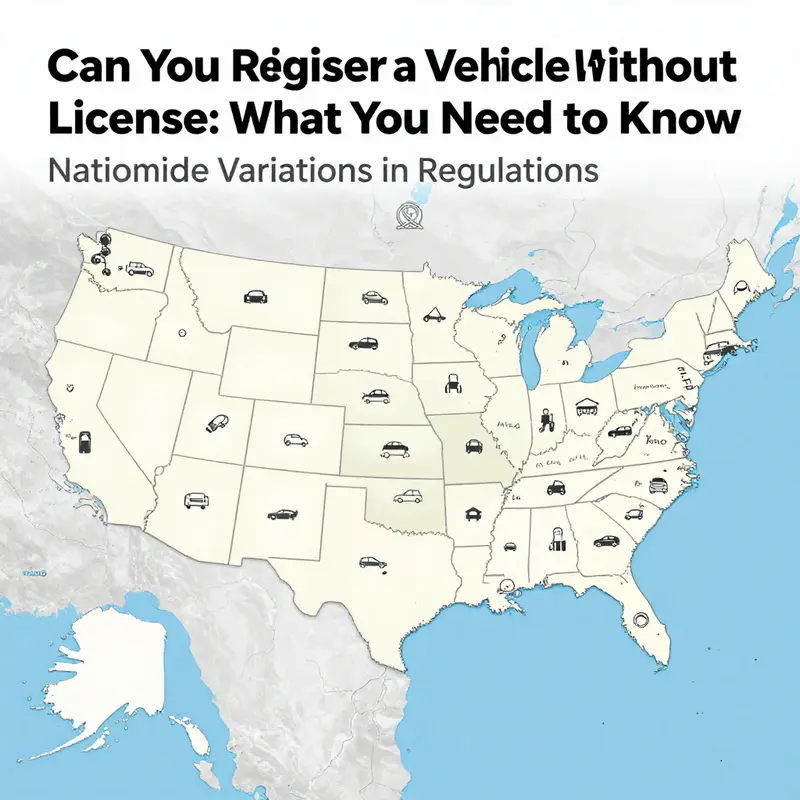
The idea that you must hold a driver’s license to own or register a vehicle is a common assumption, but the reality is more nuanced. Registration, at its core, is a record-keeping and tax-paying function that confirms ownership, confirms the vehicle exists, and ensures the vehicle is properly insured and taxed. Licensure, by contrast, is about the ability to operate a vehicle on public roads. The two systems run on parallel tracks, and in many places they only intersect when you actually plan to drive. This separation matters because it reshapes the questions people ask when they buy a car, hold a car, or invest in a vehicle that may never leave the driveway. It also explains why the documents you need to register a vehicle can look very different from the documents you’d need to obtain or renew a driver’s license, and why a vehicle can be legally yours without being legally drivable in certain circumstances.
Across jurisdictions, the baseline logic is simple: ownership, residency, insurance, and the vehicle’s origin and tax status determine registration. The specifics, however, reveal a patchwork of rules that can surprise new owners. In many places, you can establish legal ownership through standard identity documents, proof of purchase, and proof that the vehicle is legitimate for road use — but whether you can actually operate that vehicle on public roads hinges on having a valid license. The critical takeaway is that you can complete the registration process in many scenarios even if you do not hold a driver’s license, but you cannot lawfully use the vehicle on public roads without one. This distinction is not merely academic; it has real-world implications for people who buy, store, or hold vehicles as investments or assets.
To understand how this works in practice, consider the kinds of documents typically required for initial registration. Regulations such as the Motor Vehicle Registration Regulations and related ministerial orders generally call for evidence of identity, proof of origin, and proof of financial responsibility. A purchase invoice or other proof of origin demonstrates ownership and the vehicle’s lawful origin, while a certificate of conformity or import certificate confirms the vehicle’s compliance with applicable standards. When it comes to taxes and insurance, the registration process usually requires proof that the vehicle purchase tax has been paid or a certificate of exemption, and a compulsory liability insurance policy that satisfies local requirements. Finally, many jurisdictions require proof that the vehicle tax has been paid or exempted. Importantly, nowhere in this standard checklist is a driver’s license typically demanded as a prerequisite for registration itself. In other words, the government can recognize you as the owner and register the car in your name solely based on ownership and compliance documents, even if you cannot legally drive it.
This separation becomes most visible when you look at the state-by-state or country-by-country variations. A useful touchstone is how different regions treat the legitimacy of someone who wants to own a vehicle but does not hold a license to operate it. In some places, the path to registration mirrors the path to drive: a license or permit may be required for the primary registrant if they are expected to operate the vehicle regularly or if the vehicle is recorded as primarily used by a licensed driver. In others, the process accommodates non-drivers by allowing alternative forms of identification, provided other conditions are met. The practical effect is that you may be able to register a vehicle without a license in certain contexts—such as when the vehicle is being stored, held as a financial asset, or registered for investment purposes—yet the same vehicle would be illegal to drive without a license.
Take, for example, a set of commonly observed patterns in large, diverse jurisdictions. In some U.S. states, the general model is identity-driven: a valid driver’s license is often a straightforward path to registration, especially if you are the vehicle’s primary operator or owner and the vehicle will be used on public roads. California and New York exemplify a more license-centric model, where a valid driver’s license is typically expected as part of vehicle registration, particularly when the applicant will operate the vehicle. This emphasis aligns with the state’s broader regulatory framework, where licensure and operating authority are tightly linked. Yet even within those same states, there can be exceptions for non-operational purposes, fleet registrations, or specific ownership arrangements that may allow alternative forms of identification to satisfy registration requirements if other criteria are met, such as proof of residency and insurance.
In contrast, other states and areas take a more flexible stance toward identification during registration. Florida and Texas, for instance, have allowed applicants to register a vehicle using alternative forms of identification, such as a state-issued ID card, passport, or government-issued photo ID, as long as other conditions are satisfied. The emphasis here shifts from “who will operate the car” to “who legally owns the vehicle and is responsible for it,” paired with proof of insurance and residency. This approach can be particularly relevant for individuals who own a vehicle but do not intend to drive, such as a collector, an investor, or someone who stores the car on private land. It is a practical reminder that registration is about the vehicle’s place in the system, not strictly about the operator’s driving status.
These patterns shed light on a tension that often confuses newcomers: the same car may be legally registered in one jurisdiction while being ineligible for road use in another, depending on whether the registrant has a license or whether the vehicle is operable. The consequences of that tension are tangible. If you register a vehicle without a license, you may still owe taxes, insurance, and registration fees, and you must maintain compliance with local reporting and inspection requirements. However, once you decide to drive, the absence of a valid license immediately becomes a liability in most jurisdictions. Driving without a license is typically treated as a traffic offense with possible fines, vehicle impoundment, and even detention in certain circumstances. The policy framework here is designed to prevent unlicensed operation while allowing ownership and storage to be recognized for legitimate purposes.
For anyone navigating this landscape, the practical path is to separate the goals clearly. If your aim is to establish ownership and secure the vehicle’s legal status, gather the standard ownership and financial documents: identity proof, purchase invoice, proof of conformity or import documentation, proof of purchase tax payment or exemption, a valid insurance policy that meets the jurisdiction’s minimum requirements, and proof of vehicle tax payment or exemption. If you plan to operate the vehicle, then the license question becomes the central concern. In many cases, you will need to obtain a license before you can legally drive, and that process may involve tests, background checks, and vision or health requirements in addition to proper identification. Recognize that some scenarios—such as registering a vehicle that will remain in storage or be sold as an investment—may not require immediate driving permissions. In those cases, the registration can proceed while the operator’s status remains unlicensed, as long as the intended use remains non-operational and compliant with local rules.
For readers curious about how licensing rules evolve and how they shape registration practices, it is worth noting the interplay between ownership rights and operator obligations. The state’s rules on driver licensing influence registration practices by defining who may register and under what conditions. This is why references to “state rules impact on driver licensing” can be valuable beyond a single jurisdiction. You can explore a concise discussion of these dynamics at State Rules Impact on Driver Licensing, which offers a useful lens on how licensing changes can cascade into registration policy and ownership rights. State Rules Impact on Driver Licensing
As you map out your own situation, consider the broader guidance and official resources available in your region. In many places, the most reliable information comes from the government department that handles motor vehicles and road safety. For readers who want to cross-check the nuances of U.S. state practices, state-level resources typically publish the precise list of required documents, acceptable forms of identification, and any contingencies for non-operational registrations. The process can be iterative: you may need to submit a package of documents, receive confirmation, and then resolve any issues related to residency or vehicle origin before finalizing registration. It is a reminder that policy isn’t a single rule but a spectrum of requirements designed to balance ownership, taxation, safety, and safe operation on the road.
The overarching lesson is clear: ownership and operation are governed by different tracks, and understanding the distinction can save time and confusion. If you merely own a vehicle and never intend to drive it on public roads, you can often complete registration without a license, provided you can meet the documentation and financial obligations that establish the vehicle’s lawful status. If, however, your goal is to drive, you must align your registration with licensing requirements, recognizing that a driver’s license remains a separate gateway to road use. In this sense, registration without a license is not a loophole but a recognition of the vehicle’s place within the regulatory system, while driving without a license closes that place with penalties and risk.
For readers seeking a concrete reference point, the official vehicle registration information from California’s DMV offers a representative example of a comprehensive registration framework, including the core documents and processes involved in initial registration. The California resource helps illuminate how ownership, tax, insurance, and conformity documentation fit together in a real-world workflow, and it underscores why the license status matters most when the vehicle is intended for public-road operation. External readers should consult their own state or national authorities to confirm current rules, as regulations can and do change over time. See the California DMV portal for official guidance: https://www.dmv.ca.gov/portal/vehicle-registration/.
In short, the question of whether you can register a vehicle without a license is not a black-and-white prohibition. It’s a structured judgment about the vehicle’s status and its intended use, negotiated through a specific set of documents and rules that vary by jurisdiction. When you thread through the paperwork with this distinction in mind, the path from ownership to registration becomes a manageable process rather than a puzzle. And when the time comes to drive, a valid license remains the essential door that must be opened before the vehicle can share public roads with other road users.
Final thoughts
In conclusion, registering a vehicle without a driver’s license is an achievable process, contingent upon providing the required documentation and navigating the unique legal framework. However, it’s important to recognize that while registration is possible without a license, actual driving on public roads mandates having one, underscoring the importance of adhering to driving regulations. By familiarizing oneself with the documentation needed and the potential implications, vehicle owners and dealerships can ensure compliance and avoid legal hurdles while taking ownership of their vehicles. All parties involved must be vigilant about understanding and following their respective state and national laws governing these processes.