
Understanding how to trace a vehicle license plate involves knowing the legal, technological, and procedural pathways available. For new drivers, existing vehicle owners, and auto dealerships, this knowledge is not only practical but necessary in various situations, whether it’s for theft recovery or verification purposes. Each chapter of this guide will equip you with insights on how to effectively utilize law enforcement resources, GPS tracking systems, official governmental channels, and public surveillance methods to trace a vehicle’s license plate. By mastering these approaches, you can confidently navigate inquiries about vehicle locations while respecting legal boundaries.
Understanding License Plate Tracing in Public Safety
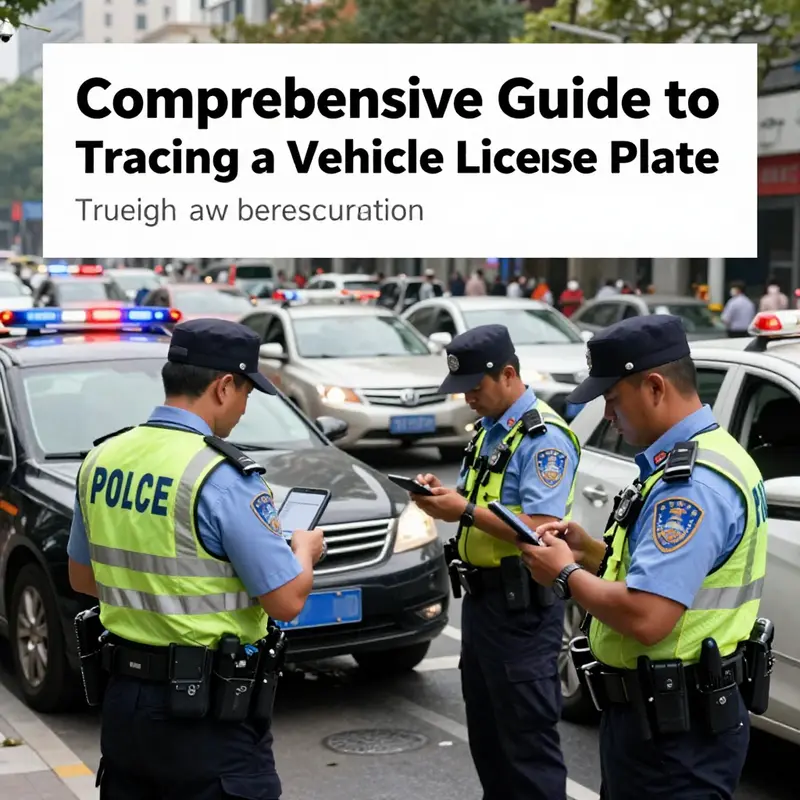
License plate tracing sits at the intersection of public safety and privacy. In everyday life, no one can determine a vehicle’s real-time location from a plate alone. In emergencies or criminal investigations, authorized agencies may access plate data under strict legal frameworks and with appropriate oversight. This chapter explores how agencies use plate information, the role of ALPR systems, and the safeguards that limit access, retention, and disclosure. It emphasizes that tracing is not a universal, real time map but a targeted tool that requires warrants, proper authorization, and accountability. Topics include ALPR basics, interagency data sharing, privacy protections, and the balance between rapid response and civil liberties. Readers will gain a high level understanding of how plate data can aid investigations while remaining subject to due process and oversight.
From Plate to Position: The Legal Pathway to Authorized GPS Tracking
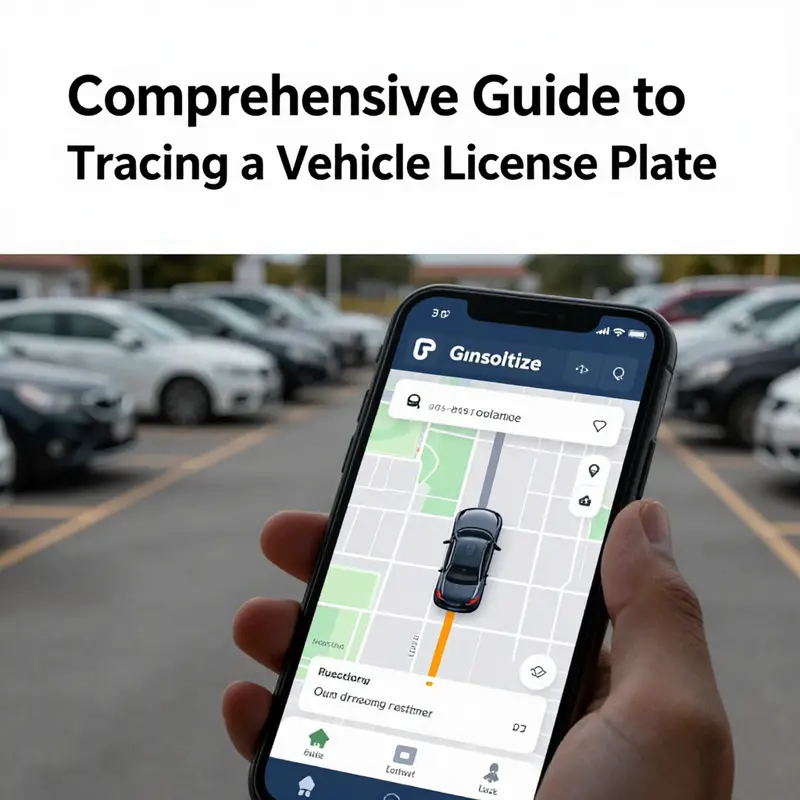
A license plate is a public identifier, not a live coordinate feed. Real time location data tied to a plate is accessible only through formal, authorized channels and for legitimate purposes. This chapter explains how authorized users such as owners, fleet managers with proper permissions, and law enforcement in urgent cases obtain vehicle location data via installed trackers and GPS platforms through secure apps, web portals, and controlled requests, with strong authentication and auditing. LPR data can establish that a plate was seen at a location, but does not provide continuous GPS coordinates; live positioning comes from a device that transmits to a secured cloud platform. Three primary channels exist: mobile apps for current position, web dashboards for history and context, and lightweight queries via text or voice to service providers. Access is governed by consent and authorization, with geofencing, alerts, and audit logs supporting responsible use. In some regions government programs offer additional pathways under strict oversight, while privacy laws require minimum necessary access and purpose limitation. The takeaway is simple: trace only through properly authorized means, with clear ownership, consent, and governance in place to protect privacy and safety.
Authority at the Right Door: Official Channels for Tracing a Vehicle by License Plate
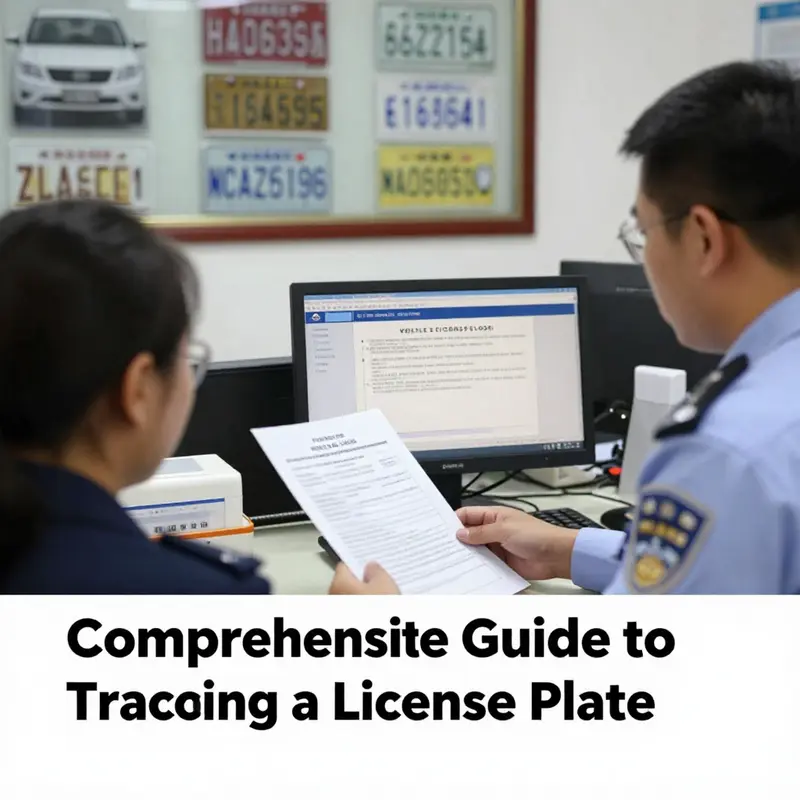
Tracing a vehicle by its license plate sits at the intersection of legality, technology, and public trust. The general public does not gain real-time visibility into where a vehicle is simply by knowing its plate number. Instead, there is a layered ecosystem of official channels designed for legitimate, time-sensitive needs—emergencies, property protection, safety investigations, and regulated due diligence when buying or insuring a vehicle. This chapter threads together how these channels operate, what information they can provide, and why privacy and due process matter as much as speed and precision. Taken together, they reveal a coherent architecture: you go to the door that corresponds to your need and your authority, you present a legitimate purpose, and you follow the procedures designed to protect individuals and communities while enabling rapid response when it matters most.
In urgent situations such as a hit-and-run, a theft, or an active criminal investigation, law enforcement agencies hold the mandate and the tools to access real-time vehicle location information through integrated surveillance and traffic systems. These systems, built on license plate recognition and wide camera networks, enable officials to reconstruct recent travel paths and coordinate a response with speed. The practical reality is that such traces are not available to the public or to private individuals; they are controlled access points in a broader public safety framework. The core value here is not speed alone but the assurance that access to sensitive data is governed by legal standards and verified procedures. In practice, authorities can combine data from multiple sources—highway cameras, toll-booth records, and city surveillance—to trace the movement of a vehicle across time and space. When someone is severely in danger or a crime is ongoing, these capabilities become a decisive factor in bringing situation under control and pursuing accountability. The public-facing takeaway remains simple: if you witness a crime or suffer a theft, contact local authorities immediately. They are trained to deploy the appropriate tools within the bounds of law and privacy protections.
Within the domain of legitimate access, there are also channels available to individuals who own the vehicle or who have explicit authorization from the owner. If you own a vehicle, or you obtain consent from the owner, you may rely on GPS-based tracking mechanisms already installed in the vehicle or connected to a formal monitoring service. These systems are designed for the owner’s use and for authorized fleet managers, offering a spectrum of tools to locate a vehicle in real time. In everyday terms, think of these as private, consent-based tracking options, governed by service agreements and security protocols. They may come in the form of dedicated applications associated with the vehicle’s manufacturer, or enterprise-grade fleet management platforms. Access typically requires authentication, device binding to the vehicle, and a legitimate purpose verified by the provider. The information delivered through these channels is highly actionable for the owner—current location, historical routes, speed patterns, and alerts for unusual activity. Importantly, these tools exist to protect property and safety, not to surveil strangers without cause.
For those who are not the owner but need information for due diligence—such as a buyer investigating a used car or a lender assessing risk—the official pathways are more nuanced. In many jurisdictions there are government-supported services and portals that provide non-real-time information about a vehicle once identity and authorization hurdles are cleared. In a broad sense, these services deliver data about the vehicle’s registration status, legitimacy, and basic attributes, rather than live tracking. They function as part of a transparent mechanism to verify ownership, confirm registration validity, and surface any flags such as liens, recalls, or legal restraints. The underlying principle is straightforward: information should be accessible to protect consumers and ensure fairness, but it must be accessed through verified identity and with a legally justifiable purpose. This creates a balance between the need for information in transactions and the imperative to safeguard privacy.
Beyond the individual’s needs, government channels offer a spectrum of official avenues designed for broader public safety, regulatory compliance, and law enforcement collaboration. Local vehicle administration offices remain a cornerstone for more in-depth inquiries. These offices, staffed by trained civil servants, can access comprehensive vehicle files when a legitimate reason is presented. Typical data include the chassis number (VIN), engine number, ownership history, past accidents, mortgage status, and whether the vehicle is under seizure or involved in a legal dispute. Visiting in person affords the opportunity to request a thorough history, inspect physical documents, and confirm details that online portals may only summarize. The process usually requires presenting valid identification, the vehicle’s registration details, and a clear, justified purpose—such as due diligence before purchasing a used car or resolving a dispute related to ownership. While the experience can involve waiting and procedural formalities, the payoff is a level of accuracy and depth that few online services can match. The local office environment reinforces the principle that certain information touches sensitive domains, including financial encumbrances and legal actions, and thus demands careful handling and formal verification.
Alongside in-person access, government portals and service hubs provide online avenues for basic to intermediate inquiries. These digital channels are engineered to be accessible around the clock and often present the most convenient first step for individuals seeking straightforward information—such as vehicle type, registration status, or basic ownership records. Verification codes, identity checks, and secure login procedures help prevent misattribution and data leaks. While online portals may not disclose every nuance found in a physical file, they offer timely, reliable information that enables informed decisions in routine scenarios like verifying a seller’s legitimacy before a transaction or confirming a vehicle’s current registration status for compliance purposes. The emphasis here is on speed, reliability, and governance. When used properly, these online resources can prevent scams and misrepresentations, strengthening the integrity of the market and the safety of road use.
Insurance companies occupy a practical and increasingly important niche in the ecosystem. In the event of an accident or claim assessment, insurers can often initiate data-sharing with authorized parties to verify the vehicle’s identity and history. This collaboration typically requires identity verification and a legitimate claims-related context. The resulting data can reveal a vehicle’s claims history, frequency of incidents, and types of incidents—information that is invaluable for buyers evaluating risk, for sellers aiming to disclose material facts, and for adjusters determining the scope of responsibility. The process is anchored in regulatory and contractual safeguards that ensure data is used solely for its intended purpose and handled with appropriate care. It is a reminder that tracing a license plate is not a solitary act; it is part of a calibrated system of checks designed to promote transparency while protecting privacy.
No chapter on official channels would be complete without acknowledging the role of law enforcement and public security platforms. In certain regions, authorized platforms exist to support legitimate investigations with rigorous identity verification and clearly defined purposes. Access to these platforms is not a panacea for casual curiosity; it is a carefully controlled avenue for pursuing justice, public safety, and asset protection. Such channels often require a lawful basis, a formal request, and involvement by sworn personnel or designated authorities. They reflect the reality that data tied to a license plate is sensitive—capable of revealing an individual’s movements and personal information—and thus must be marshaled with procedural discipline. The overarching message here is clear: when a plate intersects with a potential crime or safety concern, official channels provide the proper route to information, with the safeguards necessary to prevent misuse.
In parallel to these formal avenues, access to camera networks and license plate data for the purposes of investigation is tightly regulated. Public or private surveillance footage can contain license plate data captured at intersections, parking facilities, and other sensitive loci. While such footage can be indispensable for reconstructing events, accessing it is not a casual right. It requires clear legal justification, a proper chain of custody, and typically a court order or explicit investigative authorization. This layer of protection ensures that the powerful capability to track vehicles does not erode civil liberties or expose individuals to unwarranted surveillance. The message echoes throughout the system: tracing by plate is a tool for safety, accountability, and due process, exercised within a framework that respects privacy, proportionality, and legal authority.
The practical takeaway for readers is not a promise of universal real-time visibility. It is a reminder of where to look, how to proceed, and why the process matters. If you need to trace a plate, begin with the appropriate official channel that matches your legitimate purpose. For owners, the route is personal data access tied to the vehicle and your authorization. For buyers and investigators, the path moves through verified identity and legitimate purpose via government portals, local offices, and, when necessary, law enforcement. And at every step, the privacy and security of all involved must be protected by policy, procedure, and professional ethics. A well-ordered system does not merely reduce risk; it builds trust in how we manage information that can expose someone’s movements, ownership, and financial responsibilities.
To place these channels in a compact frame: police and emergency services hold the real-time capability under strict authorization for safety incidents; vehicle owners and their designated managers access live location through consent-based tracking; government portals provide non-real-time verification and surface essential attributes of the vehicle; insurance carriers offer history-based insights within the bounds of claims processes; and CCTV or surveillance footage requires court orders or explicit investigation to be retrieved. Each pathway reinforces a principle: the license plate is a public-facing identifier, but the information linked to it is guarded by a system of legitimate access points designed to protect both the public and private interests.
For readers who would like to explore the broader consequences of how licensing data interacts with public safety and integrity, a related discussion on licensing schemes highlights the risk to public safety when governance and ethics fail. CDL cheating scheme exposed — public safety at risk. CDL cheating scheme exposed — public safety at risk.
While the framework described above clarifies what is possible and permissible, it also underscores a crucial reality: you cannot casually trace any license plate in real time unless you are the owner or an authorized investigator acting within a formal process. When in doubt, prioritize official channels and documented procedures. The safeguards are not obstacles to assistance; they are the scaffolding that keeps the access legitimate and the data protected. This is not merely a compliance stance. It is a practical, effective approach that, in the right hands, yields timely, accurate information while upholding the values of privacy and due process that allow individuals to live and transact with confidence. The result is a system that supports safety, prevents abuse, and preserves trust in the institutions charged with public safety and vehicle governance.
For readers seeking further context on how government-endorsed surveillance networks and data-sharing capabilities influence what is possible when a license plate becomes part of an inquiry, official documents and policy notices offer a broader lens. These sources illuminate how data flows between agencies, what controls govern access, and how privacy protections are embedded in the architecture of modern enforcement and administration. See the official explanation of nationwide camera networks and inter-agency collaboration for public safety and governance here: https://www.gov.cn/zhengce/zhengceku/2024-06/18/content_6953748.htm.
Seeing Through the City’s Eyes: Tracing a License Plate with Public Surveillance and CCTV Footage
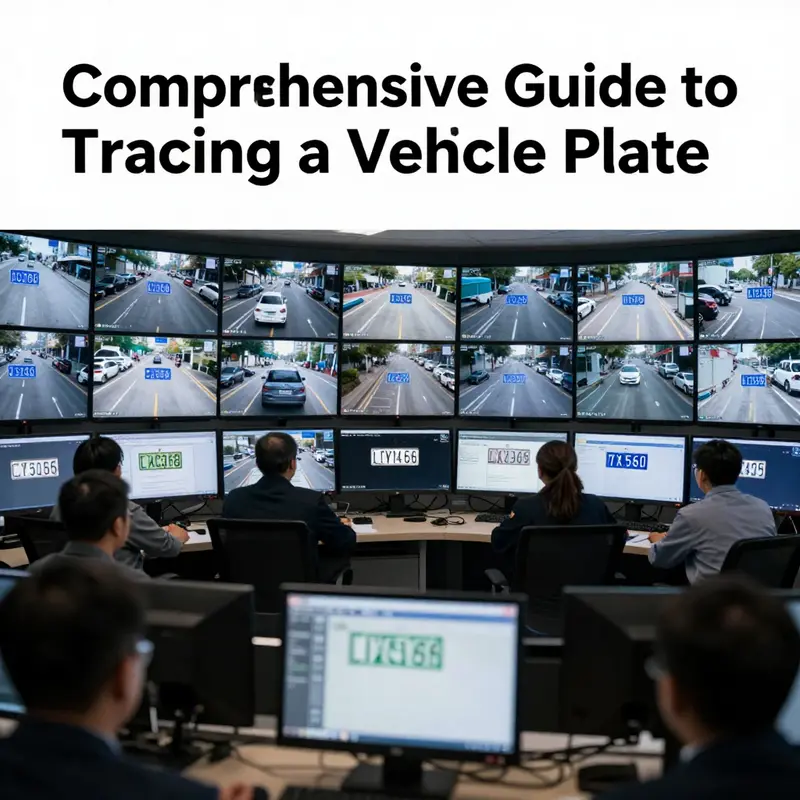
Tracing a vehicle’s license plate through public surveillance and CCTV footage sits at the intersection of law, technology, and privacy. It is not a casual DIY task that the average person can perform at will. Instead, it is a tightly regulated process reserved for authorized entities under specific circumstances. The chapters that precede this one have sketched the broad landscape—there are legitimate pathways to locate a vehicle when there is a legitimate need, but those pathways are carefully guarded by legal frameworks. This chapter delves into how public surveillance networks function in practice, how license plates are tracked within those networks, and what questions shape the balance between public safety and individual privacy. The goal is to provide a coherent picture of the process, the limitations, and the governance that frames any attempt to trace a plate using CCTV and related public camera feeds, without venturing into do-it-yourself instructions or practices that would overstep lawful boundaries.
When a potentially unlawful or dangerous situation arises—an accident, a suspected hit-and-run, or an ongoing criminal investigation—lawful access to surveillance data becomes central. The first pillar is reporting and escalation. An observer who notices a suspicious vehicle, or a victim seeking accountability, should report the incident to local authorities with as much precise information as possible: the time, the location, a descriptive account of the vehicle’s color, make, and model, and, crucially, any clear evidence available, such as a photograph or short video clip of the license plate. This is not a request for personal surveillance; it is a formal report that triggers an official response. Once the report reaches the police or traffic department, the investigative process proceeds along a path defined by statute, policy, and necessity. The authorities do not simply pull up a plate on a whim. They initiate a controlled review of recorded footage from relevant public cameras that were active at the time and place of the incident. The key word here is authorization: access to footage must be warranted by the investigation and pursued through appropriate channels.
Modern public surveillance systems often operate with Automatic License Plate Recognition (ALPR) capabilities, a technology that can rapidly convert a stream of images into data about which vehicles were present and when. ALPR works by scanning license plates as cameras observe passing vehicles, extracting the alphanumeric characters, and logging them with associated timestamps and locations. In a city-wide or region-wide network, this creates a searchable trace of vehicle movements that can be correlated with events, geographies, and other records. It is not a single system in isolation; it is a tapestry that weaves together cameras across intersections, highways, and facilities with a shared data backbone. The effect is that, under proper authorization, investigators can reconstruct a vehicle’s recent travel path, establish its presence at particular locations, and identify a vehicle’s involvement in a sequence of events. Yet the capacity to perform such tracing is bounded by legal authority, privacy protections, and the need to maintain the integrity of evidence.
To understand what this looks like in practice, it helps to imagine the sequence as a disciplined chain of steps rather than a single glance at a list of plates. The first step is corroboration. The reporting party provides time-stamped evidence and context. The investigators then determine which cameras would have had a line of sight to the vehicle, given the known route and the vehicle’s speed, and they issue a formal request to the camera operators or the agency that manages the network. In many jurisdictions, access to both the raw footage and the ALPR-derived data requires a legitimate purpose linked to a case or incident, and it may require judicial authorization if the data are sensitive or if there is a privacy-sensitive angle such as potential misidentification or civil rights concerns. This is not a matter of mere curiosity; it is a matter of due process.
The actual extraction of a plate from footage hinges on the same technology that processes millions of frames per minute across a city’s streets. ALPR-enabled cameras capture plates as vehicles pass through, and the software translates the visuals into alphanumeric strings, storing them with precise time stamps and geolocations. When investigators need to connect a plate to an event, they can query the system with a plate number and a time window. If the plate appears in recorded footage, the system can surface the frames in which the plate is visible, including the surrounding context that helps determine direction, speed, and potential linkage to other cameras in the network. In a well-governed system, this is not a one-off fetch. It is a carefully documented retrieval where each step—who requested the footage, which cameras were reviewed, what date and time were checked, and how the plate was identified—becomes part of the chain of custody that ensures the evidence can be presented in a court if needed.
The scale and sophistication of public surveillance vary by jurisdiction, but a recurring theme is the integration of vast camera networks with cross-referenced data stores. In larger states or countries, public camera networks may be connected through centralized or regional systems that enable rapid cross-checking against watch lists or reported incidents. The aim is not to surveil the public indiscriminately but to augment safety and facilitate legitimate investigations. The learning here is not about finding a quick shortcut, but about recognizing the infrastructure that makes plate tracing possible within lawful bounds. In places where national or regional networks exist, the potential for reconstructing travel history is greater, not because the technology is magical, but because the data is interconnected and the governance framework permits access under controlled circumstances.
Historical exemplars across different legal and cultural contexts illustrate these dynamics. In some jurisdictions with expansive camera networks, authorities describe the ability to reassemble recent movements of a vehicle by piecing together frames from multiple cameras along its route. In others, the networks are powerful but tightly circumscribed by privacy laws, requiring explicit authorization, a clear investigative purpose, and a documented need to know before data can be retrieved. The tension between public safety goals and privacy protections is a constant undercurrent. It shapes everything from how requests are logged to how long footage is retained and who can view it. Even when plates are identified in footage, the retrieval of the actual video and the presentation of its content rely on institutional protocols that safeguard individuals’ rights and ensure accountability for how the data is used.
Public surveillance footage and ALPR have become more common not merely because of advances in imaging or recognition algorithms, but because law enforcement and traffic management agencies increasingly rely on multi-source evidence to solve problems with speed and accuracy. A single camera can capture a moment, but a network of cameras can reveal a movement that might span minutes or hours, crossing neighborhoods and intersections. In a serious incident, that expanded view is what allows investigators to corroborate testimonies, pinpoint the vehicle’s location during critical moments, and, when appropriate, reconstruct the route for investigative purposes. Importantly, this is not a universal end-user service. Access comes with oversight, review, and strict controls designed to prevent abuse.
The ethical and legal contours become particularly salient when considering the public’s interest in safety versus the individual’s right to privacy. The rights of vehicle owners and the rights of bystanders intersect in a landscape where data collection is sensitive and potentially intrusive. Even when a plate is visible in a clip, the decision to retrieve or share footage hinges on the purpose behind the request. Investigators must articulate a legitimate objective—such as solving a crime, locating a stolen vehicle, or reconstructing an accident scene—and must demonstrate that there is a reasonable nexus between the plate data and the objective. The privacy framework typically requires minimization: only the data relevant to the case should be accessed and retained for the minimum time necessary to accomplish the objective. In practice, this means that even with sophisticated ALPR and a sprawling camera network, access is not a free-for-all; it is a carefully regulated process designed to deter misuse and preserve civil liberties.
Private property adds another layer of complexity. Many cameras in a city are owned by a mix of public agencies and private entities such as shopping centers, parking facilities, or private complexes. When an incident involves plates captured on private property, the ability to view or release footage often depends on the property owner’s consent and on the applicable rules governing public access to private surveillance. In some cases, authorities may coordinate with property owners to obtain the necessary footage, but this still occurs within an investigative framework that requires proper authorization and documentation. The bottom line is that public surveillance and CCTV footage are powerful tools for tracing a license plate, but they are not a free, behind-the-scenes access portal. They are part of a structured ecosystem that prioritizes lawful use, verifiable intent, and careful safeguarding of privacy.
The public-facing narrative of tracing plates through CCTV also intersects with broader debates about governance and transparency. In some places, there are official channels that allow citizens or stakeholders to verify certain information, such as the status of a vehicle reported missing. In those contexts, the emphasis is on controlled access and user authentication, ensuring that sensitive data is not disclosed inappropriately. The public might hear about dramatic cases in which footage played a pivotal role in solving a crime, and those stories are real; they simply occur within a framework designed to balance competing interests. For investigators, the practical takeaway is that accessibility to CCTV-derived plate data is a function of jurisdictional policy, the seriousness of the case, and the strength of the evidence required to justify retrieval.
As the discussion turns to practical realities, it is essential to reiterate the boundaries that govern this landscape. The public cannot arbitrarily request live feeds or historical footage simply because a license plate was observed in a given moment. The standards for authorization, privacy protection, and evidentiary integrity are not merely bureaucratic hurdles; they are the guardrails that prevent the misuse of powerful surveillance capabilities. This is not a guide to bypass protections, but a realistic portrait of how legitimate tracing operates within legal constraints. The interplay of ALPR, camera networks, and regulated access forms the backbone of how authorities can establish plate presence, link it to events, and, when necessary, identify the vehicle’s owner or driver through admissible channels.
In describing this ecosystem, it is helpful to acknowledge the broader scale of surveillance in certain jurisdictions. Some regions have invested in large, integrated camera networks that can monitor vehicle movements with high timing precision across extensive geographies. While the specifics vary—from retention periods to the exact mix of public and private cameras—the underlying principle remains: plate data becomes actionable when it is connected to an incident and validated through proper procedures. The moral and logistical complexity of such systems invites ongoing dialogue about privacy, accountability, and the safeguards that keep enforcement proportionate and fair. In short, public surveillance and CCTV footage are legitimate tools for tracing license plates, but they operate within a defined architecture that respects legal boundaries and civil liberties.
For readers seeking to situate these ideas within a real-world governance context, consider official guidance that underscores how CCTV and public safety are intertwined in law enforcement practice. Public-facing explanations emphasize that access to footage is restricted, subject to justification, and bound by oversight mechanisms. This framing helps distinguish between what is technically possible and what is legally permissible, a distinction that matters for anyone evaluating how plate tracing happens in the real world. When a crime or safety concern arises, the path from plate to action travels through a sequence of carefully regulated steps: observe, report, request, review, verify, and, if appropriate, act. Each step relies on clear objectives, documented authorization, and a respect for privacy that persists even as public safety goals are pursued.
In closing, the reality is that tracing a license plate through public surveillance and CCTV footage is not a magical or straightforward capability. It is a curated process governed by law, policy, and technology. The most important takeaway is not how to shortcut the system, but how the system upholds safety while guarding individual rights. If you are a member of the public, your avenues are to report concerns and rely on authorized agencies to review footage within the bounds of the law. If you are part of an investigation, you will navigate a tightly controlled workflow that emphasizes accountability, documentation, and respect for privacy. The city’s eyes are powerful when properly directed; the challenge lies in ensuring that power serves the public good without compromising the very freedoms that a modern, open society seeks to protect.
To connect this chapter to broader conversations about data governance and public safety, one can explore related discussions that examine how surveillance intersects with other regulatory domains. For readers who want a deeper look at the practical realities of surveillance, privacy, and public-interest safeguards, official guidance and policy analyses provide expansive perspectives on how CCTV and plate-tracking fit into modern law enforcement and traffic management. For further reading on how publicly accessible safety frameworks shape the use of CCTV in everyday life, see the National Police Chiefs’ Council resource on CCTV and public safety. external link: https://www.npcc.gov.uk/cctv-and-public-safety/
For internal context on how data governance considerations can intersect with reporting and safety protocols, a related discussion in our broader repository examines the balance between enforcement actions and civil liberties, including how case studies are analyzed to improve safeguards and transparency. See this internal resource for a case-grounded perspective: CDL cheating scheme exposed: public safety at risk.
Final thoughts
In summary, tracing a vehicle license plate requires a careful approach, balancing legal compliance with effective detection methods. Emergency situations often necessitate immediate police involvement, while authorized users can utilize their own GPS tracking devices for efficient tracking. Government services offer essential tools for verifying vehicle information, and public surveillance presents a last resort for retrieving footage when necessary. By understanding and employing these methods appropriately, you can ensure that you remain within legal frameworks while accessing the required information.