
The vehicle license number is more than just a unique identifier; it plays a vital role in vehicle registration, law enforcement, and traffic management. For new drivers and experienced vehicle owners alike, understanding this alphanumeric code is crucial for navigating the roads legally and confidently. This article explores the essence of vehicle license numbers, their importance in law enforcement, the differences between them and vehicle identification numbers, and their significance in vehicle registration and ownership transitions.
The Quiet Identifier on Every Car: Decoding What a Vehicle License Number Really Means
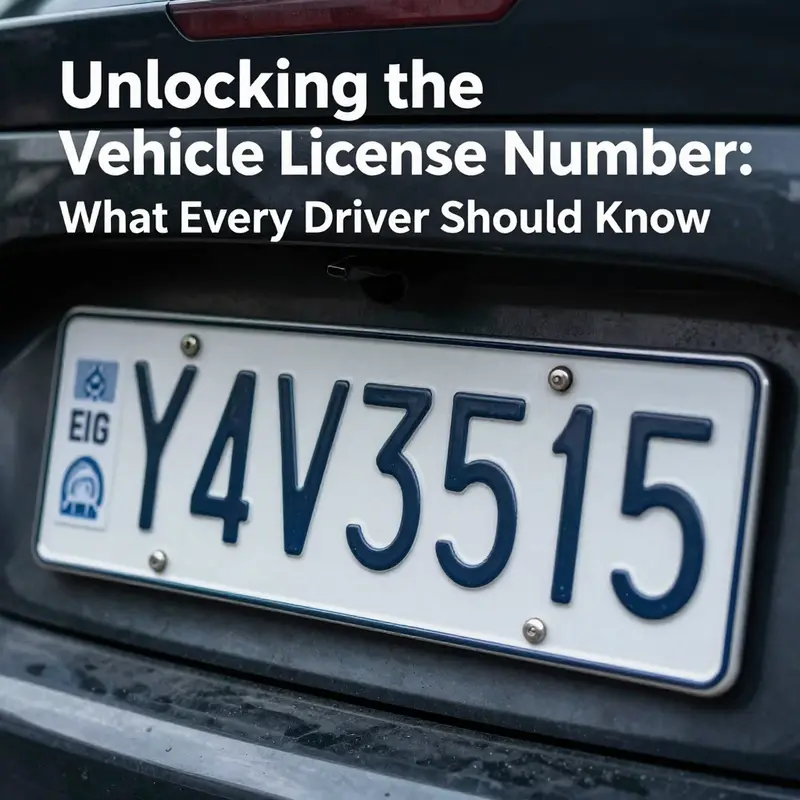
On the surface, a license plate may seem like a simple sticker of letters and numbers. But the sequence that appears on the plate is more than a decorative tag; it is a quietly powerful identifier that ties a vehicle to a jurisdiction, a registration file, and a specific moment in time. In the broad sense, a Vehicle License Number (VLN)—the official term for the code displayed on a vehicle’s plate—functions as the primary public-facing registration marker for that vehicle. It is the government’s way of saying, in a readable, human-friendly form, that this particular motor vehicle is recognized, authorized, and tracked under the law. The VLN sits at the intersection of policy, technology, and everyday road life. It travels with the car across streets and highways, is consulted by police when tracking a crime, and is referenced by tax offices, insurers, and vehicle registries when determining who owns what, where, and when.
To understand the VLN fully is to appreciate its role as both a practical tool and a social contract. It is issued by government bodies charged with vehicle regulation—such as the Driver and Vehicle Licensing Agency in the United Kingdom or a state motor vehicle department in the United States. The core function of this number is identification. It is the legible, human-readable link to the machine behind the plate—the vehicle’s registration record. That record contains information about the vehicle’s owner, its status, taxes, insurance requirements, and any exemptions or holds that may apply. When a police officer, a parking attendant, or a toll collection system scans a plate, the VLN is the key that unlocks the vehicle’s official file and, by extension, the story behind it.
The VLN is not to be confused with the Vehicle Identification Number (VIN), which is a 17-character code permanently etched onto the vehicle itself. The VIN speaks to the manufacturer and the vehicle’s internal characteristics—make, model, year, engine type, and manufacturing details. The VLN, by contrast, is the public-facing registration marker. It is the nameplate in a registry that travels with the car, visible to anyone who looks, and often the first detail that connects a vehicle to its legal standing on the road. This distinction matters not merely for precision; it shapes how authorities manage compliance, how owners manage their responsibilities, and how the public understands the rules that govern driving and car ownership.
The way a VLN looks—its format, its layout, and even the color of the plate—varies by country and, within some countries, by state or province. Formats can reflect the geography of issuance or, in some cases, the year of registration. A US plate, for example, might present a simple alphanumeric mix such as ABC1234, though each state has its own design and sequence rules, and some incorporate regional codes or time-based indicators. In the United Kingdom, the current format communicates something about age bands and registration areas, with plates often designed to help officials quickly gauge a vehicle’s age. A plate in the UK might carry a sequence that signals when the vehicle entered service, and the style can hint at whether a car is older or newer within a given generation. In other regions, color schemes and specific characters carry additional meaning—sometimes hinting at vehicle type, vehicle class, or the licensing authority that issued the plate. These varied formats reflect a practical aim: to create a system that makes it easier for authorities to identify, classify, and regulate millions of vehicles while also enabling efficient record-keeping and enforcement.
From a policy perspective, the act of issuing a VLN is a moment where administration meets technology. The process begins with registration, where ownership and vehicle details are recorded in a government database. Fees are assessed, and the plate is issued and attached to the vehicle. The registration record is then linked to the VLN, making the plate a physical manifestation of the digital file. This linkage supports a wide array of administrative tasks: vehicle taxation and insurance oversight, renewal reminders, and even the enforcement of emissions standards or safety regulations. In many jurisdictions, this connection is reinforced by mandatory display rules—front and rear plates in some regions, with particular formats or size requirements that ensure legibility and standardization. When officials need to verify a vehicle’s status, the VLN is the most direct, accessible piece of information in the public realm that can spark access to the underlying record.
The practical uses of a VLN extend beyond enforcement and administration. For traffic management, license plate data contributes to a broader picture of how a road network functions. Aggregated plate data can support studies of traffic flow, the prevalence of certain vehicle classes, and the impacts of regulatory changes on driving behavior. In many systems, the VLN also facilitates law enforcement’s ability to respond to incidents, locate stolen vehicles, and assist in the recovery of property. A plate number can serve as a critical breadcrumb that leads investigators from a public display to a private record of registration, ownership, and history. This is why the reliability of the VLN—the accuracy of the plate, its legibility, and the integrity of the associated database—matters so much in public governance and public safety.
The research context of VLNs also highlights how different countries shape the life cycle of a plate. In the United Kingdom, for instance, licensing and plate issuance are closely tied through a centralized or quasi-central system that ensures continuity across regional boundaries. The Driver and Vehicle Licensing Agency (DVLA), a national authority, participates in the broader ecosystem that governs how plates are allocated, renewed, and read by enforcement tools. By contrast, in the United States, a mosaic of state agencies oversees plates, which means each jurisdiction can adopt its own style, color scheme, and sequence logic. A plate might be issued by one state and displayed in another, creating a patchwork of interoperability challenges but also a robust layering of local governance. Across borders, the shared principle remains: the VLN is the public face of a vehicle’s registration and a tangible link to its legal identity.
In the China context, the VLN sits within a formal registration framework managed by public security traffic management departments at multiple levels. The Regulations on Motor Vehicle Registration (Ministry of Public Security Order No. 164) governs how numbers are assigned, what rules apply to their display, and how they must be maintained to ensure compliance with national road safety and administrative laws. This framework illustrates a fundamental truth about VLNs: they are not static artifacts but living components of a country’s transport governance. They encode authority, compliance, and accountability into something that people can read at a glance on the road. The simplicity of a plate—the slip of metal and paint—belies the complexity of the systems that generate and track the number behind it.
Of course, the plate is most visible when it is new, as a first registration appears on a car’s bulging front and back. As vehicles move from state to state, or from one province to another, the VLN remains constant, but the record behind it can grow and evolve. If a car changes ownership, if it is sold across borders, or if its status changes due to tax or insurance lapses, the VLN’s role shifts from mere display to a live portal into a dossier that tracks the vehicle’s legal and financial life. This is why, in many places, penalties for failing to display a plate, or for using an invalid or altered plate, are steep. A plate is not merely a decorative badge; it is a regulatory instrument that helps keep the road network orderly and auditable.
In terms of format and age indicators, the VLN often provides more than a frivolous clue about when a vehicle was registered. In some systems, the combination of letters and numbers is designed to offer a quick, machine-readable sense of timing and locality. This design can speed up the work of enforcement and registration clerks, but it also invites a richer understanding from observers who study how plate formats evolve over time in response to policy shifts, road safety campaigns, or evolving technologies in plate production. The public-facing nature of the VLN means that every citizen has access to a consistent and recognizable symbol of registration, something that builds trust in the governance of transport and maintains the social contract that makes driving possible.
There is also a distinct social dimension to VLNs. People often think about plates in terms of identity and status, but their regulatory function is more consequential. They are used to verify whether a vehicle is properly registered, whether it is taxed, whether it meets emission or safety requirements, and whether it is eligible to be driven on public roads. The conversation around VLNs intersects with privacy concerns, because the plate can reveal not just who owns a car but where it travels and when. This is why many jurisdictions implement safeguards around data access, and why enforcement practices emphasize legality and proportionality. The plate, in this sense, becomes a focal point for debates about transparency, security, and the balance between public interest and individual rights.
From a practical standpoint for an ordinary driver or a curious reader, understanding what a VLN is means recognizing its role as the interface between a vehicle and the legal structure that governs its operation. It is the visible signal of registration. It is the link to the administrative file that records the vehicle’s life: purchase, renewal of registration, payment of taxes, and confirmation that it is permitted on public roads. It is the number a tow-away notice might refer to, the string that toll roads read to charge for lane access, and the identifier a police unit will call out during a roadside stop. It is, in short, the quiet, relentless ledger that travels with every car as it moves through traffic and time.
For readers seeking a concise reference, the concept is captured by the common term license plate number, often used interchangeably with license plate or registration number in everyday speech. The Cambridge English Dictionary defines the term license plate number as the identifier that appears on a vehicle’s plate, a description that aligns with the functional reality of these numbers in the road ecosystem. This broader, definitional perspective helps situate the VLN within both formal regulatory language and everyday language, signaling that the plate is as much a symbol as a mechanism—a symbol of compliance, ownership, and accountability, all brought to life each time the car is seen moving through the public space.
Internal linking note: for readers interested in how state-level rules influence the broader framework of driver licensing and plate issuance, a related resource discusses how these policies shape the entire lifecycle of plates and licenses across jurisdictions. See the discussion at the resource titled state rules impact on driver licensing. This contextual link helps illuminate how local and regional norms influence the look, feel, and functioning of VLNs in daily road life.
Ultimately, the VLN is a practical tool built to serve a broad public purpose. It enables governments to manage millions of vehicles with a readable code that transmits essential information at a glance. It supports safety, accountability, and efficiency. It is a cornerstone of how modern road networks organize themselves, ensuring that each vehicle can be identified, tracked, and regulated in an orderly, transparent manner. To appreciate its significance is to recognize that the plate is not merely a surface ornament but an indispensable instrument in the architecture of mobility. For readers who want to explore the idea further, a resource on the broader definition of the license plate number is available through Cambridge’s dictionary entry: https://dictionary.cambridge.org/dictionary/english/license-plate-number.
License Plates on the Move: How Vehicle Numbers Tie Cars to Public Systems
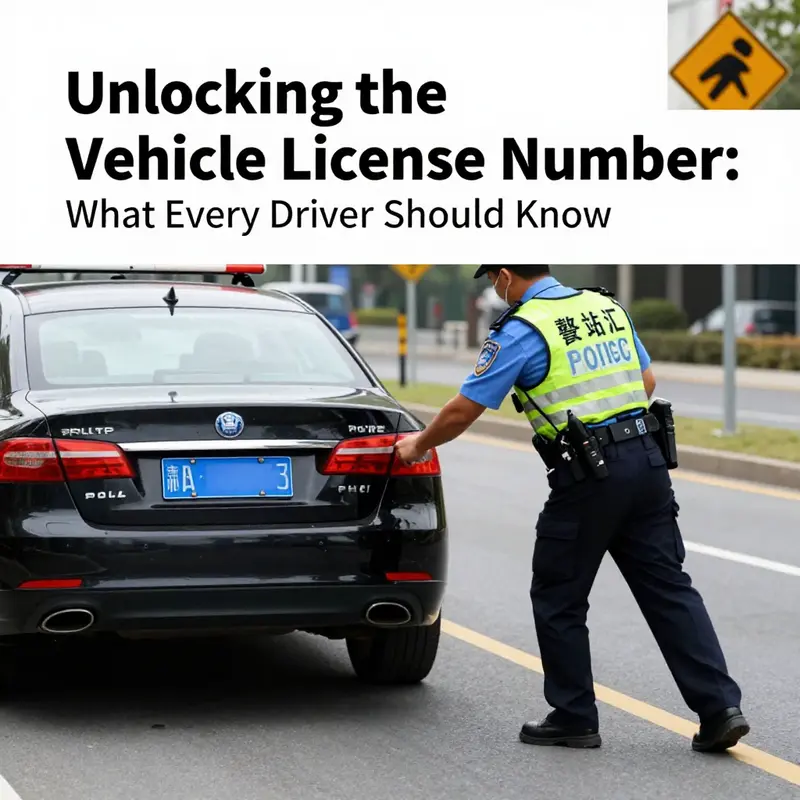
A license plate is more than a few characters on a car. It is a public-facing identifier that links a vehicle to official records, regulatory checks, and enforcement tools. When a plate passes by on a street, it signals a connection between the machine and the state’s registries, ensuring that the vehicle is properly registered, that ownership is documented, and that fees and inspections are up to date. This simple code anchors a web of data that supports safety, accountability, and efficient traffic management.
The plate number serves as the vehicle’s address within the public registry, while the VIN remains a fixed, manufacturer-provided identifier. Because plates can be reassigned to different vehicles over time, the plate number uniquely associates with a registration rather than a single chassis. The result is a dynamic link: a moving object can be traced through registries, warrants, and compliance records in real time, enabling rapid responses from law enforcement and transportation agencies.
Plate data feeds into automated systems such as traffic cameras and ALPR, amplifying its role in monitoring and enforcement. Checked against registries, plate information can verify status, detect stolen vehicles, or flag expired registrations. This power, however, requires thoughtful governance to protect privacy and limit data retention and access. The license plate number sits at the intersection of public safety and civil liberties, demanding careful balance as technology enables broader data integration.
For drivers, understanding this linkage highlights responsibility: keep registrations current, display plates legibly, and recognize that the plate number is a public identifier that helps maintain orderly and lawful roads.
Plate and VIN: How License Numbers and VINs Coexist
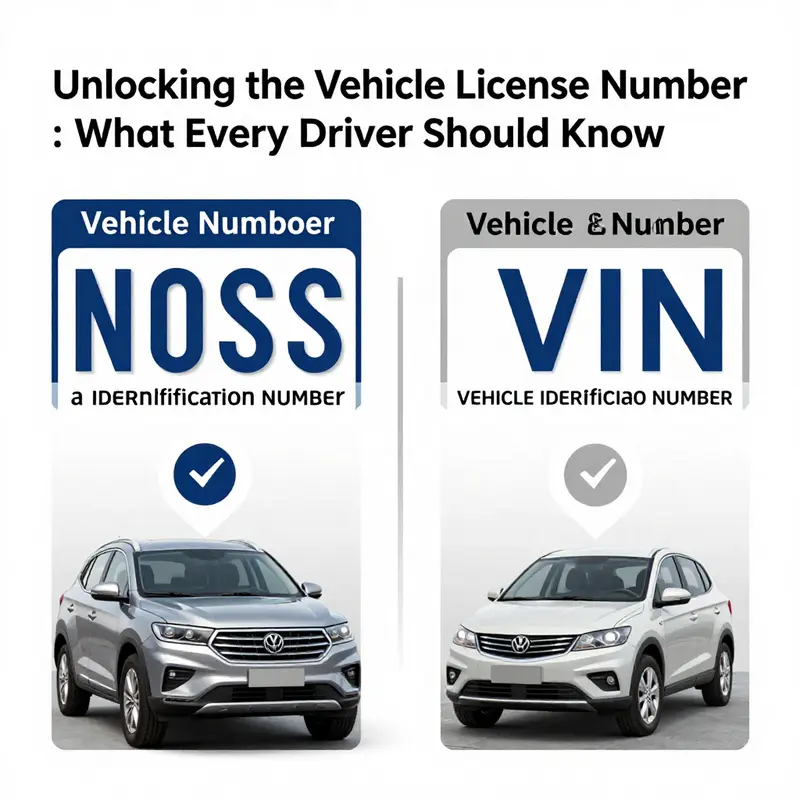
Two identifiers help us manage vehicles in different domains: the license plate number and the VIN. The license plate is a jurisdictional registration tag issued by a government authority and displayed on the vehicle so that police, toll systems, and parking enforcers can quickly confirm that the vehicle is registered in that area. It can change when ownership or residency changes and is subject to local display rules such as front plate requirements and plate designs.
The VIN, a 17 character identifier assigned by the manufacturer, is a durable fingerprint that travels with the vehicle. It encodes information about the maker, model, year, body style, and factory, and it remains constant across ownership transfers and across borders. The VIN is used for recalls, warranty work, service histories, and verification of identity in many official processes, regardless of what license plate is displayed.
Taken together, the plate and the VIN fulfill different but complementary roles: the plate anchors a vehicle in a regulatory and geographic context, while the VIN anchors its intrinsic specifications and history. This separation helps authorities manage daily road use and lets consumers trace a vehicle’s provenance over time.
Practical note: when buying a used car, you will typically check the VIN for the vehicle’s history and recalls, while the plate provides current registration status in the location where the car is operated. Some jurisdictions require front plates, others only rear plates, and the exact formats vary by region; this variability reflects policy choices and enforcement tools, not the underlying identity principle.
Readers who want to dig deeper can explore official resources on VINs and licensing to see how these identifiers support safety, accountability, and mobility.
null
null
Final thoughts
In summary, vehicle license numbers serve crucial functions that extend beyond being mere identifiers. They facilitate lawful road use, support law enforcement efforts, and ensure proper vehicle registration—all essential components for both new and experienced drivers. Understanding these facets not only enhances compliance with traffic regulations but also promotes responsible vehicle ownership.