
Vehicle license tax is an essential element for vehicle ownership in the United States, representing a significant financial responsibility for all drivers. While often seen as an additional expense, understanding its definition, purpose, and variations can empower vehicle owners, new drivers, and auto dealerships alike. This comprehensive guide dives into the nuances of vehicle license tax, offering insights into calculation methods, distinguishing it from vehicle purchase tax, and examining its broader impact on public service funding. As we progress through the chapters, readers will gain a well-rounded understanding of vehicle license tax and its critical role in transportation infrastructure.
Taxing the Ride: How Vehicle License Taxes Fund Roads, Shape Choices, and Vary Across Jurisdictions
A vehicle license tax is not a simple fee slapped onto a car each year. It is a structured charge tied to ownership or use, collected by state or local governments to support a broad ecosystem of transportation services. In many places it is described as a use tax, signaling that the cost is connected to the ongoing role the vehicle plays in a community: moving people, goods, and services, while contributing to the wear and tear on public infrastructure. At its core, the tax serves two intertwined purposes: funding the maintenance and expansion of roads, bridges, transit networks, and related facilities; and creating a financial signal that helps govern how vehicles are used and what kinds of vehicles are encouraged or discouraged by policy goals. This policy instrument sits alongside registration fees and one-time purchase taxes, yet it remains distinct in its timing, basis, and intended aims. It is in the details of how it is calculated and collected that a reader begins to understand why the tax can feel both routine and politically charged at the same time.
A common starting point for understanding any vehicle license tax is to distinguish it from the costs associated with buying a vehicle. The purchase tax—often a one-time affair at the moment of acquisition—funds government programs as well, but it does not carry the recurrent burden that a license tax does year after year. The license tax, by contrast, is levied annually or on a regular cycle and is tied to the ongoing status of the vehicle. In some jurisdictions it rests on the appraised value of the vehicle or its engine displacement, while in others it relies on a blend of characteristics, including vehicle type, seating capacity, and whether the vehicle is used for commercial purposes. This variability reflects the different policy priorities at play in different places. Rather than being a uniform charge, the license tax adapts to the local context, designed to reflect local costs of roads, environmental policy goals, and citizen expectations about fairness and affordability.
In the United States, the Vehicle License Tax is often described as a use tax because the expense is linked to the ownership or operation of the vehicle rather than to a transaction at the point of purchase. The annual payment is a form of ongoing contribution to public services, especially the maintenance of the road network that makes vehicle travel possible. The way the tax is calculated can differ widely from state to state and even within states, where counties or municipalities may add their own layers of assessment. A practical example can illuminate the point: in Arizona, the Vehicle License Tax is defined under a specific set of statutes, and it can be subject to credits granted under other statutes. This illustrates how a locally administered framework aligns revenue collection with public policy instruments at the jurisdictional level. The Arizona example underscores a general principle: license taxes are much more than revenue alone. They are part of a broader governance model that negotiates trade-offs between funding needs, equity concerns, and incentives for desirable vehicle choices. The precise rate and calculation are not universal; they reflect local values, fiscal needs, and the state’s legal framework for taxation. For readers who want to see the formal language, the Arizona Revised Statutes provide the authoritative specifications.
Yet the concept of a license tax is not unique to the United States. Across the globe, other countries structure similar charges in ways that reveal different policy priorities. In China, for instance, the tax applies to individuals or organizations that own or manage vehicles and vessels that must be registered with the vehicle and vessel administration department. The important distinction there is that the tax is framed within the broader category of automobile usage costs and is tied to characteristics like engine displacement for cars and gross tonnage for ships. The central government may set broad rules, while provincial authorities have the authority to adjust within prescribed ranges to reflect local conditions and policy aims. The result is a tiered structure that seeks to align vehicle costs with environmental and fiscal objectives. For monthly or annual road fund considerations, the central and provincial interplay is essential to understanding how much a driver pays and why some vehicles bear a higher burden than others. The tax structure is designed to be adaptable, allowing governments to respond to changing economic conditions, fuel prices, and public infrastructure needs. The official guidance from the national tax authority outlines how rates are scheduled and adjusted to reflect policy imperatives, such as reducing emissions or promoting fuel efficiency. The broader policy logic is clear: vehicle use has costs that society bears in the form of infrastructure investment and environmental impact, and the license tax is one instrument to share those costs fairly while encouraging progress toward public policy goals.
Understanding the purpose behind the tax helps in decoding the numbers. A license tax that scales with engine displacement, for example, sends a price signal about fuel economy and emissions. Smaller engines, often more efficient and less polluting, may incur lower charges, while larger engines with greater emissions footprints face higher assessments. This tiered approach is designed not only to raise revenue but also to influence vehicle choices over time. It is a recognition that the costs associated with operating larger, heavier, or higher-emitting vehicles extend beyond the owner’s pocket to the community at large, through the wear on roads, the need for more maintenance, and the broader environmental burden. In places that implement such differentiations, the policy objective is to create a financial incentive for owners to consider efficiency and alternative technologies, while still preserving the basic right to own and operate a vehicle when needed.
The administration of the license tax is, in practice, a task of balancing administrative simplicity with policy nuance. In many jurisdictions, the tax is assessed annually, but the methods of calculation can be complex. Some systems rely on the vehicle’s declared value, while others rely on engine displacement, year of manufacture, and the vehicle’s use classification. The complexity matters because it affects how accurately the tax reflects the actual use and impact of the vehicle. When the tax is tied to vehicle value, depreciation and market changes can influence annual payments, potentially creating volatility for households. When the basis is engine displacement or emissions profile, the calculation tends to be more predictable, though it may require periodic updates to keep pace with policy goals and new technologies. The interplay between local revenue needs and environmental policy makes license tax policy a living affair, one that evolves with the transportation landscape.
An essential distinction to keep in mind is the broader ecosystem of vehicle-related costs. A license tax does not stand alone. It sits alongside insurance, annual inspection or safety checks, fuel taxes, parking charges, tolls, and maintenance costs. In some regions, these costs are bundled into a single narrative about the total cost of vehicle ownership and use. The license tax provides a steady revenue stream for transportation infrastructure, while the other costs address different aspects of vehicle operation—from risk management to safety compliance to the user’s impact on road capacity. Taken together, these costs form a layered structure that underpins the public goods that vehicles rely on, such as smooth commutes, safer streets, and well-maintained highways.
A further layer of complexity arises from the variety of policy instruments that accompany the license tax. In jurisdictions with multiple layers of government, elements such as credits, exemptions, or adjustments may apply based on income, vehicle type, or specific environmental goals. For example, some statutes permit credits that can reduce the amount owed, recognizing factors like the age of a vehicle, its use in certain sectors, or participation in programs that advance public policy aims. These features underscore a broader truth: while the license tax is a mechanism for funding and policy alignment, it is also a negotiated construct that reflects local political consensus about fairness and accountability. The presence of credits in some systems demonstrates a commitment to making the tax equitable and responsive to individual circumstances, even as it preserves the overall objective of supporting public infrastructure.
In discussing the license tax, it is useful to separate the administrative experience from the policy logic. For the driver or vehicle owner, the day-to-day reality involves understanding what is due and when, how changes to the vehicle might alter the assessment, and what steps exist to reduce or adjust payments legally. It may involve presenting information about engine size, vehicle class, or usage to the relevant authority, and noting whether credits or exemptions are available. It also means recognizing the difference between ongoing license taxes and one-time charges tied to purchase. For policymakers, the challenge is to design a system that is stable enough to fund essential services, predictable enough for households to plan around, and flexible enough to respond to evolving environmental and economic conditions. The tension between simplicity and fairness, cost recovery and growth, is at the heart of any effective vehicle license tax regime.
As readers navigate these ideas, a practical takeaway emerges. Vehicle license taxes are not arbitrary. They are deliberate instruments shaped by fiscal needs, transportation planning, and environmental ambitions. They balance the demand for revenue with the imperative to promote responsible vehicle use. They recognize that the road network is a shared asset, built and maintained with public funds. They also acknowledge that vehicle ownership is a personal decision with wide-reaching social implications. When viewed through this lens, the license tax becomes more than a line item on an annual bill; it becomes a reflection of community priorities, the costs of mobility, and the ongoing conversation about how best to keep people moving while protecting the places they live.
For readers seeking a broader frame, consider how this instrument fits within the global landscape of transportation policy. In China, the framework emphasizes a tiered structure tied to vehicle characteristics and administrative oversight that blends central direction with provincial adjustments. The central government can influence the rules through national finance and taxation bodies, while local authorities translate those principles into rates that match local conditions. This arrangement illustrates how a seemingly simple concept—taxing vehicle use—can become a sophisticated policy tool that serves revenue needs, environmental goals, and social equity. The guidance provided by national tax authorities offers detailed, up-to-date information about current brackets and regulations, underscoring the importance of consulting official sources to understand how the tax operates in a given year. An external reference for official policy details is available at the State Administration of Taxation of China.
As you move from theory to practice, you may wonder how these ideas apply in your own state or country. The key is to identify the tax’s base—value, displacement, or a combination—and to understand any credits or exemptions that may apply to your situation. Recognize that the license tax is designed to fund a public good: the road system and its associated services. It is not merely a cost to be minimized, but a contribution to a broader social contract that enables mobility, safety, and economic activity. At the same time, be attentive to the policy signals embedded in the tax. Higher charges for larger, more polluting vehicles are a prompt to consider more efficient options, alternative propulsion, or other strategies that reduce environmental impact and long-term costs.
In short, the vehicle license tax is a practical, policy-driven mechanism that connects your everyday ownership experience to the health of the transportation system you rely on. Its rules vary by jurisdiction, reflecting local budgets, political choices, and environmental commitments. Its form and function embody the balancing act between revenue needs and public policy aims. And because it is continually reinterpreted in light of new conditions—economic shifts, technology advances, and evolving environmental standards—it invites ongoing attention from vehicle owners who want to understand not just how much they owe, but why the amount reflects the community’s broader priorities. For readers who want to dig deeper into the policy landscape, a useful anchor is the idea that licensing rules and driver requirements are often tied to greater governance patterns. See the discussion on state-rules-impact-on-driver-licensing for a broader sense of how licensing frameworks interplay with other public obligations, and consider how similar principles might appear in your own jurisdiction.
To bring this discussion full circle, remember that the vehicle license tax is more than a bill. It is a governance instrument intended to sustain and improve the public infrastructure that makes mobility possible. It connects personal choices with civic aims, and it aligns the costs of moving people and goods with society’s capacity to maintain and upgrade the networks that make movement feasible. As you plan vehicle purchases, consider not only the sticker price but also the annual license tax, how it is calculated, and how policy signals attached to the tax may influence future decisions. If you want a broader reference for how tax policies are structured in another major economy, consult the official guidelines provided by its tax authority at https://www.chinatax.gov.cn and compare the general logic with the local framework in your own area. In this way, the seemingly mundane annual fee becomes a doorway into the deeper conversation about the cost of mobility and the shared responsibility of keeping roads safe, efficient, and well maintained.
How Vehicle License Tax Is Calculated: Understanding Rates, Valuation, and Local Variations
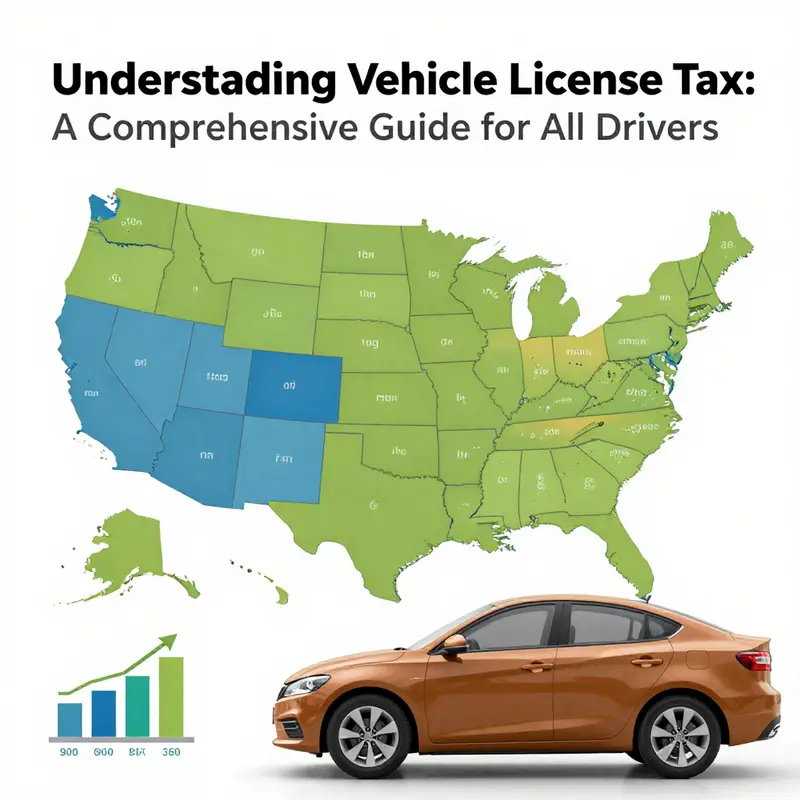
How Vehicle License Tax Is Calculated: Understanding Rates, Valuation, and Local Variations
Vehicle License Tax (VLT) is one of those recurring charges that drivers accept as part of vehicle ownership, but its calculation can be surprisingly complex. Rather than a single national rule, VLTs are set by states, provinces, and local authorities and reflect differing policy goals: revenue generation, road maintenance, environmental incentives, or congestion management. This chapter walks through how jurisdictions determine VLT rates, the common bases for valuation, and the practical variations vehicle owners encounter. The aim is to give a clear mental model so you can anticipate costs, check calculations, and spot opportunities for exemptions or reductions.
At the core of most VLT regimes is one of three valuation approaches: value-based, weight- or size-based, or engine-displacement/fuel-based. Value-based systems tax a percentage of the vehicle’s assessed market value. This is common where authorities want tax revenue to scale with the asset’s worth. Weight- or size-based systems set fees by the vehicle’s gross vehicle weight rating (GVWR) or curb weight; heavier vehicles pay more because they impose greater wear on infrastructure. Engine-displacement systems, sometimes used for motorcycles and older tax regimes, tie the fee to engine size or power because those metrics historically correlated with road impact and fuel consumption. Many jurisdictions layer these primary methods with additional factors such as vehicle type (passenger car, commercial truck, motorcycle, trailer), vehicle age, and environmental attributes.
How the assessed value is determined matters. When a tax is value-based, governments typically use one of three methods: initial purchase price depreciated over time, an official schedule of market value by make/model/year, or periodic revaluations tied to average retail prices. Depreciation schedules accelerate value drops in the early years and slow as the vehicle ages; this lowers VLT over time. Some states apply a fixed percentage schedule—say, 18% of original value in year one, 12% in year two, and so forth—while others consult sales data or consumer guides to set current market value each renewal period. The practical effect is similar: newer, higher-priced vehicles carry higher annual VLTs than older, lower-valued ones.
Weight- and size-based systems simplify administration. Fees keyed to GVWR or curb weight are straightforward to verify at registration because those figures appear on the vehicle title or manufacturer plate. This method shifts the tax burden toward heavier and often commercial vehicles, aligning revenue with anticipated infrastructure costs. Regions that prioritize freight transport funding or have heavy truck traffic commonly employ weight-based fees. Some places combine weight with vehicle class—for instance, light-duty trucks might fall into a lower fee band than heavy-duty trucks over a certain threshold.
Environmental considerations increasingly shape VLT policy. Many jurisdictions offer reduced rates, exemptions, or rebates for low-emission and zero-emission vehicles. The rationale is to encourage adoption of cleaner technology while still recovering some public costs. Conversely, urban centers facing congestion and air-quality problems may impose surcharges on high-emission vehicles. Other environmental modifiers include fuel type surcharges, taxes based on CO2 outputs, or graduated fees favoring smaller-engine vehicles. These adjustments create an incentive architecture embedded within the VLT system.
Local variation is large. Some urban centers layer additional charges on top of base VLTs. Congestion fees, low-emission zone payments, or metropolitan levies can appear on annual statements or as separate permits. For example, cities with intense traffic or established congestion pricing sometimes require additional local permits for city access. Rural districts may offer lower base fees to reflect lighter road usage and different infrastructure costs.
Another source of variation is exemptions and credits. Military personnel stationed away from home, disabled veterans, certain nonprofit organizations, and historic or collectible vehicle owners frequently qualify for partial or full relief from VLT. Some states reduce the tax for vehicles used primarily for farm work or for agricultural cooperatives. Bright-line rules or discretionary waivers apply depending on statutory design.
Timing and billing practices affect the user experience. Most jurisdictions bill VLT annually at registration renewal, though a few assess it semi-annually or in multi-year blocks. Some collect VLT as part of registration fees at the time of vehicle purchase, while others require separate VLT statements. When VLT is tied to market value, the renewal notice typically includes a line showing the assessed value and the rate applied, helping owners verify the math. If the jurisdiction uses a depreciation schedule, the notice will often list the age-based factor.
Penalties and enforcement are predictable but important. Failure to pay VLT usually carries late fees, interest, and risk of registration suspension. Repeated nonpayment may lead to vehicle impoundment or inability to renew registration. Jurisdictions maintain liens or administrative holds in some cases, so timely payment prevents escalating costs. Many agencies provide payment plans or hardship accommodations to reduce compliance barriers.
Understanding how VLT rates are publicly published helps you stay informed. Most licensing agencies publish fee schedules online and supply calculators that estimate annual tax by entering year, make, model, and sometimes mileage. Official websites often explain exemptions, required documentation, and how to dispute an assessed value. If you suspect an error—misclassified vehicle type, incorrect model year, or omitted credit—contact the issuing agency promptly and provide supporting documentation such as purchase invoices, title paperwork, or certification letters.
To illustrate, consider two hypothetical owners: one in a value-based jurisdiction and another in a weight-based jurisdiction. The value-based owner buys a new sedan with a list price of $30,000. In year one the assessed value may be 90% of list price, then depreciate according to a published schedule. If the VLT rate is 1.5% of assessed value, the first-year tax would be about $405—declining each year as depreciation reduces the assessed value. The weight-based owner operates a light-duty pickup with a GVWR of 6,000 pounds. If the jurisdiction charges $25 per 1,000 pounds, the annual VLT would be $150. These simplified examples show how different bases produce different outcomes for similar-cost vehicles.
Electric vehicle owners should pay special attention. Some regions waive VLT altogether for EVs, while others impose higher fees to offset lost fuel tax revenue used for road maintenance. In places that incentivize EV uptake, VLT exemptions often come with residency or usage requirements and may expire after a certain period. Where EVs are subject to separate annual road-use fees, the combined cost may still be lower than conventional-fuel VLTs, depending on local policy.
Commercial vehicles add complexity. Businesses often register commercial fleets under distinct classes, and taxes may incorporate payload, distance-based fees, or special permits. Interstate commerce can introduce apportionment systems where taxes are allocated based on miles traveled within each jurisdiction—this is common for motor carriers. Fleet managers need to reconcile registration rules across multiple states or provinces to avoid double taxation and ensure proper apportionment.
For owners seeking to minimize surprises, a few practical steps help: consult the licensing authority’s official fee schedule, use online calculators when available, verify the vehicle’s recorded attributes on the registration form, and check for available credits or exemptions. If you plan to move between jurisdictions, research how that new jurisdiction assesses VLT and whether any credits transfer. Where registration occurs after a vehicle purchase, review whether the dealer has applied correct sales tax credits or any state-specific deductions; some laws permit reductions when certain taxes were already paid at purchase.
Finally, remember that VLT is distinct from other vehicle-related taxes and fees. License tax targets ownership or use. Sales tax or purchase taxes apply at acquisition. Registration fees are administrative charges for licensing and plates. Emissions inspections, safety inspections, and local permits can produce additional costs. If you want a complete picture of annual vehicle ownership cost, add VLT to these recurring and one-time charges.
For jurisdiction-specific details, always consult the official vehicle licensing site for your area. They provide authoritative fee tables, calculators, and forms. For a general overview used by many drivers in the United Kingdom, see the government guidance on vehicle licensing: https://www.gov.uk/vehicle-licence. For practical guidance on how state rules affect driver and vehicle licensing processes in the U.S., information on state-level impacts can be found in this resource on state rules impacting vehicle licensing: https://drivernvehiclelicensing.com/state-rules-impact-on-driver-licensing/
This chapter equips you to read a renewal notice with confidence, compare how different factors influence your tax, and identify legitimate ways to reduce or challenge an assessed Vehicle License Tax. Armed with the right documents and a basic understanding of valuation methods, you can ensure the tax you pay aligns with the legal framework that governs your vehicle’s registration.
Two Taxes, Two Moments: How Vehicle License Tax Differs from the One-Time Purchase Levy
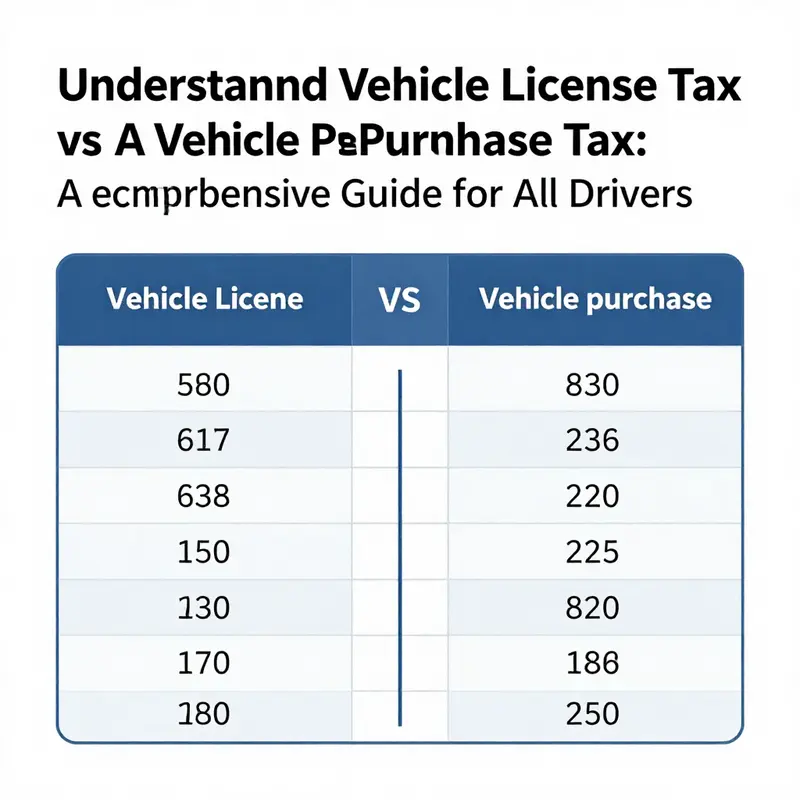
Understanding the split between ongoing ownership costs and the one-time purchase levy helps vehicle owners predict expenses and comply with rules. The Vehicle License Tax and the Vehicle Purchase Tax serve different fiscal and policy aims, show up at different times, and are calculated by different methods. Grasping those contrasts clarifies why a vehicle can trigger more than one tax bill, and why the agency that collects each tax may be different.
At the most basic level, the Vehicle Purchase Tax is a front-loaded charge tied to acquisition. It lands when a person or business completes the purchase. Many countries treat this tax like a sales or transfer levy. Its base is the transaction value: a fixed percentage of what was paid for the vehicle. In some jurisdictions the law is explicit about which vehicles are covered and which are exempt. For example, certain passenger cars, trailers, and motorcycles with larger engine displacements often fall under a statutory percentage. Because the charge is levied one time, it is administratively simple: collect the payment, record the sale, and move on.
By contrast, the Vehicle License Tax reflects the ongoing privilege of using public roads. It functions as a recurring fee for keeping a vehicle legally operable on public ways and roughly matches the cost of maintaining the transportation network that every vehicle uses. The tax is typically paid annually or on some other regular schedule. In many U.S. states, local transportation departments or motor vehicle agencies administer these periodic assessments. The Federal Highway Use Tax in the United States is a prominent example for heavier commercial vehicles; it measures road use with a weight-based formula and funnels revenue toward highway infrastructure.
Timing is the first practical distinction drivers notice. The purchase levy appears on the sales documents and on the initial registration paperwork. The license tax returns as an annual reminder: renew your plate, submit a payment, and remain lawful. Because the Vehicle License Tax recurs, it becomes part of the predictable cost of ownership, much like insurance or routine maintenance. Owners budgeting for a vehicle should therefore plan for both the initial purchase tax and the ongoing license tax.
How each tax is calculated shows deeper policy differences. The Vehicle Purchase Tax uses a value-based approach. It treats the act of buying as the taxable event and assesses a percentage of the transaction price. This design makes collections straightforward: the taxable base is the sales price, and the rate applies uniformly. The policy goal here is revenue generation from consumption. Because it is tied to sales, it can also be used as a lever to influence purchasing behavior by adjusting the rate for certain vehicle types.
The Vehicle License Tax leans on physical or usage characteristics. Common bases are vehicle weight, engine displacement, and sometimes emissions or age. In practice, weight-based systems penalize heavier vehicles more because they cause more wear and tear on roads. Engine-displacement measures align taxes with a proxy for fuel consumption or power. Emissions-based schemes aim to reflect environmental externalities. The U.S. Federal Highway Use Tax illustrates the logic: rates are set per thousand pounds of gross vehicle weight, with progressive tiers that sharply increase for the largest trucks. That structure ties revenue to perceived impact on public infrastructure.
Jurisdiction and administration also differ. Purchase taxes are often implemented by national or central tax authorities, reflecting their nature as sales taxes or consumption duties. Vehicle License Taxes usually fall under the remit of transportation agencies, motor vehicle departments, or state revenue offices. These agencies are well-placed to verify registration status, inspect vehicles where required, and manage renewals. The differing administrators mean that compliance responsibilities fall on different forms and offices; a buyer typically settles the purchase tax at the point of sale or through tax bureaus, while the license tax becomes part of vehicle registration handled by motor vehicle agencies.
Revenue use further separates the two. Purchase taxes generally flow into general government coffers. The money supports a range of public services and is not always earmarked specifically for transportation. By comparison, Vehicle License Tax revenue is frequently tied to transportation funding. Many jurisdictions direct license tax receipts to road maintenance, bridge repair, and transit projects. This alignment helps justify the recurring nature of the levy: those who use roads contribute to their upkeep over time.
These differences affect practical decisions. For buyers, the one-time purchase tax can significantly raise the upfront cost of acquiring a vehicle. This tends to influence purchasing timing and model choice. Buyers often account for these costs when negotiating prices or deciding between used and new vehicles. For fleet managers and commercial operators, the license tax matters more in the long run. Heavier vehicles face higher annual fees, which in turn factor into route planning, vehicle selection, and lifecycle cost models.
The interplay between the two taxes becomes important when ownership, registration, or location changes. Moving a vehicle from one jurisdiction to another can trigger either a pro-rated license tax, additional purchase-related charges, or credits to avoid double taxation. Some states or countries provide credits or exemptions to prevent owners from paying both a purchase tax at the time of acquisition and a similar tax immediately upon registering in a new place. Administrative rules govern how credits apply and what documentation is needed.
Policy makers sometimes adjust either tax to influence behavior. Purchase tax rates can be reduced or waived to stimulate vehicle sales in slow markets. Alternatively, they can be increased or structured to favor fuel-efficient models. License taxes may be retooled to reflect environmental goals, shifting away from purely weight-based approaches to hybrid formulas that include emissions or fuel efficiency. This kind of tax reform aims to encourage cleaner fleets and reduce road damage while maintaining stable funding for infrastructure.
For vehicle owners and operators, a practical understanding matters more than the theory. Know which tax you paid at purchase and which you owe each year. Retain sales and registration documents to prove payments and claim any applicable credits when moving jurisdictions. For commercial fleet operators, track how weight thresholds and mileage affect annual license obligations; small changes in fleet composition can change tax liabilities substantially.
Agencies responsible for collection also supply guidance and forms that clarify obligations. Motor vehicle departments provide renewal notices that itemize license fees and taxes. Tax bureaus outline purchase tax rules and exemptions. When in doubt, consult the administering agency before settlement or registration to avoid surprises and duplicative payments.
The split between a one-time purchase levy and an ongoing license tax reflects two distinct aims: capture revenue at the point of consumption, and fund the continuous benefits of shared infrastructure. Recognizing this split helps owners budget effectively and helps policymakers design taxes that align with public goals, whether revenue stability, infrastructure investment, or environmental impact.
For questions about how state-level regulations intersect with driver and vehicle rules, see the detailed discussion on how state rules impact driver licensing. For deeper technical and administrative detail on the U.S. Federal Highway Use Tax, refer to the government report linked below.
External reference: https://www.gao.gov/products/GAO-24-107197
The Quiet Toll and the Road Ahead: How Vehicle License Taxes Shape Revenue, Policy, and Public Services
The vehicle license tax is a quiet, enduring charge that accompanies ownership of a vehicle year after year. It is a form of tax on the right to hold and operate a car, truck, or motorcycle within a jurisdiction, and it sits alongside registration fees and other charges in the broader ecosystem of transportation funding. Unlike the one-time vehicle purchase tax that many people encounter at the moment of buying a vehicle, the license tax travels with ownership and, in many places, with use over time. It is often described as a use tax, reflecting a principle that the cost of public roads and transportation infrastructure should be shared by those who benefit from them. The exact mechanics of the tax—how the base is defined, what rate applies, and whether credits or exemptions exist—vary widely from state to state and even among localities within a state. In many U.S. jurisdictions, the base can hinge on the vehicle’s value, its engine displacement, or other characteristics that correlate with wear on the road system and the costs of maintaining it. The result is a revenue instrument that is deeply connected to the ownership and use of mobility, yet also highly contingent on political choices, economic conditions, and policy directions that evolve with time. The Arizona statute, for example, defines the vehicle license tax within the state’s Revised Statutes and allows for reductions through credits established under another provision. These legal anchors illustrate how the tax is embedded in a broader, interlocking framework of fiscal rules and public policy that shapes both the revenue stream and the services it is expected to sustain. At its core, the vehicle license tax serves two practical purposes: it provides a predictable, ongoing revenue source for transportation-related services, and it signals the state’s expectations about the level of road use, vehicle wear, and environmental impact that different vehicle classes impose on the public realm. It is important to keep in mind that the license tax is separate from the vehicle purchase tax, a distinction that helps clarify the timing and nature of payments drivers face. The purchase tax is levied at the moment of sale and often functions as a one-time revenue event, whereas the license tax recurs annually and thus contributes to steady budget planning for infrastructure, maintenance, and related public services. As the policy environment shifts with changing vehicle technology and evolving mobility patterns, the way the license tax is structured and collected can become a focal point for reform. A modern challenge that looms in many regions is the way electrification and alternative propulsion affect traditional revenue sources tied to fuel consumption. When vehicles run on gasoline, fuel taxes have historically served as a key revenue pillar for roads and transportation programs. However, rising numbers of battery electric and hybrid vehicles are eroding those fuel-based revenues. The Florida example, noted in recent legislative discourse, underscores this dynamic: lawmakers proposed removing vehicle registration decals as a cost-saving measure, and the debate around that proposal highlighted broader questions about how to sustain transportation funding as the mix of vehicle technologies changes. The House staff analysis did not assign a specific economic impact figure to the decal removal, but the surrounding discussion makes clear that revenue streams tied to vehicle ownership—whether through decals, registration, or license taxes—face novel pressure from shifts in the fleet composition and in how governments administer motor vehicle services. The longer-term implication is that the vehicle license tax cannot stand alone as the sole instrument of transportation finance if it remains anchored to traditional metrics of road use and ownership when those metrics are being disrupted by technology and policy choices. The fuel tax, long a backbone of road maintenance funding, provides a useful lens for understanding this transition. In the research literature, fuel taxes are shown to perform two functions: they generate revenue and they influence driving behavior. The policy lever is not merely about raising money; it also conveys an environmental and efficiency signal to motorists. Yet, the empirical reality is nuanced. Across OECD countries, studies suggest that even a substantial tax increase on fuel yields a modest reduction in travel demand in the short term—typically in the single-digit range. A rough rule of thumb from this body of research is that a 10 percent increase in fuel taxes may reduce travel by roughly one to three percent, depending on local elasticity, alternative transport options, and household budgets. In political arenas, where voters are highly sensitive to price changes at the pump, large increases can be politically perilous, limiting the policy space for bold fuel tax hikes. This tension helps explain why many governments look beyond broad tax escalators to more targeted tools that preserve revenue while offering flexibility and fairness. Two broad categories have gained traction in transportation policy debates: congestion charges and road user charges. Congestion pricing seeks to manage demand by charging higher prices in congested corridors or times, with revenue earmarked for transportation improvements and, ideally, for efficiency-enhancing investments. Road user charges, including mileage-based fees, aim to align payments with actual road use, rather than a static vehicle value or engine size alone. These ideas reflect a shift from a purely ownership-based charge to one that better captures the wear a vehicle imposes on the system. They also respond to the evolving reality that people today drive differently—from shorter trips in urban cores to longer commutes and a growing mix of shared and automated mobility. The Florida example—where decals might be removed as part of a broader move to digital administration—signals a trend toward modernization that can streamline service delivery and reduce administrative costs. Yet the broader lesson is clear: simplifying administration does not automatically guarantee sustainable revenue unless accompanied by reforms that account for changing vehicle technology and usage patterns. In practical terms, the vehicle license tax remains a vital instrument for balancing fiscal responsibility with the ongoing need to support essential public services. Road maintenance, bridge upkeep, transit operations, safety programs, and the broader transportation ecosystem all rely, in part, on the steady cadence of license-based revenue. When a jurisdiction adjusts the structure of the license tax or reconfigures its administration, it is not just changing a line item in a budget; it is altering the incentives and the certainty that finance the everyday functioning of the road network. A key design question, therefore, is how to compose a tax that is fair across vehicle types, ownership durations, and income groups while remaining predictable enough to fund long-range improvement plans. Value-based approaches, which tie the tax to the vehicle’s valuation, PED or depreciation, or other indicators of road impact, can be more equitable over the life cycle of ownership than flat-fee schemes. Engine displacement-based approaches, by contrast, tend to be more closely tied to the mechanical stresses vehicles impose on infrastructure, but they can disproportionately affect older or smaller vehicles in ways that require careful policy calibration. In jurisdictions where credits exist—such as the Arizona statute that allows reductions under specific conditions—the design can incorporate relief for lower-income households, veterans, or vehicles used for particular purposes. These credits demonstrate how the license tax can reflect public values and policy priorities, not merely revenue needs. The interplay between license taxes and other vehicle charges is also central to how states plan for the future. Registration fees, which accompany licenses in many places and often fund similar activities, are sometimes viewed as a more stable payment alongside the license tax. The relationship between these charges matters because it shapes overall affordability and public acceptance. If the combination of annual charges becomes overly burdensome, there is political pressure to roll back one component or to restructure the entire system. Conversely, if fees are too low, the road network may suffer from underinvestment. The challenge for policymakers is to design a package that sustains essential services without stifling mobility, while also accommodating the growing share of electrified and alternative propulsion vehicles. That means acknowledging the revenue risks posed by electrification and exploring complementary approaches. Mileage-based user fees, for example, can be designed to mirror road wear more closely and to adjust for vehicle efficiency, weight, or occupancy. In framing these options, policymakers must also consider equity implications: how to ensure that people with low incomes or those who rely on vehicles in rural areas are not disproportionately burdened by a shift away from fuel taxes toward per-mile charges. The discussion around vehicle licensing and road funding is not simply a technical accounting exercise. It sits at the intersection of public finance, environmental policy, urban planning, and social equity. The choices made in how to tax ownership and use of vehicles reverberate through neighborhoods, impact the quality of roads and transit, and influence the affordability of mobility for families and workers. A robust licensing framework, underpinned by transparent rules and regular evaluation, can help ensure that revenue remains sufficient to maintain the transportation backbone while adaptively supporting innovations in mobility. It is also worth noting that the administrative approach to licensing matters. Modernizing administration—such as moving away from physical decals toward digital systems—can reduce costs and improve compliance, but it does not automatically solve funding gaps. Even as a government adopts a streamlined, digitized process, it must still confront the core policy question: how much revenue is needed and how should it be raised in a way that aligns with the state’s transportation and environmental goals? For readers navigating their own responsibilities as vehicle owners, the practical takeaway is straightforward: stay informed about how the license tax is calculated in your jurisdiction, what credits might apply, and how the broader mix of taxes and fees funds roads and public services. This awareness helps individuals understand why these charges exist and why policy debates over their design matter for daily life—from road quality to commute times to the affordability of maintaining a vehicle. It also highlights the importance of civic engagement: public consent to tax changes often hinges on visible improvements in infrastructure and a clear sense that funds are being allocated in a fair and effective manner. As regions continue to adapt to a changing mobility landscape, the vehicle license tax will likely remain a central piece of the transportation revenue mosaic, even as new mechanisms are introduced to address gaps created by electrification, changing travel patterns, and urban transformation. In thinking about the road ahead, it becomes clear that the license tax is not an isolated instrument but part of a broader fiscal design that seeks to balance accountability, efficiency, and opportunity. The conversation about how to fund roads is not just about preserving the status quo; it is about shaping a transportation system that can sustain public services, invest in resilience, and respond thoughtfully to the technologies and behaviors redefining mobility. One practical way forward is to pursue governance frameworks that couple license taxes with adaptable reform pathways—pathways that can be triggered as fuel tax revenues decline, as vehicle use shifts, or as new transportation modes become more prevalent. In such a framework, the license tax remains a foundational element, paired with targeted innovations like mileage-based charging where appropriate and equitable, with built-in protections for vulnerable populations and regions that depend heavily on vehicle use. Within the broader narrative of transportation finance, the vehicle license tax embodies a core tension: it must be predictable enough to fund critical services while flexible enough to accommodate a rapidly changing mobility ecosystem. The task for policymakers, practitioners, and researchers is to continue advancing evidence-based designs that sustain road quality, support public safety, and ensure that the price of mobility remains fair and manageable for people across income levels and geographies. For those who want to explore how licensing rules interact with other driver-related policies, one can consider the evolving landscape of state rules and their impact on driver licensing as part of this broader system, and see how these connections shape both compliance and revenue. state rules affecting driver licensing. As a companion to this discussion, a broader external perspective on fuel taxation and its economics can be informative: Fuel tax—an overview.
Final thoughts
In conclusion, the vehicle license tax serves as a crucial component of vehicle ownership, impacting drivers, auto dealerships, and public services. By understanding its purpose, calculation methods, and distinctions from vehicle purchase tax, stakeholders can navigate this tax effectively. Moreover, recognizing the role it plays in funding essential infrastructure can foster greater appreciation and compliance. Ultimately, informed drivers contribute not only to their own responsibilities but also to the communal infrastructure that enhances safety and quality of life for all.