
In recent years, the landscape surrounding Non-Domiciled Commercial Driver’s Licenses (CDLs) has shifted dramatically, eliciting both concern and recognition from lawmakers and foreign nationals alike. The introduction of the Non-Domiciled CDL Integrity Act signals a pivotal change in the issuance process for these licenses.
For many foreign nationals, securing a CDL is not merely a bureaucratic hurdle, but a critical stepping stone towards employment and integration within the U.S. trucking industry. With new legislative measures on the table, the importance of understanding these changes cannot be overstated.
As stakeholders in this debate grapple with the implications of these shifts, the future of CDL issuance remains a focal point of discussion, highlighting the complexities of immigration status and driving regulations that affect countless lives and livelihoods across the nation.

Recent legislative and regulatory actions have substantially reshaped the issuance framework for Non-Domiciled Commercial Driver’s Licenses (CDLs). H.R. 5688, officially designated the ‘Non-Domiciled CDL Integrity Act’, was formally introduced in the 119th Congress on October 3, 2025, by Congressman David Rouzer (R-NC), with Congressman Mike Simpson among its cosponsors. This proposed legislation endeavors to amend Title 49 of the United States Code, thereby imposing more stringent and clarified requirements upon states for the issuance of CDLs to individuals who lack domicile within the issuing state. The stated objectives of H.R. 5688 encompass the enhancement of road safety and the provision of support to American drivers, addressing perceived deficiencies within the existing non-domiciled CDL system.
Concerning its congressional status, H.R. 5688 was referred to the House Committee on Transportation and Infrastructure upon its introduction. Subsequently, it was further referred to the Subcommittee on Highways and Transit. As of now, no further public legislative actions or discussions within the committee concerning H.R. 5688 have been reported.
The implications of these changes for foreign nationals are profound. Under underlying Department of Transportation (DOT) initiatives, the FMCSA had introduced an Interim Final Rule (IFR) that sought to limit non-domiciled CDL issuance primarily to individuals with specific employment-based visas. However, the IFR has faced substantial legal challenges and is currently blocked pending judicial review, leaving states free to issue non-domiciled CDLs under prior guidelines. This legislative landscape remains fluid, as ongoing disputes could further influence its applicability and enforcement.
| Legislation | Impact on Foreign Nationals | Additional Requirements |
|---|---|---|
| Non-Domiciled CDL Integrity Act (H.R. 5688) | Stricter issuance guidelines for CDLs, potentially limiting access to foreign nationals based on visa status. | Proof of specific employment-based visa required. |
| Previous Regulations | More flexible issuance policies, allowing non-domiciled individuals to obtain CDLs with less scrutiny. | None enforced at the national level, but state-specific requirements applied. |
Highlights of Key Quotes from George Lancaster and Others
Legislative changes impacting Non-Domiciled Commercial Driver’s Licenses (CDLs) not only stem from policy and regulation but also from personal stories that reflect the human element of this issue. Below are some powerful quotes from George Lancaster, alongside contextual explanations that illuminate their significance in relation to the legislation:
George Lancaster Quotes
-
“It’s just the way I was raised.”
This quote encapsulates the core values instilled in George Lancaster, showcasing a commitment to community and service. It underlines the perspective that supporting others, especially foreign nationals navigating the complexities of acquiring a CDL, is not just an obligation but a moral responsibility. Lancaster’s upbringing influences his advocacy and echoes the sentiments of many who believe in helping those striving for a better life.
-
“He thought he could get in between me and the truck. He didn’t make it.”
This quote, while depicting a moment of personal bravery during a significant incident, serves as a metaphor for the larger battle faced by foreign nationals in the CDL application process. It reflects the obstacles many encounter and the determination required to overcome systemic barriers. Lancaster’s resilience mirrors that of countless individuals striving to achieve their professional dreams against the odds.
-
“I was born and raised here in Tennessee; we try to help people whenever possible.”
Here, Lancaster emphasizes the importance of community support and hospitality prevalent in many American regions. This sentiment connects to the legislative efforts, as lawmakers like Rep. David Rouzer and others are motivated to enact policies that support inclusivity and aid foreign nationals in their quest for employment opportunities within the trucking industry.
Broader Context
These quotes highlight that the legislative journey is not merely about laws and regulations but also about the lives they affect. The Non-Domiciled CDL Integrity Act, while focused on tightening regulations, results from rich, personal experiences and the push for justice that many advocates feel for the foreign community. Each statement from Lancaster resonates deeply with the underlying complexities of immigration status, opportunity, and the pursuit of the American dream, reminding us of the human stories behind the statistics and legal jargon.
Implications for the Trucking Industry
The recent Non-Domiciled CDL legislation significantly impacts the trucking industry. It influences hiring practices, limits access for foreign nationals, and affects overall industry growth.
Changes in Hiring Practices
The new legislation tightens the available driver pool. Stricter eligibility criteria for non-domiciled CDLs may require trucking companies to change their recruitment strategies. Estimates suggest that around 194,000 to 200,000 non-domiciled CDL holders could be sidelined. As a result, companies might prioritize hiring drivers who meet the new requirements. This could increase reliance on compliant domestic drivers or those with verified legal status. Consequently, it may lead to higher wages as employers compete for qualified domestic talent.
Accessibility for Foreign Nationals
For foreign nationals looking for employment in trucking, the new legislation creates higher barriers for obtaining and renewing CDLs. The need for in-person renewals and thorough eligibility assessments could reduce the number of qualified drivers who can manage the costs and time necessary to comply. Historically, the industry has depended on a diverse workforce, including many immigrant drivers. These changes could reduce workforce diversity and complicate efforts to address the current driver shortage.
Overall Growth Potential of the Industry
These regulatory changes could tighten the labor market, leading to higher freight rates and increased operational costs. Trucking companies may confront reduced capacity and rising service costs, which could harm profitability and growth potential. Smaller carriers might struggle to meet the new compliance demands, leading to further market consolidation as larger firms with more resources gain an advantage.
In summary, the Non-Domiciled CDL legislation presents challenges for the trucking industry. It requires adaptive strategies to ensure a robust, inclusive workforce while addressing the pressures of new regulations.
User Adoption Rates of Non-Domiciled CDLs Among Foreign Nationals
Since the introduction of new legislation, specifically H.R. 5688, user adoption rates of Non-Domiciled Commercial Driver’s Licenses (CDLs) among foreign nationals have seen a significant downturn due to stricter eligibility criteria and enforcement measures.
Key Insights:
- Precipitous Decline in Adoption: Previous trends of increasing adoption for non-domiciled CDLs have drastically reversed. States have paused or completely ceased the issuance of new non-domiciled CDLs, profoundly impacting overall numbers.
-
Quantitative Evidence of Impact:
- The FMCSA reports that approximately 200,000 non-domiciled CDL holders exist, with projections indicating that 97% of these individuals likely will not meet the new requirements.
- This translates to approximately 66,000 potential new candidates being disqualified annually due to the stringent requirements introduced by the recent legislation.
-
Changes in State Issuance:
- States such as South Dakota, which previously reported increases in CDL issuances, are now witnessing significant drops or total suspensions of new applications due to the legislative crackdown.
-
Barriers to New Applicants:
- The new regulations have introduced several administrative burdens that deter foreign nationals from pursuing CDLs, including the need to prove employment-based visas and complete annual in-person renewals.
-
Legislative Intent:
- The regulatory framework aims to create a highly controlled group of drivers, prioritizing safety and integrity over broader accessibility. This shift in focus reflects ongoing concerns about national security and highway safety, ultimately leading to a restrictive environment for CDL access among foreign nationals.
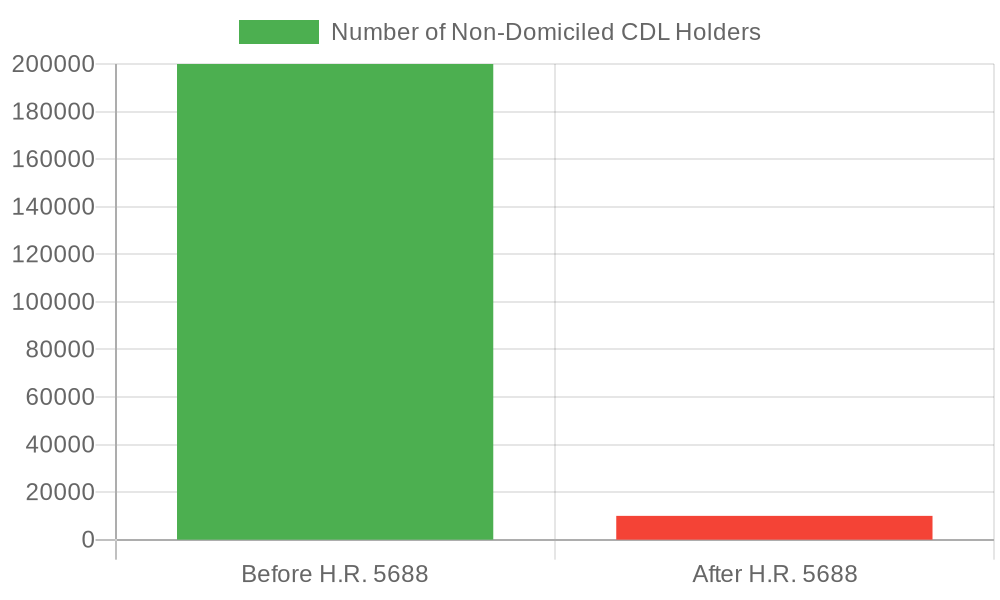
Non-Domiciled CDL Holder Statistics Before and After H.R. 5688
| Period | Number of Non-Domiciled CDL Holders |
|---|---|
| Before H.R. 5688 | 200,000 |
| After H.R. 5688 | < 10,000 |
Sources:
- Federal Motor Carrier Safety Administration (FMCSA) – Non-Domiciled CDL Data
- House Bill H.R. 5688 – Non-Domiciled CDL Integrity Act
- American Association of Motor Vehicle Administrators (AAMVA) – Impact Analysis
Note: Data reflects estimates and projections based on regulatory changes and state-level enforcement.
In conclusion, the recent developments surrounding the Non-Domiciled CDL Integrity Act represent a significant turning point for both foreign nationals and the trucking industry at large. The introduction of HR 5688 has laid out stricter guidelines for the issuance of Commercial Driver’s Licenses to individuals without a domicile in the state of issuance. This legislation is crucial, as it aims to enhance road safety and ensure that only qualified drivers obtain CDLs.
However, these new regulations also present stringent barriers that could substantially limit the access of foreign nationals to non-domiciled CDLs. With the projected decline in adoption rates, it is imperative for stakeholders in the trucking industry to closely monitor how these shifts affect employment practices and workforce diversity. As the industry navigates through these changes, it becomes essential for all involved to advocate for fairness and inclusivity in the application process.
We encourage readers to stay informed about further legislative developments and engage in discussions that shape the future of CDL issuance. By remaining aware of these issues, we can support efforts that advocate for a more equitable system that benefits all members of our communities.
Navigating New Waters: Understanding Legislative Changes in Non-Domiciled CDLs for Foreign Nationals
As these new regulations take effect, the trucking industry is now faced with the challenge of adapting swiftly to a rapidly changing landscape. Employers are left to rethink their hiring models, seeking new ways to attract and retain drivers in an increasingly competitive market.
The disconnect between legislative intent and practical industry operations could fuel advocacy efforts from various stakeholders, including industry associations and immigrant support groups. These entities may push for revisions to the regulations to ensure a balance is struck between safety and workforce diversity.
Moreover, the evolving atmosphere might lead to grassroots movements advocating for clearer pathways to licensure for foreign nationals, allowing them to contribute constructively to the economy while securing their professional ambitions.
Navigating New Waters: Understanding Legislative Changes in Non-Domiciled CDLs for Foreign Nationals
The truck driving industry is undergoing significant changes as legislators introduce new safety requirements, impacting the CDL application process for foreign drivers. The recent Non-Domiciled CDL Integrity Act (H.R. 5688) is a prime example of how regulatory frameworks are shifting to enhance safety and compliance within the trucking sector.
Legislative Overhaul and Regulatory Tightening
The core of these changes is rooted in federal regulations designed to bolster safety within the trucking industry. The Federal Motor Carrier Safety Administration (FMCSA) issued a new rule that significantly tightens the criteria for obtaining non-domiciled CDLs. This can have profound implications on the accessibility of these licenses for foreign drivers, necessitating a deeper understanding of the CDL application process.
Eligibility and Documentation Hurdles
Under the new law, more stringent eligibility criteria mean that only individuals with specific employment-based visas can obtain non-domiciled CDLs. This legislative shift poses serious barriers for many foreign nationals, directly influencing their potential to gain employment in the trucking industry. Document requirements now include possession of a valid foreign passport and proof of immigration status, complicating the application process for foreign drivers.
State Accountability and Federal Oversight
States now face increased scrutiny and responsibility to comply with these new regulations. Consequently, their role in issuing non-domiciled CDLs grows more critical, as improper licensing can lead to severe consequences, affecting both safety and compliance in the trucking industry.
English Language Proficiency Enforcement
The emphasis on English language proficiency is another crucial aspect of the new regulations, specifically designed to ensure that all commercial drivers can communicate effectively. This requirement is essential for the safety of foreign drivers and their ability to navigate U.S. roadways successfully.
User Experiences and Industry Ramifications
These legislative changes significantly impact foreign drivers and the broader trucking industry, resulting in various challenges:
Uncertainty and Job Security for Foreign Drivers
The tightened regulations create a climate of uncertainty for foreign-born drivers, whose ability to renew licenses and secure employment is now heavily scrutinized. Ensuring compliance with legislation is paramount for maintaining their livelihoods.
Industry Discontent and Economic Pressures
The implications for hiring practices within the trucking industry are significant, as companies must recalibrate their recruitment strategies to align with new rules. This restructuring can cause frustration among both foreign and domestic drivers, leading to a tense economic landscape.
Safety Perceptions and Qualification Scrutiny
While the rationale behind these laws is to improve safety in the trucking industry, the increased scrutiny on foreign drivers often does not adequately account for their individual qualifications. This can lead to a generalized perception of risk associated with foreign professionals who already face hurdles in the CDL application process.
Adaptation in Hiring Processes
Due to heightened regulatory standards, trucking companies must adapt their hiring processes to incorporate comprehensive background checks and verification of documentation. This new layer of compliance adds complexity to the recruitment strategy, shaping the future for all drivers involved.
Technology’s Evolving Role
Additionally, the incorporation of advanced technologies in the trucking sector necessitates that all drivers, including foreign nationals, become proficient in using new digital tools. The intersection of technology and traditional driving practices will create new challenges and opportunities in the CDL application process.
In conclusion, the legislative moves surrounding Non-Domiciled CDLs highlight the pressing need for clarity and consistency in the CDL application process for foreign drivers. As trucking companies and foreign nationals navigate these changes, continued dialogue and advocacy will be essential to ensure that the industry remains inclusive and capable of meeting labor demands while maintaining high safety standards.