
Vehicle license fees are an essential component of vehicle ownership, ensuring that all drivers contribute to the maintenance of public roadways. This article explores the fundamental aspects of vehicle license fees, their purpose, and how a variety of factors influence their costs. Readers will gain valuable insights into the specifics of how vehicle type and fuel type impact licensing fees. Furthermore, we will delve into recent trends, specifically focusing on the evolving landscape of fees related to electric vehicles. Understanding these elements is crucial for new drivers, existing vehicle owners, and dealerships alike, ensuring informed decisions and compliance with regulations.
Fiscal Fuel for the Front Lines: Understanding Vehicle License Fees and Their Purpose
Vehicle license fees are not just a line on a bill or a routine annual chore. They are the financial mechanism by which a complex system of roads, safety, and public service is funded and sustained. These fees exist because governments face a predictable challenge: people use roads every day, and every mile traveled imposes wear, tear, and risk. The costs of maintaining and improving the system—pavement that lasts, bridges that bear heavy traffic, clear sightlines at intersections, signals that coordinate flow, and the safety programs that reduce harm—must be financed. License fees, charged to vehicle owners, are the way authorities align the cost of that usage with the people who reap the benefits and bear the burden. In this sense, license fees are closer to a per-mile contribution than to a punitive charge. They acknowledge that the privilege of driving comes with responsibilities to the shared infrastructure and the broader community.
Understanding what goes into these fees helps illuminate why the numbers vary so much from place to place and from vehicle to vehicle. A private sedan, a delivery van, a heavy-duty haul truck, a bus, a motorcycle, and an electric vehicle do not contribute to road upkeep in the same way, even if they share the same road surface. Fees reflect the diverse patterns of use and the differing costs of operating, maintaining, and regulating these machines. In some jurisdictions, the overarching structure is annual; in others, it is biennial. In still others, the framework blends registration charges with weight-based assessments, engine size considerations, fuel type adjustments, and regional priorities. The point is not to punish particular types of vehicles but to ensure that the financing is equitable, predictable, and capable of supporting ongoing improvements along the corridors where people live, work, and travel daily.
At the heart of the system lies a simple principle: the road network is a public good, and its upkeep benefits every traveler, even those who foot the bill through other taxes at different times. License fees, therefore, function as a direct, tangible link between road usage and funding. They fund the agencies charged with road maintenance, traffic safety programs, and the administrative work that keeps licensing and registration orderly. The revenue from fees pays for the staff who issue plates, process renewals, inspect vehicles for safety and compliance, and collect data that informs maintenance schedules and capital investments. When a road wears down faster than expected or a bridge needs strengthening to withstand increasingly heavy loads, the fiscal response is often a recalibration of these fees. The goal is not to extract more money but to align funding with observed wear, projected demand, and the evolving needs of a dynamic transportation system.
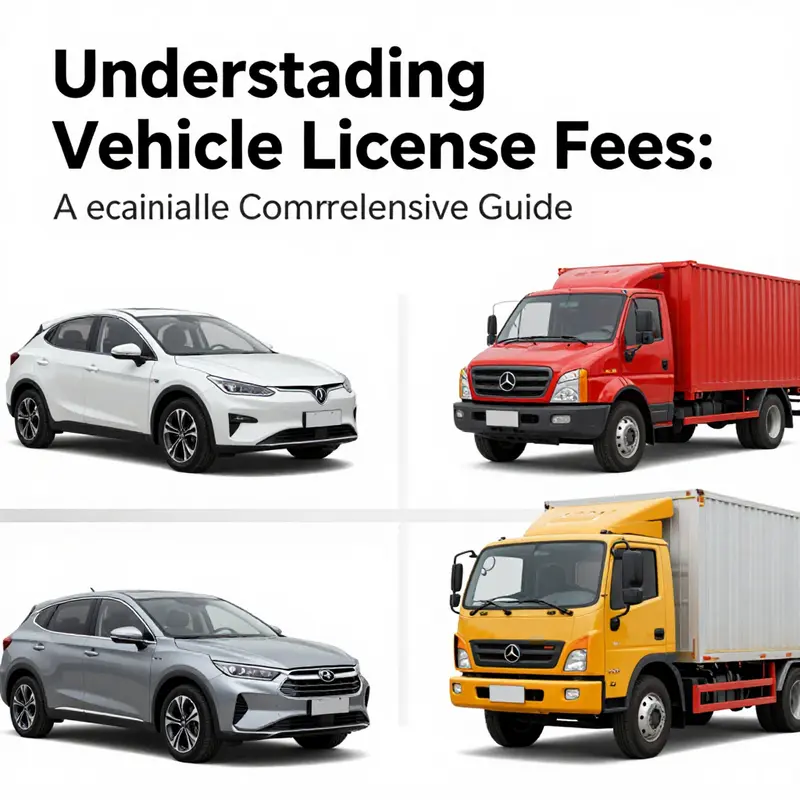
The mechanics of how a fee is calculated are layered and sometimes subtle. They begin with the vehicle’s fundamental characteristics: type, weight, and engine size. A commercial truck, designed to transport goods across long distances, imposes different demands on pavement and on the surrounding infrastructure than a private passenger car. Heavier weights transmit greater stress to the road surface, accelerating wear and requiring more frequent resurfacing or reconstruction. Engine size, which often correlates with power, acceleration, and fuel consumption, also enters the calculation in some jurisdictions as a proxy for usage intensity and emission profiles. Fuel type—gasoline, diesel, electricity, or alternative fuels—can adjust the base rate, reflecting how revenue from fuel taxes may complement or, in some cases, replace vehicle license fees. Electric vehicles, in particular, have disrupted traditional funding models that relied heavily on fuel taxes. Where a car powered by an internal combustion engine pays fuel taxes with every fill-up, an electric vehicle contributes less directly to those road-revenue streams. Jurisdictions have responded with adjusted fee structures, some increasing or introducing EV-specific charges, others phasing in changes gradually to preserve consumer confidence and market stability.
Another core factor is the registration period. A fee set for a one-year cycle differs from a two-year cycle, not only in the total outlay but in the policy signals it sends about long-term road planning. A longer renewal cycle offers predictability to drivers and to the revenue planning of transportation agencies. It can reduce administrative costs and the friction of frequent renewals, while still ensuring that vehicles remain compliant with safety standards and registration requirements. Some regions pair the renewal with safety inspections or emissions testing, reinforcing the link between ongoing vehicle condition and continued access to public roads. The administrative side of fees—the titling process, record-keeping, and compliance monitoring—also absorbs a portion of the cost. These are necessary operations that ensure every registered vehicle is accounted for, that ownership is clear, and that future transfers of title or changes of ownership are logged properly.
The broader purpose of license fees, however, extends beyond the mechanics of collection and the need for steady revenue. They are a tool for safety and standards. The money supports safety programs that reduce traffic collisions, improve pedestrian protection, and promote responsible driving behavior. It makes possible the regular safety checks that detect brakes, tires, and lighting issues before they become hazards on crowded streets or highways. It funds environmental initiatives tied to vehicle standards, helping communities reconcile mobility with air quality and climate goals. Fee income also sustains the regulatory machinery—the offices, personnel, and data systems that keep the licensing ecosystem functioning smoothly. When a new driver applies for a license plate, when a vehicle is due for an annual inspection, or when a registration must be renewed after a period of inactivity, this operational backbone ensures that the process remains reliable and predictable. In short, license fees are not simply a fiscal instrument; they are a social contract designed to maintain road safety, support essential services, and enable responsible, continuous improvement of the transportation system.
Within this framework there are practical nuances that influence the everyday experience of vehicle owners. Some programs offer concessions or reductions under specific conditions. For instance, certain vehicles used exclusively for approved training purposes, such as driving instructor vehicles or heavy-duty instructional prime movers, may qualify for a substantial reduction—up to 50 percent in some cases—provided they are not used for commercial or private transport beyond their designated role. This kind of concession acknowledges the unique public service function of training vehicles and recognizes that the typical wear-and-tear and risk profile for these vehicles differs from that of ordinary private or commercial use. It is a thoughtful adaptation that serves public interest without eroding the broader funding pool.
The variation across jurisdictions is a natural outgrowth of geography, policy priorities, and administrative capacity. In large, diverse countries or federations, for example, state or provincial authorities exercise substantial autonomy over how licenses are structured, how often renewals occur, and which vehicle characteristics drive the fee schedule. In smaller jurisdictions or regions with single regulatory authorities, uniformity can be higher, yet even there, the balance between ensuring sufficient revenue and keeping fees affordable for residents remains a delicate political and practical task. Because the cost drivers can differ—climate-related maintenance needs, population density, road network age, freight corridors, and even political choices about environmental policy—no one-size-fits-all formula exists. Each area calibrates its fee schedule in light of its own data, budget projections, and public consultation.
The practical upshot for the average vehicle owner is twofold. First, the exact amount of the annual or biennial license fee will depend on where you live and what you drive. Second, the broader value proposition of paying that fee goes beyond the moment of renewal. It translates into safer roads, more reliable travel times, and investments that can reduce long-term maintenance costs for everyone. A well-funded licensing system can anticipate needed upgrades—new bridges, resurfaced lanes, smarter traffic management technologies, and programs that promote safer driving habits at critical locations such as school zones and construction work sites. Even the administrative experience—the clarity of renewal notices, the efficiency of the registration process, and the accessibility of licensing offices—depends on the same revenue stream.
To connect these ideas to real-world practice, it helps to consider how a typical jurisdiction like California structures its vehicle license responsibilities. The state’s DMV website offers a comprehensive overview of fees, renewal processes, and vehicle-specific regulations. While every jurisdiction has its own particular mix, the underlying logic resonates across borders: fees are a predictable tool for funding and governance, designed to align individual costs with collective benefits and to support a robust, safe, and well-maintained transportation system. For readers seeking concrete, up-to-date guidance on their own area, the official DMV or licensing authority remains the most reliable resource.
The topic naturally invites questions about how licensing intersects with other regulatory domains. Vehicle inspection requirements, exhaust and emissions standards, and tiered safety programs often cohabit the same policy space as license fees. These linked areas reinforce a coherent approach to road safety and infrastructure stewardship. For readers curious about the variation in inspection rules across jurisdictions, there is a helpful body of information in related discussions and summaries such as US states’ vehicle inspection requirements, which illustrates how inspection regimes interact with licensing cycles and fee structures. This kind of cross-cutting look helps demystify why certain fees feel higher or lower in practice: the difference is not merely about revenue generation but also about how a given place chooses to bundle safety checks, environmental performance, and administrative efficiency with the act of registration.
Finally, it is worth acknowledging that licensing policies are not static. They evolve with shifting transportation realities, such as the broader adoption of electric vehicles, changing fuel tax dynamics, and the emergence of new mobility models. In some regions, this evolution has included explicit updates to how EVs are taxed, sometimes introducing new charges or adjusting existing ones to preserve the public funding that roads and safety programs require. Transitional terms often accompany such changes, helping vehicle owners adjust gradually while authorities collect the data necessary to refine the approach. A prudent reader will keep an eye on official communications and budget documents from their local licensing authority to understand how upcoming renewal cycles may unfold and how the fee schedule might respond to changing vehicle mixes on the road.
In sum, vehicle license fees occupy a central place in the architecture of modern transportation governance. They are grounded in everyday practicality, anchored in safety and infrastructure imperatives, and calibrated to reflect the diverse realities of vehicle types, usage patterns, and regional goals. They ensure that the cost of operating public roads is distributed in a way that acknowledges both utility and responsibility. As vehicles evolve—from traditional internal combustion engines to electric drivetrains and other emerging powertrains—the fee structures will continue to adapt, always with the aim of sustaining a safe, efficient, and resilient road system for current travelers and for future generations. The conversation about these fees, and the policies that shape them, remains an essential part of understanding how societies keep their wheels turning responsibly. For readers who want to explore the topic more deeply, official government resources will provide the clearest picture of current provisions, exemptions, and eligibility criteria across different regions.
External resource for further context: https://www.dpti.vic.gov.au/vehicle-licensing
The Hidden Ledger of Road Use: How Vehicle License Fees Are Shaped by Policy, Vehicle, and Place
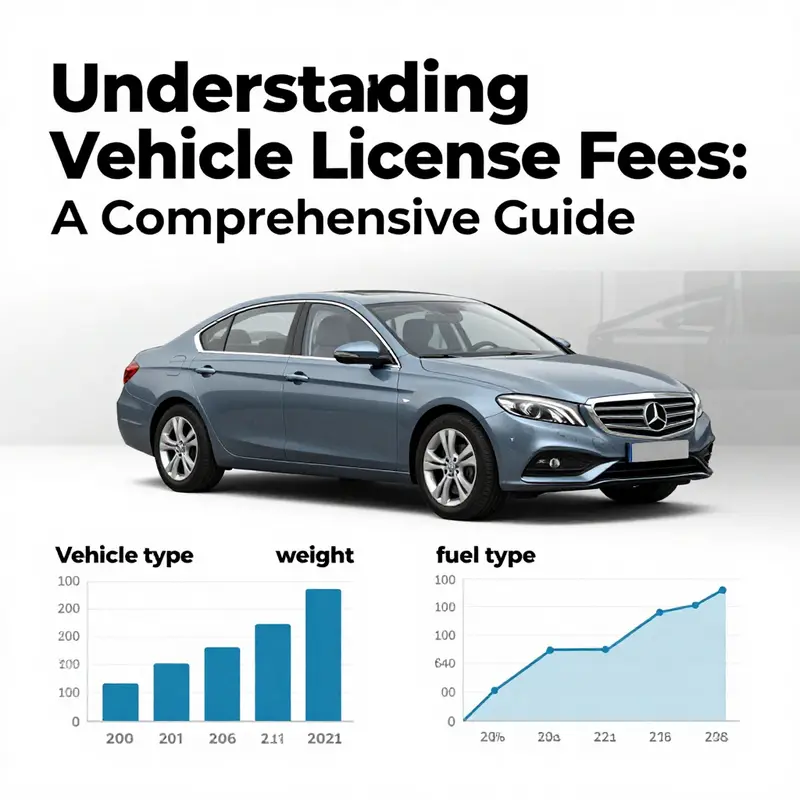
The Hidden Ledger of Road Use begins with a reminder that vehicle license fees are not merely a price tag for the moment you renew your registration. They are a living mechanism, a formal instrument through which governments translate the cost of maintaining public roads into a predictable stream of revenue. The annual or biennial sticker you attach to your car is the visible face of a complex calculation that reflects policy choices, the character of the vehicle, and the jurisdiction where it is registered. Reading that face carefully reveals more than dollars and cents; it reveals how a transportation system asks different users to contribute, and how that contribution aligns with goals like safety, efficiency, environmental protection, and long-term infrastructure resilience.
At the broadest level, the place where a vehicle is registered is the single most influential factor in determining the size of the annual bill. Vehicle registration is not a national, one-size-fits-all process. It is a patchwork of state, provincial, and local rules, each with its own philosophy about how road upkeep should be funded and how to balance fairness with practical revenue needs. Some states rely more heavily on fixed base fees, while others tilt toward ad valorem approaches that tie charges to value. Within a single state, counties or municipalities may layer surcharges on top of the base fee, creating a mosaic where the same vehicle could incur different costs depending on where it is registered or where it is operated.
That variation matters for households, fleets, and individuals who move across borders for work, education, or family. The result is not simply a higher or lower number on the renewal notice; it is a reflection of competing priorities: a desire to keep streets safe and well-maintained, a commitment to encouraging or discouraging certain vehicle types, and a need to adapt to changing technologies and driving patterns. In places with high population density and heavy use of road networks, the fee structure may be designed to capture more revenue, support drainage, bridges, and pavement improvements, and address congestion by investing in smarter traffic management. In other regions with smaller populations or lower traffic volumes, the system might lean toward lower base fees, with surcharges applied selectively or not at all.
Beyond jurisdiction, the vehicle itself is a central piece of the equation. Age matters, but so do vehicle type and size. Newer vehicles, by virtue of their higher market value, often attract higher registration costs, especially in systems that tie a portion of the fee to value or purchase price. Trucks and larger SUVs frequently carry heftier bills than compact cars because their use imposes different wear-and-tear assumptions on road surfaces and because their environmental profiles historically have appeared less favorable in some policy designs. Motorcycles may sit in a separate lane within the pricing structure, reflecting different safety and maintenance considerations. In recent years, many places introduced cutoffs, adjustments, or new categories for electric vehicles. In some jurisdictions, EVs have enjoyed lower fees to encourage adoption and to offset the lack of fuel tax revenue; in others, the fee structure has been recalibrated to preserve revenue streams that historically depended on fuel taxes. The evolving EV landscape serves as a practical test case for how policy-makers think about the alignment between incentives and real-world road costs.
The value-based thread runs through many fee schemes as well. In several states, the registration fee calculation includes an ad valorem component: a tax based on the vehicle’s assessed value, updated periodically to reflect depreciation or rising prices. This approach interlocks the moment of purchase with ongoing annual costs, linking what you paid to own the vehicle with what you pay to keep it running on public roads. The logic is intuitive—more valuable vehicles should contribute more to the upkeep of the system that supports their mobility—but it also introduces sensitivity to market conditions. A car that has appreciated in value, or one that remains in pristine condition, can push the annual bill upward even if its mileage remains modest. Conversely, a vehicle that declines rapidly in value may see a gentler renewal charge. Across states, this ad valorem element can be more or less pronounced, and even when it exists, the exact method and rate are a matter of policy choice.
Sales tax and related taxes sit in a closely linked orbit around the annual license fee, though they occupy different moments in the lifecycle of vehicle ownership. Sales tax is typically paid at the point of purchase, not at renewal, and represents a major component of the overall cost of acquiring a vehicle. Some states supplement this framework with additional annual or semi-annual charges that function as property-like taxes or fees tied to the vehicle’s value. For planners and households, the combined effect of upfront sales tax and ongoing registration costs can influence decisions about what vehicle to buy, how recently to update a fleet, and how much to allocate for maintenance and upgrades over time. In some cases, the total burden is a composite of these elements, with the renewal fee acting as a linchpin that keeps the system funded annually or biennially, while sales tax sweeps on the initial transaction, and local levies fill in gaps created by regional policy choices.
Mileage and emissions tracing adds another layer of nuance. A growing number of jurisdictions explore or implement mileage-based fees and emissions-linked charges as a way to more closely align fees with actual road usage and environmental impact. The basic premise is straightforward: the longer you drive or the more you rely on a polluting vehicle, the more you contribute to keeping the roads in service. For many drivers, this translates into a predictable, if sometimes surprising, adjustment to their annual bill. On the emissions side, vehicles that burn more fuel or generate higher emission outputs historically attract higher charges under some programs, while cleaner or zero-emission technologies may receive relief or exemptions. The policy rationale is clear—shift behavior toward efficiency and sustainability without compromising the essential revenue stream that funds road work—but the outcomes can feel uneven to the people paying the bills, especially in regions where road use patterns and vehicle mixes vary widely within a state.
Another facet of the cost equation is the array of optional services and entitlement features that can accompany license fees. People who crave personalized license plates, expedited processing, or the convenience of title transfers through third-party services may incur additional charges that sit alongside the base registration. These optional components are not merely revenue adders; they reflect the ways in which the licensing system evolves to provide services that drivers value, while also reflecting the administrative costs of delivering those services. They often sit at the periphery of the main calculation, yet they accumulate in total and can influence how a household budgets for a year in which a renewal arrives.
The renewal frequency itself shapes the cadence of costs. Annual renewals distribute the cost more evenly across the calendar but can create the impression of a higher outlay when measured on a month-to-month basis. Biennial renewals compress the payments into fewer occasions, potentially lowering the annual perceived burden but creating larger lump sums at renewal. In practice, states balance administrative convenience, customer convenience, and revenue predictability when choosing renewal intervals. The choice also interacts with the broader policy environment—some jurisdictions adjust base rates or add-on fees in tandem with renewal cycles, and others maintain a stable annual rhythm that aligns with fiscal planning and budgeting cycles. The ultimate effect is that the same vehicle can feel like a different financial proposition depending on where it is registered and when the renewal lands on the calendar.
The policy landscape also includes transitional terms and phased changes that accompany reform. In the context of newer fee structures—and particularly with electric private vehicles, or e-PCs—governments sometimes announce a reform that applies primarily to newly registered vehicles while offering transitional renewal terms for vehicles already on the road. The goal is to avoid a sudden, disruptive spike for existing owners while ensuring that the broader system eventually reflects updated policy aims. These transitional provisions matter for households planning a vehicle purchase or renewal in the near term and for fleets routing their budgets across multiple years. They also illustrate how fiscal design can be adaptive, responding to technological change and evolving transportation needs without sacrificing the reliability of the revenue stream that funds maintenance and modernization.
For anyone trying to forecast or compare costs, the practical path is to consult the official licensing authority for the relevant area. The exact formula, the latest surcharge schedule, and any regional amendments are published by the local department of motor vehicles or its equivalent. In a place like California, for example, the DMV maintains a comprehensive overview of vehicle license fees, renewal processes, and EV-specific regulations. The institution behind these rules is tasked with translating broad transportation policy into concrete costs that vehicle owners will face on renewal. The California example underscores a reality common to many jurisdictions: behind every renewal notice is a careful accounting of policy objectives—maintain roads, fund bridges, support safer streets, and transition toward sustainable mobility—woven into a calculator that is not always transparent to the casual reader but is resolvable to the patient, detail-focused citizen who takes the time to read the fee structure and the accompanying notes.
The social purpose of license fees extends beyond the mechanics of road repair. It embodies a governance bargain: those who benefit from road networks, whether as drivers, pedestrians, or businesses, contribute to the system that makes those networks function. The design challenge for policy-makers is to balance fairness with revenue stability and to respond to new mobility realities without creating excessive volatility for households or fleets. The evolving questions include how to price access to urban corridors that carry high congestion costs, how to adjust for advances in vehicle technology that reduce or shift the tax base, and how to ensure that low-income drivers or rural residents are not disproportionately burdened by a system that must remain financially robust. As this chapter traced through several layers—jurisdictional variation, vehicle characteristics, value-based and usage-based components, tax interactions, and service-related add-ons—it becomes evident that the sticker on the windshield is the product of a wide network of policy decisions. Those decisions reflect a society’s interpretation of fairness, responsibility, and the public good in the age of evolving transportation.
To deepen understanding of how these policy choices play out in practice, readers can explore discussions about state rules and how they shape driver licensing in different jurisdictions. See the discussion on State Rules Impacting Driver Licensing for a sense of how regulations in one jurisdiction can ripple into licensing fees, renewal terms, and resource allocation for road safety programs. When thinking about the full cost picture—from tax-on-purchase to annual renewal to optional services—it helps to step back and recognize that these charges are not arbitrary. They are a mosaic built from historical funding needs, political choices, and the ongoing negotiation between mobility, safety, and the environment.
For readers seeking a broader, nationwide perspective that compares how different states approach registration fees and related taxes, there is a wealth of data compiled by policy researchers. A nationally oriented resource that aggregates state-by-state comparisons can illuminate where costs cluster and why. This broader lens can clarify how a given fee feels in everyday life, depending on where you live and how you use your vehicle. In the spirit of providing accessible, up-to-date context, it is useful to consult a respected overview that collects these variations into a single framework; the National Conference of State Legislatures maintains a comprehensive report on vehicle registration fee comparisons that is regularly updated to reflect policy changes across the states. For a nationwide perspective, consult the NCSL report on vehicle registration fees. https://www.ncsl.org/research/transportation/vehicle-registration-fee-comparisons.aspx
In the end, knowing what drives the cost of license fees helps demystify the renewal notice and empowers readers to ask informed questions of their local authorities. It also highlights a central tension in road finance: the need to fund essential infrastructure now, while gradually aligning charges with evolving vehicle technologies, driving patterns, and environmental goals. The chapter’s exploration—from how different jurisdictions structure fees to how vehicle value, age, and usage feed into the calculation—offers a practical lens for evaluating policy choices and their everyday impact. The renewal sticker becomes not simply a line item but a marker of the public’s shared investment in roads, safety, and progress.
null
null
License as Ledger: Tracing Vehicle Fees and the Road to Funding
Vehicle license fees are more than a single line on a renewal notice. They reflect how a community pays for roads, maintenance, traffic management, and future infrastructure. The exact amount varies by jurisdiction and by vehicle characteristics such as weight, engine size, and fuel type, with electric vehicles often prompting policy adjustments. This chapter explains the logic behind fees, discusses how policymakers balance stable funding with equity, and describes why charges differ across places. It also offers practical steps for readers to find local rules on their licensing authority’s website and to understand how license fees fit into broader transportation policy.
Final thoughts
Understanding vehicle license fees gives drivers the knowledge needed to navigate the complexities of vehicle ownership effectively. The structure of these fees is not only essential for funding road maintenance but also reflects the type of vehicle owned and its environmental impact. By staying informed about changes, especially concerning electric vehicles, drivers can make knowledgeable choices that align with both their financial and environmental considerations.