
Understanding how to locate a vehicle owner by license plate is an essential skill for various stakeholders, including new drivers, existing drivers, vehicle owners, and auto dealerships. With the integration of technology and stringent privacy laws in China, knowing the right steps and proper channels to take can simplify what can otherwise be a complex process. From utilizing government-sanctioned apps to engaging local traffic authorities, each method ensures compliance with legal requirements while offering valuable insights. This article will delve into five pivotal chapters addressing these methods to enlighten readers on the best practices, enabling them to act within the law and respect personal privacy.
Navigating Official Avenues to Identify Vehicle Owners by License Plate: A Practical Guide Through Legal Channels and Government Services
When a vehicle seemingly appears in a location where it should not be, or when an accident or incident centers on a specific license plate, the instinct to locate the owner is natural. Yet in China, as in many jurisdictions, the act of uncovering who sits behind a plate is governed by privacy protection laws, road safety considerations, and formal procedures designed to prevent misuse. This chapter walks through the most legitimate, efficient, and legally sound paths to learn about the owner in a way that preserves individual privacy while addressing the tangible needs of the situation. It is a narrative of balance—between practical resolution of problems on the ground and the protective framework that governs personal data. The goal is not to bypass safeguards but to use them correctly, so that disputes, misunderstandings, and dangerous situations can be resolved without compromising the rights of the people involved or running afoul of the law.
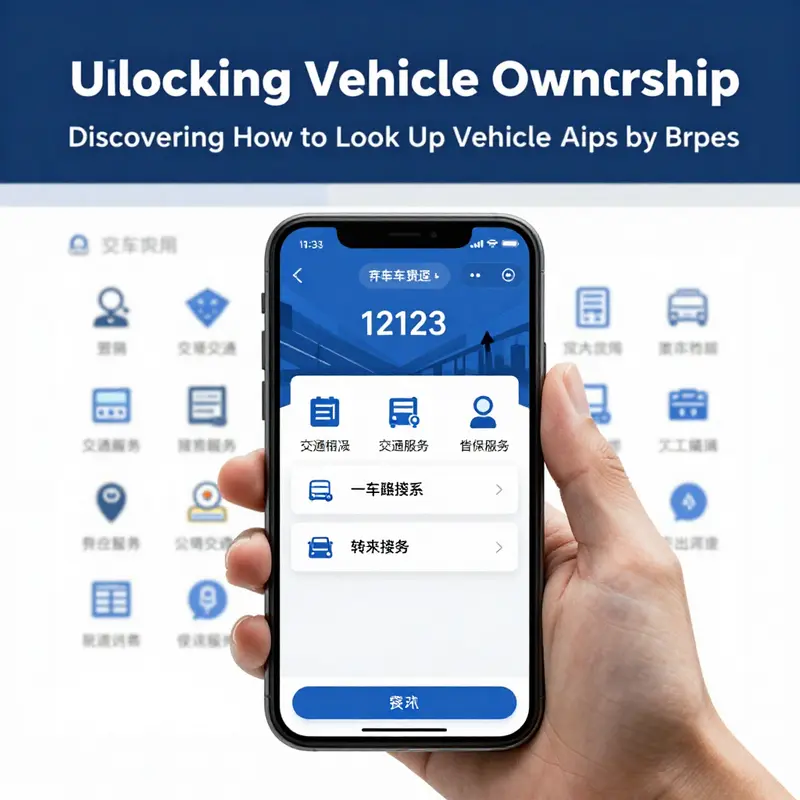
The most direct, non-emergency route available to the general public is the official Traffic Management channel, delivered through the government’s dedicated app. In practice, this path centers on a feature known as the One-Click Car Move, an intentionally streamlined service designed to facilitate communication between parties when a vehicle is obstructing public space or needs to be moved for safety or logistical reasons. The user begins by opening the official Traffic Management platform, and then selects the One-Click Car Move option. The process requires the user to enter the license plate number in full, along with basic contact information. The system then forwards the request to the appropriate local traffic police department for review. If the request is approved, the system triggers a notification process that reaches the registered owner—typically via an SMS or an in-app message—informing them that their car is blocked and needs to be moved. Importantly, this mechanism does not disclose the owner’s full name within the app interface itself. The intended outcome is practical and communicative: the owner is alerted and can respond to arrange movement, thereby resolving the immediate concern without exposing private data. The design reflects a careful calibration between prompt resolution and privacy protection, acknowledging that the notification itself, while not revealing personal identifiers openly in the app, can reasonably point to an owner’s identity through the context of the message and the vehicle’s registration.
For ordinary users, this channel is fast, free, and aligned with the government’s regulatory framework. It serves non-emergency needs and offers a humane, low-friction mechanism to address a common parking or blocking scenario. The approach implicitly teaches a broader lesson about how public institutions exercise data access: information is available in a controlled, purpose-driven manner, with the emphasis on notification and contact rather than on disclosing sensitive personal data within consumer-facing interfaces. The process, however, rests on legitimate purposes—situations that threaten safety, disrupt public order, or involve the legitimate need to move a vehicle. It would not be appropriate for personal curiosity or non-clarified concerns. This boundary keeps the system reliable and just, ensuring that privacy protections remain intact while still delivering practical outcomes when a legitimate need arises. The underlying principle is that the public-user interface is a conduit for action, not a portal to personal data; the ultimate access to deeper identifiers requires formal authorization through other channels.
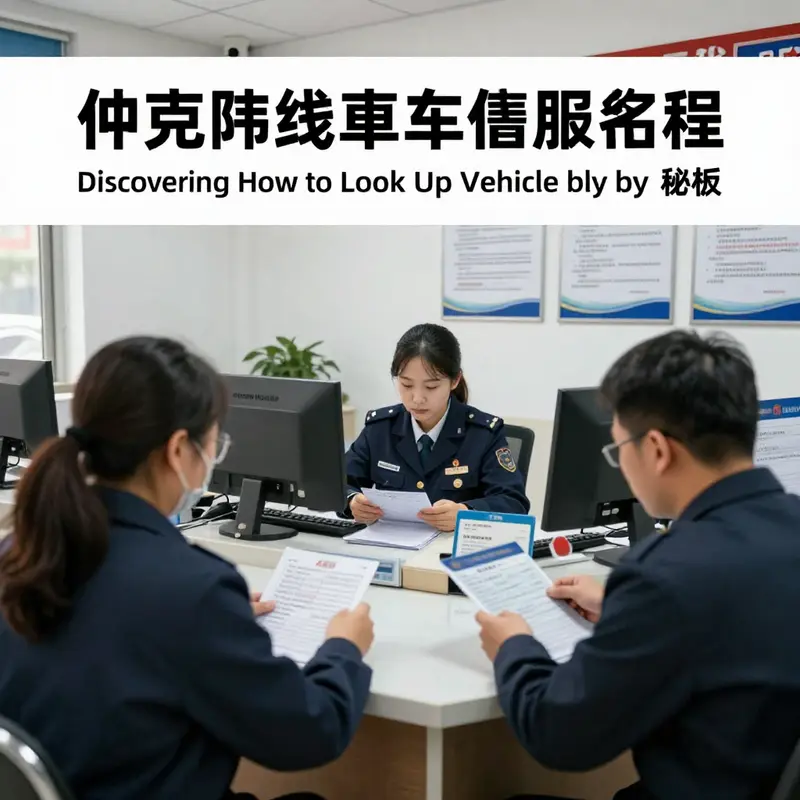
When the circumstance calls for more formal verification or when the situation involves a deeper inquiry beyond a simple move or contact, visiting the local Vehicle Administration Office—the Car Management Office—represents the authoritative route. Here, the interaction is more procedural and requires documentation that demonstrates a legitimate interest in obtaining the owner’s information. The staff at the counter are trained to assess the basis for the inquiry and to ensure that the request aligns with the applicable laws and regulations. To proceed, an applicant presents a valid ID and proof of relationship or a valid interest in the vehicle, such as involvement in an insurance claim, a documented dispute, or a formal transaction. The owner’s name and other ownership details are typically accessible through the national vehicle registration database once the staff verify the legitimacy of the claim. In this context, the information is legally binding and supported by official seals or stamps, ensuring that the data released carries legal weight and can be used in formal proceedings if necessary. The process recognizes the need for precision and accountability; it accepts that certain scenarios—such as property transfers, accident resolutions, or eligibility checks related to a vehicle—warrant access to deeper ownership data under strict controls.
Fee structures and processing times vary, reflecting the office’s workload and the complexity of the inquiry. It is not unusual for the office to require a formal application, the submission of supporting documents, and perhaps a short waiting period while the database is queried. Those who navigate this route should expect a measured pace, balanced by the clarity of the results and the legal robustness of the data provided. The Car Management Office approach embodies a high standard of accuracy and accountability. It is particularly valuable in disputes or transactions where a precise understanding of ownership, vehicle status, and encumbrances—such as mortgage liens or legal seizures—can influence outcomes. In these circumstances, the information obtained through official documentation is not only more reliable but also carries an evidentiary weight that is essential for any subsequent legal or administrative steps. This is why many people turn to this channel when the situation demands a documented trail rather than a transient note or a message from a third party.
Beyond these front-line channels, there are other avenues that may apply in specific contexts. If the situation involves a legitimate insurance claim arising from an incident, the insurance company linked to the vehicle can play a practical role. The insurer has access to claim-related processes that can facilitate contacting the owner for claims purposes, but this route is constrained by proper legal authorization and privacy protections. A claim file may prompt the insurer to reach out to the owner through approved channels, yet the disclosure of personal data remains contingent on established protocols and the client’s consent, where applicable, rather than a broad, open disclosure. The key point here is that information does not flow freely; it moves within a tightly regulated system designed to protect all parties’ privacy while enabling essential administrative and legal actions that support claims resolution.
In parallel with these options, there are recognized legal pathways for situations that go beyond ordinary remedies. When legal disputes arise—whether they involve car theft, civil litigation, or a need to preserve evidence—courts and lawyers can organize more formal discovery mechanisms. A Court Investigation Order, issued through the appropriate judicial process, can authorize access to vehicle registration details from the vehicle administration. In practice, this means that a lawyer can obtain the owner’s information under the protection of the court’s authority, with the order providing a solid legal basis for the release of data. These channels reflect the law’s ultimate commitment to due process and the protection of privacy, ensuring that even serious or complex disputes can be pursued with legitimate authority and a clear paper trail.
The overarching theme across all legitimate methods is straightforward: privacy laws and civil codes place strict limits on who can access personal information and under what circumstances. Unauthorized third-party lookup services, private investigators, or any platform purporting to reveal personal data without proper authorization are not just unreliable; they are illegal and carry significant risk for those who engage with them. The Personal Information Protection Law and the Civil Code together form a legal framework that respects individual privacy, regulates data processing, and delineates the roles of public agencies, insurers, and legal professionals in accessing information. This legal architecture is designed to protect both the vehicle’s owner and the public by ensuring that information is disclosed only when there is a narrowly defined legitimate interest and a formal, auditable process to support the request. When one considers the landscape of options, the lesson becomes clear: for quick, non-sensitive tasks, use the official app; for formal verification or sensitive inquiries, proceed through the Car Management Office or through the appropriate legal channels. Avoid anything that promises to bypass safeguards, because those paths are not just unsafe—they undermine the entire framework that protects every citizen’s data.
It is worth pausing to acknowledge the temptation—and even the frustration—that can accompany a blocking or incident scenario. A fast resolution is appealing, and the instinct to locate the owner is strong. Yet speed must not trump legality. The public system has been designed to align speed with accountability, so that actions taken on the road today do not create privacy violations or legal problems that persist long after the moment of disruption. A practical mindset is to treat the One-Click Car Move as the first tool in the toolbox, especially when the situation involves a non-emergency need to communicate and coordinate. If more is required—such as confirming ownership for a formal claim, initiating a dispute resolution, or ensuring that a vehicle is properly documented within a transactional framework—the Car Management Office becomes the appropriate next step. It is through these channels that the integrity of both the process and the information is preserved, ensuring that the rights of the owner and the safety of the public are protected in tandem.
In keeping with the emphasis on official channels, readers should also be aware of potential misdirections online. There are pages and services that claim to bypass official mechanisms, or to provide owner details without appropriate authorization. Some of these sources may present themselves as quick fixes or sensational shortcuts, and it is here that the cautionary example of misleading materials becomes instructive. For readers who want to see how such claims can falter under scrutiny, consider a cautionary exploration of a piece titled CDL cheating scheme exposed: public safety at risk. This reference, while not a guide for legitimate lookup, serves as an important reminder that shortcuts to sensitive information are often dangerous and likely unlawful. The presence of such material underscores why relying on official channels is not merely prudent but essential for any responsible action. See CDL cheating scheme exposed: public safety at risk for a contextual understanding of how misinformation can circulate around vehicle data and why official procedures exist not only to protect privacy but to prevent harm that could arise from misuse.
To close the loop, the practical path for most people remains clear. Use the Traffic Management 12123 app for non-emergency situations to facilitate communication with the owner or to arrange safe vehicle relocation, while recognizing that the app itself will not disclose the owner’s name. For formal verification, formal claims, or sensitive inquiries, the Vehicle Administration Office stands as the authoritative source, backed by documentation, procedures, and legal authority. The insurance route can assist within the boundaries of proper consent and claims processes, but never as an everyday replacement for legitimate access. When disputes escalate to legal action, the court system—and the possibility of a Court Investigation Order—provides a lawful mechanism to obtain the necessary ownership details. Across these pathways, the unifying principle remains the same: protect privacy, ensure accuracy, and align every action with the legal frameworks that govern personal information. That alignment is not a barrier to resolution; it is the structural safeguard that makes timely, fair, and accountable outcomes possible for drivers, property owners, and the public at large.
For readers seeking broader context on privacy law and regulatory frameworks, an external resource provides a wider perspective on how privacy protections operate within China’s legal ecosystem: https://www.chinalawblog.com/2020/09/privacy-laws-china. This resource offers an external lens on the principles that guide data handling, consent, and legitimate access, complementing the specific procedures described here. In sum, the recommended practice is to rely on official channels first, escalate through formal processes when necessary, and always respect the privacy rights that safeguard each person behind the license plate. The aim is to resolve practical concerns promptly and responsibly, without compromising the legal protections that keep road safety and personal data secure.
Gatekeeping the Plate: How Local Traffic Police Guard Vehicle Owner Information
Access to vehicle owner information tied to a license plate sits at a carefully guarded intersection of public safety, privacy, and practical necessity. In many jurisdictions, including our focal context, the local traffic police are the custodians of the official records that connect a plate to its registered owner. Those records exist to resolve disputes, investigate incidents, and enforce the law. They are not a resource for casual curiosity or private advantage. The principle is simple: information is powerful, and its release is restricted to protect individuals’ privacy while still enabling legitimate remedies for harms or legal claims. This is not a process designed for everyday lookup, but a targeted, justified request adjudicated by trained officers who balance the claimant’s need against the owner’s right to privacy. The resulting interactions, while structured, unfold in a manner that can feel almost procedural to outsiders; still, they rest on an everyday reality: the police hold the keys to a system that can connect a plate to a person, but only under clearly defined conditions and with proper documentation.
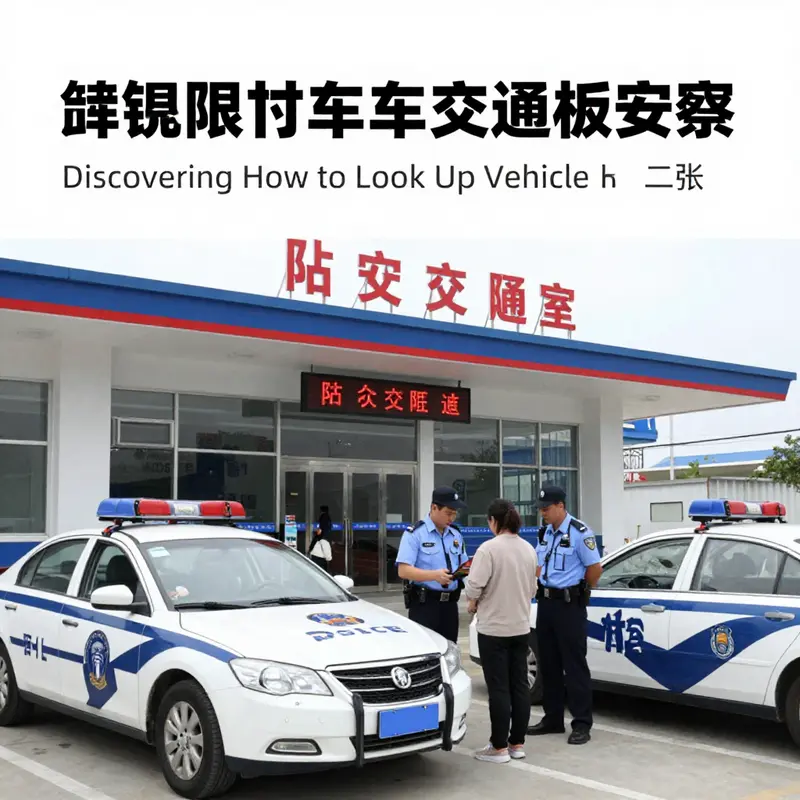
To understand how this mechanism works in practice, imagine stepping into the local traffic police office with a clear, documented reason for requesting owner information. The scene is not a confrontation but a verification of concern—an accident investigation, a serious parking incident, or a dispute that must be resolved through official channels. The officers you meet are not gatekeepers who judge your intentions at a glance; they are practitioners who implement a legal framework. Their goal is to ensure that access to sensitive data remains reserved for those who demonstrate legitimate need, and that every retrieval of personal details is tied to verifiable claims and documented procedures. The psychology of this encounter matters as much as the paperwork. You are asked to present yourself calmly, explain your situation succinctly, and let the process unfold. This approach reduces friction and reinforces the notion that privacy protections are active, not passive.
The procedural path begins with a visit to the appropriate facility—often the Vehicle Management Office or a police station that houses the traffic division. Before you arrive, collect everything that can prove your legitimate interest: a government or official report number from an accident, a police incident number, or a court document that mandates inquiry. Your own identification is indispensable; a simple photo ID is generally required. The license plate number you seek must be stated precisely, with attention to any alphanumeric nuances that could lead to a mismatch. Once you present these materials, you should expect to engage in a straightforward, procedural exchange rather than a casual conversation. The officers will verify your identity, confirm your interest, and check the relevance of the request against formal criteria. Depending on the local jurisdiction, they may run the inquiry through an internal, encrypted system that connects plate data to registered owners. The response you receive—whether a direct contact detail, a forwarding of a message, or a formal denial—will reflect the outcome of this verification.
The specifics of what is released are governed by privacy protections designed to prevent abuse. Even with a legitimate claim, the information you obtain is usually limited to what is necessary for your case. The police are mindful of the owner’s right to privacy and are thus careful not to disclose more information than is essential. In many cases, the police may provide contact channels to the owner rather than a full set of personal data. For example, they might forward your message through official channels or facilitate a direct but mediated contact to ensure that communications remain appropriate and documented. This measured approach reduces the risk of harassment or misuse, which could undermine public trust and invite legal complications for the requester as well as the authorities. In this sense, the local force acts as both a guardian of privacy and a facilitator of justice, navigating the tension between access and protection with a steady hand.
The types of legitimate reasons that typically justify a lookup are specific and grounded in real-world needs. A vehicle involved in a hit-and-run or a traffic incident where the other party fled the scene creates a factual basis for inquiry because locating the owner becomes essential to accountability and resolution. Similarly, a long-standing traffic violation that has implications for safety, or a dispute where the vehicle is central to the claim, can warrant an official inquiry. In these contexts, the request is not personal, but rather a mechanism to restore order, secure restitution where appropriate, or support legal processes already underway. The officers will assess the credibility and severity of the claim, and they may request additional documents to corroborate the need. For instance, if an accident report exists, presenting the report number helps establish a clear connection between the incident and the inquiry. If a court document authorizes inquiry, presenting that document also provides a solid basis for access.
A common concern is the fear that such processes might be exploited for intimidation or harassment. The answer lies in both policy and practice. The law typically requires articulable reasons and verifiable evidence of impact or risk. Without these, the request is unlikely to progress. The system’s integrity depends on the willingness of claimants to articulate their case precisely and on the officers’ diligence in vetting requests. It is not enough to know a plate number; one must demonstrate how access to the owner’s contact information serves a legitimate purpose within a legitimate process. In practice, this means a careful, documented chain of custody for any information obtained, a precise description of why the data is necessary, and a clearly defined outcome that remains within the bounds of the law.
The encounter with the local police is thus not a simple transaction but a legal event that requires preparation, patience, and respect for the rules that protect everyone’s privacy. If the request is denied, it is usually because the criteria for a legitimate inquiry were not satisfied or because the balance between the claimant’s needs and the owner’s privacy could not be ethically and legally justified in the given circumstances. In such cases, the path forward may involve alternative channels that are designed for more routine or non-urgent requests, such as official channels through government platforms or administrative offices that handle vehicle records under stricter criteria. The overarching message is clear: access is restricted, and when it is granted, it is grounded in demonstrated necessity and formal authorization.
For readers who want to explore the broader regulatory landscape that shapes these practices, there is a useful pause to consider how vehicle-related information intersects with other regulatory domains. Topics such as vehicle inspection standards or licensing requirements can influence how records are maintained and accessed in different jurisdictions. To further understand how these regulatory threads weave together, you can refer to related discussions about US states’ vehicle inspection requirements, which illuminate how diverse systems govern accountability, safety, and privacy in transportation. This thread of understanding helps situate the local practice within a wider framework of public safety and regulatory compliance. US States Vehicle Inspection Requirements
If you are considering a course of action that might require owner information, it is worth noting that several parallel avenues exist. In emergencies or situations that involve imminent risk to life or property, agencies may have expedited or alternative procedures to share information with the proper authorities. In non-emergency circumstances, however, the emphasis remains on documented legitimacy. This is not a license to bypass the system or to pressure officials into disclosing data; rather, it is a reminder that the system is designed to protect everyone—road users, vehicle owners, and the public at large—while still offering a means to address legitimate grievances. The careful balance between transparency and privacy is not merely a bureaucratic preference. It is a practical necessity in an era where data can be misused as easily as it can be used to repair harms and resolve disputes.
As you reflect on the process, remember that the key to a successful inquiry lies in preparedness and restraint. The more clearly you articulate your legitimate interest and the more thoroughly you document your case, the smoother the interaction is likely to be. Bring your ID and the supporting documents, present your case succinctly, and allow the officers to complete their verification work. Expect a decision to be contingent on proper legal justification and the availability of data via official channels. Even when a request is approved, the information you receive will likely be subject to limits designed to shield the owner’s privacy while enabling you to pursue the matter at hand. The experience is a vivid reminder that the road from license plate to owner is not a straight line but a carefully managed corridor governed by law, policy, and professional discretion. This is the essence of how local traffic police handle inquiries: a measured, legitimate mechanism that upholds privacy while enabling justice.
External resource: For a broader understanding of privacy protections and how data related to vehicle records is safeguarded in legal frameworks, you can consult independent resources that survey data protection principles and enforcement practices. External resource: https://privacyinternational.org/
null
null
From Insurance Inquiries to Official Channels: The True Path to Vehicle Owner Information via License Plate
Trying to learn who owns a vehicle just from its license plate is a tempting shortcut, but it’s a route blocked by privacy protections and strict data access rules. The belief that an insurance company can instantly reveal an owner’s identity to a curious passerby is a common misconception. In practice, insurers hold policyholder information under careful guard, and sharing private identifiers with the public based on a plate number would violate multiple layers of privacy law and risk real harm. The very idea that a single datum—an alphanumeric plate—could unlock a person’s name, address, or phone number touches on sensitive personal data that most jurisdictions treat as off-limits to ordinary requests. The reality, across many regulatory environments, is that access to ownership details is tightly controlled and reserved for legitimate, documented reasons. In China, for example, privacy protection laws and civil codes frame who may see which data and why. The same principle underpins privacy regimes around the world: data is power, and power comes with accountability. This chapter explores the legitimate paths that exist when there is a real, justified need to identify a vehicle owner, and it explains why attempting to obtain this information through an insurance company on the basis of a license plate alone is not a viable or lawful option.
The most direct lesson here is simple: do not treat insurance providers as a public directory. They are intermediaries that manage risk, coverage, and claims for policyholders. Personal data linked to a vehicle—names, addresses, contact details, and precise ownership information—are protected as private information. Access to that data is typically restricted to the owner themselves, or to authorized entities such as law enforcement or courts, and only in the context of a clearly defined purpose. When you consider who can legally access ownership data, the frame shifts from “Who can I call to get this?” to “What official process must I follow to obtain this information lawfully, and what justifications are accepted by the authorities?” In other words, the focus moves from informal inquiries to formal procedures that balance individual privacy with public interest and safety.
One of the most reliable and legitimate channels is built into an official government platform designed for vehicle management and public-safety needs. In China, the Traffic Management 12123 app stands out as a primary tool for non-emergency requests related to vehicle relocation and related concerns. The app is an official interface linked to the Ministry of Public Security, and its design reflects a careful consideration of privacy and legitimate access. Within this system, users can locate an option often described as the “One-Click Vehicle Relocation” service, or what users call a quick car move feature. By entering a license plate number along with your contact information, you initiate a process that routes your request to the local traffic police division. If the request is deemed legitimate and justified—perhaps a case involving a blocking vehicle, a safety risk, or a formal dispute—the authorities may respond through the platform with pertinent next steps. In approved cases, the app can facilitate a direct line of communication to the vehicle owner, typically via a phone call or text message, enabling the involved parties to resolve the matter without exposing personal data to the wrong audience. This pathway is fast, free, and fully aligned with regulatory expectations, because it centers on a formal, verified process rather than informal outreach or speculative inquiries. The principle here is transparency and traceability: you initiate a request, the request is evaluated by trained officials, and any disclosure of contact information occurs under supervision and with a justified purpose. The operational reality is that the system prioritizes safety and compliance, not convenience for those who want to bypass established channels; it’s a reminder that privacy protections are designed to be efficient in cases of genuine need rather than a barrier to everyday friction.
Another legitimate route is to engage directly with local traffic authorities when there is a clear, documented justification to access ownership details. A traffic incident, a hazard posed by a vehicle, or a legitimate safety concern can serve as the basis for an inquiry. In such scenarios, you would present valid identification, proof of your relationship or legitimate interest (for example, as an involved party in an accident, an insurer with a legitimate claim, or a person with a civil or criminal matter that requires resolution), and the specifics of the case. The officers and investigators may then verify your request and, if justified, access the vehicle registration database to retrieve the owner’s contact information in a manner consistent with legal procedures. It is crucial to emphasize that this channel is not for casual curiosity. The bar is intentionally high, reflecting the sensitive nature of the data and the potential consequences of misusing it. The process is designed to deter misuse while ensuring that those with a legitimate reason can obtain necessary information in a controlled, auditable manner. This is a key distinction from any approach that relies on guessing or pressuring a private entity to disclose details without proper authorization.
Sometimes the most appropriate path involves the vehicle administration office—often labeled as the Car Management Office or similar in various jurisdictions. Here, the request is formalized with paperwork, and you must establish your relationship or legitimate interest in the vehicle. You would typically bring valid identification and documentation that demonstrates your stake in the matter, such as an insurance claim, accident report, or other official records. There may be a modest processing fee and a longer turnaround time, but the result is high accuracy with a clear chain of custody that stands up to scrutiny. The emphasis in this route is reliability and legal compliance: the office operates within a framework that preserves privacy while ensuring that those who need to locate an owner can do so when justified by the facts of the case. In practice, these procedures—whether via the government app, police, or vehicle administration office—complement one another. They create a spectrum of official avenues that respond to different circumstances, all anchored in legitimate purpose and safeguarded data handling.
There are circumstances when the owner’s information becomes part of an insurance or claims process. Insurance companies themselves do hold the data, but they do not disclose personal identifiers to third parties solely on the basis of a license plate. They may, however, assist in facilitating contact when there is a valid claim and proper authorization. This assistance is not a promise of personal contact details; rather, it is the channeling of information through appropriate procedures to support a legitimate insurance claim. The emphasis is squarely on protecting the owner’s privacy while enabling the resolution of the claim. The insurer may coordinate with the owner to address the claim, arrange repairs, or provide necessary communication channels, but they will not release private identity data to a person who cannot demonstrate an authorized interest. It is essential to recognize this boundary because it preserves trust in the system and respects the rights of the vehicle owner. The law, and the ethical obligations that accompany it, thus create a careful balance: information is shared not to satisfy a simple curiosity but to support legitimate, documented needs—such as claims handling, safety concerns, or legal proceedings.
When a straightforward path through official channels is insufficient or unavailable, there remains a legal route through the courts. In disputes involving vehicles, such as civil litigation, theft, or complex ownership matters, a Court Investigation Order can be sought. A lawyer can petition the court, demonstrating a clear legal basis for the request and presenting evidence that supports the necessity of obtaining the vehicle registration details. If the court grants the order, licensed authorities can disclose the necessary information to the appropriate parties through formal processes. This is a reminder that the rule of law ultimately governs access to sensitive data, and courts act as the final arbiter when others cannot resolve a matter within the bounds of standard procedures.
In considering these options, it is important to heed the universal warning embedded in privacy and data protection discourse: using unauthorized third-party websites, private investigators, or unvetted services to obtain owner information is illegal in many jurisdictions and often dangerous. These approaches can expose you to fraud, data theft, or other forms of harm, and they undermine the trust that makes official channels work. The Personal Information Protection Law, Civil Code, and corresponding frameworks shape what is permissible and what constitutes misuse. They also impose penalties for violations and emphasize responsible handling of personal data. The core message is simple: always start with legitimate, verifiable authorities and documented justifications. If your purpose is aligned with safety, legal obligations, or rightful claims, you will find that the official pathways are designed to support you without compromising anyone’s privacy.
For readers seeking a broader perspective on how licensing rules interact with data access and ownership questions, a related discussion on how state rules shape driver licensing provides useful context. It examines how regulatory environments balance public safety, individual rights, and administrative practicality, which helps clarify why certain information remains guarded. You can explore that broader context through the following resource: state rules impact on driver licensing.
In reflecting on the practical realities of attempting to obtain owner information from a license plate, the takeaways are clear. Insurance providers are not open data sources for personal details based solely on a plate. Official avenues—through the Traffic Management 12123 app, police departments, vehicle administration offices, or, when warranted, through insurance cooperation or the courts—offer legitimate, accountable mechanisms for accessing information. These channels protect privacy while serving legitimate interests, such as resolving accidents, addressing safety concerns, and supporting lawful claims. The emphasis is not on seizing information at will but on stewarding it responsibly within a framework that preserves trust in the system as a whole. As such, the road to finding a vehicle owner, when needed, runs through documented procedures, verified purposes, and formal authorizations rather than informal requests or private inquiries. External resources on privacy frameworks further illuminate the principles at play and reinforce why these protections exist—protections that enable the public to pursue safety and justice without exposing private individuals to unnecessary risk.
External resource: https://gdpr.eu/what-is-gdpr/
Tracing Ownership by Plate in Civil Disputes: A Legal Framework for Vehicle Record Access
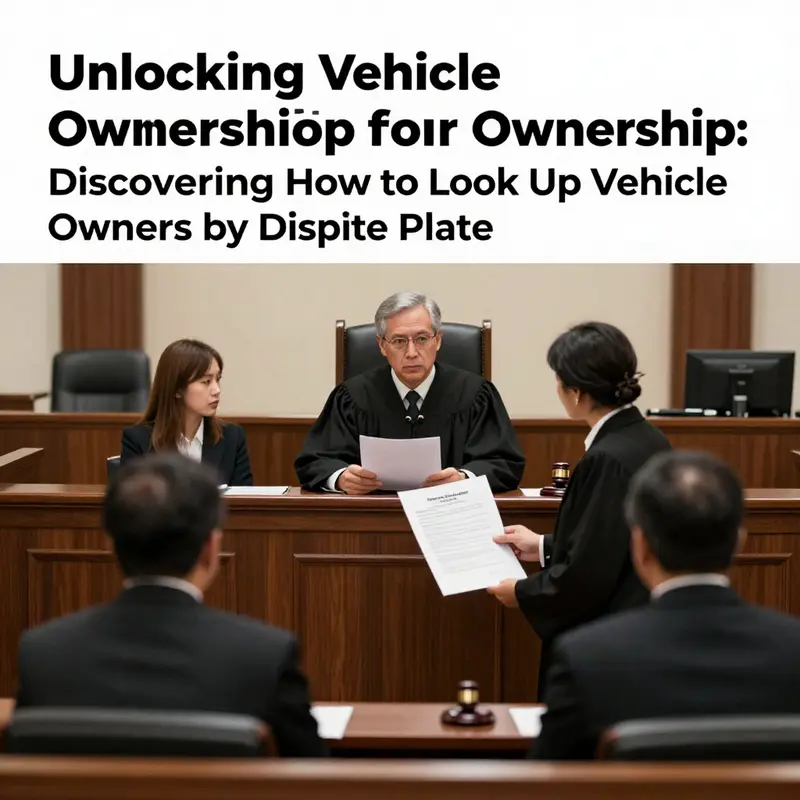
When a dispute turns on who owns or uses a particular vehicle, the license plate becomes more than a simple identifier; it becomes a linchpin in a process designed to protect privacy while ensuring due process. In such cases, the goal is not to obtain raw personal data on a whim but to access ownership information through formal, lawful channels that safeguard both sides’ rights. The laws governing civil procedure in these circumstances are careful about how and why a vehicle’s ownership details can be disclosed. They emphasize that access to sensitive data must rest on legitimate legal interests, be tethered to concrete disputes, and be executed through authorities empowered to balance efficiency with privacy.
In dispute scenarios—whether a civil claim, a debt-collection action, or a property-right contest—the starting point is often a judge, a lawyer, and a carefully constructed record. The opposing party may have a stake in proving ownership, establishing accountability for damages, or clarifying liability. Rather than inviting private inquiry into private lives, the system channels requests through formal mechanisms that require justification, evidence, and procedural discipline. A party seeking ownership information must recognize that the objective is not casual curiosity but the lawful gathering of admissible evidence within a court’s supervisory framework. This distinction is not merely bureaucratic; it shapes every step of the process from filing to data delivery and, ultimately, to the integrity of the adjudicatory result.
The most common lawful route in dispute contexts begins with a court-initiated inquiry. A party involved in a dispute can file a formal application with the court, requesting access to vehicle ownership information tied to a particular license plate. The court then evaluates the request under applicable civil procedure rules. If the court finds the applicant has a legitimate interest and the request is proportional to the dispute, it may issue a court investigation order. This directive is not an open-ended search; it is a narrowly tailored instrument that authorizes a lawyer or another authorized agent to retrieve the registered owner’s details using the license plate number from the relevant vehicle administration office or the police department responsible for traffic records. Throughout this process, due process remains central: the court’s decision is reasoned, the scope is bounded, and the data provided is confined to what is necessary for the case at hand. The emphasis is on clarity and control, avoiding broad disclosures that could sweep personal data into the dispute beyond what is essential for the claim.
Within this framework, the procedural logic rests on specific legal anchors. One such anchor is the Civil Procedure Law, which enshrines mechanisms for evidence gathering in dispute resolution. In the formal petition to the court, it is common to cite the appropriate articles that authorize the court to direct access to records held by vehicle management authorities or public security bodies. When a court issues a court investigation order, it operates within a system designed to ensure that the information retrieved is both accurate and properly safeguarded. The ordering document typically specifies the license plate number, the scope of data to be retrieved, the parties who may receive it, and the permissible use of the information. This careful calibration helps prevent misuse and reinforces that privacy protections are not abstractions but enforceable standards that accompany every data transfer.
Another pillar of legitimate access in dispute contexts is a specialized judicial network, a centralized enforcement or records system used by courts to streamline the retrieval of vehicle-related data. Although the details may vary in practice, the essence is a direct channel that courts tap to confirm ownership, vehicle type, and status indicators such as liens or seizures. This centralized mechanism is designed to minimize public exposure of private information while delivering timely, authoritative results to a court proceeding. By leveraging such a system, judges can rapidly determine which vehicle belongs to an opposing party or verify the ownership chain without requiring a public release of personal identifiers. The speed and reliability of this approach are counterbalanced by robust safeguards: the data is accessed only under court authorization, the scope is tightly circumscribed, and the information is used strictly within the context of the litigation at hand. In many respects, this judicial technology serves as the bridge between efficient dispute resolution and the protection of individual privacy, ensuring that procedural expediency does not erode fundamental rights.
A third pathway, complementing the court-ordered route, arises when litigation is already underway and the parties seek judicial assistance during the pre-trial phase. In appropriate circumstances, a court may consider a request that prompts an official inquiry into vehicle ownership based on clues presented by the parties. For instance, if a plaintiff suspects that the opposing party owns a vehicle implicated in the dispute, the court may authorize a targeted inquiry to corroborate ownership through the vehicle management office. The pre-trial mechanism is designed to avoid delays later in the case by clarifying key facts early on. Importantly, these pre-trial investigations are constrained by the same privacy protections and evidentiary standards that govern post-filing inquiries. The process requires careful documentation, a clear link to the issues in dispute, and a reasonable likelihood that the information will affect the outcome of the case. In practice, the success of such requests hinges on the presentation of credible clues and the court’s assessment of proportionality and necessity.
It is essential to underscore a critical boundary that governs all these avenues: private individuals cannot legally use unapproved third-party apps, private investigators, or informal channels to extract another person’s vehicle ownership information. The Personal Information Protection Law and related privacy statutes govern these domains with strict prohibitions and potential penalties for illicit access. This boundary matters not only to protect the named owner but also to preserve the integrity of civil proceedings. When a party bypasses official channels, the data obtained through such means is typically deemed inadmissible, and the responsible individual may face administrative penalties or even criminal liability. The courts, meanwhile, are charged with upholding these standards, which is why the formal avenues described—court orders, centralized judicial networks, and authorized inquiries—exist in the first place. They provide a predictable, auditable route for obtaining essential information without compromising broader privacy protections.
For practitioners, the practical implications of these procedures are as important as their doctrinal foundations. A lawyer entering a dispute involving ownership questions must craft a carefully supported motion or petition, tying the request to concrete issues in the case. The motion should articulate the factual basis for ownership concerns, cite the relevant procedural authority, and demonstrate why access to ownership data will materially affect the dispute’s resolution. Documentation matters: the defense or plaintiff should compile evidence such as accident reports, parking or scene photographs, or other relevant records that establish a credible nexus between the license plate in question and the factual dispute. The court will scrutinize this nexus with an eye toward proportionality, ensuring that the information sought is necessary and not an overreach. In this setting, the role of counsel is crucial: a skilled practitioner can translate the factual scenario into a legally grounded request that stands up to judicial scrutiny, reduces the risk of overbroad data exposure, and preserves privacy protections for all parties.
Once a court investigation order is granted, the mechanics of data retrieval follow a disciplined path. The authorized agent—often a lawyer or a court-appointed representative—will contact the appropriate vehicle administration office or law enforcement body and request the specific ownership details associated with the license plate. The data provided typically covers ownership names, vehicle registration details, and may include indicators such as the vehicle’s status (for example, whether it is currently registered, under lien, or seized). The release of information is typically restricted to the court, the attorney of record, and, in some systems, the client for whom the information was sought. The exchange is conducted under formal safeguards designed to prevent leakage, misuse, or secondary dissemination. In practice, this means that the data are transmitted through secure channels, stored only for the duration of the case, and subject to protective orders as needed to prevent unwarranted exposure.
As the dispute proceeds, the information gleaned from ownership inquiries can become a pivotal piece of the evidentiary puzzle. It can corroborate or challenge witness testimony, help locate the other party for service or discovery, and establish a chain of ownership that impacts liability determinations. Yet it remains only one element among many, and its weight must be evaluated within the broader evidentiary framework of civil procedure. Courts will consider how ownership information supports or undermines the claim, how it interfaces with other discovery rules, and whether any additional corroborating evidence is available. This integrative approach helps ensure that the resolution rests on a robust evidentiary base rather than on a single data point. The philosophical underpinning is clear: access to vehicle ownership data is a powerful tool, but it is appropriately constrained, transparent in its use, and bound by the due-process rights of all parties.
For readers seeking a broader, policy-informed context on the regulatory environment governing access to driver and vehicle data, consider the broader rules that shape such access in varied jurisdictions. See also discussions on how state rules influence driver licensing and related data access, which illuminate the balancing act between public interest and individual privacy. state rules impact on driver licensing.
Ultimately, the pathways described here are designed to ensure that disputes over ownership are resolved with accuracy and fairness while safeguarding privacy. They reflect a judicial ecosystem in which data are not freely available but are providentially accessible through formal, accountable mechanisms. The court’s authority to issue targeted investigations, coupled with the transparency of the central enforcement or records network, offers a reliable route to resolution that respects both the claimant’s needs and the owner’s rights. This framework supports the integrity of civil proceedings by ensuring that crucial factual questions around ownership can be tested, verified, and documented within a structured legal process.
For those seeking authoritative procedural guidance and the forms associated with civil enforcement and evidence collection, the official site of the Supreme People’s Court provides detailed resources and rules that govern vehicle inquiries within litigation. This guidance reinforces the principle that access to ownership data is a regulated, court-supervised activity, designed to advance justice while protecting personal information. External resources at the court’s site clarify how investigative orders are issued, how data is handled, and what remedies exist if the process is misused. External resource: https://www.court.gov.cn
Final thoughts
By understanding the legitimate channels to look up vehicle owners by license plate, all stakeholders can ensure compliance with legal guidelines while respecting individual privacy. Utilizing the Traffic Management 12123 app provides a straightforward approach, while local traffic authorities and vehicle administration offices offer structured support. Additionally, engaging with insurance companies and legal avenues when necessary ensures thorough resolution of ownership inquiries. Through this article, readers are equipped with the critical insights required to navigate vehicle ownership searches confidently and appropriately.