
As a new driver or even an existing vehicle owner, understanding the intricacies of vehicle registration is crucial for legal compliance and safe driving. A driver’s license plays a significant role in this process, serving not only as proof of a driver’s ability to operate a vehicle but also as a necessary document for registering a vehicle in many jurisdictions. Without a valid driver’s license, individuals may find it challenging to navigate the complexities of vehicle registration, which is designed to ensure that all vehicles on the road are identifiable and in compliance with safety standards. Moreover, for new drivers, obtaining a driver’s license marks a critical milestone that opens the door to vehicle ownership. In contrast, existing drivers must stay informed about regulations to avoid penalties and maintain their driving privileges. Whether you’re a learner eager to hit the road or a seasoned driver needing a refresher, grasping the importance of the driver’s license within the vehicle registration process is vital to your freedom and safety on the road. Discover state rules that impact driver licensing and learn about vehicle inspection requirements in the U.S. to ensure you’re well-prepared for your licensing journey.

Legal Requirements for Registering a Vehicle
When deciding to register a vehicle, it’s crucial to understand the varying legal requirements across different states in the USA. Here are the main aspects that new drivers, current vehicle owners, and auto dealerships should consider:
Role of a Driver’s License in Vehicle Registration
While many states do require a valid driver’s license to complete the registration of a vehicle, it is not a universal requirement. Here are key points to consider:
-
State Variability: Different states have distinct rules regarding whether a driver’s license is necessary for vehicle registration. For instance, in Oklahoma, individuals can register a vehicle without possessing a driver’s license, thus separating the processes of vehicle registration and driver’s licensing. Learn more about state rules.
-
Exceptions: Some states like Massachusetts allow individuals to lease, purchase, and register a vehicle without a driver’s license, though a license is required to operate the vehicle legally.
General Requirements for Vehicle Registration
Across most states, the following documents and information are generally required to register a vehicle:
- Proof of Identity: This can usually be a driver’s license, passport, or any other government-issued ID.
- Vehicle Title: A completed title application form that verifies ownership of the vehicle.
- Proof of Insurance: Many states require proof of insurance coverage before allowing any registration.
- Vehicle Inspection: Certain states mandate a vehicle inspection, particularly for safety and emissions compliance. For more detailed information about vehicle inspection requirements, check this link.
- Payment of Fees: Registration typically requires the payment of various fees, which vary from state to state.
In summary, registering a vehicle demands specific documents and adherence to state regulations. While a driver’s license is commonly required, exceptions exist, and understanding your specific state’s requirements is vital for compliance and legal operation.
Comparison of States’ Requirements for Driver’s Licenses and Vehicle Registration
Here’s a quick reference table comparing different states regarding the necessity of a driver’s license for vehicle registration. This table includes states that require a driver’s license and those that do not, providing clarity for new drivers, learners, and vehicle owners alike.
| State | Requires Driver’s License for Registration | Notes |
|---|---|---|
| Maryland | No | Vehicle can be registered without a valid driver’s license. |
| Texas | Yes | Valid driver’s license is required for vehicle registration. |
| Florida | Yes | Must present a valid driver’s license for vehicle registration. |
| Washington | Yes | A valid driver’s license is required for vehicle registration. |
| California | Yes | Driver’s license required for vehicle registration. |
| New York | Yes | Vehicle registration requires a valid driver’s license. |
| Ohio | Yes | In Ohio, a driver’s license is necessary for vehicle registration. |
| Maine | Yes | A valid driver’s license is required to register a vehicle. |
| Virginia | No | Registration may be completed without a driver’s license under certain conditions. |
For more detailed state rules regarding driver licensing, you can learn more about state rules.
Additionally, visual representation can also shed light on the proportion of states that do require a driver’s license for vehicle registration. Below is a pie chart illustrating this distribution:

You can also find guidance on vehicle inspection requirements across states in our vehicle inspection requirements guide.
Exceptions to Driver’s License Requirements
While possessing a valid driver’s license is generally seen as a prerequisite for registering a vehicle, there are notable exceptions that allow individuals to complete the registration process without one. Below are key scenarios and examples where this might apply:
-
Military Personnel: Many states provide exemptions for active-duty military members. They may not possess a local driver’s license but can still register a vehicle, provided they meet specific documentation requirements. For instance, Washington State allows military personnel to register a vehicle without a driver’s license. More on this can be found here.
-
Business Registrations: Businesses can often register vehicles under their name without requiring a driver’s license. This is common for commercial vehicles used for business purposes, where the business entity assumes the registration responsibility.
-
Non-Drivers: Individuals who choose not to obtain a driver’s license, such as certain non-drivers or people with disabilities, may still register a vehicle. However, they must provide other forms of identification and proof of vehicle ownership, typically a title and a bill of sale.
-
Residents Registering Vehicles in Different States: Some states allow residents to register vehicles without a local driver’s license, especially if their primary identification is from a different state. This is common in circumstances where individuals are temporarily residing in another state. Educational institutions or employers often provide the necessary documentation.
While these exceptions exist, it’s essential to check specific state regulations as they can vary significantly. For comprehensive information about state rules impacting driver licensing, visit this page.
Based on the search conducted, the statistics regarding vehicle registration compliance rates show varying numbers across different states. While there isn’t a comprehensive national statistics set readily available, several reports provide insights into the importance and status of vehicle registration compliance.
For instance, California DMV reported a total of 7,992,943 vehicle registration renewals for the fiscal year 2022-2023, indicating a robust effort towards compliance among vehicle owners in the state. Understanding such statistics is crucial for several reasons:
- Public Safety: High registration compliance rates contribute to ensuring that vehicles on the road adhere to safety regulations, ultimately protecting the public.
- State Revenue: Vehicle registration fees form a significant portion of state revenues. Thus, tracking compliance helps in budget planning and resource allocation.
- Regulatory Compliance: Compliance statistics assist in assessing the effectiveness of state initiatives and policies aimed at improving vehicle registration processes.
Overall, understanding vehicle registration compliance rates helps both regulatory bodies and vehicle owners maintain a clear pathway towards ensuring safety and legal adherence in automotive operation. For more details on how state regulations impact driver licensing, you can learn more about the topic. Additionally, it’s important to recognize the correlation of vehicle registration with documentation and licensing requirements. To explore more about inspection impact, visit this page.
Understanding the intricate relationship between a driver’s license and vehicle registration is essential for all drivers, particularly for newcomers to the roads. A valid driver’s license is often a prerequisite for registering a vehicle, reflecting the regulatory framework that governs these crucial aspects of vehicle ownership. This connection underlines the importance of maintaining compliance with state and national motor vehicle laws. For instance, many jurisdictions require proof of a valid driver’s license when registering a vehicle, ensuring that only qualified individuals are allowed to operate vehicles legally.
Moreover, both processes-obtaining a driver’s license and registering a vehicle-are inherently linked to ensuring safety on the roads. New drivers and vehicle owners must be aware of these requirements to avoid legal pitfalls and ensure their compliance. Resources such as the Driver and Vehicle Licensing Agency provide critical information that aids in understanding these processes. Familiarity with these requirements equips new drivers with the knowledge needed to navigate the responsibilities of vehicle ownership effectively, reinforcing the importance of having both valid licensing and registration.
By grasping these basics, not only can drivers foster their own safety, but they can also contribute to a culture of responsibility on the road.
“A driver’s license is crucial for legally operating a vehicle. Driving without a license is a serious offense across all states, thereby underscoring the license’s role in confirming identity and legal permission to drive.”
- Driving-Tests.org, source
FAQ Section: Common Questions About Vehicle Registration and Driver’s Licenses
1. Is a driver’s license required to register a vehicle?
- Yes, in most states in the U.S., a valid driver’s license is required to register a vehicle. This ensures that all drivers are legally capable of operating the vehicle they own. However, some states may allow individuals without a driver’s license to register a vehicle under certain conditions.
2. What documents do I need to register my vehicle?
- Typically, you’ll need the following documents:
- Proof of identity (often a driver’s license or state ID).
- Vehicle title (if applicable).
- Proof of insurance (most states require insurance before registration).
- Payment for registration fees (varies by state).
- Learn more about state rules.
3. How long does it take to process vehicle registration?
- Processing times can vary significantly by state and the method of registration (online vs. in-person). Generally, it can take anywhere from a few minutes to several weeks.
4. What is the difference between registering a vehicle and obtaining a title?
- Registration is the process of officially recording your vehicle with the state, while a title proves ownership. Registration is typically renewed annually, whereas the title remains with the owner unless sold or transferred.
5. Can I drive my vehicle while waiting for it to be registered?
- Generally, you cannot legally drive an unregistered vehicle. Some states issue temporary permits that allow you to drive while waiting for the official registration.
For detailed state-specific information, you can access USAGov’s motor vehicle services.
Driver’s License Requirements by State
Understanding whether a driver’s license is required to register a vehicle is crucial for new drivers, existing drivers, and vehicle owners alike. The following chart provides a visual representation of the frequency of different states requiring a driver’s license for vehicle registration:
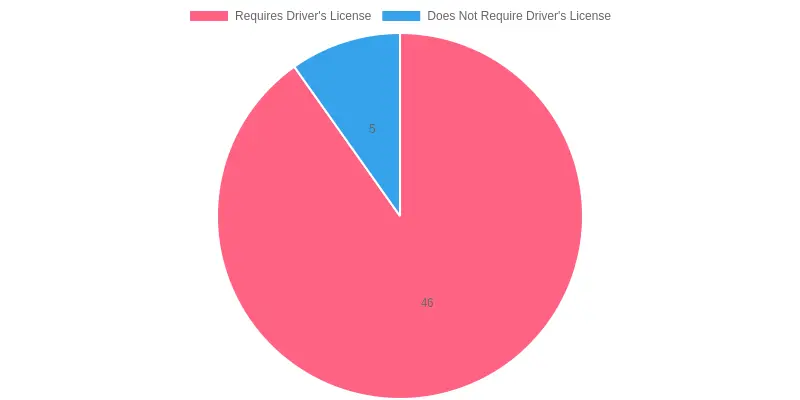
Summary:
- 46 states require a driver’s license for vehicle registration.
- 5 states do not require a driver’s license for vehicle registration.
For more detailed state-specific information, you can visit state motor vehicle services.