
For new and existing drivers alike, understanding the regulations surrounding vehicle registration and driver’s licenses is essential. Questions often arise about whether the names and addresses on these two important documents need to match. This article examines the critical factors involved in ensuring both documents comply with state regulations. We will delve into the implications of name alignment between your vehicle registration and driver’s license, address requirements, and the specific rules that vary from state to state. By the end, you’ll have a clear understanding of how to navigate these requirements effectively.
Names in Sync, Paper Trails in Harmony: Navigating Vehicle Registration and Driver’s License Alignment
The most practical way to frame the issue begins with the distinction between name and ownership. The name that appears on your registration should reflect the legal name of the registered owner. If you are the owner of the vehicle, that means your full legal name should appear on the registration as it appears on your driver’s license. If you have undergone a legal name change—through marriage, divorce, court order, or another mechanism—you are obligated to update records so that the DMV sees a consistent name across documents. When there is a mismatch between the name on the registration and the name on the license, you can encounter complications at the point of sale, during insurance interactions, or when attempting to register a second vehicle. The DMV’s records rely on your primary identification document, most often your driver’s license, to anchor the person who owns and operates the vehicle. In practice, this means you should plan to update the license first, then move to revise the registration, ensuring that the owner’s name on the registration aligns with the name on the license before you proceed with other changes.
In the language of compliance and everyday transactions, the name on your registration and the name on your license should be in harmony. The alignment of a legal name across records is not just about vanity or consistency; it’s about ensuring that the government and institutions can verify who owns the vehicle, who is insured to drive it, and who is accountable in the event of an incident. The principle has practical consequences. If the names do not match, you may experience delays when selling the vehicle, as the buyer’s attorney or the lender’s title company will need to confirm that the person listed on the registration is the same person who holds the title. Insurance companies also rely on consistent naming to process your policy without requiring additional documentation or sending up flags that could slow coverage. The chain of documentation must reflect a single, verifiable person, and the name on every link in that chain should be the same.
To illustrate how a mismatch can ripple through your paperwork, imagine a scenario where a person changes their name after marriage but neglects to update the driver’s license before updating the vehicle registration. The old name on the license and the new name on the registration create a temporary discrepancy that can confuse insurers, lenders, and even the DMV system itself. In many cases, the DMV cross-checks the license with the vehicle’s title and the owner’s insurance records. When these key documents are not in alignment, a process that should take a straightforward visit or a quick online submission can become a multi-step verification exercise. In some states, authorities may require you to present certified documentation of the name change, such as a marriage certificate or a court order, to verify the change and to ensure the new name is carried through every relevant record. Laura Mendez, a State DMV Compliance Officer, emphasizes the practical consequence of keeping records aligned: “Keeping your vehicle registration current with your legal name prevents unnecessary scrutiny and supports smoother transactions.” Her point underscores the real-world impact of accurate, uniform naming across documents that govern ownership, liability, and compliance.
When it comes to address information, the situation becomes more nuanced. The address on your registration often matters for notices, renewals, summons, and the DMV’s ability to locate the right records for you. Many states require that the address shown on the registration matches the driver’s license address, at least in the DMV system. The logic is straightforward: the driver’s license is the most widely used form of identification for people who operate a vehicle, and it is the address most DMV communications are routed to. In California, for example, the address on your registration is expected to reflect the address you have on file with the DMV, which is typically tied to your driver’s license address. However, there are permissible variations in some states. A landlord’s address, a business address used for fleet registrations, or a temporary residence can complicate matters. In those cases, the state may allow a separate address on the vehicle registration, provided you have legitimate documentation that explains the discrepancy. The critical point is that you must understand the specific rules of your state and adjust accordingly. The DMV’s official guidance is the most reliable source, and careful attention to it can prevent a range of administrative headaches.
The practical approach for most people is to treat the license as the primary ID document and the driver’s license as the anchor for the state’s records. When you legally change your name, begin there. Update your driver’s license first to reflect the new name. Once that change takes effect, proceed to update the vehicle registration so that the owner name on the registration matches the new name on the license. This sequential process reduces the risk of overnights of misalignment and ensures that all notices and renewal reminders reach you at the correct address and in a timely manner. In many states, the DMV system is designed to recognize and propagate changes across related records, but the process is smoother when you handle them in the intended order and with the appropriate documentation. To ensure you are following the correct steps for your state, consult your state’s DMV website and, if needed, call ahead or visit a local office to confirm the required documents before you make a change.
The responsibility for maintaining accurate records doesn’t end with the name. The ownership status is equally important. If you are not the registered owner of the vehicle, your name on the registration will not necessarily match your license for ownership purposes. In cases where a vehicle is titled in another person’s name, you may need to provide proof of your right to operate the vehicle, such as a lease agreement or power of attorney, alongside your updated driver’s license information. The key is to ensure that the person listed as the owner on the registration corresponds to the person who holds the title and is named on the insurance policy. This is not merely a bureaucratic concern; it directly affects your legal exposure, liability in the event of an accident, and the accuracy of records that may be reviewed during a sale or transfer of the vehicle.
It is worth noting that state rules can vary in subtle but meaningful ways. While most jurisdictions require that the legal name on the registration aligns with the name on the license, some may permit certain variations for business entities, trusts, or corporate ownership, provided the paperwork demonstrates the appropriate authority and endpoint. The most reliable course is to treat the license as the anchor and ensure the vehicle registration mirrors the exact legal name shown on that license, regardless of whether a different address is being used in a business context or a rental arrangement is in effect. In practice, the best approach is to narrow any potential ambiguities before they arise by aligning the documents proactively rather than reacting to notices or penalties later. The DMV’s guidance underlines a simple principle: consistency reduces friction. When records are consistent, you can move through routine steps—renovating your home, purchasing a new car, or filing insurance claims—without getting bogged down in identity verification every step of the way.
For those who want a direct reference to how state rules might impact licensing more broadly, consider exploring more on this topic through the resource focused on state rules impacting driver licensing. This can help you understand how different states manage identity, address, and ownership information in their DMV systems. State rules impacting driver licensing.
As you prepare for future changes—whether you’re moving, changing your name, or purchasing a vehicle—think of the process as a chain that links your identity, your ownership, and your records. Start with a verified legal name on your driver’s license. Confirm that the name appears exactly as it should on the title and on the insurance documents. Then tackle the registration, ensuring that the owner line matches the license and that any address information is consistent with the DMV’s records. If you anticipate a name change, plan the update in the right order to minimize downtime and administrative friction. The end goal is straightforward: your official documents should tell one, unambiguous story about who you are and what you own. In that sense, the alignment between your vehicle registration and your driver’s license is not just a matter of form; it is a guardrail that helps you navigate daily life with confidence, knowing that your identity is reflected accurately across the system.
To summarize with practical clarity, begin with your driver’s license if you are changing any legal name. Once the license update is complete, proceed to update your vehicle registration so the legal name matches exactly. If you confront an address question, check whether your state requires the registration address to mirror the license address, and if so, align those fields accordingly. If you are unsure, call or visit your local DMV—office staff can confirm the precise documents and steps required, including whether you need to present proof of the name change or any residency documentation. The process may seem meticulous, but the payoff is straightforward: fewer delays, smoother transactions, and records that tell a single, clear story about who owns and operates your vehicle.
For those seeking additional guidance, the California DMV’s Name Change page offers direct, state-specific information that can help you understand the steps in your jurisdiction. The page provides detailed instructions, required forms, and the documentation you’ll need to complete the transition smoothly. Accessing official guidance early in the process can help you avoid back-and-forth with the DMV and reduce the likelihood of a name mismatch arising later in the life of the vehicle. The path to alignment is not a mystery; it is a practical, document-driven routine that protects your interests and keeps your records clean across the spectrum of vehicle ownership.
External resources for further clarity: the California DMV provides authoritative guidance on name changes and related registration issues at https://www.dmv.ca.gov/portal/vehicle-registration/name-change/.
Mirror, Match, or Misalign? Navigating Address and Identity Rules Between Vehicle Registration and Your Driver’s License
Ask most drivers what their state requires, and many will say that the name or the address on the registration has to perfectly match their driver’s license. The reality is more subtle. In most states, the law does not demand that the names be identical in every circumstance. But the rules do demand consistency where it matters most: proof of ownership, residency, and the ability to be correctly contacted by the state. The difference between ownership and permission to operate becomes clear when you disentangle the status of the vehicle, the driver, and the place they call home. If you are the registered owner of a vehicle, the name on the registration is the name the state recognizes as the owner in that jurisdiction. If you share ownership, or if there is a lien on the vehicle, the registration documents may show the owner as the person named in the title or the lienholder, depending on state law. In practice, however, the driver’s license is the primary credential for identity in day-to-day life, and many processes at the DMV rely on the license to confirm who you are. If you ever change your legal name, you must update both documents, not just one. A name change doesn’t slip quietly into a state’s records on its own; it requires action—legal documentation, straightforward paperwork, and sometimes a short waiting period.
But here’s where the path splits: address. Your driver’s license is designed to reflect your current residence for legal purposes, and the vehicle registration functions as the state’s record of that same residency for vehicle-related rights and responsibilities. The address on your registration is the address the state will use to mail you renewal notices, citations, and other important correspondence. For this reason, many states require that the address on the registration matches the address on the driver’s license. This alignment isn’t just a formality; it serves practical functions—from ensuring you receive notices about tests and renewals to confirming that the vehicle is operating in a jurisdiction where you actually reside. In everyday terms, if your license says you live at 123 Main Street but your registration lists 456 Oak Avenue, the DMV may request proof of residency or require you to revise one or both documents. They want to ensure you truly live where you say you live, because residency affects where you can register a vehicle, where you may be issued a driver’s license, and which local laws you fall under.
The nuance becomes even more visible when you move. A temporary job assignment, a short-term rental, or a move to a new city can produce a mismatch that isn’t a crime, but it is something the DMV cares about. The reality is that many people experience a transition period during which the address on their license and the address on their registration are not perfectly in sync. Some states tolerate small, momentary mismatches, particularly if you can demonstrate continuous residency and your correspondence is going to a set address that you can verify with documents. Other states enforce stricter consistency, and they may require you to update either document promptly when your situation changes.
The question of how these requirements play out in practice hinges on a few core mechanisms. The first is ownership and the identity chain. If you are the vehicle’s legal owner, the name on the registration should reflect your legal name. If you have added a co-owner or if there is a lien on the vehicle, the registration may show the owner as the person who has the legal right to register and operate the vehicle, and in some cases the lienholder can appear in a separate line on the document. The license itself is an instrument of identity—your legal name and your current address—to the extent that it is accepted by law enforcement and other agencies. When the name on your license and the name on your registration diverge during a transition period, the state will generally accept a reasonable amount of time for you to correct the records, provided you can show evidence that the legal name remains the same and that you are actively updating your documents.
The second mechanism is address verification. The DMV uses the address on your license to verify residency, and the address on your registration to tie a vehicle to a particular residence. The purpose isn’t to police your life but to ensure the vehicle is properly registered in the jurisdiction and that notices reach you. If you own a vehicle and register it in your name, you are expected to keep the address consistent across documents. When you lease a new apartment, move to a new city, or update your name, the typical workflow is to update your license and your registration. The ordering usually doesn’t matter; what matters is that both records reflect the same place of residency once the changes are made.
The state-specific landscape is as striped as a map of the country itself. Each state writes its own rules, and the exact expectations can vary widely. In a broad sense, some states are strict about matching addresses, others provide leeway during transitions, and a few allow alternative arrangements if you can demonstrate residency through supporting documents. California, for example, treats the address on your registration as being tied to the address on file with the DMV. Because the DMV already maintains your address for licensing, the state generally expects the two to be aligned. Yet there may be scenarios—such as renting a secondary property or having a business address—that create legitimate exceptions or administrative allowances. The takeaway is that even though there is a common thread across states, the specifics are not universal, and the exact requirements are nested in each state’s DMV regulations and statutes.
To do what is prudent, one should start with the right source. The DMV websites are the authoritative guides. They spell out what information must appear on the registration form, what documents you should present if you need to prove residency, and what you must do if you change your name. They also explain the process for updating your records, whether you are updating online, by mail, or in person, and they outline the timelines within which changes should be completed. The best approach is to treat your driver’s license and vehicle registration as two linked but distinct records that should be kept in sync to avoid confusion or trouble with compliance, enforcement, or mail delivery. The idea is not to chase perfection every year, but to maintain a consistent set of data across the two primary state documents.
In practice, the action plan for a driver who wants to avoid future headaches can be summarized as a simple sequence: whenever your personal information changes in any way, check both documents and update both as needed. If you have a legal name change—such as after marriage, divorce, or court order—update your driver’s license first, and then update the vehicle registration, or do the reverse, depending on how your state processes changes. The essential point is that the name change isn’t complete until both records reflect the new name. If your address changes—whether you move across town or to another county—your filings should be updated promptly. Some people delay this, hoping they will not encounter any issues; the risk is a delay in receiving renewal notices or worse, a citation that is mailed to the wrong address. The DMV’s mail-out system is precise, but it depends on the accuracy of the contact information it holds. A mismatch may lead to a misdirected notice, which can have cascading effects—late renewal fees, missed deadlines, and confusion at the moment of inspection or renewal.
Consider the tangible consequences that can arise from mismatches. If you are pulled over and the officer runs your license and your vehicle’s registration, you can be asked to clarify discrepancies. If your registration lists an address that is not the one on your license, the officer may seek proof of residency or additional documents to confirm your eligibility to operate the vehicle. If you are involved in an accident, the information on both documents will be cross-checked against the state’s records. In the most straightforward case, the two documents should reflect the same legal identity and residency; in more complex cases—such as when an individual has recently moved or changed names—the resolution may take a little longer, but it remains important to avoid a future challenge to the state’s ability to contact you.
As you navigate these issues, you may wonder whether there is a universal rule that applies everywhere. The answer is no. The national patchwork is the result of centuries of state autonomy over vehicle registration and driver licensing. What remains universal, though, is the practical function of both records. They are not decorative labels; they are the state’s way of tracking ownership, ensuring that the right person is behind the wheel, and making sure that the state can reach you with timely notices. If you own a vehicle, the registration is a record of that ownership in the state’s eyes; if you hold a driver’s license, the license is your credential for operating a vehicle and for presenting your identity to law enforcement or other agencies. When you align both records, you reduce friction in the countless small interactions that everyday life requires—renewal reminders, traffic tickets, insurance notices, and administrative alerts about safety inspections or vehicle compliance.
The practical counsel, therefore, is straightforward, though it does entail attention to detail and a willingness to occasionally review documents that you may not think about often. Start with the official source: your state’s DMV page. Read the section that addresses the relationship between registration and license information, especially the parts about name changes and address changes. If you have recently moved, pull up the pages that describe how to update your address for both documents. If you have changed your name, locate the steps for name change and the timing for updating each record. The language used by DMVs sometimes speaks in the formal terms of residency verification, proof of address, and notification timelines, but the underlying principle is practical: keep your two most critical state documents aligned to reflect who you are, where you live, and how you can be contacted.
To illustrate how the state rules are applied in practice, consider the common scenario of a person who has moved within the same state. They sell their old home or rent out the old address, then move to a new home in a different part of town. They keep the old license address for a while, perhaps due to inertia or the process of renewing the license. They may update their driver’s license first, or they may update the vehicle registration first. The important thing is that at some point the two documents should reflect the same information. The DMV often requests supporting documents, such as a lease, utility bill, or bank statement, to confirm residency when there’s an inconsistency. Having those documents ready can streamline the process, but the point to emphasize is that you should not let a mismatch linger. The cost of failing to update is not just a late fee; it can include administrative delays, the risk of improperly billed notices, and a sense of vulnerability when authorities doubt your residency status.
In addition to these core principles, it is worth noting how the practical realities of life intersect with these rules. People move for work, for family, or for school; they may store vehicles at a second residence or operate a vehicle from a business address. Some states may accommodate these arrangements, while others may insist on living within the jurisdiction to keep a registered vehicle. The underlying message is clarity and timeliness. If you know you will be moving, plan ahead. Prepare the documents you will need to show proof of residency at your new address. Gather your identification, proof of insurance, and any lease or mortgage documentation that demonstrates your eligibility to register a vehicle at the new location. You can often do this work online, which makes it easier to manage a change without visiting a DMV office in person. The trend in many states toward online processing has simplified the process; still, it does require you to ensure that you have the correct data on both documents before you submit. In the long run, this approach saves time and reduces the likelihood of disputes with authorities or the DMV.
It is essential to keep this discussion anchored to the controlled reality of state systems. The DMV’s rules are designed to protect both the public and each individual driver. The license is the primary credential for identity and driving privilege, while the registration ties a vehicle to an owner and to a resident. The two instruments are designed to complement one another; they are not random labels. When a person ensures that the address on both documents is aligned and that the name on both reflects the legal name presently in use, they reduce friction, save time, and minimize the possibility of penalties. This is especially true for anyone who may be subject to automatic notifications or renewals, or who wants to avoid the risk of important notices being returned as undeliverable because of address discrepancies. The goal is not to enforce a rigid standard but to ensure clear lines of accountability and communication between you and the state.
As you finish this chapter, remember that there is no universal decree that binds every state’s rules into a single, simple rule. Rather, there is a consistent logic across jurisdictions: the items the DMV uses to verify who you are and where you live have to be coherent enough to let the agency act efficiently. The path to that coherence is straightforward even if the details are highly specific to your state. If you have questions, consult your state’s DMV website, where you will find the precise procedures, timelines, and required documentation. In addition to the general guidance summarized above, consider perusing state-level postures such as the resource on the State Rules Impact on Driver Licensing for a deeper dive into how licensing and registration practices intertwine across different contexts. This cross-pollination of information can help you anticipate how a rule in one state might affect a move to another, or how changes in your status could ripple through both records.
The careful reader will also note that while the specifics may diverge, the underlying pattern holds: alignment reduces friction. If the address on your license matches the address on your registration, you improve the odds that your notices reach you, your ownership documents stay coherent, and your driving privileges remain uninterrupted. If you ever have to check the details, start with the DMV, because this is the agency that sets the expectations for both documents. It is not a question of whether both records will look exactly the same in every line; the question is whether they reflect the same person, at the same address, with the same legal name, across all the records that matter in day-to-day life.
For those who want to go deeper, the California DMV provides a clear starting point for understanding how registration and license addresses interact in one of the country’s most populous states. The guidance there illuminates the connection between legal residency and vehicle registration, and it can serve as a model for readers to compare with their own state’s policies. This broader view reinforces the insight that alignment is not a punitive constraint but a practical safeguard that keeps you connected to the system that grants you the privilege of driving and owning a vehicle.
To close the loop, consider the following practical steps you can take today. Verify your current address on your driver’s license and on your vehicle registration. If either has changed due to a move or a name change, initiate the update promptly. If you are unsure of your state’s requirements, consult the official DMV page for your jurisdiction. Gather documents that prove residency and name, and prepare them for submission, whether online or in person. Keep digital copies of these documents to help you complete updates quickly if you move again in the future. By maintaining up-to-date records, you limit the risk of notices being sent to the wrong address, the risk of identity confusion, and the administrative friction that can accompany life in a mobile, regulated society. The goal is not to enforce a rigid standard but to ensure clear lines of accountability and communication between you and the state.
For further authoritative context and to see how different states approach this question, refer to the external guidance provided by the California DMV on address matching, and know that the general principles apply widely. This knowledge empowers you to navigate your own state’s rules, minimize the chance of missteps, and approach future moves with confidence rather than surprise. You can consult the official California DMV resource here: https://www.dmv.ca.gov/portal/.
On the Road to Alignment: Navigating How Vehicle Registration Relates to Your Driver’s License Across States
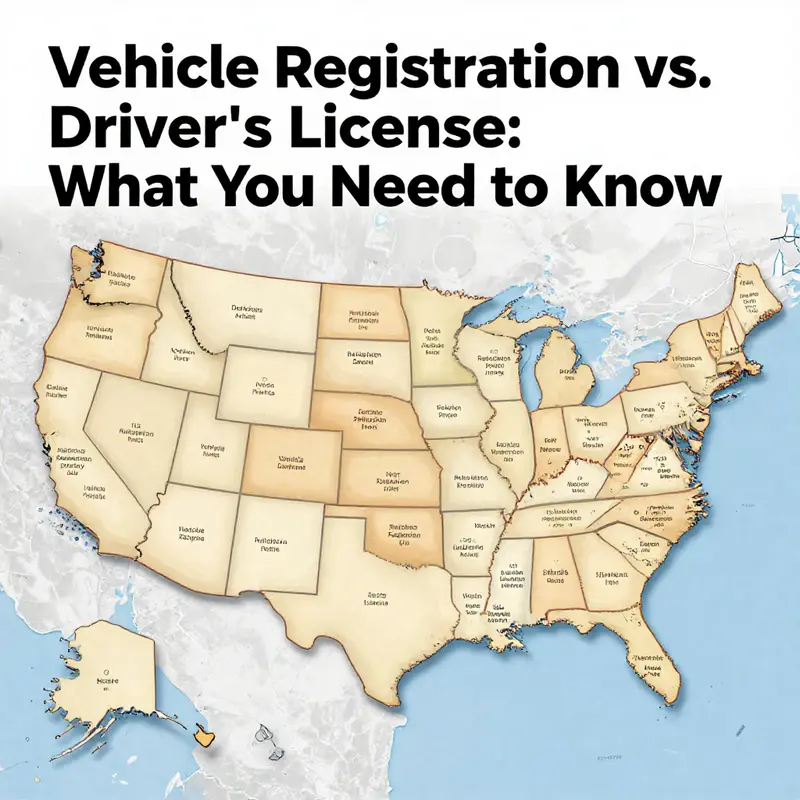
Anyone who has ever filled out a DMV form knows the tug of consistency. The driver’s license carries your legal name and your current address. The vehicle registration sits on the dash, a public claim of ownership and accountability. Given that both documents sit at the crossroads of identity and location, it’s natural to wonder whether they must mirror each other. The truth is more nuanced than a single universal rule. In the United States, there is no federal mandate that the exact name and the exact address on a vehicle registration must match your driver’s license. Instead, states set their own standards. What nearly all states require, however, is accuracy and currency. The documents should reflect the current legal owner of the vehicle and the most current place where you reside or receive notices. The overarching principle is straightforward: avoid mismatches that could raise questions or trigger administrative headaches. The friction begins when you move, legally change your name, or when the vehicle is owned by someone other than the person who drives it most of the time. In those moments, the question becomes less abstract and more about practical steps, fines, and the daily reality of keeping paperwork aligned with life as it actually unfolds on the street and in the DMV line.
The first layer of complexity is name. If you are the registered owner of a vehicle, the name on the registration should align with the name on your driver’s license. This alignment is a matter of internal consistency and, in many states, a legal trigger for smooth processing during inspections, renewals, and notices. Yet life rarely sits still. People change their names through marriage, divorce, or court orders. In those moments, the prudent move is to update both documents in tandem. If you legally change your name, you are wise to approach the license and the registration as a matched set, not as two separate tasks that may drift apart over time. A lag between updating a license and updating a registration can create a window of nonconformity that may complicate scenarios as simple as passing a vehicle inspection or much more serious moments if you are pulled over or involved in an accident. The exact requirements to update depend on your state. Some states let you initiate changes online and complete them through the mail or in person; others require in-person visits for certain name changes. The common thread is the need for official documentation that proves your new name, such as a marriage certificate or a court order, and the ability to present it as part of the DMV’s verification process. When the name on the registration is not the same as the name on the license due to a pending update, most DMVs expect you to indicate the status and proceed with the correction as soon as possible. In practice, this means juggling documents, deadlines, and the sometimes slow pace of government processing. The moment you allow a discrepancy to linger, you expose yourself to a range of administrative complications, from renewal hiccups to questions during a traffic stop.
Address is the other axis along which many states demand alignment. In this arena, the general tendency is to require that the address on your vehicle registration matches the address on your driver’s license. The DMV uses this consistency to verify residency for notices, renewal reminders, and regulatory compliance. It also simplifies enforcement. If your license shows one address and your registration shows another, you could face administrative questions, delayed notices, or even penalties in some jurisdictions. That said, there is nuance. A handful of states recognize that when people rent, share homes, or operate a vehicle from a business address, the registration may reflect an address different from the one on the license. Those states may permit a registration at a business address or a mail-forwarding address, provided the address is legitimate, serviceable, and verifiable by the DMV. In other words, the door is not slammed shut, but the threshold is not universally identical across the nation. The path to compliance is to check the rules for your specific state and to keep a clear trail of where you live and how you receive DMV communications.
California offers a concrete example that helps ground the conversation: the address on the registration must correspond to the address on file with the DMV, and that address is generally tied to where your license is issued or updated. If you move or change your address, you must update both your license and your registration. The logic is straightforward in California, where the DMV describes a unified approach to identity and residency across its records. In the Empire State, New York, the principles are similar in emphasis: the registered owner’s name on the vehicle title and registration should match the name on the driver’s license. The practical implication of mismatches in New York can include complications during registration renewals or vehicle inspections, and even potential fines if the discrepancy is deemed meaningful by a particular issuing official. While these state-level examples illustrate the pattern, the exact rules—what counts as a sufficient match, what exceptions exist, how long you have to make updates—vary enough that a local check with the state’s DMV is essential. The one constant is transparency and accuracy. If the DMV asks for your current address or name, you should provide the precise information and document any changes that have occurred since your last update.
The question of exceptions has a real-world texture. Most readers intuitively worry about the married couple scenario, where two people may hold driver’s licenses under different surnames while a vehicle is registered in a single name. In theory, this could be a gray area, and in practice, it becomes a matter of state policy. Some states may accommodate a vehicle being registered under one spouse’s name even if both spouses have licenses under different names, but this is not a universal standard. The safest approach is to examine the exact rule in your state before enrolling in or changing registration to accommodate a living arrangement that doesn’t fit the typical one-name-one-vehicle model. The bottom line is to verify via your state’s official DMV resources because state rules can shift with new legislation or administrative adjustments.
Another layer of nuance involves ownership versus operation. In many households, the vehicle you drive is financed or leased, and the lien holder’s name may appear as the registered owner on the title. In such cases, the registered owner might not be the person who primarily drives the car. The law still expects that the registration accurately reflect the current owner, including the lien holder’s interest if applicable. If you are the primary driver but not the registered owner due to a loan or lease arrangement, the mismatch between owner and operator is a different kind of alignment question. It may not imply noncompliance in every state, but it does demand careful attention to ensure that the records you present to the DMV reflect who actually owns the vehicle and who is responsible for registration quantities, notices, and liability. This is not merely an abstract accounting exercise. It can come into play if you are selling the vehicle, transferring title, or addressing a DMV inquiry about a recall notice or a renewal reminder. The simplest path is to confirm, for your specific situation, who should be listed as owner and whether that person’s name and address must align with the license, the registration, and the title.
So what should a conscientious driver do to stay compliant without becoming overwhelmed by state-by-state trivia? Start with a practical, proactive approach. First, identify your state’s official DMV site and locate the sections on vehicle registration and driver licensing. Read the explicit statements about name changes, address updates, and any exceptions for marriages, co-ownership, or business use. The official guidance will be your most reliable compass because it reflects current policy, not a generalized memory of rules that may have shifted. Second, create a simple checklist for life changes that trigger updates: name changes, address moves, changes in vehicle ownership, or changes in how you use the vehicle. If you have recently changed your name, you should plan to update both documents promptly. If you have moved, you should verify whether you are required to update both records within a set timeframe after your move. Third, consider a strategy for fleet or multiple-vehicle households. If you own more than one vehicle, you may find it useful to standardize your address and owner information across registrations and licenses to minimize the risk of mismatches. Fourth, keep your records organized. Retain copies of marriage certificates, court orders, or other official name-change documents, and maintain a log of when you updated records and where you made those updates. When the DMV asks for proof, you want to respond quickly and with the right documentation. Finally, engage with your state’s DMV resources whenever you have questions. The official pages will typically offer step-by-step instructions, online services, and direct contact options for clarifications. In some cases, there are nuances that require human guidance rather than a self-service portal. You should not be embarrassed to seek clarity when something seems unclear or when the rules appear rigid in a manner that would disrupt your day-to-day life on the road.
The broader takeaway is that alignment between your vehicle registration and your driver’s license is not a universal mandate but a matter of state policy focused on accuracy and accountability. Name alignment matters most when you are the registered owner. Address alignment matters in many states for notices and regulatory compliance. Exceptions exist, especially for complex personal situations like name changes, multiple vehicles, or business use, but they are not universal. To navigate this landscape confidently, you should anchor your actions in the official guidance of your own state’s DMV and treat changes as a coordinated update rather than two separate tasks. In this sense, the road toward alignment resembles a well-marked route: it becomes straightforward once you know the right signposts and you follow them promptly when life changes take effect.
As you consider the state-by-state differences, you can see why it is so important not to rely on memory or anecdotal statements from neighbors or social media. The rules are written in the language of policy and procedure and are enforced through the DMV’s administrative processes. If you want to understand how your own state handles these issues, you can explore more on the topic through related discussions about how state rules impact driver licensing. For a broader view of how these rules interact across different jurisdictions, you can learn more at the following reference point: state rules impacting driver licensing. This link helps connect the general principle of alignment to the real-world variety you will encounter in the states.
In short, there is no one-size-fits-all rule about whether vehicle registration must match your driver’s license. There is, however, a consistent emphasis on accuracy, honesty, and timely updates. If you keep your name and address aligned with your current life status and you verify those details with your state DMV, you will reduce the risk of complications when you renew, when you are pulled over, or when you need to prove ownership or residency for any number of routine administrative processes. The best practice is to stay informed and to update whenever life changes. The DMV is not a portal of endless loopholes; it is a tool to keep public records truthful and aligned with real-world ownership and residence. The better you know your state’s expectations, the smoother your interactions will be, whether you are renewing a registration, transferring a title, or simply correcting a clerical oversight that would otherwise create months of confusion. The goal is not perfection in anticipation of any single scenario but resilience in the face of the inevitable shifts in address, name, and ownership that life brings.
External resource: https://www.dmv.ca.gov/portal/
Final thoughts
In summary, while there are general guidelines regarding the alignment of names and addresses on vehicle registrations and driver’s licenses, the specifics can vary greatly depending on your state. Ensuring that both documents are up to date with correct information is crucial for compliance and avoids potential legal issues. Always refer to your state’s DMV guidelines for the most accurate information and keep your personal details aligned to streamline your driving experience.