
Navigating the world of commercial driving can be complex, especially for new drivers and vehicle owners. Understanding the vehicles that require a Commercial Driver’s License (CDL) is crucial for anyone looking to drive professionally, whether they are newly licensed or seasoned drivers. This article delves into the various types of vehicles necessitating a CDL, the specific eligibility requirements, the essential safety regulations in place, the impact of CDL licensing across different vehicle types, and future trends in the CDL space. Each chapter aims to clarify the intricacies of CDL licensing, making it easier for you to understand your obligations and ensure compliance as you hit the road.
Decoding CDL Necessities: How Vehicle Type, Weight, and Cargo Shape Your License Path
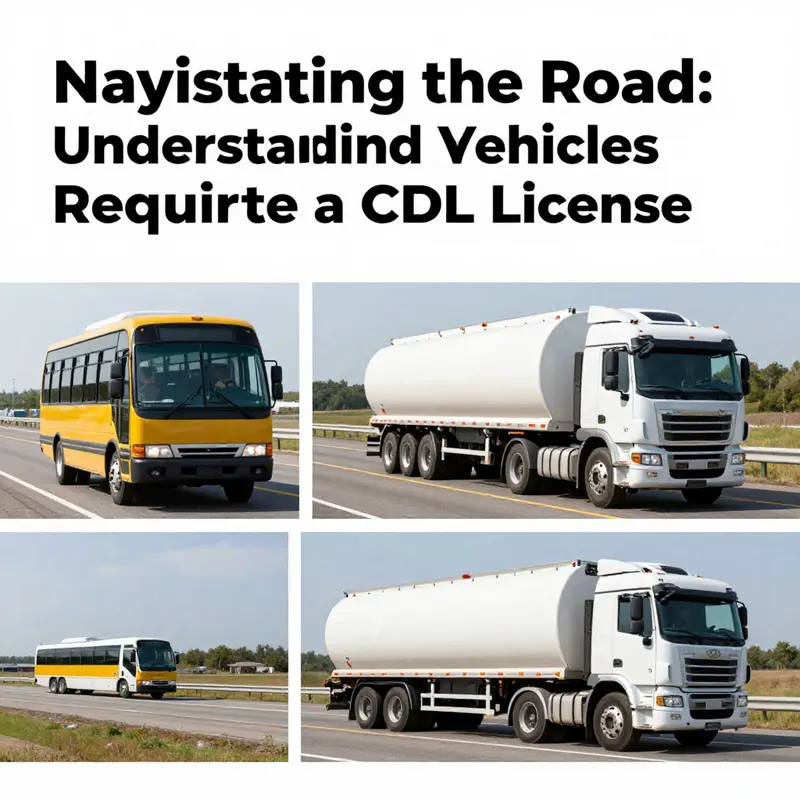
Choosing the right license is not simply a matter of weight or size; it is a decision rooted in how a vehicle is used, what it carries, and where it travels. In the United States, the Commercial Driver’s License system exists to ensure that drivers who operate certain kinds of vehicles have demonstrated the skills, knowledge, and responsibility necessary to handle the distinctive challenges those vehicles present. The path to a CDL is not one-size-fits-all. Instead, it follows a logic built around vehicle type, gross vehicle weight, and the nature of the cargo, whether that cargo is passengers, hazardous materials, or a combination that requires special handling. For aspiring drivers and employers alike, understanding this logic is essential because it determines not only who can legally drive a given vehicle, but also what training, testing, and ongoing compliance will be required along the way.
The backbone of the CDL structure rests on three main classes—A, B, and C. Each class corresponds to a different operational reality on the road. Class A is the gateway to large, heavy, and often long-haul combinations. It is required for combination vehicles whose gross combination weight rating, or GCWR, reaches 26,001 pounds or more, provided the towed unit weighs more than 10,000 pounds. In practical terms, this typically means the big tractors that pull heavy trailers across state lines, where the total system weight becomes a central safety and control concern. The weight threshold reflects a recognition that controlling a rig of that scale demands advanced handling skills, precise braking, and sustained attention to weight transfer, braking, and coupling across long distances.
Class B, by contrast, covers single, substantial vehicles or those that tow lighter trailers. A Class B license is needed for vehicles with a gross vehicle weight rating, or GVWR, of 26,001 pounds or more, or for such a vehicle towing a trailer that weighs no more than 10,000 pounds. This class encompasses many urban and regional workhorses: city buses that ferry passengers through downtown corridors, dump trucks that move material at construction sites, and large delivery or freight trucks that operate within a city or region. The emphasis here shifts toward up-and-down control, maneuverability in tighter spaces, and the ability to manage heavier loads without the extended line-haul considerations that come with multi-trailer configurations.
Class C occupies a different niche again. It applies to vehicles that do not fit into A or B but are designed to carry 16 or more passengers, including the driver, or to transport hazardous materials that require placarding. Think of school buses and certain shuttle vehicles, or specialized trucks designed to haul hazardous substances in quantities that trigger placarding requirements. The focus of Class C is safety in environments where passenger traffic is common or where the cargo itself poses risks that require specialized handling and emergency response readiness. These distinctions are not just bureaucratic labels; they map directly onto the types of tests, endorsements, and regulatory obligations a driver must meet.
Endorsements add depth to this framework. They are the tools that let a driver work with particular cargo or vehicle configurations. The H endorsement is essential for transporting hazardous materials, a domain that carries heightened risk and demands rigorous background checks and testing beyond standard CDL requirements. The N endorsement enables operation of tank vehicles, where the dynamics of liquid or gas transport introduce additional considerations for loading, unloading, and handling pressurized contents. The P endorsement is tailored for passenger transport, reflecting the skill set needed to safely manage people in vehicles that share the road with everyday drivers. The X endorsement combines hazardous materials and tank vehicle operations, signaling a high level of specialization and responsibility.
Testing for CDL holders is designed to be thorough and multi-faceted. Every applicant must pass both a knowledge test and a practical skills test. The knowledge component covers federal and state regulations, vehicle inspection procedures, and safe driving practices. The practical side includes a pre-trip inspection, where the driver demonstrates a systematic check of the vehicle and its critical systems; a basic controls test to show mastery of essential handling maneuvers; and an on-road driving exam that assesses real-world performance, including how the driver responds to traffic, weather, and the vehicle’s load characteristics. The testing process is not merely a rite of passage; it is a structured verification of the competencies that underlie safe, predictable operation of heavy and potentially hazardous vehicles.
Beyond the classroom and the practical test, a CDL holder remains bound by regulations that shape daily operations. Hours of service rules, for instance, govern how long a driver may stay behind the wheel before taking rest breaks, a convention designed to prevent fatigue and the kind of errors that can lead to serious crashes. Vehicle maintenance obligations ensure that the equipment itself remains safe and reliable, with drivers often responsible for conducting or validating pre-trip inspections and reporting any deficiencies. Medical certification requirements add another layer of accountability, acknowledging that the physical and mental fitness of a driver directly impacts road safety. Taken together, these rules form a comprehensive framework that keeps roads safer, especially when commercial operations involve large vehicles, complex routes, or demanding schedules.
Age restrictions introduce another dimension to the CDL landscape. In-state operation typically requires a minimum age of 18, but crossing state lines or engaging in the transport of hazardous materials raises the age barrier to 21. This staggered approach recognizes the greater responsibility and higher risk associated with inter-state operation and hazmat handling. A further, increasingly important factor in recent years is the federal policy environment. As of September 2025, new federal rules have tightened eligibility by prohibiting CDL issuance to individuals without legal status. That shift ties licensing to immigration documentation in ways that affect both workforce planning and the pipeline of candidates for commercial driving positions. The implications are profound for employers who rely on a steady influx of qualified drivers and for states that administer the program, underscoring the importance of staying current with federal and state requirements.
For anyone navigating this landscape, the practical takeaway is clear: determine the role your vehicle will play, identify the weight and passenger or cargo characteristics, and map those factors to the appropriate CDL class and endorsements. This alignment is not just about compliance; it is about ensuring that every mile traveled under the license carries the weight of safety, professionalism, and responsibility that the road demands. At the state level, regulations can add nuances that vary from one jurisdiction to another, sometimes affecting testing prerequisites, medical standards, or specific endorsements. Drivers and employers alike benefit from consulting the state’s motor vehicle department for the most current, location-specific guidance while keeping a finger on the pulse of federal standards.
In this context, it matters to distinguish between the kinds of operations you plan to undertake. A school district must carefully assess whether a vehicle falls into Class C because it carries 16 or more passengers, or whether a special cargo scenario might trigger an endorsement requirement. A regional freight operation may rely primarily on a Class A or Class B license, but the addition of a tank or hazardous materials load can instantly shift the licensing landscape with an X or H endorsement. The realities of modern logistics—where fleets blend passenger transport with cargo and sometimes hazardous materials in the same corridor—mean that drivers often hold more than one endorsement, and employers frequently design training plans that prepare crews for the full spectrum of tasks they will encounter.
To those who must make sense of all these moving parts, there is a practical compass. Start with the vehicle’s GVWR and GCWR, and assess whether the operation involves a combination vehicle, a single heavy vehicle, or a passenger-oriented or hazmat-focused scenario. Then consider the cargo’s nature and the route network. If the vehicle moves people, or if hazardous materials are part of the equation, expect additional testing, background checks, and regulatory scrutiny. The broader truth is that the CDL ecosystem is designed to reward preparedness and discipline. It ensures that when a driver sits behind the wheel of a heavy truck, a bus, or a specialized tanker, they bring with them not just driving skill but a comprehensive framework of safety practices, regulatory awareness, and professional accountability.
Beyond the federal framework, state-specific rules can shape how you apply for a license, how you test, and how you maintain it on a day-to-day basis. For drivers and employers seeking clarity on how local variations affect eligibility and compliance, consider exploring material on what those state rules imply for driver licensing. state rules impact on driver licensing
For authoritative guidance, the Federal Motor Carrier Safety Administration maintains the formal map of vehicle classes and CDL requirements. This resource articulates the official thresholds, endorsements, testing components, and ongoing compliance expectations that govern CDL practice across the nation. It is a vital reference for anyone planning a career in commercial driving or managing a fleet that relies on CDL-qualified personnel. To consult the federal standards directly, visit the FMCSA vehicle classes and CDL requirements page.
Who Really Needs a CDL? Understanding Eligibility, Vehicle Classes, and the Road to Licensing
In the United States, the Commercial Driver’s License (CDL) exists to ensure that drivers of larger, heavier, or more complex vehicles meet higher standards. The rules are set at the federal level, but administration happens through state licensing agencies, which adds a layer of variation. The result is a practical map for those considering whether they need a CDL, and if so, which class, endorsements, and medical requirements apply. The core principle is straightforward: once a vehicle crosses certain weight or passenger or hazmat thresholds, a CDL becomes mandatory. The threshold numbers are not arbitrary; they reflect the potential risk and the complexity involved in operating those vehicles.
Some readers will find that their daydream of driving a big rig or transporting schoolchildren needs a little recalibration. The reason is that not every large vehicle requires a CDL. A common misconception is that size alone dictates licensing needs. In reality, the driving task matters as much as the vehicle’s physical heft. A heavy vehicle that is designed to haul a cargo and is used in commerce must be treated differently from a personal vehicle driven for family trips. The rules carve out space for Class A, Class B, and Class C licenses, each mapping to different vehicle types and use cases. The practical effect is a structured ladder: as you move from everyday cars into larger, heavier, or more specialized vehicles, the licensing requirements rise in tandem with the responsibilities you will assume behind the wheel.
At the feature level, the most conspicuous criterion is the manufacturer’s GVWR—gross vehicle weight rating. A single vehicle with a GVWR of 26,001 pounds or more almost universally triggers a CDL requirement, depending on the class and the purpose of the vehicle. If a vehicle is designed to carry 16 or more passengers, including the driver, the same threshold applies. In other words, the bus that shuttles students or commuters likely falls under CDL provisions not because it is enormous but because it is designed to carry many people, which carries safety and operational implications that licensing aims to address. The same is true for vehicles used to transport hazardous materials that require placards. The presence of hazmat changes the rules, not just the weight, because the risk profile shifts significantly, calling for specialized knowledge, training, and a level of accountability appropriate to handling dangerous goods.
The interplay between weight and use becomes more nuanced when you consider combination vehicles. A towing vehicle that has a GVWR of 26,001 pounds or more, paired with a trailer weighing 10,001 pounds or more, typically necessitates a CDL for at least one driver. This rule extends to many everyday heavy-tow scenarios—the kind you might see on construction sites, in regional distribution, or moving equipment where the combined weight crosses the threshold. It’s not just the truck or the trailer in isolation; it’s the act of combining them in a practical work setting that triggers licensing because the operation requires longer stops, more complex braking, and greater vehicle dynamics that demand formal training.
Yet there is a counterintuitive corner: the CDL Class C. This class exists to cover vehicles that are still used for commercial purposes but do not fit neatly into the heavier A or B categories. Class C is commonly associated with small buses—that is, vehicles designed to transport 16 or more passengers including the driver—alongside certain hazardous materials vehicles that do not reach the heavier classifications. It also covers some combination vehicles when the GVWR of the towing component is 26,001 pounds or less, provided the towed trailer weighs more than 10,000 pounds. It also covers single vehicles with a GVWR of 26,001 pounds or more when they are designed to carry 16 or more passengers or carry hazmat. The existence of Class C reflects a deliberate design to ensure that drivers in narrower but still risky operating envelopes meet baseline professional standards.
Within the framework, age limitations add another layer of consideration. The minimum age to drive within a state is typically 18, but those who plan to drive across state lines or handle hazardous materials encounter a higher bar: 21 years old. The interstate dimension introduces not only a longer repertoire of skills but also a more stringent alignment with federal safety standards. This age boundary is not mere bureaucracy; it is a recognition that highway duty across jurisdictions amplifies risk and responsibility. While the certificate of medical fitness—the CDL medical card—remains a constant requirement for most CDL holders, its specifics vary with endorsements and the nature of the payload. Medical certification is a practical gatekeeper ensuring that drivers meet standards for vision, hearing, fatigue management, and general fitness that enable safe operation over long distances and varied driving conditions.
The licensing process itself embodies a cycle of knowledge and practice. Before stepping into a testing environment, hopeful applicants absorb the content of a commercial driving manual, covering topics from traffic laws to vehicle inspection, from safe driving techniques to the specifics of hazardous materials handling when relevant. The practical component then follows: a pre-trip inspection, a basic control skills test to demonstrate the vehicle’s fundamental handling, and behind-the-wheel driving tests in a range of driving scenarios. For those pursuing hazmat endorsements, additional security and safety-related steps exist, including background checks and additional endorsements beyond the core CDL. Training programs are widely available, from community colleges to private fleets and commercial driving schools, but the choice of program is a personal decision shaped by the learner’s goals, schedule, and budget. Regardless of path, the emphasis remains constant: a well-rounded knowledge of vehicle systems, road rules, and safety practices is essential.
State variation plays a central role in the final shape of eligibility. The federal framework provides the backbone, but states issue the licenses. The actual requirements, minimum standards for testing, and the specific endorsements are implemented through the state Department of Motor Vehicles or equivalent licensing authority. Because of this, someone who appears to meet the general threshold in one state might encounter a different set of tests or an alternative approach to documentation in another. That is why professional drivers often confirm details with their local licensing office or consult official state guidance. For example, state authorities typically publish explicit criteria about who needs a CDL, and what vehicle configurations fall under which class. They also set the procedures for medical certification, background checks for hazmat endorsements, and the timelines for retesting or renewing credentials.
The conversation about eligibility also intersect with broader regulatory trends. In the wake of evolving safety expectations, agencies at both the federal and state levels have refined definitions and added clarifications about what qualifies as a commercial vehicle and what does not. The result is a dynamic landscape that can feel opaque to newcomers. To navigate this landscape effectively, it helps to anchor decisions to the two anchor questions: What is the GVWR of the vehicle or the combination? And what is the vehicle designed to transport: passengers, cargo, or hazardous materials? When the answers point to or beyond 26,001 pounds, to 16 or more passengers, or to hazmat, then the CDL becomes a central credential. It is the kind of credential that passes from one job or industry to another with relative ease because it is built on shared safety standards rather than on a disparate patchwork of state-specific idiosyncrasies.
Alongside this logic sits an awareness of the practical realities of the licensing journey. The process demands time, accountability, and a certain readiness to meet medical and legal prerequisites. Those who are drawn to the highway’s scale—whether for a career with a trucking company, a school district’s transportation fleet, or a city’s municipal service fleet—will benefit from imagining the journey as a continuum rather than a single hurdle. The requirement to meet age, medical, and background criteria presents a natural sieve that guides entrants toward the appropriate class and route. And because many roles in commerce rely on CDL-holding drivers, there is a systemic incentive to ensure that training and testing reflect real-world duties. The aim is not merely to certify competence for a test but to certify a driver’s preparedness for the demands of daily operations, long hours on the road, varied weather and road surfaces, and the complex task of coordinating with other road users under pressure.
As readers contemplate their own paths, they may find it valuable to consult state-specific guidance to confirm the precise steps, schedules, and documentation required. The framework exists to ensure safety and reliability on the nation’s roads, and the specifics—like age minimums, required medical certification, and the exact definitions of GVWR and trailer weight—are the levers that determine whether a CDL is required for a given vehicle or use case. Even for those who ultimately decide that a CDL is not necessary for their immediate goals, understanding these rules clarifies why certain vehicles operate under CDL constraints and why others do not. This comprehension can help prevent missteps, such as attempting to operate a commercial vehicle without the appropriate license, or assuming that a particular vehicle automatically falls into a higher licensing category because of its size.
In sum, the road to a CDL is anchored in clear thresholds and purpose-driven classifications. The big questions revolve around GVWR and how a vehicle is used. If a single vehicle exceeds 26,001 pounds gross vehicle weight, or if a combination exceeds the sum of 26,001 pounds for the towing unit and 10,001 pounds on the trailer, a CDL is typically required. If the operation involves transporting 16 or more passengers, or hazardous materials that require placards, a CDL is almost certainly necessary, and likely in Class C or higher, depending on the exact vehicle configuration. The practical takeaway is straightforward: verify the GVWR, examine the vehicle’s intended use, and consult the state licensing authority to confirm whether a CDL, which class, and which endorsements will apply. When in doubt, ask; the licensing office can map the local rules against the national framework, and the outcome will be a license that corresponds to a driver’s real-world responsibilities and the risks inherent in the job.
For a broader view on how state rules impact driver licensing, consider the following resource: state rules impacting driver licensing. This link helps illuminate how different jurisdictions align with the national framework and where the thresholds or documentation requirements diverge. If you are considering hazmat duties or extended interstate operation, your state’s guidance will help you plot the exact path to licensure, including the necessary medical certificates and background checks that some endorsements entail.
External resource: For a state-by-state overview that complements the overview here, see the Washington State Department of Licensing page on CDL eligibility and requirements: https://www.dol.wa.gov/learndrive/cdl/needacdl.aspx
Steering Toward Compliance: Navigating Safety Rules for Vehicles That Trigger a CDL
A Commercial Driver’s License (CDL) is more than a credential; it is a gateway into a regulatory ecosystem designed to keep heavy vehicles and the people around them safer every mile of the way. When a vehicle requires a CDL, it signals not only the size or purpose of the machine but a set of responsibilities that ripple through maintenance, operation, and governance. The categories that determine whether a CDL is required hinge on three practical criteria: the vehicle’s weight and structure, the passenger load it is designed to carry, and the hazard level of its cargo. In the United States, this means that many everyday operations—small buses that shuttle workers or school groups, certain hazardous materials transports, or combination vehicles that tow substantial trailers—fall under Class C rules, while larger trucks and buses align with Class B or Class A licenses. The nuance matters, because the Class C designation does not blanket all large vehicles; the line between Class C and the higher classes is drawn by GVWR, passenger capacity, and whether placarded hazmat is involved. The shifting boundary between these classes underscores a broader truth: CDL safety regulations are not a static checklist but a living framework meant to adapt to the realities of on-road operations, the roles drivers play, and the cargo they carry.
Within this framework, the safety regime is both comprehensive and practical. It encompasses vehicle maintenance, driver qualifications, hours of service, drug and alcohol testing, and the use of electronic logging devices. These components work together to create a continuous chain of accountability. The regulatory architecture is anchored by the U.S. Department of Transportation (USDOT) and, more specifically, the Federal Motor Carrier Safety Administration (FMCSA). Together they establish the standards that carriers and drivers must meet, with state motor vehicle agencies issuing the actual licenses and enforcing practical compliance on the ground. The structure is purposefully layered: federal safety standards set the baseline, while state processes implement and tailor licensing specifics to local conditions. It is this collaboration between federal mandates and state administration that shapes every CDL journey—from the first written test to the last inspection performed at a shop on a quiet weekday.
A driver’s day begins with a careful respect for maintenance obligations that keep heavy vehicles trustworthy on the road. The PTI, or pre-trip inspection, is not a ritual; it is a diagnostic routine that requires the operator to confirm the condition of brakes, tires, lights, steering, suspension, and other critical systems. An annual inspection remains another pillar of safety, ensuring that vehicles meet federal safety standards beyond that initial pre-trip check. The emphasis on maintenance is not decorative. It interfaces with the CSA, the Compliance, Safety, Accountability program, which evaluates carriers based on safety performance metrics, including maintenance violations. A single failed inspection or a recurring maintenance issue can cast a long shadow over a carrier’s reputation and its ability to operate across state lines. In this environment, the vehicle is not merely a machine but a rolling safety record that travels across highways and through timesheets, a truth that reinforces why meticulous upkeep is non-negotiable. The routine is as much about prevention as it is about compliance; it translates into fewer breakdowns, safer braking distances, and more predictable handling under varying weather conditions.
On the human side, driver qualification sits at the core of safe operation. CDL holders must demonstrate competence through both written and practical exams that test knowledge of traffic laws, vehicle systems, and practical driving skills. But the bar does not end at the test. A driver’s eligibility is reinforced by medical examinations and background checks designed to confirm the physical and psychological readiness to operate heavy equipment safely. These checks help ensure that the operator meets the physical demands of long hours, complex vehicle dynamics, and potential hazard exposure. The requirements also clarify the practical realities of licensing: drivers must hold the appropriate class for the vehicle type they intend to operate, for example Class B for most large straight trucks or buses, and Class C for certain smaller passenger vehicles carrying passengers or hazmat materials. And the age rules create a geographic boundary of capability: while many operators can drive within their state at age 18, inter-state operations or hazmat transport typically require a minimum age of 21. The landscape shifts further in light of evolving federal rules on immigration status that, as of September 2025, prohibit granting CDL credentials to individuals without lawful status. This reflects an intentional alignment of licensing with national compliance and safety objectives, underscoring that CDL credentials are granted within a broader framework of legal eligibility.
Hours of Service (HOS) rules weave fatigue management into every route. The intention is simple: limit fatigue-driven risk by regulating how long a driver can be on duty, how long behind the wheel, and when rest periods must occur. The regulations define a framework of driving time, on-duty time, and mandated rest periods, plus a restart provision after a defined period of duty. For CDL operations, the logic is to prevent monotony, ensure alertness on long hauls, and preserve reaction time when days stretch into night. The HOS rules apply regardless of cargo type or route, creating a universal discipline that emphasizes safety over speed. The latest iterations also encourage transparency through electronic records, and the rules are reinforced through random checks and the possibility of enforcement actions if violations are detected.
Drug and alcohol testing forms another critical pillar. CDL drivers are subjected to a rigorous testing regimen that includes pre-employment screening, random testing, post-accident testing, reasonable suspicion testing, and return-to-duty testing after violations. The consequences of a positive test or a failure to comply are severe and immediate, often resulting in removal from duty and significant professional ramifications. This aspect of compliance is not merely punitive; it is a preventive measure designed to protect the driver and the public from impaired operation, a risk that multiplies with the size and weight of CDL vehicles.
To support enforcement and accountability, electronic logging devices (ELDs) have become the standard for most interstate CDL operations. These devices automatically record driving time, ensuring accuracy in adherence to HOS limits and providing enforcement officials with real-time, tamper-resistant data. The technological dimension of compliance is not simply a digitization of paperwork; it is an important stride toward reducing human error, deterring rules violations, and enabling rapid response in case of incidents on the road. For carriers, ELDs also facilitate better fleet management and more predictable scheduling, which can translate into safer operations and improved service reliability.
The credibility of a CDL operation rests on a robust trail of documentation. Carriers must maintain detailed records of driver qualifications, vehicle inspections, maintenance logs, HOS data, and testing results. This documentation is the backbone of accountability. It is the material that inspectors review during roadside checks and audits, the evidence that a carrier is meeting its obligations and that drivers have met all prerequisites for safe operation. The absence or mismanagement of these records can trigger investigations, penalties, or even the suspension of operations. In this sense, compliance is not a one-time hurdle but a continuous discipline that touches human resources, maintenance planning, and daily dispatch decisions.
The consequences of non-compliance are tangible and potentially severe. Fines, operational suspensions, and, in cases of repeated violations, criminal penalties can follow a carrier or a driver who disregards the rules. The cost of non-compliance goes beyond money; it can jeopardize public safety, company viability, and long-term career prospects for drivers who rely on a clean safety record to advance. This is why the regulatory environment emphasizes proactive safety culture: regular training, routine maintenance, transparent records, and a clear understanding that the CDL is both privilege and responsibility.
For readers seeking authoritative guidance and ongoing updates, the FMCSA website remains the primary resource. It provides comprehensive materials, regulatory updates, and tools designed for carriers and drivers alike. When time allows, taking a moment to review the latest Federal guidelines can prevent misinterpretation of rules and reduce confusion about how to apply them in real-world operations. In the broader context of CDL safety and compliance, the practical takeaway is clear: the path to safe, law-abiding driving lies in integrating maintenance discipline, rigorous driver qualification, disciplined scheduling, and transparent recordkeeping into the fabric of daily operations. To explore a related topic in greater detail, you can refer to state-specific requirements for vehicle inspections through the linked resource on state inspection requirements. state vehicle inspection requirements.
Ultimately, the CDL regulatory ecosystem is designed to be navigable yet rigorous. It recognizes that large and heavy vehicles play a vital role in commerce and public services, but it also demands a consistent commitment to safety from every driver and every carrier. The cadence of inspections, the precision of tests, the faithfulness of medical evaluations, and the discipline enforced by HOS and ELDs together create a culture of accountability. The result is not merely compliance for compliance’s sake but a safer highway environment for everyone who shares the road—passengers, pedestrians, other motorists, and the drivers themselves. The road ahead for carriers and drivers alike is one of ongoing vigilance, continuous training, and a steadfast adherence to the standards that keep large, complex vehicles on the move without compromising safety. For those who want to deepen their understanding of the regulatory framework and its current applications, the official FMCSA resources offer a reliable compass: https://www.fmcsa.dot.gov/.
The CDL Threshold: What Vehicles Trigger a Commercial License and Why It Matters
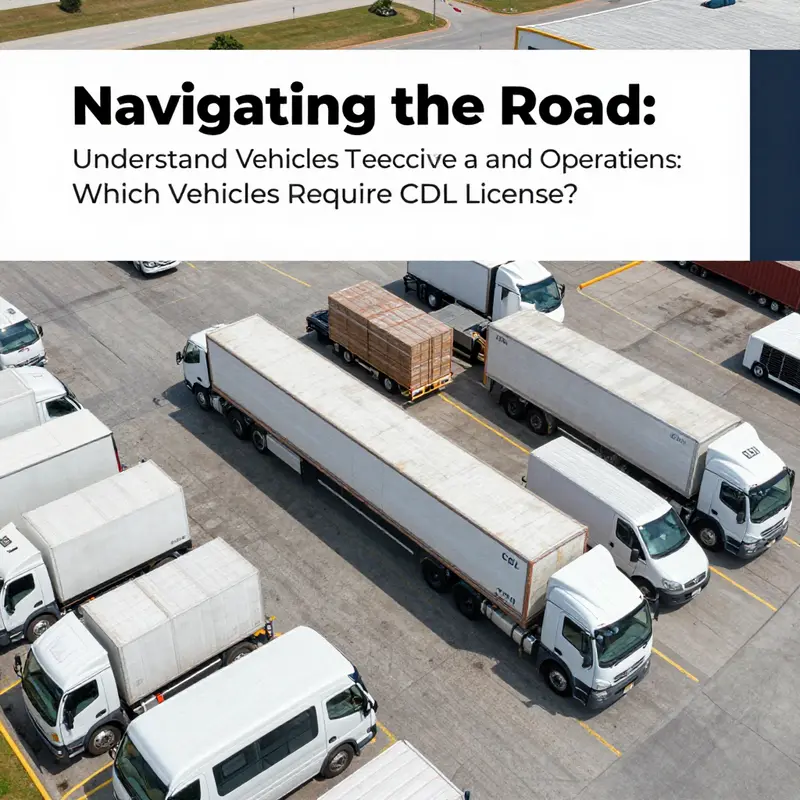
The Commercial Driver’s License, or CDL, sits at the intersection of safety, commerce, and road policy. It is not merely a credential but a gatekeeper that signals professional training, testing, and accountability for driving vehicles that can pose greater risks on busy roads. Understanding which vehicles require a CDL helps fleets plan responsibly, individuals chart a career path with clarity, and communities maintain safer streets. The framework is built on three practical axes: weight, passenger capacity, and cargo type. Weight is the most visible signal. In the United States, a vehicle with a Gross Vehicle Weight Rating (GVWR) of 26,001 pounds or more typically falls under CDL requirements. This threshold serves as a starting line for many big rigs, freight haulers, and heavy-duty vocational trucks that routinely share interstates with passenger vehicles. Yet weight alone does not tell the full story, because the way a vehicle is configured can shift it into or out of CDL territory. A tractor-trailer, for example, may push into CDL eligibility if the combined GVWR—tractor plus trailer—reaches 26,001 pounds or more and the trailer itself weighs more than 10,000 pounds. In short, the pairing matters as much as the components. The regulatory logic recognizes that a heavy, single unit and a heavy, paired unit both modify the way a driver must be prepared to control momentum, braking distances, and handling under varying loads.
Passenger capacity adds a second layer. Any single vehicle designed to transport 16 or more passengers, including the driver, automatically triggers CDL considerations. This rule captures a broad spectrum of operations beyond the obvious freight context. City buses, school buses, and charter coaches all fall into this category because the risk profile shifts when more people occupy the vehicle. The third axis—hazardous materials—introduces a separate but equally important set of requirements. If a vehicle carries hazardous materials requiring placarding, the CDL is typically mandatory, irrespective of exact weight or the number of passengers. This emphasis reflects an enduring objective: to ensure that drivers handling dangerous goods possess specialized training, documentation, and procedures to minimize risk to themselves and to the public.
Taken together, these criteria delineate what many people casually think of as “heavy trucks” from a broader, more nuanced landscape. The heavier end of the spectrum is governed by Class A licenses, which cover the most demanding combinations and operations. Class B licenses focus on heavy straight trucks and large passenger vehicles that don’t require the most complex tractor-trailer configurations. Finally, Class C enters the scene for a distinct set of tasks. Class C is not a simple proxy for “smaller,” nor is it a category to be overlooked. It applies to vehicles designed for passenger transport and hazmat tasks that do not meet the heavier weight thresholds of Class A or B. In practice, Class C typically includes smaller buses and certain passenger vans used for commercial purposes, as well as hazmat operations that are lighter in vehicle weight but heavier in perils to safety.
The practical impact of Class C becomes clearer when one considers the everyday errands and services that people rely on without thinking about licensing. A shuttle service that moves workers between a facility and parking lots, a municipal van used for commuter routes, or a small hazmat carrier that tidies up specific, localized deliveries—all these scenarios sit at the boundary between non-CDL driving and CDL responsibilities. The line is drawn not by appearance but by the regulatory risk profile: how many people are aboard, what is being carried, and how heavy the vehicle is. This is why many operators who think they are safely within the “non-CDL” zone still need to be mindful of their exact GVWR and intended use. The law’s logic favors a conservative approach to licensing when uncertainty exists, because the consequences of insufficient training can be severe on busy highways.
Of course, not every vehicle in daily life requires a CDL. Standard passenger cars and most light trucks stay well below the GVWR threshold, so they do not trigger CDL requirements. Similarly, small delivery vans and light-duty trucks used for transporting limited quantities of hazardous materials fall outside the most restrictive thresholds in many cases. The practical upshot is that routine personal travel or small-scale local deliveries generally do not demand a CDL. Yet the boundary lines are real, and they shift as vehicle configurations or cargo profiles change. A vehicle that seems modest in size on a city street can become a CDL candidate when its purpose involves moving many people or potent, dangerous cargo.
Beyond the vehicle itself, licensing decisions are also shaped by where a driver operates. Intra-state operations—driving within a single state—often come with different rules and age thresholds than inter-state operations that cross borders. The federal system, administered by the Department of Transportation (DOT) and implemented by state motor vehicle departments, sets the overarching framework. States issue the licenses, but those credentials must align with federal driver qualification standards, endorsements, and restrictions. This federal-state partnership is designed to preserve uniform safety objectives while accommodating local transportation needs.
A practical implication of this architecture is the age dimension. The minimum age to drive within state lines is typically 18, but crossing state lines or engaging in hazmat transport requires the driver to be 21 and to satisfy the more stringent federal standards for those operations. There is, however, an important, evolving reality to watch: as of September 2025, federal rules prohibit individuals who lack lawful immigration status from obtaining a CDL. That stipulation raises the bar for verification of identity and legal status as part of the licensing process, reinforcing the broader principle that CDL holders operate in a regulated, accountability-based framework. The alignment of immigration documentation with licensing underscores how comprehensive compliance must be—covering not just the vehicle, but the driver safeguarded by lawful status and verified credentials.
Given the complexity of these rules, the wisest path for drivers and fleet managers alike is to ground decisions in official guidance. The state motor vehicle department remains the primary point of contact for licensing pathways, testing, and endorsements, while the federal FMCSA (Federal Motor Carrier Safety Administration) provides the driver qualification standards and the broader safety policy. The interplay between state practice and federal standardization means that a single vehicle can be viewed differently depending on operational plans, routes, and cargo. This is why a careful, case-by-case assessment proves more reliable than a one-size-fits-all rule. If you want to understand how local rules might alter classification or endorsement requirements, you can explore the nuances under the topic of state rules that shape CDL licensing. The link below leads to a resource that frames these jurisdictional considerations in a way that connects vehicle profile to licensing steps and restrictions: state rules that shape CDL licensing.
As readers map their own situations, they should not lose sight of the bigger regulatory architecture. The FMCSA’s driver qualifications information provides a concise, authoritative baseline for which endorsements may be needed, the training standards to meet them, and how endorsements align with specific cargo or passenger operations. A practical approach is to inventory the vehicle’s GVWR, the number of occupants, and the nature of the cargo. If any of those dimensions push past 26,001 pounds, involve 16 or more passengers including the driver, or require placarding for hazardous materials, a CDL—not just a more generic license—becomes the functional minimum. From there, the path includes selecting the appropriate class (A, B, or C) and identifying any endorsements or restrictions tied to hazmat, passenger transport, or other specialized tasks.
The implications extend beyond individual choices. For fleets, understanding which vehicles require CDL helps allocate training budgets, schedule driver testing, and plan safety programs that reflect the true risk profile of each operation. It also clarifies compliance obligations when expanding into new routes or services. A school district that adds a shuttle service, a freight company that broadens its intercity reach, or a construction contractor that relies on heavy equipment and hazmat materials all must align their licenses with the operational realities they plan to undertake. This alignment reduces the risk of penalties, improves safety on the roads, and supports a smoother, more predictable day-to-day workflow for drivers who spend their days behind large steering wheels and in cabs designed for purpose and responsibility.
In sum, the CDL threshold is more than a numeral. It is a framework that translates vehicle design, passenger needs, and cargo risk into a disciplined licensing path. It recognizes that driving large, heavy machines or transporting dangerous goods carries a heightened level of responsibility, and it codifies that responsibility into training, testing, and ongoing compliance. It invites drivers to contemplate not just what their vehicle can do, but how the vehicle’s mission affects public safety, insurance considerations, and the daily realities of road-sharing. For anyone contemplating a move into this space, a careful assessment of GVWR, passenger capacity, and cargo type—coupled with consulting the relevant state and federal resources—provides a clear, practical roadmap. The licensing decision, in this sense, is less about a barrier and more about a shared commitment to safe, professional operation on America’s roads.
External reference: For an official overview of driver qualifications and endorsements, consult the FMCSA CDL Information page. FMCSA CDL Information.
The Expanding Roadmap: Envisioning CDL Requirements in a Modern, Electrified, and Autonomous Fleet
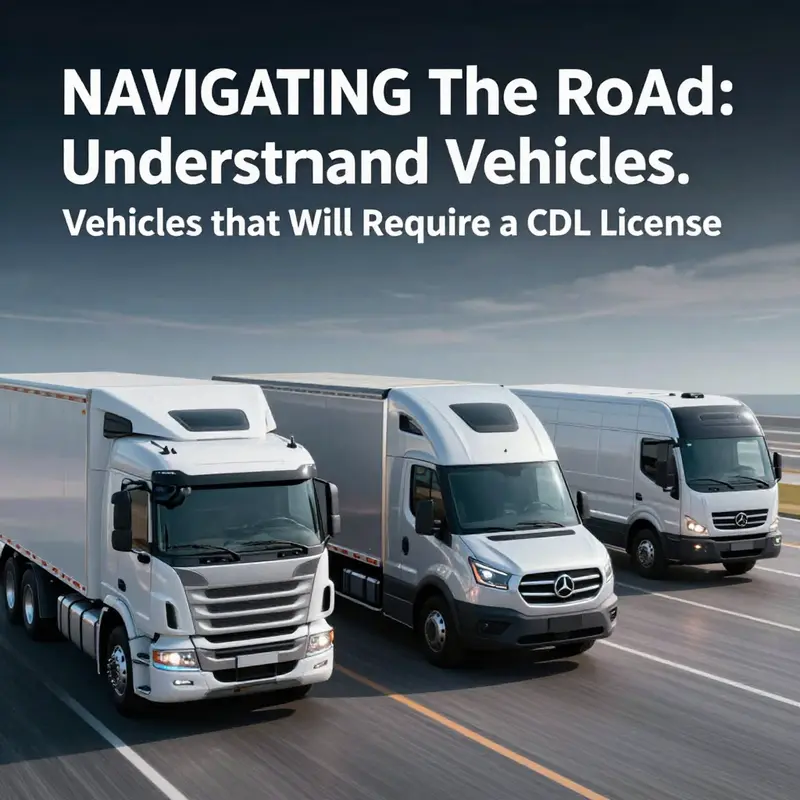
A CDL sits at the intersection of safety, commerce, and technology. For decades, the rules separated shuttle buses from long-haul tractor-trailers, and from hazmat or large passenger operations. The framework hinges on GVWR, intended use, and cargo. Class C is a boundary capturing smaller buses, certain hazmat operations, and mixed configurations where weight and passenger loads align with narrower duties. But the line between what requires a CDL and what does not is not fixed; it is a dynamic boundary shaped by fleets, logistics, and technology. As fleets expand into new powertrains and automated systems, the CDL landscape shows signs of a broader horizon. The future may see a wider array of vehicles under the same license regime, or under related requirements that blend traditional driving skill with new operational competencies.
In the near future, automation will be a key shift. Autonomous and semi-autonomous driving technologies are increasingly embedded in commercial fleets. The question is the role of a human driver when automation can handle routine driving but may require human intervention in emergencies. The FMCSA has signaled regulatory thinking must adapt. This does not mean a wholesale redefinition of which vehicles require a CDL, but it could incorporate oversight responsibilities for automated operations. Practically, this could translate into amendments to endorsements or specialty training that prepare drivers to monitor, intervene, or supervise automated platforms without surrendering core CDL skills. For entrants, this means broad readiness to operate in a driving ecosystem where automation and human judgment share the road.
Electrification adds another layer. Electric cargo vans and heavy trucks are moving from niche to core components of last-mile and regional logistics. When these EVs carry heavy payloads and traverse urban corridors, their GVWR may exceed thresholds that channel some operators into certain license categories. The shift toward sustainable urban logistics means more vehicles will require formal credentials, and training that covers electric powertrains, battery safety, regenerative braking, and charging infrastructure. The shift is about rethinking maintenance, ride quality, and emergency handling in a world where propulsion comes from batteries rather than a diesel engine. For aspiring drivers, this means competence in new systems, an appreciation for safety around high-voltage components, and understanding how charging availability and downtime affect safety and uptime.
Alongside autonomy and electrification, specialized vehicles continue to populate the CDL landscape. Mobile medical units, modular construction equipment carriers, and utility service vehicles illustrate the broader scope of CDL jurisdictions. These vehicles support infrastructure resilience and emergency response, and operate where precision matters. The line between general freight and specialized duties is becoming a spectrum. Employers and regulators are focusing more on training pipelines that prepare operators for these roles. It is not just about steering a heavy machine; it is about understanding safety configurations, road-user interactions, and how to perform critical tasks when lives or essential services depend on timely delivery.
As the field evolves, so does the preparation required of CDL applicants. Foundational skills remain essential: vehicle control, cargo securement, and hours-of-service compliance. Yet entrants will likely need a broader toolkit. Training will emphasize electric powertrains, battery handling, and integration with telematics and fleet management. Drivers may be asked to demonstrate familiarity with automated systems, including when to assume manual control in unexpected situations. Emergency intervention strategies for automated platforms will be a focus, requiring calm, methodical problem-solving. The regulatory environment will encourage continuing education and recertification to keep pace with technology and safety practices. The CDL becomes a framework of competencies rather than a single skill.
For those pursuing CDL credentials, the process remains administered by state agencies with federal standards guiding core requirements. Age thresholds, intrastate versus interstate operation, and specific endorsements stay central. The rule that you must be at least 18 to drive within your state and 21 to cross state lines or handle hazardous materials remains in place, even as vehicles become more varied. The 2025 reforms around immigration status have added a dimension to licensing decisions. Federal guidance and state administration together shape the path to the wheel, so prospective drivers should stay informed and verify current rules with their state motor vehicle department and FMCSA.
The broader trend points to a more expansive CDL framework as new vehicle types enter service and urban delivery expands. That means more rigorous training pipelines, testing for emerging vehicle technologies, and a greater emphasis on safety culture. Policymakers, educators, and industry leaders are encouraged to demystify licensing and to make the path to CDL accessible to a diverse workforce. The CDL landscape becomes a societal tool for reliable, safe, and efficient mobility.
For readers navigating this terrain, monitor how vehicle categories float in and out of eligibility as technology and regulations shift. The trajectory suggests more vehicles at the edge of Class C or near GVWR thresholds could drift into a broader CDL framework. Those preparing now by gaining experience with a wide range of propulsion systems, safety procedures, and emergency response will be better positioned to adapt. Stay informed by official guidance and agency updates before pursuing a CDL, and connect with state authorities for the most up-to-date criteria.
Finally, licensing intersects with policy and workforce development. If cities push for more last-mile electric fleets and fleets adopt automation to boost efficiency, the question becomes not only who can drive a vehicle but who can supervise, maintain, and troubleshoot automated systems. In this future, the CDL may become a gateway to a family of competencies that ensures a driver can handle conventional tasks and manage the responsibilities of high-tech operations. The responsibility of safe operation is a composite set of skills that grows with the vehicles themselves. The CDL remains the passport to entering this ecosystem, with meaning and required competencies expanding as the road evolves.
To explore how state rules intersect with licensing, readers can review resources on how jurisdictions adapt to changing vehicle types and fleet needs. This is a living policy area influenced by local priorities and safety goals. Practical steps include seeking training that covers a spectrum of vehicle technologies and staying attuned to how fleets audit new safety procedures. The road ahead is broader than simple classification by GVWR or passenger load; it is a shift toward holistic mastery of operating in a technologically advanced transportation network.
Final thoughts
Understanding the vehicles that require a CDL license is essential for ensuring the safety, compliance, and efficient operation of commercial vehicles. Each chapter of this article has provided a comprehensive look at the various classes of vehicles that demand specific licenses, eligibility criteria, regulatory requirements, and future trends in the industry. As regulations evolve and new vehicle technologies emerge, staying informed about CDL licensing will continue to be pivotal for both new and existing drivers, alongside vehicle owners and dealerships. By recognizing these aspects, stakeholders can better navigate the complexities involved in commercial driving.