
A vehicle license is a fundamental legal document that serves as a prerequisite for operating a vehicle on public roads. It not only ensures adherence to safety and insurance standards but also verifies ownership and registration. Understanding vehicle licensing is crucial for new drivers, seasoned vehicle owners, and auto dealerships. This guide delves into the various dimensions of vehicle licenses, including their definitions, regulatory implications in different countries, their vital role in traffic safety, and their broader economic effects. Each chapter will provide insights that contribute to a comprehensive understanding, ultimately demystifying the importance of vehicle licenses.
License to Drive: Understanding What a Vehicle License Really Is
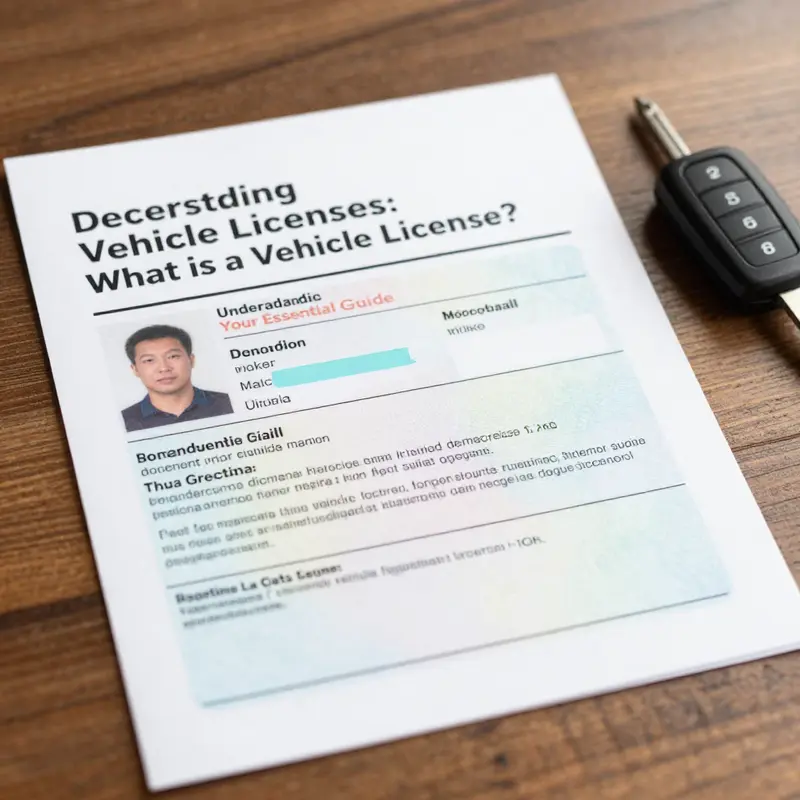
On every journey along the road, there is a document quietly guiding who may operate a vehicle and under what conditions. A vehicle license—the phrase itself can be slippery, because in everyday speech it may refer to different official papers in different places—functions as a formal authorization to drive on public streets. At its core, a vehicle license is a legal instrument. It confirms that a vehicle is registered, that the person responsible for the vehicle is known to the authorities, and that the vehicle, in its state, has met the necessary safety, registration, and sometimes insurance requirements to travel on public roads. The license is not a mere tag or a sticker; it is a contractual and regulatory hinge linking the vehicle, its owner or operator, and the road authority that oversees a jurisdiction. In common practice within several major systems, the license is associated with the vehicle’s registration documents and, in some places, with the license plate itself. Yet the precise meaning shifts with geography. In the United States and the United Kingdom, for instance, a vehicle license is typically understood as a registration certificate or title—a document that confirms legal ownership and registration status. In other contexts, especially in formal government language, the term can be closely aligned with the plate itself, though strict terminology may call the plate a vehicle registration plate rather than a license. In China, the distinction becomes more nuanced still, with the Motor Vehicle Driving License covering the driver and the Motor Vehicle Registration Certificate covering the vehicle. Collectively, these documents create a lattice of compliance that aims to ensure safety, accountability, and reliable information about every vehicle that shares public space. A useful way to approach the topic is to view the license as a compact ledger: a single official record that registers the year of purchase or transfer, the identification of the vehicle, and the person who bears responsibility for its operation on any given day. This ledger serves not only as proof of legal operation but as a means for authorities to track whether the vehicle has passed required inspections, meets environmental standards, and remains properly insured. The perimeters of licensing, then, extend well beyond mere ownership proofs. They establish the framework within which vehicles circulate, how they are tested for roadworthiness, and how their use is monitored over time. The importance of this system is not only about preventing theft or fraud but about maintaining a living registry that helps protect other road users, pedestrians, cyclists, and the environment. The chapter that follows unspools how a vehicle license fits into the broader ecosystem of road regulation, ownership transfer, and public safety, while highlighting the shared purpose that links jurisdictions around the world. The details matter because they shape everyday experiences, from how you register a car when you buy it, to how you renew a license plate, to how you prove you meet insurance and safety standards when you register a vehicle for the first time. The vehicle license sits at an intersection where law, commerce, and personal responsibility converge; it is an instrument that translates the abstract rights of vehicle ownership into concrete, enforceable obligations, and it helps ensure that each journey is backed by a documented commitment to safety and accountability. Within this framework, the precise components of the license can vary, but the underlying logic remains consistent: governance requires verified information about who may drive, what vehicle is involved, and whether that vehicle meets the standards necessary for public operation. In practical terms, this means that a license ties together three essential elements: legitimacy to operate, proof of registration, and an ongoing responsibility to maintain safety and compliance. When you own or operate a vehicle, the license is a continuous reminder that driving is not a personal privilege alone but a public trust that depends on routine checks, timely renewals, and honest reporting of changes in ownership, address, or vehicle condition. The complexity of licensing systems reflects the diversity of policy objectives that governments pursue. Some jurisdictions place heavy emphasis on safety inspections and emissions testing as preconditions for a license, while others prioritize robust record-keeping and transparent ownership trails. Across borders, the principle holds: licensing is a mechanism for balancing individual mobility with collective safety and accountability. The license thus functions as a bridge between personal mobility and public policy, translating personal needs—getting to work, transporting a family, running a business—into a framework that others can regulate, verify, and trust. It is a living document, because it must adapt to changing circumstances: new owners, new vehicles, new address information, changes in insurance status, and periodic safety or emissions checks. For the vehicle owner, that adaptability translates into practical steps: ensuring registration details remain current, maintaining insurance coverage as required by the jurisdiction, and keeping the vehicle in a condition that meets safety standards. When any element of the licensing chain falters, the consequences ripple outward, affecting not only the owner but other road users who depend on the reliability of this system to function as intended. This interconnectedness is why licensing is not a one-time transaction but a recurring process that accompanies the vehicle for its entire lifespan on the road. The process of obtaining a vehicle license—whether as a first-time registration or a subsequent renewal—unfolds in stages, though the specifics differ by country. In many places, the journey begins with ownership transfer or initial registration, where the vehicle’s make, model, and identification numbers are recorded, and the owner’s information is verified. The vehicle’s identification number, or VIN, becomes a critical anchor in the record, offering a unique fingerprint that cannot be duplicated. This VIN ties the vehicle to its registration certificate, and often to the physical plate, where applicable. As part of the registration, authorities typically require proof that the vehicle has met safety standards and, in many cases, that it has up-to-date insurance coverage. The emphasis on insurance is strategically important: it ensures that, in the event of an accident or damage, victims and the broader public have a path to compensation and accountability. In some systems, the licensing process also includes emissions testing or safety inspections that validate the vehicle’s condition and environmental impact. These checks are not merely bureaucratic hurdles; they are preventive measures designed to identify and address defects, worn components, or noncompliant emissions before a vehicle returns to the road. The paperwork itself—the registration certificate, proof of insurance, and any inspection records—acts as tangible evidence that the vehicle has complied with the regulatory framework. When a vehicle changes ownership, the license record must be updated to reflect the new responsible party. This transfer of responsibility is a keystone of the licensing architecture, ensuring that the entity accountable for the vehicle’s actions is the same one that holds the license. Without timely and accurate transfer, both the seller and the buyer can find themselves exposed to liability gaps, fines, or difficulties in legally operating the vehicle on public roads. The license also interacts with the concept of plate issuance or display, depending on the jurisdiction. In some regions, a license is closely bound to the plate, serving as the official credential that authorizes the plate’s use on that vehicle. In others, plates may be separate from the license itself, but the two documents must align in the records so that police, inspectors, and other authorities can reliably trace vehicle identity and ownership. This relationship between the license, the plate, and the registration document illuminates a broader point: licensing is not a single document standing alone, but a cluster of records that collectively establish legal operation, ownership, and compliance. The literature and guidance provided by official sources reinforce this integrated view. Dedicated government portals frequently describe how to apply for, renew, or update vehicle licenses, detailing the documents needed, the fees assessed, and the timelines involved. They also clarify how licenses interact with the broader system of roadworthiness, insurance, and road safety. In a world of varying administrative traditions, one constant remains: the license serves the public as a guarantee that a vehicle entering public space has been assessed against defined standards and that the person responsible for that vehicle can be held accountable for its use. From the consumer perspective, understanding the vehicle license can demystify common questions that arise when buying, selling, or simply driving a car. Why do I need the license plate? Why is there a separate registration certificate? How often must I renew, and what triggers a renewal? These questions map onto the everyday reality of vehicle ownership. They remind drivers and owners that the privilege of road use comes with responsibilities that extend beyond personal convenience. It is equally important to recognize that licensing practices reflect local policy goals. Some jurisdictions emphasize consumer protection and transparent ownership trails; others prioritize environmental compliance or road safety through regular inspections. The resulting mosaic of rules is not arbitrary. It is designed to create predictable expectations for drivers, law enforcement, insurers, and service providers, while offering a clear framework for addressing noncompliance. As a result, the vehicle license becomes a touchstone of reliability in modern mobility. It signals not only that a vehicle is entitled to be on the road but also that the operator is recognized, accountable, and bound by the rules of the road. For the reader seeking a practical orientation, it helps to remember three core ideas: the license confirms legitimacy to operate; it links to the vehicle’s registration and ownership; and it anchors ongoing safety and regulatory compliance through inspections, insurance, and timely renewals. With that foundation, navigating the licensing landscape becomes less about a maze of forms and more about a continuous, shared trust between drivers, vehicle owners, and the authorities charged with keeping roads safe. The language may vary from country to country, and the precise documents may look different on a page, but the intent is remarkably consistent: to create a responsible and verifiable system in which every vehicle operates under known terms and where accountability rests with a clearly identified operator. As you move through your own journey with a vehicle—whether you are purchasing a car, transferring ownership, or simply keeping up with annual renewal requirements—keeping the license in clear view helps you understand not just what you must do, but why you must do it. The license is not a barrier to mobility; it is a framework that makes mobility safer, fairer, and more auditable for everyone who shares the road. For those who want to explore more about how licensing rules can vary within one country or how inspections shape the value of a vehicle over time, consider exploring state-specific or country-specific guidance, such as the detailed resources provided by official channels. For instance, official guidance on vehicle licensing provides structured information about eligibility, documentation, and renewal processes that are tailored to the jurisdiction and legal framework in place. State Rules Impact on Driver Licensing helps illustrate how local rules can shape the path to licensing and the ongoing responsibilities of drivers and owners. In addition, it is worth consulting authoritative government resources for country-specific instructions and timelines. For officials and policymakers, the licensing framework also serves as a tool for measuring compliance, enforcing standards, and guiding improvements in road safety and efficiency. The flexibility of licensing systems to adapt to new technologies—such as digital records, online renewals, and integrated enforcement—reflects a forward-looking approach to mobility that remains anchored in the essential idea that operating a vehicle on public roads is a regulated and accountable activity. In sum, a vehicle license is not simply a label or certificate but a living contract among a driver, a vehicle, and the state. It is the formal articulation of responsibility, the proof that a vehicle has been evaluated for safety and legality, and the mechanism by which societies manage a complex web of ownership, use, and accountability on shared spaces. Understanding this chapter’s core concept—the license as a gateway to lawful, safe, and transparent motor travel—helps readers appreciate the everyday processes that keep traffic moving, while also recognizing the deeper social purpose behind the rules that govern road use. For those seeking more comprehensive guidance on how licensing works and where to find official information, consult the government resources on vehicle licensing. The UK government’s official site, for example, offers detailed guidance on licensing requirements and procedures that apply to residents and vehicles in the United Kingdom. You can access this guidance at https://www.gov.uk/vehicle-licence.
The Legal Thread of Vehicle Licenses: How Nations Authorize, Regulate, and Cross Borders
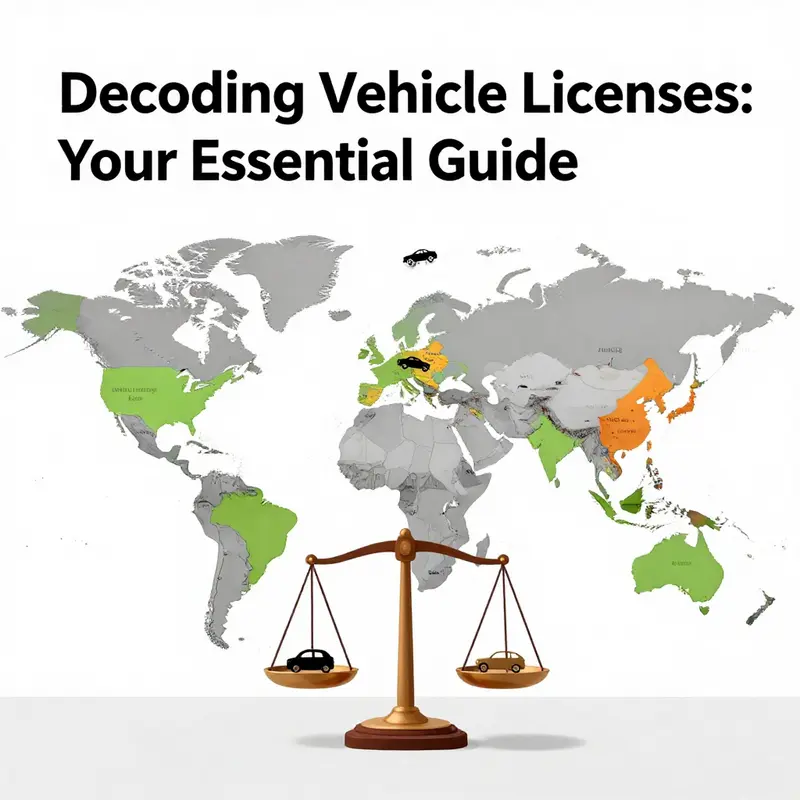
A vehicle license is more than a single document tucked into a glove compartment; it is the formal permission and the public acknowledgment that a specific motor vehicle may travel on public roads. At its core, a vehicle license is a legal instrument issued by a government authority that certifies a vehicle’s eligibility to be operated, tying together safety, registration, and insurance requirements into a single, enforceable framework. In practice, the license embodies two related ideas: the owner’s formal claim to the vehicle’s registration and the vehicle’s authorization to be driven on civic spaces that are shared with others who are governed by the same rules of the road. Across different jurisdictions, this interplay of authority, safety, and accountability shapes everyday driving as much as it shapes the design of licensing procedures themselves, and it underpins the public trust that keeps roads functioning smoothly.
What the phrase means, however, shifts with local terms and regulatory culture. In many parts of the United States and the United Kingdom, people often refer to the registration and ownership documents, sometimes using the term vehicle license to denote the registration certificate or title that confirms legal ownership and registration status. In these contexts, the plate itself—often colloquially called a license plate—serves primarily as a public identifier for the vehicle rather than a grant of permission to operate. The distinction matters because the license, registration, and plate each play distinct roles in governing road use: one verifies who owns the vehicle, another confirms that the vehicle is registered and insured, and a third visibly identifies the vehicle to law enforcement and other road users. This triangulation of documents is a common feature across many legal systems, even though the precise naming and emphasis can vary.
Turning to another part of the world, the terminology and emphasis can be more specific still. In China, for example, the system differentiates between the Motor Vehicle Driving License, which governs the driver’s ability to operate a vehicle, and the Motor Vehicle Registration Certificate, which governs the vehicle’s own standing in the public registry. The Vehicle License, as it is translated in some contexts, is a statutory document that allows a motor vehicle to travel on Chinese roads and includes essential details such as the vehicle’s make, model, the owner’s name, registration date, and inspection status. The structure is deliberately multi-part, often described as comprising a cover, a main page with vehicle details, and a supplementary page for inspection records. This tripartite organization mirrors a broader principle found in many regulatory regimes: driving privileges depend on both the person behind the wheel and the vehicle itself meeting defined safety, registration, and inspection standards. Officials emphasize that authoritative information about licensing procedures and requirements is publicly accessible through government channels, and this emphasis on transparency is a consistent theme across systems as diverse as those in Europe, North America, and Asia.
The purpose of a vehicle license, then, sits at the intersection of individual responsibility and collective safety. It is designed to ensure that vehicles on the road have been verified for roadworthiness, that drivers are fit to operate them, and that the vehicle’s ownership and accountability trail can be traced. In practical terms, a valid license means that a vehicle is properly registered, that it has the necessary insurance coverage, and that any required inspections are up to date. It is not a static badge of status; it is a live, evolving record that can influence enforcement actions, premium costs, and even the ability to register a vehicle in the first place. The license becomes a hinge point—connecting ownership, safety compliance, taxation, and public safety—as part of a broader system of road governance.
A deeper layer of complexity emerges when we widen the lens beyond individual countries to consider regional and international contexts. In the European Economic Area, there are currently more than 170 distinct driving-licence types in use among member states. This level of fragmentation illustrates how licensing systems can diverge even within a region that shares a common market and similar road rules. Such diversity matters for everyday life: foreign drivers may encounter different testing procedures, renewal cycles, or recognition agreements when crossing borders. In response, the European Commission has pursued harmonization efforts and provides tools such as the Driving Licence in Member States portal to help map out how licenses are recognized and how cross-border mobility can be facilitated. The underlying goal is not to erase national differences but to reduce friction for drivers who move across borders, whether for work, study, or travel.
In the United States, the licensing landscape is intentionally decentralized. Each state administers its own driver-licensing program, even though most states align with federal guidelines on safety standards and testing protocols. The result is variation in testing difficulty, age requirements, recognition of licenses from other states, and the duration of license validity. For many people, this means that moving from one state to another can involve a learning curve, as rules about testing, renewals, and required documentation can differ from place to place. The federal government sets broad safety goals, but the states implement the details, which means drivers must stay informed about local requirements whenever they relocate or add a new vehicle to their household. The decentralized model reflects a broader policy philosophy: licensing is best tailored to local traffic environments, enforcement practices, and public safety priorities, even as it creates a practical challenge for cross-border mobility within the country.
Other regions adopt a very different approach. Countries with highly centralized systems, such as certain East Asian nations, pursue standardization across the entire nation. These systems typically require rigorous written tests and practical exams, and they tend to emphasize ongoing education and training for licensed drivers. The common thread here is consistency: standardized processes, uniform criteria for admission to the licensing system, and a coherent national narrative about road safety. Centralized models can facilitate rapid adoption of safety best practices and ensure that all licensed drivers meet identical benchmarks, but they also demand high administrative capacity and continuous investment in testing infrastructure, examiner training, and audit mechanisms to maintain credibility.
Looking ahead, emerging legislative frameworks acknowledge the evolving nature of vehicle technology. The rapid development of automated and autonomous vehicles has prompted policymakers to consider how licensing should adapt. A recent example in regulatory discourse is a three-tiered approach that addresses pre-market introductions, in-service monitoring, and state-level oversight. The idea is to create a safety net that covers the lifecycle of automated vehicles—from initial market entry to ongoing performance on public roads—without losing sight of the traditional licensing framework that governs human drivers. This convergence of technology-specific regulation with conventional licensing systems signals a future in which the boundaries between vehicle status, driver certification, and state oversight become more fluid. The trajectory is toward a more integrated, technology-aware governance model that protects public safety while enabling innovation.
Amid these broad patterns, the practical questions about how to obtain and maintain a vehicle license remain consistent. In most jurisdictions, securing the right to drive or to operate a vehicle involves a careful sequence of steps: establishing ownership and registration for the vehicle, ensuring adequate insurance coverage, and meeting safety requirements through testing, inspection, and ongoing compliance. For a driver, the path typically begins with a learner’s permit, followed by a practical driving test and a theory exam, culminating in a full license that must be renewed periodically. For the vehicle itself, registration is the legal record that confirms ownership, status, and compliance with safety standards; the plate—perhaps the most publicly visible symbol of vehicle identity—announces to others on the road that the vehicle exists within the regulatory framework. The two realms—driver and vehicle—are inseparable in practice, even when they are governed by distinct administrative processes.
Within this continuum of rules and records, a simple but essential reminder holds true: licensing is not a one-off event, but an ongoing relationship between a driver, a vehicle, and the state. Updates to address, ownership changes, modifications to the vehicle, or new insurance arrangements all trigger updates in the official records. Compliance with periodic inspections and re-certifications keeps the road system credible, and it plays a direct role in shaping the perceived and real safety of traffic. For those navigating the licensing landscape, awareness of both local specifics and broader international tendencies helps illuminate why rules exist in the first place. It also clarifies how, over time, the document that grants permission to operate a vehicle becomes a living archive of responsibility, safety, and accountability on the roadways we share.
As we consider how a license functions in a global context, it is useful to remember the practical friction points that travelers and new residents encounter. Moving between states or countries often tests the limits of recognition, the reuse of documents, and the transfer of record histories. The challenge—and opportunity—lies in balancing national sovereignty over road safety with the benefits of smoother mobility and clearer cross-border expectations. The internal dynamics of licensing are not merely bureaucratic—they influence the way roads are policed, how premiums are calculated, and how quickly a system adapts to new technologies like connected vehicles and autonomous driving. In this sense, licensing is as much about public trust and governance as it is about ownership or a simple stamp of approval.
For readers who want to explore official guidance and the latest regulatory developments from different regions, one accessible way to deepen understanding is to compare how licenses are discussed in official portals and regional directives. For instance, the European Commission’s resources on driving licenses across member states provide a concise snapshot of harmonization efforts and the reality of multiple, overlapping licensing regimes within a single economic area. Such portals are not just bureaucratic references; they offer a map of how mobility is imagined, regulated, and supported across diverse legal cultures. They illuminate why the practical steps to obtain and maintain a license can look very different from one country to the next, even while the underlying purpose—safety, accountability, and lawful road use—remains constant.
In practice, drivers who travel or relocate should keep a few guiding principles in mind. First, know the local requirements for both the vehicle’s registration and the driver’s license. Second, recognize that a license is part of a broader system of road safety that includes insurance and regular inspections. Third, be aware that cross-border use may require additional documentation or recognition arrangements, depending on whether the license is accepted in another jurisdiction. Finally, stay informed about new regulatory developments that can affect licensing for traditional drivers and for vehicle technologies that push beyond conventional operating paradigms. The road ahead will continue to reveal how licensing evolves in tandem with changes in vehicle design, traffic management, and digital record-keeping.
For readers seeking further detail and official guidance, see the European Commission’s Driving Licence in Member States resource for an orientation to cross-border licensing considerations and how member states approach recognition and validation of licenses across borders. State rules impact on driver licensing offers a focused lens on how regional and state-level rules can shape the practical experience of obtaining and renewing a license, especially for individuals who move between jurisdictions. This internal reference points to a broader conversation about mobility, safety, and accountability that remains central to any comprehensive discussion of what a vehicle license is and why it matters. For those who want to explore the relationship between licensing and vehicle compliance in a broader, European context, the external resource provides a detailed overview of harmonization efforts and cross-border considerations: https://ec.europa.eu/growth/transport/driving-licence_en.
null
null
The Economic Compass of Vehicle Licensing: How Licenses Shape Ownership, Policy, and Public Budgets
A vehicle license is more than a formal tag that accompanies a car on its journey. It is a legally sanctioned instrument that links ownership, responsibility, and access to the road. While most readers may associate a license with a plate or a registration certificate, the deeper economic value lies in the way licenses are issued, priced, and managed by governments. The underlying logic is straightforward: licensing creates a controlled space for vehicle operation, aligning individual behavior with public goals such as safety, environmental protection, and traffic efficiency. Yet the consequences of licensing policies stretch far beyond road safety. They reach into household budgets, urban planning, and the fiscal health of cities and nations. As such, the economics of vehicle licensing sits at the intersection of private choice and public governance, where every renewal fee, quota limit, and auctioned permit resonates through markets, households, and the arc of city development.
For vehicle owners, the license represents formal acknowledgment—an official record that a vehicle is registered, insured, and meets minimum regulatory standards. It is a tangible commitment to maintain safety inspections and emissions controls, and, crucially, it marks the point at which a private asset becomes capable of legal use on public roads. Becoming a licensed vehicle owner involves more than a one-time payment. It entails a cascade of direct costs—registration fees, taxes, periodic inspection charges, and renewal fees—that accumulate over time and influence a household’s decision calculus. When ownership is expensive or onerous to renew, households reassess the value of keeping a vehicle, choosing to delay purchases, switch to cheaper alternatives, or rely more on shared mobility. The administrative burden accompanies the finances: document requirements, deadlines, and the need to keep records in good standing. In regions with simple, predictable procedures, the licensing experience can feel routine; in places with complex, congested systems, the process becomes a frictional cost that complicates even ordinary decisions about car ownership.
The friction is magnified in markets that employ scarcity-driven licensing. In several megacities, the number of new licenses is deliberately capped, and access to a license is allocated through auctions or lotteries. When governments implement quotas, the economics of licensing becomes a live test of scarcity rent. The price of a license in such systems can surge to a level that makes it a quasi-asset class in its own right. In extreme cases, the market value of a license may exceed the price of the vehicle itself. This translation of a regulatory instrument into a valuable asset has profound implications. It can deter first-time buyers, shift demand toward used rather than new vehicles, and incentivize investment in alternative modes of transport. It also opens the door to informal markets and speculative activity that operate on the periphery of formal rules. The behavior of consumers shifts as well: with licenses priced up, households may postpone purchases, adopt pooling arrangements, or rely more heavily on ride-hailing and public transit. These behavioral responses can ripple through neighborhoods, altering traffic patterns, parking demand, and local business activity.
From the policy perspective, the license is a robust revenue lever and a strategic tool. Vehicle-license fees, registration charges, and auction revenues provide governments with predictable streams that can be directed toward the very problems the licensing regime seeks to address—congestion, air pollution, and the strains on infrastructure that follow rapid urban growth. The revenue story is especially salient in cities that treat license allocations as a central policy instrument. Auction proceeds in places with strict quotas can be substantial, and planners often earmark a portion of those funds for public transit expansion, electric-vehicle charging networks, or environmental protection programs. When allocations are calibrated to favor cleaner technologies, the licensing regime becomes a lever for climate policy, aligning short-term revenue with long-run sustainability goals. Yet these benefits come with caveats. Revenue-generating licensing systems can exacerbate inequality if the costs of accessing a license are disproportionately borne by lower-income households. The ethical dimension is not merely a side note; it is a central design concern. If the system prices people out of private transport or forces vulnerable groups into less flexible mobility options, the policy may fail its equity tests even as it succeeds on congestion or emissions fronts.
A central economic effect of licensing policy is its influence on urban form and mobility choices. In cities where new licenses are tightly rationed, families may decide against owning a car in favor of investing in a more versatile, multi-modal commute. This shift can liberate urban space from parking requirements and reduce the scale of road infrastructure needed to accommodate private vehicles. It also invites a greater reliance on public transit, cycling, and walking. These behavioral shifts have cascading consequences. Public transit systems require different capital and operating expenses, which must be funded by tax revenue or license-related income. The success of such shifts hinges on the quality and reliability of alternatives to private cars. When buses run on time, trains connect efficiently to workplaces, and bike lanes feel safe and welcoming, the licensing regime can deliver its environmental and social goals without imposing undue burdens on low-income residents who rely on affordable mobility options. Conversely, if licensing costs become a barrier to participation in the urban economy, the very goals of congestion management and emissions reductions may be undermined by reduced access to employment and services.
The economic logic of vehicle licensing also interacts with the transition to electric vehicles. In many places, policymakers are restructuring license allocations to reward cleaner technologies. This is not merely a symbolic gesture; it is a design choice aimed at accelerating climate-positive outcomes. When license scarcity collides with EV incentives, the resulting dynamics can shift the timing and pace of EV adoption. If caps are aligned to favor electric vehicles, households may be nudged toward electrified ownership even when the upfront cost of an EV remains high relative to internal-combustion alternatives. In such settings, the licensing regime plays a role similar to that of fuel taxes or charging subsidies, directing consumer preference through price signals embedded in the allocation framework. The result can be a more rapid integration of EVs into the fleet, with anticipated benefits in air quality and energy efficiency. Yet this approach also requires careful calibration to avoid undue windfall gains for early adopters or unintended distortions in second-hand markets, where the resale value of conventional vehicles might plummet if the license environment strongly favors EVs.
Beyond these macro-level effects, licensing policies shape the daily life of households in tangible ways. The cost of a license becomes a recurring line item in the family budget, affecting decisions about the worth of owning a car in a given location. If renewal cycles are frequent and fees rise with inflation or vehicle age, the cumulative cost of ownership grows in ways that influence maintenance investments, insurance choices, and even the likelihood of seeking cheaper, older models that still meet regulatory standards. In crowded urban centers, the scarcity-driven structure of licenses can intensify regional disparities. Neighborhoods with better access to license allotments or lower renewal costs may experience faster growth in car ownership, while other districts become more transit-dependent. Over time, this can reshape local labor markets, housing values, and the accessibility of essential services for residents with varying income levels. These effects, though difficult to quantify in a single snapshot, accumulate across years and decades, becoming a key ingredient in the broader calculus of urban development.
The discussion would be incomplete without acknowledging the precise, practical aspects that govern day-to-day licensing. In many jurisdictions, the license encompasses not only the right to operate but also the obligation to maintain insurance and safety records, to undergo periodic inspections, and to keep registration information up to date. The alignment of these requirements with broader environmental and safety standards reflects how revenue and policy goals intertwine. For example, regular inspections and emissions tests, while primarily aimed at safety and environmental protection, also serve as gatekeeping mechanisms that influence market dynamics. Vehicles that fail standards may be sidelined from the roads until repairs are made, which in turn affects resale values, maintenance markets, and the timing of new purchases. The administrative side—the paperwork, the renewals, the cross-checks between different government departments—adds a cost that falls on households and businesses alike. In regions where these processes are centralized and streamlined, owners experience smoother renewal cycles and fewer delays; in places with fragmented administration, delays can compound the economic burden and undermine trust in the licensing system.
To make sense of these dynamics, it helps to situate licensing within the broader ecosystem of government services and national policy. The license does not exist in isolation; it is part of a network that includes vehicle taxation, insurance regulation, safety standards, and urban transport planning. When governments view licensing as a lever for multiple objectives—traffic safety, air quality, transit investment, and social equity—the design space expands. Decisions about how to allocate licenses—whether through auctions, lotteries, or first-come, first-served rules—reflect trade-offs between efficiency, fairness, and administrative feasibility. The revenue implications feed back into public services, with funds directed to road maintenance, public transit expansions, or environmental programs. This circularity—policy instrument, market response, budgetary outcome, and social impact—defines the economic character of vehicle licensing.
For readers seeking a practical sense of how these ideas play out across different regulatory regimes, it is useful to consider how licensing interacts with inspection regimes and registration documentation. In the United Kingdom, for instance, the licensing framework is tightly integrated with registration and roadworthiness checks, guided by official guidance from government portals. In the United States, state-level rules about inspection and registration shape the costs and opportunities associated with license ownership. A useful, focused resource on how inspection requirements vary across states can be found at US states’ vehicle inspection requirements. This reference helps illuminate how seemingly technical rules influence everyday costs and risk assessments for vehicle owners, especially those who move across state lines or operate fleets.
The licenses’ price signals, the allocation mechanisms, and the associated regulatory requirements do more than determine whether a car can legally travel from point A to point B. They shape how people decide to commute, where they live, and how cities evolve. As urban planners and policymakers confront growing concerns about congestion and climate change, the licensing regime emerges as a practical instrument to guide behavior toward more sustainable, equitable outcomes. The challenge lies in designing a system that balances revenue needs with the aspiration to democratize mobility, ensuring that access to transportation remains within reach for residents across income levels while still delivering the public goods that licensing seeks to secure. The trajectory of this policy instrument will hinge on thoughtful calibration: aligning license scarcity with targeted incentives, ensuring transparency in allocation, and protecting vulnerable households from excessive cost burdens while still preserving the capacity to fund essential transportation infrastructure.
In this sense, the vehicle license stands as a litmus test for how a society negotiates the trade-offs between individual freedom to move and collective responsibility to build a more efficient, cleaner, and more inclusive urban environment. It tests the imagination of policymakers and the resilience of households, reminding us that a simple piece of paperwork can carry the weight of a city’s economy, its social fabric, and its future climate trajectory. As cities continue to grow and technology reshapes travel choices—from electrification to micromobility—the economic life of licensing will likely become more intricate. Yet at its core, the license remains a contract: a promise that when you take your car onto a public road, you do so within a framework that seeks safety, fairness, and progress for the community as a whole.
For readers who want to explore the regulatory texture behind these dynamics further, the discussion above complements broader policy debates and underscores why a seemingly mundane document can have outsized economic consequences. The vehicle license is not simply about permission; it is a financial, social, and environmental instrument that helps steer the trajectory of mobility in the 21st century. It links personal budgets to public budgets, private choices to collective outcomes, and the everyday act of driving to the long arc of urban transformation. In that sense, understanding what a vehicle license is—beyond its technical definition—means recognizing its central role in shaping who moves, how much it costs, and what cities become as a result. As the next chapter turns to the practicalities of compliance, ownership, and enforcement, the reader will see how these economic forces translate into concrete experiences on the road and in the wallet.
External reference for further context on the economics of licensing and the EV transition can be found in detailed analyses of licensing allocations and electric vehicle adoption, which explore how auction revenues, equity considerations, and policy design interact with urban energy futures: https://www.youtube.com/watch?v=7X9Y8k1Z5dE
Internal link to related regulatory details on inspections across states: For a focused look at how inspection requirements can vary and influence ownership decisions, see US states’ vehicle inspection requirements.
Final thoughts
In summary, a vehicle license is more than just a piece of paper; it constitutes the legal backbone for driving and vehicle ownership. By understanding its definition, legal implications, impact on public safety, and economic effects, individuals and businesses alike can navigate the complexities of automotive regulations. For new drivers, gaining knowledge about vehicle licenses is essential not just for compliance, but also to foster responsible driving habits. As the automotive landscape continues to evolve, appreciating the nuances of vehicle licensing will play a crucial role in ensuring safer roads and smoother operations in the vehicle ownership experience.