
Vehicle licenses are essential for ensuring safety and legality in vehicular operations on public roads. This article offers a comprehensive overview, starting with the definition and significance of vehicle licenses, before diving into the various types and variants available around the world. We will also discuss the legal framework that governs vehicle licensing and the implications for vehicle owners and drivers alike. Understanding these aspects is key for new drivers, existing drivers, vehicle owners, and auto dealerships to navigate the regulatory landscape effectively.
null
null
Vehicle License Unfolded: A Comprehensive Guide to Types, Variants, and Global Practice
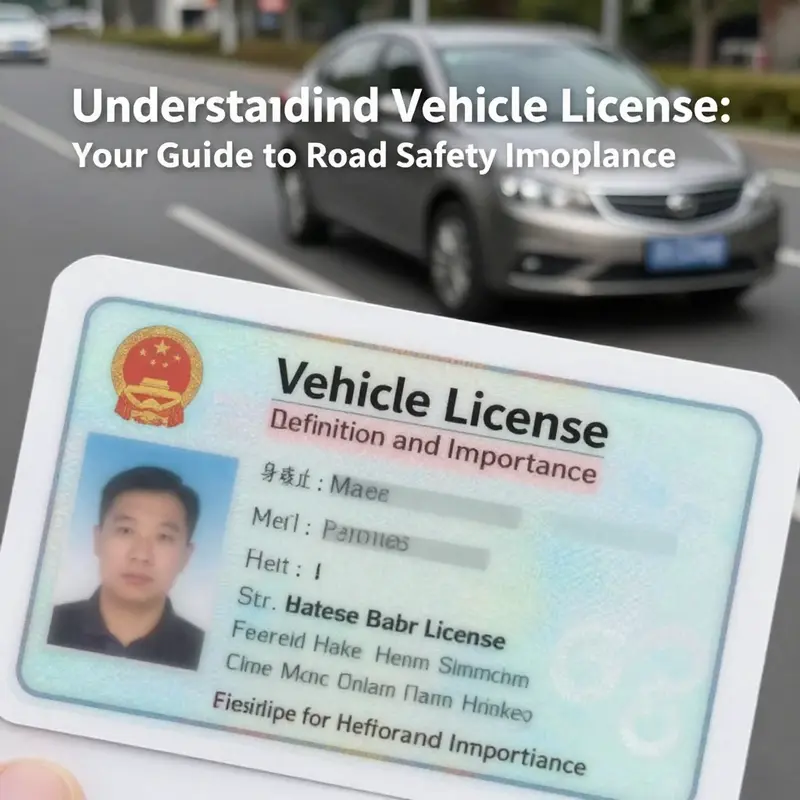
A vehicle license is more than a single document tucked away in a glove compartment. It is a formal grant from government authorities that permits a specific motor vehicle to operate on public roads. In many systems, this license sits alongside the proof of ownership and the proof of insurance, forming a triad that reassures the public and the authorities that a vehicle is registered, identified, and ready for safe operation. At its core, a vehicle license verifies that the machine and its owner comply with a set of safety, environmental, and regulatory standards. It also acts as a public record, linking a vehicle’s make, model, and identification details to an owner, and it carries an expiration date that signals when revalidation should occur. In some legal contexts, however, the phrase “vehicle license” can blur into the language of the driver’s license, because the operator’s credentials—proof that a person is permitted to drive—sit alongside or interact with the vehicle’s registration. This overlap is not universal, but it is common enough that readers should watch for differences across jurisdictions. In broader terms, the vehicle license and the driver’s license are two documents that coexist within a regulatory ecosystem, each addressing a different aspect of road use: the vehicle’s eligibility to be on the road, and the individual’s eligibility to operate a vehicle. Across the globe, the exact naming and emphasis shift, but the underlying logic remains similar: the vehicle must be visible to authorities, verifiable in its ownership, and demonstrably compliant with safety and environmental rules before it can share the public lanes with other road users.
In the United Kingdom and several Commonwealth systems, the phrase often foregrounds the registration of the vehicle and, by extension, the vehicle tax or road tax that accompanies it. In the United States, a comparable registration certificate is typically the key document that proves the vehicle is correctly registered within a state and that it meets local safety and emissions requirements. In China, the terminology tends to align with a formal registration certificate often linked to the so‑called driving permit framework, a reminder that the road‑use ecosystem can be organized around slightly different focal points in different legal systems. These regional distinctions are not merely linguistic quirks; they reflect practical differences in what authorities emphasize when a vehicle enters the road network, how ownership is documented, and how compliance is verified during inspections or at checkpoints. The upshot is that readers should view the vehicle license as a country‑specific instrument whose details, procedures, and consequences depend on local rules, even as the broad purpose—safety, accountability, and orderly road use—remains constant.
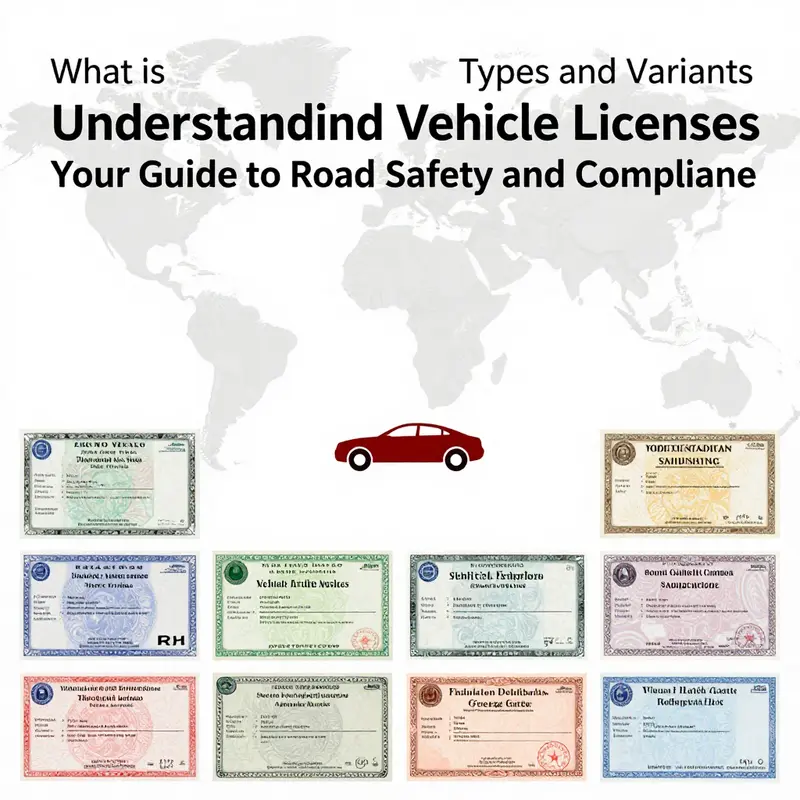
To understand what counts as a vehicle license, one needs to consider both the common types of licenses and the variants that jurisdictions layer on top of the basic idea. The most familiar type is the private passenger vehicle license. This is the license most people encounter in daily life: it covers personal cars, sedans, and small sport utility vehicles used for private transportation. These licenses usually come with straightforward registration requirements, a chassis identification number or VIN, a record of ownership, and an annual or multi‑year renewal. A separate but related thread concerns commercial vehicle licenses. Vehicles used for business—delivery vans, larger trucks, and buses—carry additional obligations. They may require proof of higher insurance limits, weight classifications, and sometimes more stringent safety or emissions standards. The regulatory framework for commercial vehicles often aims to ensure that vehicles carrying goods or passengers are positioned to perform reliably under heavier use, with drivers who meet specific qualifications for the heavy machinery involved and the increased risk that comes with larger vehicles on crowded streets.
Alongside private and commercial designations, motorcycles and mopeds represent a distinct branch of vehicle licensing. The licensing framework for two‑wheeled vehicles typically allocates classifications based on engine size or power output, recognizing that motorcycles involve different handling characteristics and safety considerations. Heavy Goods Vehicle licenses and Public Service Vehicle licenses further illustrate how the system scales with size, weight, and purpose. An HGV license is designed for drivers who operate large trucks and transport equipment over long distances, often requiring additional training and testing that reflects the truck’s capabilities and the higher stakes of its operation. A PSV license, meanwhile, is aimed at vehicles used to carry passengers for hire, such as taxis or charter buses, and it carries its own set of professional standards and compliance checks. Each category reflects not just the vehicle’s size and function, but the public safety calculus that governs who is permitted to operate such vehicles on public roads.
Beyond these core categories, the landscape of vehicle licenses includes a broad array of regional variants. Some jurisdictions are moving toward digital licenses, storing the license on smartphones or government apps rather than issuing a physical card. Digital licenses offer convenience and speed, but they also raise questions about security, privacy, and the reliability of digital verification in low‑connectivity environments. Other jurisdictions still rely on physical documents but maintain a flexible approach that accommodates temporary registrations for visitors or new residents. International permits or driving permits can help travelers meet local requirements when they operate a vehicle outside their home country, underscoring the practical reality that vehicle licensing often intersects with cross‑border travel and tourism. Specialized licenses are not rare either. Some regions create sub‑licensing for electric vehicles or hybrids, recognizing that the propulsion technology can affect maintenance regimes, safety considerations, and urban emission targets. Others tailor licenses to specific industries such as agriculture or construction, where vehicles may operate in environments with unique regulatory expectations.
The practical pathway to obtaining and maintaining a vehicle license is anchored in the work of government agencies tasked with registration and regulation. In many places, this means a department of motor vehicles, transportation agency, or a similarly named body that handles registration, ownership records, VIN verification, and the issuance or renewal of licenses. The process typically begins with proof of ownership, insurance coverage, and identity, followed by an inspection or validation of the vehicle’s safety features and emission controls where applicable. The system may also require proof of compliance with local road taxes, environmental standards, or weight limits for commercial vehicles. Once issued, the license becomes a live document that is refreshed at regular intervals, with reminders for renewal to prevent lapse. Non‑compliance or failure to renew can result in penalties, suspension of registration, or the inability to legally operate the vehicle on public roads. The cyclical nature of this process reflects the ongoing instantiation of public safety expectations: vehicles must be trackable, up to date, and verifiably compliant each time they navigate public spaces.
The breadth of license types and the ebb and flow of regional variations can give rise to questions about how the licensing ecosystem interacts with the broader framework of driving rights and vehicle ownership. In many jurisdictions, the licensing regime is not simply about owning or driving a vehicle; it is a governance mechanism that links vehicle data to an individual or organization, and it ties vehicle operation to a chain of responsibilities. For example, the license may be tied to insurance requirements, so that proof of coverage aligns with the vehicle’s registration status. It can also interact with road‑safety programs, tax collection, and environmental initiatives designed to manage emissions or traffic intensity. In some places, the license may be used to enforce compliance with weight limits, axle configurations, or route restrictions for commercial operators. And because the license is a public record, it can serve as the basis for enforcement actions when a vehicle is found without valid registration or when the operator lacks appropriate credentials. The cumulative effect is a robust system that supports accountability, traceability, and fairness on the roads while accommodating a spectrum of vehicle types and operator intents.
Within this complex landscape, it is important to acknowledge how the licensing framework continues to evolve. Digital credentials, interoperability across jurisdictions, and clearer international standards are all on the horizon in many regions. The trend toward digitalization is matched by a growing awareness that the road ecosystem must accommodate new vehicle technologies—electric propulsion, autonomous features, and connected services—without sacrificing the clarity and enforceability of licensing rules. Yet, the essential logic remains enduring: a vehicle license names a vehicle, registers its identity with a government body, and certifies its compliance with the standards that keep the road network safe and orderly. This is not a mere administrative formality but a public covenant that makes possible the predictable, responsible use of a shared transportation system. For readers seeking a concise synthesis of how state rules shape driver licensing, see the discussion on state rules impacting driver licensing.
For those who wish to explore the topic further, it is helpful to consult official sources that describe how licensing and registration are managed in specific jurisdictions. A careful reading of the official guidance can illuminate the exact documents required, the typical timelines for renewal, and the particular safety or environmental criteria that apply to different license categories. In practice, the specifics vary, but the overall architecture—ownership verification, vehicle identity, and regulatory compliance—tends to be a common thread across countries. This shared structure supports a coherent approach to road usage, ensuring that both the vehicle and the driver meet the expectations of the communities they serve. As cities and nations pursue smarter, safer, and more sustainable transport futures, the concept of the vehicle license remains a central anchor, linking technology, policy, and everyday mobility in a tangible, enforceable way.
External reference: https://www.gov.uk/government/publications/vehicle-licensing-and-registration-information
What is Vehicle License? The Legal Compass Behind Vehicle Ownership, Registration, and International Mobility
A vehicle license is more than a single card or certificate; it is a structured system that tracks who may operate a vehicle, what vehicle may be operated, and under what conditions. In practice, the term carries different weight in different places, but the core purpose remains consistent: to align road use with safety, accountability, and order. The simplest way to think about it is as a legal authorization that connects a vehicle to a person or entity and to a jurisdiction’s rules about registration, insurance, and safety standards. Yet the real-world fabric of vehicle licensing stretches beyond a single document. It encompasses the vehicle’s official registration, the status of the driver who may operate it, the history of the vehicle’s inspections, and, increasingly, the technology that governs how a vehicle behaves on public roads. The connections among these elements create a layered framework designed to prevent fraud, ensure traceability, and support rapid responses when something goes wrong on the road. In many places, this framework is not static; it evolves with changing technology, global mobility, and shifting ideas about liability and safety.
When people in different countries speak of a vehicle license, they often mean different things. In several jurisdictions, the phrase is closely tied to the registration certificate—the official record that a vehicle is permitted to circulate on public roads. This document typically lists the vehicle’s identifying details, such as the VIN (Vehicle Identification Number), make, model, year, color, and the name and address of the owner. It also records the registration expiration date and sometimes information about the registration tax or fees that support road maintenance. In the everyday flow of life, households use this license to prove that their car is legally on the road, to register a vehicle when ownership changes hands, and to renew the registration when required. In the United States and the United Kingdom, for example, many people use “vehicle license” in the sense of the registration certificate rather than the driver’s license, and the term often includes the plates and the proof of insurance that the jurisdiction requires for operation.
In other contexts, especially in informal speech, the phrase may refer to the driver’s license itself—the document that authorizes a specific person to operate a vehicle. This distinction matters because the responsibility for safe operation lies with the operator, while the vehicle itself carries its own registration and documentation. The two documents—the driver’s license and the vehicle registration—work together to confirm who may drive and what vehicle may be driven, but legally they are separate instruments. The driver’s license establishes competence and identity, while the vehicle registration establishes ownership and the vehicle’s eligibility for use on public roads. In many administrative settings, this separation becomes important for enforcement, taxation, and cross-border travel.
The international dimension of vehicle licensing adds further complexity. International travel requires a bridge between domestic licensing systems and cross-border recognition. An International Driving Permit (IDP) is often described as a multilingual translation of a domestic license, designed to facilitate communication and consent when driving abroad. It is not a substitute for a domestic license; it must be carried alongside the original license. The IDP helps rental agencies, police, and foreign authorities understand the license’s details across language barriers. The concept rests on internationally recognized conventions and is valid in many countries, but it does not guarantee universal acceptance. Some nations place restrictions on the use of IDPs, and the permit’s validity can vary from one country to another. The overarching idea is transparency and portability: a traveler can present a license in a language understood by local authorities, reducing misunderstandings during traffic stops or in the event of accidents. For reference, international permit guidance is available through organizations that coordinate these standards, providing a framework that complements national licensing schemes.
The modern licensing landscape is not static. With the rise of automated and connected vehicles, regulators are rethinking liability, safety testing, and how best to ensure public trust in new driving technologies. In the United Kingdom, legislative developments in recent years have introduced explicit concepts around autonomous driving. The Automated Vehicles Act of 2024 defines autonomous driving in a way that emphasizes operation without human intervention, shifting some oversight and accountability from the driver to the entity responsible for the vehicle’s automated functions. A novel construct—the Authorised Self-Driving Entity (ASDE)—emerges here as a formal acknowledgment that a manufacturer or developer may be held responsible for the autonomous features’ proper functioning. This reallocation of responsibility does not erase traditional licensing; rather, it reframes how we assign risk when automation handles most or all of the driving task. The practical effect is an expanded regulatory perimeter that includes vehicle design, testing, data handling, cybersecurity, and the processes used to certify that a vehicle can be trusted to operate without human readiness to intervene immediately.
In the United States, the regulatory approach to autonomous driving remains highly decentralized, reflecting a strong federal–state partnership. Federal safety standards set broad expectations for vehicle systems, while state governments regulate deployment, local testing, and insurance requirements for developers. Since 2011, nearly every state has enacted some form of autonomous-vehicle legislation, with a substantial portion moving from limited research trials toward more ambitious deployments on public roads. The resulting mosaic requires manufacturers to adapt to diverse requirements—ranging from accident reporting to minimum risk conditions triggered when a system failure occurs or when the vehicle must hand control back to a human operator. This patchwork can be seen not as a flaw but as a transitional structure that accommodates innovation while preserving accountability and public safety. The regulatory conversation continues to evolve as vehicles become more capable and as data-sharing, cybersecurity, and liability questions become central to policy discussions.
The cross-border implications of licensing extend beyond the mechanics of car ownership and driving. They affect how people travel for work, study, or recreation, and they influence how goods move through regional economies. A country that tightly regulates vehicle licensing may also maintain correspondences with neighboring states or nations to facilitate legitimate cross-border movement. In some regimes, a vehicle that is properly registered in one jurisdiction may enter another only with certain permit validations, customs clearances, or insurance alignments. In others, the process is streamlined to encourage mobility while preserving safety standards. The core principle remains clear: a license is not just a piece of paperwork; it is a governance mechanism that ties responsibility, capability, and accountability to the physical machine and the human operator alike.
The historical and geographic variability of vehicle licensing is not an accident but a response to differing political structures, road infrastructures, and cultural expectations about driving. In China, for instance, the term that most closely aligns with what English speakers might call a vehicle license refers to the Motor Vehicle Registration Certificate, often discussed under the umbrella of the Driving Permit. This certificate is essential for lawful operation on public roads and serves as a formal record of a vehicle’s eligibility to be driven. Across the Atlantic, the UK’s system distinguishes between vehicle taxation, registration, and the broader road-use framework, where the so-called vehicle license often intersects with the annual road tax payment that keeps the roads funded. The United States, with its state-based DMV authorities, emphasizes a registration that includes a license plate and proof of compliance with local insurance requirements. Understanding these distinctions helps clarify why travelers and new residents must navigate a suite of documents rather than a single, universal card.
To appreciate how this system functions in real life, consider the everyday rhythm of life with a vehicle. A family buys a car, receives a registration certificate, and registers the vehicle to their address. They obtain insurance that complies with local requirements, and they maintain annual or periodic inspections where applicable. They renew the registration before it expires, and they keep track of the vehicle’s official documents as they would keep track of a passport. When traveling to another country for a long visit or for work, they may obtain an IDP to ease language barriers and facilitate rental arrangements. If they are exploring new technologies such as automated driving, they must stay informed about the evolving regulatory expectations for the vehicle’s autonomous features and the responsibilities that fall to the manufacturer or operator under the applicable law. In a sense, the vehicle license is a living record—a legal instrument that communicates not only who owns the vehicle but also how it may be used in society, how it is insured, how it is maintained, and how it may travel beyond national borders.
For readers seeking a practical lens on how state rules shape the licensing landscape, a current thread of analysis focuses on how different jurisdictions balance driver licensing with vehicle registration, and how those choices influence everyday compliance and enforcement. See the discussion on how these rules can vary at the state level in the piece titled State rules impact on driver licensing. Linking to this analysis helps anchor the discussion in a concrete governance context and highlights the ways policy choices trickle down to the moment a driver interacts with a police officer or a vehicle inspector on a roadside stop. This interconnectedness—between national standards, regional rules, and global travel norms—illustrates how the vehicle license functions as more than a bureaucratic form. It is a living framework that shapes responsibility, safety, and mobility in a world where people and vehicles move across borders with increasing frequency.
From a policy perspective, the ongoing dialogue around licensing seeks to preserve safety while enabling innovation. The license is the most visible face of road governance, but beneath the surface lies a web of standards, inspections, insurance criteria, and liability rules that make modern traffic possible. The rise of automated systems foregrounds new questions: If a vehicle can drive itself, who is responsible when something goes wrong—the driver, the manufacturer, the operator, or the entity that maintains the vehicle’s software? Answering this question requires rethinking traditional licensing boundaries and recognizing that future mobility will increasingly hinge on both robust licensing practices and rigorous technical and ethical oversight. In this sense, the vehicle license remains an essential anchor as policy makers, engineers, and the public navigate a road landscape transformed by smart technology, cross-border movement, and evolving notions of accountability.
For readers who want to explore international dimensions beyond the domestic context, a widely referenced resource provides official guidance on how driving permits travel across borders. See the FIA guidance on International Driving Permits for a concise overview of the recognition framework and its practical implications for travelers and regulators alike. This external reference complements the core discussion by framing IDP expectations within a global standardlette and helps readers understand how international cooperation supports smoother, safer mobility across diverse legal systems.
What is Vehicle License: The Essential Groundwork for Ownership, Compliance, and Safe Driving
A vehicle license is more than a single card or a line on a ledger. It is the legal instrument that ties a machine to a set of responsibilities, rights, and expectations in the complex ecology of public roads. When people ask what a vehicle license is, they are really asking how a society organizes access to mobility in a way that protects the owners, other road users, and the environment. At its core, a vehicle license is a formal authorization issued by a government authority that confirms a vehicle’s eligibility to operate on public roads. This eligibility is not a private preference but a statutory threshold built on safety standards, accountability, and ongoing compliance. The vehicle license embodies the state’s interest in ensuring that vehicles entering the traffic stream are traceable, inspectable, insured, and registered in a way that keeps the public record clear and actionable. It is the hinge between private ownership and public responsibility, and understanding it helps explain why road rules exist, why penalties accompany violations, and how a society manages a shared space of movement and risk.
Because the phrase “vehicle license” is used differently from country to country, it is worth spelling out the nuances while keeping sight of the common thread. In many places, the term is closely linked to the vehicle’s registration—the official certificate that the vehicle is registered to a particular owner and is legally permitted to be used on public roads. That certificate typically carries the vehicle’s VIN, its make and model, the registered owner’s details, and the registration expiration date. In the United States and the United Kingdom, for example, the vehicle registration record is a fundamental element of the license concept, even though a separate driver’s license governs who may operate a vehicle. In China, the official document that allows a vehicle to operate on the road is often known as the Motor Vehicle Registration Certificate, sometimes colloquially described as a vehicle license in translations, but it sits within a broader regulatory framework that also contains the driving permit.
Yet the landscape is not monolithic. The UK, for instance, has historically associated the term “vehicle license” with the combination of vehicle tax (the road tax) and registration, both of which are prerequisites for legal operation. In the US, the common reference is the state-issued vehicle registration, a standing record that accompanies the vehicle and is periodically renewed, often alongside insurance requirements. In China and other jurisdictions, the language shifts slightly, but the principle remains: the document signals that the vehicle has passed certain checks, is properly identified, and is prepared to participate in the road system under current rules. These variations matter, but they do not erase the common purpose that unites them: to verify that a vehicle is properly accounted for within a regulatory system designed to maintain safety, environmental standards, and accountability.
For vehicle owners, the implications are concrete and frequently practical. The license confirms that the vehicle has been registered in the owner’s name or to the owner’s account and that it is recognized as a legitimate participant in the road network. The document itself usually captures critical data: the Vehicle Identification Number, the owner’s name and contact details, the registration’s expiration date, and the record of licensing fees paid. This is not a mere formality, but a portable proof of responsibility. The license becomes especially important during encounters with law enforcement, when filing insurance claims, or when transferring ownership. It is a key reference point that helps establish the vehicle’s legal status and its compliance with the standards set by the jurisdiction. Without an up-to-date license, not only is the vehicle at risk of being treated as unregistered, but the owner can face penalties, limits on insurance coverage, and even obstacles to selling or purchasing the vehicle.
For drivers, the relationship between license and operation is a little more nuanced. A clear distinction exists between the vehicle license and the driver’s license. The driver’s license grants permission to operate a vehicle, while the vehicle license confirms that the vehicle itself is legally authorized to be on the road. This separation is deliberate. It means that a driver can be licensed to operate a vehicle, yet the vehicle may be subject to additional requirements—such as registration, inspection, or specific insurance coverage—that ensure the vehicle remains fit for road use. Maintaining an up-to-date vehicle license minimizes the risk of mobility disruptions. It supports smooth insurance claims, eligibility for toll passes or parking permits, and even access to certain services that rely on a vehicle’s registered status. When either component falls out of sync—when a driver’s license is valid but the vehicle license has lapsed, or when the vehicle is registered but the driver’s license has expired—part of the mobility chain is broken. The consequences can range from fines to impoundment, and in the worst cases, to legal action.
The process of obtaining and maintaining a vehicle license is ultimately a governance task. It begins with registration, a step that binds a vehicle to a legal owner and to a specific set of regulatory obligations. Registration requires identity verification, vehicle documentation, proof of ownership, and often evidence of compliance with safety and (in some jurisdictions) emissions standards. The vehicle’s VIN acts as a unique, unalterable fingerprint that travels with the car, making it easier for authorities to track ownership, verify the vehicle’s history, and ensure that the information on file is consistent across bureaucratic systems. Once registered, the vehicle enters a lifecycle of renewal every year or every few years, depending on the jurisdiction. Renewal requires confirmation that the vehicle remains compliant with current standards, payment of any licensing or registration fees, and, in many places, a renewed proof of insurance.
The consequences of not maintaining a current license are practical and immediate. A vehicle found operating without valid registration can be pulled from the road, impounded, or restricted from sale or transfer. Insurance coverage can be jeopardized if the license is not up to date, since insurers rely on the license as a marker of the vehicle’s legal status and compliance. The fines vary, but the underlying logic is consistent: traffic systems rely on timely data and verifiable accountability. The license is a public instrument designed to reduce uncertainty—between the vehicle and the authorities, between the owner and the state, and among road users who depend on predictable behavior from one another.
A subtle but important thread connects licensing to road safety. Where inspection regimes exist, a vehicle’s license often carries the implication that the vehicle has passed certain safety or emissions checks or that it is subject to periodic review. In many jurisdictions, inspection and license administration are intertwined with the broader plan to reduce harm on the roads. The relationship between licensing and inspection can be direct—one document confirming compliance with standards, the other providing ongoing permission to operate. This interdependence reinforces the idea that vehicle licensing is not a one-time ritual but part of a continuous duty to maintain a safe, functioning transport system. The example of an internal reference highlights how policy differences shape practical experience in different regions: some places emphasize annual inspections as a precondition to renewing a license, while others rely on a combination of insurer evidence, vehicle history, and straightforward registration fees to maintain the status quo. The result is a mosaic of practices, yet a shared aim: to know, with reasonable certainty, that the vehicle in use is traceable, accountable, and operated within the law.
The life of a vehicle license is also shaped by public policy and the evolving priorities of road management. Environmental standards, for instance, increasingly influence licensing decisions. Emissions regulations, fuel efficiency targets, and disclosure requirements for owners all feed into the licensing framework. In many places, these standards are designed to push vehicle fleets toward cleaner performance, while maintaining a fair system of fees and accessibility for owners. The license thus becomes a mechanism by which public policy translates into everyday choices—how a vehicle is built, how it is maintained, and how often its status must be reaffirmed. This is not merely about paperwork; it is about ensuring that the road network remains predictable, that incidents can be investigated with clarity, and that the public trust in the transport system remains intact.
To navigate this landscape effectively, it helps to stay anchored in the practical realities of the jurisdiction where one lives or operates. While the specifics will differ—from tax schedules to renewal intervals to the exact data stored on a registration certificate—the underlying logic remains consistent. The vehicle license provides a durable record of legal status, a point of reference for law enforcement and service providers, and a safeguard against the ambiguity that can otherwise complicate ownership, operation, and transfer. It is part of the social contract of modern driving, a tangible sign that a vehicle is not merely a private asset but a public accountability mechanism. In this sense, the license is both a shield and a passport: a shield against unauthorized use and a passport that enables legitimate travel within a regulated system.
For readers seeking to understand the practical steps behind this framework, the essential takeaway is straightforward. Keep the vehicle’s registration up to date, track the expiration dates, and ensure that all related documents—VIN, owner information, proof of insurance, and any inspection certificates—are current and accurately reflect reality. When you go to renew, prepare the required proofs of identity, ownership, and coverage, and be mindful of any jurisdictional twists, such as vehicle taxes, emissions certificates, or special regional requirements. While the mechanics of obtaining a license may differ, the intent remains clear: a well-maintained license is a cornerstone of responsible vehicle ownership and dependable mobility.
Across borders, the dialogue about vehicle licensing continues to evolve with technology and policy. Digital records, standardized data capture, and cross-border recognition pose new opportunities and new challenges for regulators and for drivers alike. The move toward electronic records and online renewals promises convenience, but it also raises questions about privacy, data security, and the reliability of digital verification. In this shifting terrain, the vehicle license acts as a stabilizing reference point—a traditional form that persists even as newer methods of verification emerge. For readers who want a practical and authoritative grounding, reference to official guidance from national and regional transportation authorities remains invaluable, as does awareness of local practices that affect how a license is obtained, renewed, and enforced. If you are looking for more specific information about how licensing is handled in different places, illustrated examples and up-to-date requirements are usually published by the relevant motor vehicle agencies and transportation departments.
In sum, a vehicle license is not simply a piece of paperwork or a bureaucratic gatekeeper. It is the tangible expression of a public system designed to protect everyone who shares the road. It aligns ownership with responsibility, connects individual acts of purchase and use to a larger rule framework, and supports a safe, orderly, and auditable flow of traffic. The license helps ensure that every vehicle, every driver, and every journey remains accountable to the laws that govern them. It stands as a reminder that mobility is a collective endeavor, built on clear records, predictable procedures, and ongoing attention to safety, legality, and public trust. For readers exploring this topic, the next steps involve understanding how licensing interacts with local rules, how to maintain compliance, and how to engage with public agencies when questions or issues arise. A well-maintained vehicle license is a quiet partner in daily life, enabling movement, protecting investment, and sustaining the social contract that keeps roads functioning for everyone.
External resource: https://www.gov.uk/vehicle-licensing
Internal resource for further reading: US States Vehicle Inspection Requirements
Final thoughts
In conclusion, vehicle licenses play a crucial role in regulating vehicle operation on public roads and ensuring both safety and compliance. Understanding the various types of licenses, the legal framework that supports them, and their implications helps new drivers, existing drivers, and vehicle owners meet their responsibilities on the road. Familiarity with these elements fosters a more informed relationship with driving regulations, enhancing safety for all road users.