
Vehicle licensing is a fundamental aspect of vehicle ownership and operation, with far-reaching implications for safety, legal compliance, and road management. Understanding what vehicle licensing entails is crucial for new drivers and learners as well as for existing drivers and vehicle owners. This article will delve into the intricacies of vehicle licensing, exploring its importance in road safety, the regulatory framework that governs it, its economic implications, and its societal impact on commuters and transport systems. Each chapter builds upon the last, offering a holistic view that promotes informed decisions and compliance in the realm of vehicle operation.
Licensing the Ride: How Vehicle Licensing Shapes Responsibility, Identity, and Safety on Public Roads
Vehicle licensing is more than a bureaucratic hurdle; it is the formal doorway through which a vehicle earns access to the public road network. At its core, licensing combines registration, identification, and accountability into a framework that helps governments monitor who is using which wheels, ensure that those wheels meet safety and environmental standards, and provide drivers, insurers, and the public with a clear record in the event of incidents on the road. The terminology can blur across places, because a vehicle license often refers to two linked but distinct things: the license plate that publicly marks a vehicle, and the official registration document that proves the vehicle is legally allowed to operate. Yet both parts rest on a shared purpose—ensuring legality, traceability, and safety so that the road network can function with predictable rules and reliable information.
To understand why licensing exists in the first place, it helps to imagine a road system as a vast, living inventory. Every vehicle on the road has a unique identity, often an assigned registration number tied to a vehicle identification number (VIN). The government, acting as guardian of the public interest, requires this identity to be verified against a set of standards before a vehicle can be driven. Registration records link a vehicle to an owner, recording who is allowed to use it and under what conditions. This is not merely about collecting fees or issuing a tag. It is about establishing a legal footprint for the vehicle—one that can be traced, audited, and, when necessary, revoked. That traceability is what makes licensing a cornerstone of road safety and accountability.
One of the most tangible aspects of licensing is the issuance of a license plate. A license plate is more than a sticker or a number; it is a public signifier that a vehicle has met essential prerequisites and is registered in a jurisdiction’s system. The plate streamlines identification by law enforcement, insurers, and service providers. It anchors the vehicle in the administrative framework that governs use, renewal, and compliance. The process that leads to this plate varies by region but typically includes several overlapping checks: verifying the vehicle’s identity and ownership, confirming the vehicle is correctly insured, and validating that it meets safety and emission standards set by the authority. In many places, the license plate is accompanied by a physical registration certificate—a document that you keep as proof of legal operation and that you may need to present when selling, transferring ownership, or re-registering the vehicle after major changes.
Alongside the plate and certificate, the vehicle itself is subjected to ongoing examinations and compliance checks. A key element is ensuring the vehicle meets safety requirements that protect drivers, passengers, and pedestrians. In some systems, this involves an initial type approval process for new vehicles, followed by periodic inspections that confirm continued airworthiness, braking performance, lighting, tires, and other critical systems. Emissions standards add another layer of discipline, tying licensing to environmental goals. These checks vary by jurisdiction, but the underlying logic remains the same: a licensed vehicle should not pose unacceptable risks to others on the road. The requirement for insurance is equally central. It is the financial backstop that ensures victims of crashes can recover medical costs and property damage, while it also compels vehicle owners to bear responsibility for the consequences of their operation.
The mechanics of licensing can also reflect local legal culture and administrative capacity. In Hong Kong, for instance, the licensing system is a tightly integrated ecosystem managed by a dedicated government department—the Transport Department. This ecosystem encompasses vehicle registration, the issuance of license marks through an auction system for new vehicles, mandatory type approval and vehicle examinations, and insurance prerequisites. The system has grown increasingly digital in its service delivery. Citizens can manage many aspects of licensing through a unified digital platform—HKeMobility—that streamlines the process, reduces friction, and provides real-time status updates. By consolidating tasks that previously required multiple visits to offices or lengthy waiting periods, digital services help keep the licensing journey transparent and efficient. The Hong Kong example highlights a broader truth about licensing: the more integrated and user-friendly the process, the more robust the compliance environment becomes, which in turn enhances road safety and accountability across the system.
To appreciate how licensing structures the relationship between the vehicle and the road, consider the sequential path a future car owner might navigate. After obtaining a driver’s license, the aspiring owner must decide how to bring a vehicle into legal operation. The registration step confirms that the vehicle is properly identified and linked to an owner. If the vehicle is new, it may require proof of payment and documentation demonstrating that it has passed a series of compliance checks. In many places, owners must participate in an auction or allocation process to obtain a license mark or plate, particularly for desirable combinations or special formats. The auction step is not merely a prestige exercise; it is a controlled mechanism to assign scarce license marks in a way that preserves orderly use of public space and reduces confusion on the roads. Once the vehicle is registered and issued a plate, it must pass a vehicle examination and maintain ongoing insurance coverage to remain in good standing. These steps create a durable chain of accountability: the vehicle is visible in public registries, its operator is backed by insurance, and the vehicle itself continues to meet safety and environmental standards.
The licensing journey does not end with the plate and certificate. Renewal cycles, re-registration after ownership transfers, and updates to insurance or safety compliance are all part of the ongoing governance of the road system. In many jurisdictions, licenses and plates are tied to a regulatory calendar that flags when a vehicle’s inspection is due, when insurance must be renewed, or when a plate must be revalidated after a change in ownership or a significant modification to the vehicle. This continuity matters. It creates predictable expectations for drivers and other road users, reduces the likelihood of unregistered vehicles on the road, and underpins effective enforcement. A well-designed licensing regime, therefore, does more than grant permission to drive. It fosters a culture of responsibility and transparency that helps prevent crashes, supports prompt response when incidents occur, and provides a reliable record for accountability in disputes or investigations.
Understanding vehicle licensing also involves recognizing that approaches differ by jurisdiction. Some places rely heavily on physical inspections and manual checks, while others lean on digital documentation and centralized registries. The core principles—verification of identity and ownership, compliance with safety and emissions standards, insurance, and a valid license plate or registration certificate—remain constant because they answer the same practical questions: Is this vehicle legally allowed to operate here? Is it identifiable and traceable to a responsible owner? Has it met safety and environmental requirements? By answering yes to these questions, licensing supports safe mobility, fair enforcement, and credible data for transportation planning.
For readers navigating licensing in a specific locale, the official government portals are the most reliable sources of current requirements. They offer up-to-date details on registration steps, the mechanics of license plate allocation, inspection regimes, insurance mandates, and any digital tools that simplify the process. In the Hong Kong example, the Transport Department’s guidance and the HKeMobility digital service illustrate how a government can make licensing more accessible while preserving strict safety and accountability standards. The same logic—clear rules, verifiable records, and a user-centered service approach—applies wherever licensing operates. If a reader is curious about cross-border practices, comparing how different systems structure inspections, registration, and plate issuance can illuminate the trade-offs between ease of use, enforcement effectiveness, and public safety. The linked resources below provide a jumping-off point for such exploration: a practical glance at how one region integrates inspections with licensing and the broader governance framework, and a policy lens on how state rules shape the licensing landscape for drivers and vehicles alike.
Internal reference: US states’ vehicle inspection requirements offer a useful comparison to how inspections are embedded in licensing. For an overview of how inspection regimes can vary and what that implies for licensing credibility, see the resource on US states’ vehicle inspection requirements here: US states’ vehicle inspection requirements.
As readers widen their view beyond a single jurisdiction, it becomes clear that vehicle licensing is a living system—one that evolves with technology, safety science, and urban policy. When governments modernize licensing, they typically aim to reduce friction for compliant owners, improve the accuracy of vehicle identification, and strengthen the safety net that protects all road users. Digital services, if well designed, can accelerate these outcomes without compromising oversight. They can provide timely reminders for inspections, streamline the verification of insurance, and ensure that ownership changes are reflected in the central records with minimal delay. Yet technology alone cannot substitute for the fundamental requirements of safety and accountability. The essential questions—Is the vehicle legally registered? Does it meet safety standards? Is there valid insurance?—remain the anchors of a robust licensing system.
For those seeking a deeper dive into the procedural landscape of licensing in a concrete jurisdiction, the Transport Department’s official portal remains the primary reference point for current rules, forms, and service options. It is through such official channels that drivers and vehicle owners learn how to navigate the system correctly and responsibly. The broader takeaway is straightforward: vehicle licensing is the scaffolding that supports lawful, safe, and traceable mobility. It binds together the vehicle, its operator, and the public in a framework designed to reduce risk, clarify responsibility, and enable effective enforcement when necessary. In that sense, licensing is not a one-time formality but a continuing commitment to orderly, accountable, and safe road use.
External resource for reference: https://www.td.gov.hk
How Licensing Protects Roads: Driver Competence, Vehicle Fitness, and a Safer System
Vehicle licensing is more than paperwork; it is the cornerstone of a safe public road network. By combining standards for who may drive with rules about what may be driven, licensing constructs a layered defense against crashes, injuries, and undue strain on emergency systems. This chapter explains how those layers work together, why they matter, and what challenges and trade-offs arise as authorities balance safety, mobility, and fairness.
At its core, licensing separates those prepared for the responsibility of driving from those who are not. The most direct expression of this is the graduated driver licensing (GDL) system, designed specifically to reduce risk for new drivers. Rather than granting full privileges at once, GDL moves drivers through phases of increasing freedom as they build experience. Early stages place limits on high-risk situations — night driving, carrying multiple young passengers, or unsupervised highway travel — while requiring supervised practice and a minimum age for progression. These measures are simple yet powerful: they shrink exposure to the conditions where novice drivers are most likely to make mistakes.
Research supports the GDL philosophy. Jurisdictions that adopt comprehensive, well-enforced programs tend to see markedly fewer fatal crashes among young drivers. The reductions come from limiting the frequency of complex, high-risk scenarios while allowing skills and judgment to develop in safer contexts. In practice, GDL policies also encourage supervised learning: experienced drivers act as coaches, providing real-time feedback that training courses alone cannot replicate. Licensing, therefore, is an educational tool as much as a legal filter.
But driver competence is only one half of the equation. Vehicle licensing systems also verify that the machines on the road meet minimal safety and emissions standards. Registration and inspection requirements create checkpoints where authorities can identify unsafe vehicles — those with faulty brakes, worn tires, broken lights, or excessive emissions — and remove them until they are repaired. This process reduces mechanical failures that could cause or worsen accidents. It also enforces environmental standards, which affects public health in communities near busy roads.
When driver and vehicle checks work in tandem, they create a multi-layered safety architecture. Licensing documents and plates identify the responsible party for enforcement and accountability. Testing and background checks limit access to those who demonstrate skill and responsibility. Inspections and registration filter out vehicles that pose an obvious safety risk. Enforcement mechanisms, such as fines, suspension, or revocation, provide incentives for compliance. Together, these elements help maintain predictable, manageable conditions on shared roadways.
Licensing systems also serve broader public-safety functions. They enable authorities to track vehicles involved in crimes or collisions, support insurance and compensation processes, and provide data for planning and enforcement. A robust licensing database helps emergency services locate owners, ensures recalls reach affected vehicles, and aids policymakers in identifying dangerous patterns or regions that need targeted interventions. In these ways, licensing underpins not just day-to-day safety but also the institutional responses that follow crashes and mechanical failures.
Yet the system is not without trade-offs. Strict licensing rules can limit mobility for those who depend on driving for work or care duties, especially in rural areas with limited public transportation. Mandatory inspections impose costs and time burdens. Graduated restrictions, while effective, can be frustrating for families and teens who must wait longer for unrestricted privileges. Policymakers must weigh safety gains against these social and economic impacts, and adopt measures that preserve access while reducing harm.
Equity concerns deserve particular attention. Marginalized groups may face greater difficulty meeting licensing requirements due to limited access to training, testing centers, or resources for vehicle repairs. Without thoughtful policy, licensing can unintentionally widen inequalities by restricting job opportunities or increasing fines and penalties for those least able to pay. Addressing this requires targeted outreach, subsidized training or inspection programs, and flexible options for demonstrating competence that maintain standards without creating undue barriers.
Enforcement also shapes outcomes. Licensing rules achieve their safety potential only when violations are detected and addressed. Effective enforcement needs appropriate resourcing and integration with other systems, such as traffic policing, automated compliance checks, and vehicle databases. Overly punitive enforcement can erode trust and cooperation, while under-resourced approaches leave dangerous drivers and unsafe vehicles on the road. Balanced enforcement combines clear consequences with pathways for remediation, such as driver education or staged reinstatement programs.
Technology is changing how licensing systems operate and improving safety prospects. Digital registration, automated reminder systems, and centralized databases make it easier to track compliance and deliver timely alerts about recalls or required inspections. Advanced driver-assistance systems (ADAS) in vehicles reduce crash risk, and licensing frameworks are beginning to integrate considerations for such technology. Digital testing environments and telematics also offer new ways to assess and support driver competence over time, rather than relying solely on a single test event.
However, technology introduces new questions. Data privacy, equitable access to digital services, and the potential for algorithmic bias in assessing driver risk must be managed carefully. Licensing authorities must ensure that digital tools enhance safety without excluding those who lack access or creating opaque decision-making processes.
Integration across jurisdictions matters too. Vehicles frequently cross municipal, regional, and national boundaries, and inconsistent rules can create gaps in safety oversight. Harmonizing basic standards — inspection intervals, minimum equipment requirements, or age-based licensing milestones — reduces loopholes that risky actors might exploit. At the same time, local context matters; rural areas, dense urban centers, and differing climates require tailored approaches. Coordinated networks and mutual recognition agreements help preserve safety while accommodating local differences. For more detail on how inspections vary by region, see state vehicle inspection requirements.
Ultimately, the effectiveness of vehicle licensing depends on design, implementation, and continual adaptation. A well-crafted system prioritizes evidence-based measures like graduated licensing and regular inspections, supports equitable access to compliance, and leverages technology responsibly. It balances deterrence with pathways to improvement, recognizing that safety improves most when drivers and vehicles are encouraged and enabled to meet standards, rather than simply punished.
Licensing is also preventive. By reducing the incidence of crashes among the most at-risk groups and by keeping unsafe vehicles off the road, licensing lowers the human and economic costs of crashes. That prevention preserves emergency resources, reduces healthcare burdens, and saves lives. It helps communities function more reliably and equitably.
As policymakers and safety advocates evaluate licensing reforms, they should measure outcomes with clear metrics: crash and fatality rates, compliance levels, access to licensing, and the distributional impacts of rules and penalties. Continuous monitoring allows corrective action when programs create unintended harms or when new risks emerge. Evidence-based adjustments — for example, modifying GDL phases, expanding inspection criteria, or introducing subsidized repair programs — keep the licensing system responsive and effective.
The public benefits when licensing is more than a formality. Thoughtful systems that combine driver development, vehicle fitness checks, proportionate enforcement, and equitable access create a safer, more accountable driving environment. Licensing is the practical mechanism that turns safety goals into enforceable standards and measurable outcomes. In that role, it remains indispensable to any strategy aimed at reducing crashes and protecting road users.
For further information on the evidence and guidance behind graduated licensing programs, see the official resources from the National Highway Traffic Safety Administration: https://www.nhtsa.gov/vehicle-safety/graduated-licensing.
How State and Federal Rules Shape Vehicle Licensing and the Road Ahead
How State and Federal Rules Shape Vehicle Licensing and the Road Ahead
Vehicle licensing sits at the intersection of law, public safety, and technological change. It is the formal mechanism that lets a motor vehicle enter public roads with legal permission, and it creates a system of identification, accountability, and compliance. In the United States, this system is not monolithic. Instead, it is a layered regulatory structure in which states hold primary authority, while federal entities set safety baselines and shape incentives. Understanding that balance clarifies why licensing looks different from one jurisdiction to the next and why regulators must adapt as vehicle technology evolves.
At the heart of vehicle licensing is state authority. Each state establishes the procedures for registering vehicles, issuing license plates, and granting driver credentials. These procedures include verifying a vehicle’s identity—usually through a vehicle identification number (VIN) check—confirming ownership, collecting fees and taxes, and documenting that the vehicle meets certain safety and emissions standards. For drivers, states determine eligibility ages, required documentation, testing protocols, and the cadence for renewals. The specifics vary: some states require annual vehicle inspections, others biennial; some place an emphasis on emissions testing, others on mechanical safety; some provide online services for renewals, others still require in-person visits.
This state-centric approach has practical advantages. Local authorities are closer to the communities they serve and can tailor rules to local road conditions, climate, and enforcement capacities. It allows experimentation—one state can pilot a new inspection rule, and others can adapt best practices. But it also creates heterogeneity. A vehicle legally registered in one state may face different inspection requirements or insurance thresholds when driven elsewhere. That patchwork makes national coordination both essential and challenging, particularly for commercial fleets that operate across multiple states.
Federal influence complements state control rather than replacing it. Agencies such as the National Highway Traffic Safety Administration (NHTSA) set vehicle safety standards that manufacturers must meet. These standards shape what states can require when they evaluate a vehicle’s condition during registration or inspection. Federal law also sets broad parameters for driver disqualifications—for example, how certain serious traffic offenses affect licensure or how commercial driver license (CDL) standards should be implemented. Crucially, the federal government uses funding levers and model guidelines to nudge states toward uniform practices where national consistency matters—traffic safety campaigns, distracted-driving laws, and requirements tied to federal highway funds are examples.
Federal oversight often operates indirectly. When the federal government ties road funding to compliance with specific safety programs, states must align their licensing-related policies to secure those funds. Federal research and data collection inform state policy choices by identifying risk areas and effective countermeasures. This collaborative tension—states retain autonomy, but federal rules and incentives guide policy uniformity—creates a system capable of both local responsiveness and nationwide safety improvements.
Emerging technologies are stretching traditional regulatory frameworks. Autonomous vehicles (AVs), advanced driver-assistance systems (ADAS), and connected vehicle platforms alter the meaning of a vehicle’s legal status. Licensing systems were designed to identify a driver and a mechanically operated vehicle. When software assumes driving tasks, regulators must decide what a license authorizes: Is it the human operator, the entity responsible for the software, or the vehicle itself? States are grappling with questions such as what tests an operator of an autonomous vehicle must pass, whether a vehicle with no human operator can be registered, and how liability will be assigned after a crash.
Some states have moved faster than others, developing specific permitting and testing protocols for AVs. California, Arizona, and Michigan have been notable in establishing frameworks that allow testing and limited commercial deployment under regulated conditions. These frameworks typically require detailed reporting, safety case submissions from developers, and clearly defined responsibilities for intervention and remote operation. They also often require insurance and indemnification provisions to protect the public. Yet no single national standard dictates how AVs must be licensed, leaving each state to build its own approach and, in many cases, to learn from the regulatory experiments of others.
Safety remains the central objective across all regulatory choices. Licensing regimes aim to ensure that every vehicle on the road is trackable, insured, and meets baseline safety criteria. They ensure drivers have the minimum competencies needed for safe operation and that vehicles adhere to emission and mechanical standards that protect public health. Even as licensing must adapt to novel vehicle types, its core function remains unchanged: to create accountability and reduce risk.
Balancing safety with innovation requires careful regulatory design. Overly restrictive rules can stifle technological development and block potentially life-saving advancements. Overly permissive approaches can expose the public to untested risks. States often attempt to thread this needle by creating staged approval processes for new technologies: limited testing under controlled conditions, increasing permissions as evidence accumulates, and mandating robust data reporting so regulators can assess real-world performance. This gradualist approach allows regulators to respond to issues quickly while still permitting progress.
The interaction of state rules with other policy areas adds complexity. Insurance requirements, for example, are integral to licensing systems because they protect victims of crashes. States vary in minimum coverage thresholds, and those thresholds affect costs for owners and operators. Commercial regulations—like those governing CDLs—overlap with vehicle registration when a vehicle is used for hire or interstate commerce, triggering federal regulations. And public safety concerns, such as preventing fraud in license issuance, require coordination between motor vehicle agencies and law enforcement.
Practical issues also shape how licensing is experienced by the public. Administrative capacity influences wait times for new registrations or license tests. Digital infrastructure determines whether a motorist can renew online or must visit an office. Enforcement strategies, including spot inspections and data-sharing across jurisdictions, affect compliance rates. When states coordinate effectively, they can streamline cross-border travel and commercial operations. When coordination lags, drivers and businesses may face inefficiencies and confusion.
Because vehicle licensing affects nearly every road user, policy changes generate broad interest and varied stakeholders: drivers, manufacturers, mobility service providers, insurers, and public safety advocates. Effective regulation requires transparent rulemaking and clear pathways for feedback. As autonomous technologies proliferate, open data and performance reporting will be critical for building trust and for enabling evidence-based adjustments to licensing rules.
The present regulatory landscape shows a system in transition. States remain the primary actors, tailoring licensing systems to local needs while responding to federal standards and incentives. Federal agencies supply safety baselines and research that inform state choices. Technological innovation is the driving force reshaping licensing questions, demanding new categories of permits, clearer assignment of responsibility, and updated inspection protocols. Navigating these changes successfully will depend on pragmatic, data-driven regulation that safeguards the public while allowing innovation to deliver safer, more efficient mobility.
For a deeper look at how different states are approaching these challenges and how smart mobility intersects with licensing, see the University of Michigan’s analysis of current U.S. approaches to regulation in smart mobility: https://mcity.umich.edu/publications/regulatory-frameworks-for-smart-mobility-current-u-s-approaches/.
For further context on how state policy differences affect drivers directly, review this discussion of state rule impacts on driver licensing: state rules impact on driver licensing.
Counting the Cost: Economic Effects of Vehicle Licensing on Cities and Citizens
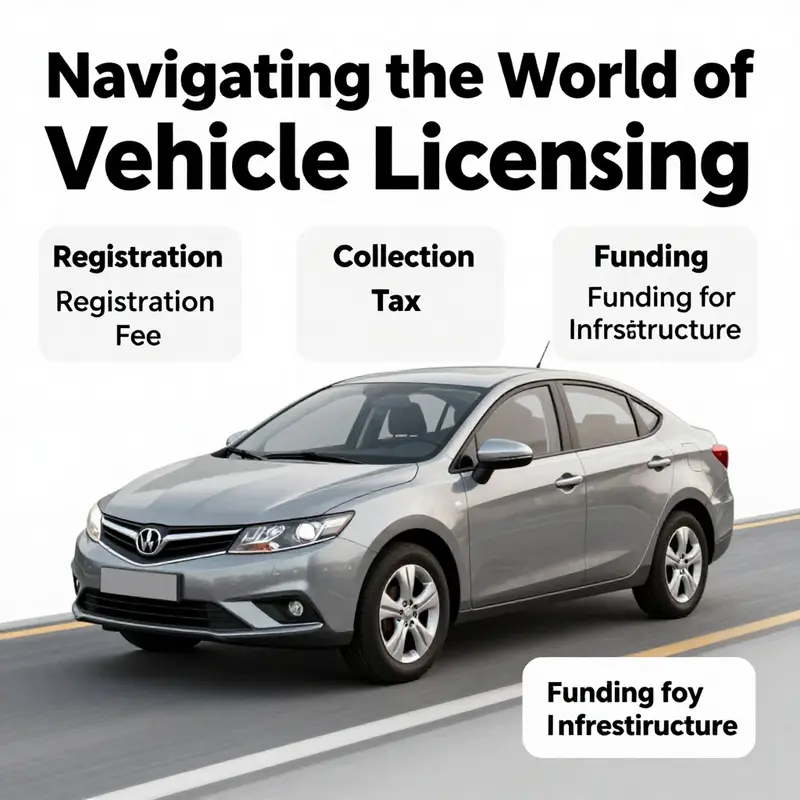
Vehicle licensing shapes more than legal status; it steers urban economies, equity, and environmental outcomes. When governments design licensing regimes, they are effectively allocating access to the public road network. That allocation has direct and indirect economic consequences: it alters vehicle ownership costs, influences travel behavior, creates markets for scarce entitlements, and reshapes where people live, work, and invest. This chapter traces those impacts in a single narrative, exploring how licensing mechanisms like vehicle quota systems act as de facto economic instruments, how fairness concerns emerge, and how well-crafted policy can nudge cities toward sustainable mobility.
At its simplest, a vehicle license is permission to operate on public roads. Once the state ties that permission to scarcity—by limiting the number of licenses available—the license acquires economic value. Vehicle quota systems (VQS) exemplify this transformation. Cities such as Singapore and Beijing have limited the issuance of new vehicle licenses. That scarcity turns licenses into tradable assets. Prospective car buyers must secure not only the vehicle but also the right to own and use it. The market value of that right often climbs steeply, sometimes surpassing the cost of the car itself. The price signal created by a limited supply is powerful: it reduces the pace of vehicle ownership growth and functions as a form of congestion pricing without charging drivers per trip.
Viewed through an economic lens, VQS reduce congestion by raising the fixed cost of car ownership. Higher entry costs decrease demand for private vehicles, especially among marginal buyers who weigh transit alternatives more heavily when faced with a substantial license premium. Less traffic means shorter travel times and lower fuel consumption for remaining vehicles. Air quality improves because fewer vehicles are circulating, and greenhouse gas emissions fall as trip-making shifts to more efficient modes. In marketplaces where licenses trade openly, the revenue or value trapped in licenses can be substantial. Governments may capture some of this value directly through auctions or indirectly via regulated quota allocation. When captured, this revenue can fund public transport, cycling infrastructure, or other programs that magnify the environmental and congestion benefits of reduced car ownership.
However, the economic gains come with trade-offs. Scarcity-driven license prices act as a regressive tax unless mitigated. High license costs disproportionately affect lower-income households, who are less likely to bear large upfront expenses but may depend on private vehicles where transit is weak. In cities with steep license premiums, wealthier residents can more easily afford cars and secure mobility, while poorer residents face restricted access. This distributional impact raises important equity concerns: a policy that reduces aggregate congestion but concentrates mobility among the affluent can deepen spatial inequality and limit economic opportunities for disadvantaged populations.
Market distortions also appear when quota systems are poorly designed. Artificially constrained licenses can spur secondary markets, speculative behavior, and fraud. If licenses are transferable, they create an asset class that attracts investors and speculators who may hold licenses unused, betting on price appreciation rather than on enabling mobility. Black markets can emerge where administrative oversight is weak. Moreover, VQS may reduce vehicle turnover, slowing the introduction of safer, more fuel-efficient models. If buyers pay large premiums for the right to own a car, they may keep older vehicles longer to amortize the cost, undermining emissions and safety gains expected from fleet renewal.
Policy design matters. When authorities implement licensing constraints, they must consider complementary measures to preserve access and fairness. Targeted subsidies, exemptions, or quota-set-asides for low-income residents can offset regressive effects. Lottery systems can introduce an element of randomness that equalizes access over time, though they may lack the price signal that drives reduction in demand. Auctions generate public revenue and allocate licenses to those with the highest willingness to pay—but unless revenue is recycled into accessible alternatives, auctions risk concentrating mobility among wealthier households. The choice between price-based allocation and non-price mechanisms is a fundamental design decision with deep economic consequences.
Beyond immediate distributional effects, vehicle licensing influences longer-term patterns of urban development and innovation. By increasing the relative cost of private car ownership, restrictive licensing nudges both residents and developers toward land use that favors density and mixed uses. Denser neighborhoods make transit, walking, and cycling more viable, further reducing the reliance on cars. Developers respond to demand: where car ownership is expensive, buildings feature fewer parking spaces and more shared mobility amenities. Over time, this feedback loop can lower the per-capita cost of living and of traveling, while creating economies of scale for public transit providers.
Licensing regimes can also accelerate investment in alternative mobility solutions. Reduced vehicle ownership creates market openings for high-capacity public transit, pooled ride-hailing, bike-share systems, and last-mile micro-mobility. When licensing revenue is earmarked for such investments, the combined effect multiplies: constrained car ownership plus better alternatives lead to sustained modal shift. Conversely, if licensing revenue is absorbed into general budgets without strategic reinvestment, opportunities to reconfigure urban mobility are missed.
An often overlooked economic effect lies in administrative costs and compliance. Licensing systems impose record-keeping, enforcement, and inspection demands. Those costs are borne by governments and, indirectly, by drivers through fees. Efficient administrative design—digital registration, integrated inspection schedules, transparent transfer rules—reduces friction and the costs of compliance. Poorly run systems, by contrast, generate delays, corruption risks, and higher transaction costs that erode public trust and the legitimacy of licensing as a policy tool.
Vehicle licensing also plays a role in national and regional fiscal strategies. Where vehicle taxes, registration fees, and license auctions produce significant revenue, governments face incentives to maintain or expand those income streams. This can create political pressures that conflict with environmental goals. For example, a city may have to weigh the short-term fiscal benefit of high license fees against the long-term goal of reducing car dependence. Policy makers must evaluate the full economic equation, balancing revenue needs with social and environmental objectives.
Finally, equitable design and transparency are essential to public acceptance. Policies that appear arbitrary or that concentrate benefits among elites are politically fragile. Clear communication about why licensing exists, how revenues are used, and how the policy benefits the broader public helps build support. Including measures that protect low-income and mobility-dependent populations—reduced fees, exemptions, or reinvestment into service improvements—helps align social equity with urban sustainability.
To explore empirical case studies and deeper analysis of vehicle quota impacts, see the Brookings Institution’s research on quota systems, which examines both economic outcomes and policy lessons in China and elsewhere: https://www.brookings.edu/research/the-economic-impact-of-vehicle-quota-systems-in-china/.
For a related perspective on regulatory requirements that interact with licensing—such as inspections and safety checks—see the overview of state inspection rules and how they shape compliance and costs: https://drivernvehiclelicensing.com/us-states-vehicle-inspection-requirements/.
How Vehicle Licensing Shapes Commuting, Safety and Urban Mobility
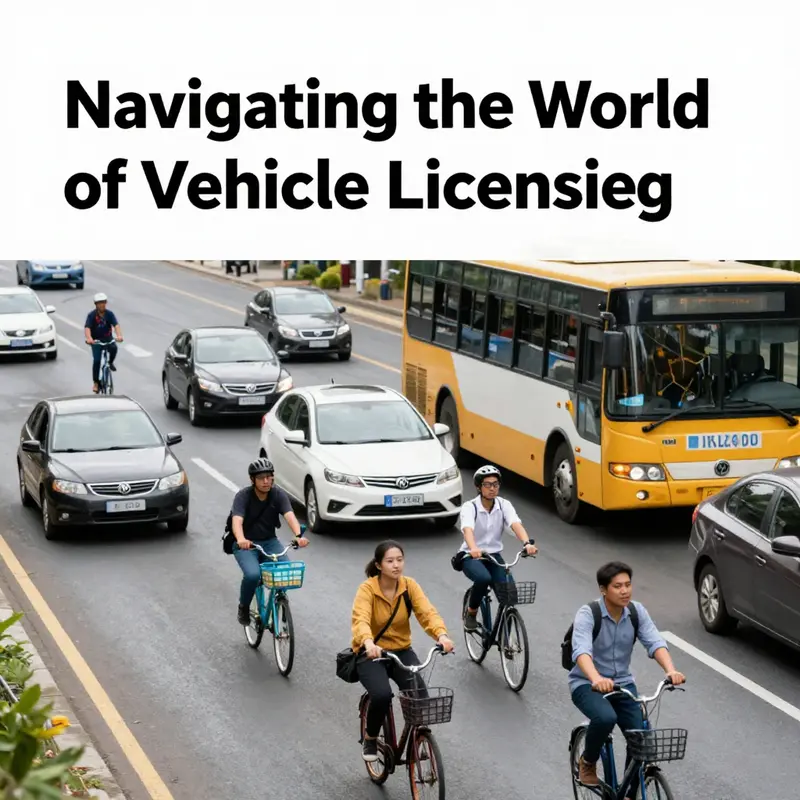
Understanding the ripple effects of vehicle licensing on daily travel and public systems
Vehicle licensing does more than record ownership and assign plates; it shapes how people move, how cities grow, and how public health and equity play out across transport networks. When a government requires licensing, it creates a framework that enforces standards, collects revenue, and influences behavior. Those mechanisms intersect with commuter choices, traffic patterns, environmental outcomes, and social opportunity. Exploring these interactions reveals why licensing policy matters beyond bureaucracy and how small changes in rules or fees can have large downstream effects.
At its core, licensing establishes minimum competency for drivers and verifies that vehicles meet safety and emissions criteria. This foundational role directly affects road safety. Licensing programs that include robust testing and periodic renewals reduce the number of unqualified drivers on the road. Fewer unqualified drivers means fewer accidents, and fewer accidents mean fewer injuries and deaths. That reduction supports public health systems by lowering emergency care demand and long-term rehabilitation costs. When licensing requirements emphasize vehicle inspections and emissions controls, they also remove dangerous or poorly maintained vehicles from circulation. The practical outcome is an incremental but measurable improvement in safety and air quality for everyone who shares the road—drivers, cyclists, pedestrians, and public transport riders.
But licensing does not operate only as a safety filter; it is a significant revenue tool. Fees collected at registration, renewal, and transfer generate funds that governments often channel back into transport-related services. Those revenues can support road maintenance, traffic management systems, public transit subsidies, or investments in active transport infrastructure like bike lanes and sidewalks. In many jurisdictions, licensing revenues are a predictable income stream that underwrites long-term planning. The way those funds are allocated affects commuter experience: well-maintained roads and efficient public transit reduce travel time and vehicle wear, while investment in traffic calming and multimodal infrastructure can make urban travel safer and more equitable.
Revenue collection, however, raises equity questions. The cost of licensing, inspection, insurance, and compliance can form a barrier to mobility for low-income households. In regions where licensing fees and associated costs are high relative to income, owning and operating a vehicle becomes less accessible. That limited access curtails job opportunities, constrains access to education and healthcare, and narrows social mobility. For commuters who cannot afford licensing or who live where public transit is inadequate, the result can be longer commute times, fewer job options, and greater financial stress. Policymakers must weigh the fiscal benefits of licensing fees against the social cost of reduced access to transportation.
Transport and licensing policies also interact with environmental objectives. Many jurisdictions use licensing mechanisms to nudge cleaner vehicle choices. That can mean higher fees for older, higher-emission vehicles, or differentiated rates based on fuel type and emissions ratings. When done carefully, these measures reduce pollution and encourage turnover toward cleaner fleets. But they can also produce unintended outcomes. If fees disproportionately burden lower-income owners of older vehicles, those drivers may delay replacing their cars or fall into noncompliance. In effect, a policy designed to cut emissions can amplify inequality unless it is coupled with support measures such as targeted subsidies, trade-in programs, or accessible alternatives to private car ownership.
Another policy tool tied to licensing is congestion pricing and emissions-based taxation. These approaches use fees to reflect the true social cost of driving in crowded or polluted urban areas. Licensing systems often provide the administrative backbone for such schemes by linking vehicles to payment enforcement and exemptions. When integrated with traffic management, pricing can reduce peak congestion and shift trips to off-peak hours or to public transit. However, if implementation ignores the distributional impact, congestion charges can place undue burdens on those with limited travel alternatives. Equitable design requires exemptions or discounts for vulnerable commuters, reinvestment of revenues into affordable mobility options, and transparent communication about how funds will be used.
Technology is transforming licensing and with it the ability to respond to commuter needs. Digital platforms streamline registration and renewals, reducing time and administrative friction for vehicle owners. They also enable data-driven policy. Aggregated, anonymized vehicle registration and movement data can reveal commuting patterns, highlight underserved corridors, and identify times of peak demand. Crowdsourced inputs, when combined with licensing data, give planners a richer picture of how people use roads and transit. This intelligence supports targeted interventions—such as new bus routes, adaptive traffic signals, or localized infrastructure upgrades—that improve commuter experience while minimizing wasteful spending.
Yet technology alone does not guarantee fairness. Digital systems must be accessible to users with varying levels of literacy and internet access. Otherwise, they risk excluding older adults, low-income groups, or rural residents. Complementary offline services, multilingual support, and affordable access points are essential. When digital licensing platforms incorporate equitable design, they shorten lines, lower administrative costs, and free staff to focus on outreach and enforcement of safety standards.
A further social dimension of licensing involves accountability and enforcement. Proper registration and visible plates make it easier to enforce traffic laws, recover stolen vehicles, and ensure compliance with insurance requirements. That accountability protects communities from fraud and reduces the incidence of hit-and-run incidents. Conversely, weak enforcement can erode trust in the system and undermine public safety. Ensuring consistent, impartial application of licensing rules strengthens social cohesion by making the roads safer and more predictable for all users.
Policymakers seeking balanced outcomes should view licensing as a lever within a wider mobility strategy. Two complementary approaches can reduce negative impacts while amplifying benefits. First, integrate licensing policy with targeted social programs. For example, discounted fees, installment payments, or exemptions for low-income drivers can prevent exclusion while maintaining standards. Second, couple emissions-based fees with accessible incentives—subsidized upgrades, low-interest loans for cleaner vehicles, or investments in rapid, affordable transit along corridors where many low-income commuters travel. These measures align environmental goals with social equity.
Finally, the way licensing is communicated and implemented matters. Transparent rules, clear articulation of how revenues will be used, and visible examples of improvements funded by licensing income build public support. When citizens see safer roads, better transit, and cleaner air as direct outcomes of licensing policy, compliance rises and the system gains legitimacy.
Understanding vehicle licensing through this societal lens clarifies why it cannot be designed in isolation. Licensing interacts with safety, revenue, equity, technology, and environmental goals. Thoughtful policy design—one that anticipates behavioral responses and protects vulnerable groups—can harness licensing to improve commuting, reduce harm, and advance urban mobility goals. For readers interested in how transport policy connects to broader urban systems and planning, further discussion can be found in the academic literature on urban transport systems: https://doi.org/10.1007/978-3-030-98717-6_9
For practical examples of how state rules influence licensing and drivers, see this discussion of regulatory impacts on driver licensing: https://drivernvehiclelicensing.com/state-rules-impact-on-driver-licensing/
Final thoughts
In conclusion, vehicle licensing is not merely a regulatory obligation; it serves as a cornerstone of road safety, economic stability, and societal structure. By understanding its multifaceted role, individuals can better appreciate the responsibilities that come with vehicle ownership and operation. Engaging with the licensing process ensures that vehicles are safe, compliant, and ready for the roads, contributing to a broader culture of accountability and safety among all road users.