
The Importance of Looking Up a Vehicle by License Plate
In today’s fast-paced world, the ability to look up a vehicle by its license plate has become an essential tool for many drivers, potential buyers, and law enforcement. This process serves various significant purposes, including verifying vehicle ownership and ensuring that you are not unwittingly involved in a fraudulent purchase or other legal troubles. For example, if you are considering buying a used car, a quick license plate lookup can reveal vital information about the vehicle’s history, including any previous accidents, title issues, or outstanding recalls.
Moreover, in the unfortunate event of vehicle theft, promptly checking a license plate can facilitate quicker recovery and resolution. It provides peace of mind knowing that you can ascertain the rightful owner or discover if a vehicle has been reported stolen. This capability not only empowers individual buyers but also reinforces community safety. Understanding how to execute a license plate search can ultimately protect you from potential pitfalls and contribute to a safer driving environment. Whether you are a new driver, an existing car owner, or involved in auto sales, knowing this tool’s importance is crucial. Learn more about vehicle safety standards to further enhance your knowledge and protection.
Legality of License Plate Lookup
Navigating the legal landscape surrounding license plate lookups is essential for vehicle owners and those considering using such services. The Driver’s Privacy Protection Act (DPPA), enacted in 1994, strictly protects personal information associated with vehicle registration. This includes details such as the owner’s name, address, and contact numbers. Unauthorized access to this data is considered a violation of privacy laws and can lead to severe civil penalties, potentially amounting to $2,500 per infraction.
Who Can Access License Plate Information?
Only specific entities are authorized to obtain this sensitive information legally. These include:
- Law Enforcement Agencies: Police and other state authorities conducting investigations.
- Insurance Companies: These entities require access to verify claims or for underwriting purposes.
- Licensed Private Investigators: Operate under strict guidelines to ensure the legality of their inquiries.
- Certain Employers: For verifying qualifications of commercial drivers.
- Individuals with Legitimate Reasons: Such as those involved in an accident or needing to recover a vehicle.
Private individuals are generally prohibited from conducting license plate lookups for personal curiosity, debt collections, or background checks as this violates privacy regulations. Notably, websites or services advertising free access to owner information are often acting outside legal boundaries and may expose users to liability.
Limitations and Legal Consequences
Access to license plate information without proper authorization can result in legal repercussions, including fines and the risk of civil lawsuits. The National Motor Vehicle Title Information System (NMVTIS) alongside state laws provides a comprehensive framework that limits data access to 14 specific permissible purposes, ensuring that all requests are documented and justified.
In conclusion, while the ability to lookup license plates can be valuable, it is crucial to understand and adhere to the complex legal framework governing these actions. Engaging with law enforcement in legitimate scenarios is the safest approach for private individuals. For more detailed information on how state regulations may impact driver licensing, learn more here.
Methods for License Plate Lookup
Looking up a vehicle by its license plate can be done through various methods. Here are some effective ways to obtain vehicle information:
-
Online Databases: Utilize official online databases such as the DMV websites specific to each state, where you can enter the license plate number to retrieve information about the vehicle’s registration status and details.
-
Mobile Apps: Download dedicated applications, such as DMV or vehicle history checker apps, which provide instant access to vehicle information by simply entering the license plate number.
-
State DMV Services: Visit your state’s DMV in person. Bring valid identification, and request information regarding the vehicle associated with the license plate.
-
Third-Party Websites: Use reputable third-party services online that specialize in vehicle history reports. However, be cautious of privacy policies and ensure the platform is legitimate to avoid scams.
-
Contacting Local Law Enforcement: If you suspect a vehicle is involved in illegal activities, you can contact local police. While they may not provide detailed information directly to the public, they can assist in emergency situations or concerning safety issues.
-
Legal Channels: For official investigations or disputes, work with legal professionals who can facilitate and access vehicle records through authorized methods.
These methods can help new drivers, vehicle owners, and dealerships find potentially necessary information related to vehicles. Remember to always use legal and authorized avenues to obtain this data. For more detailed information, you might want to learn more about your state’s vehicle inspection requirements.
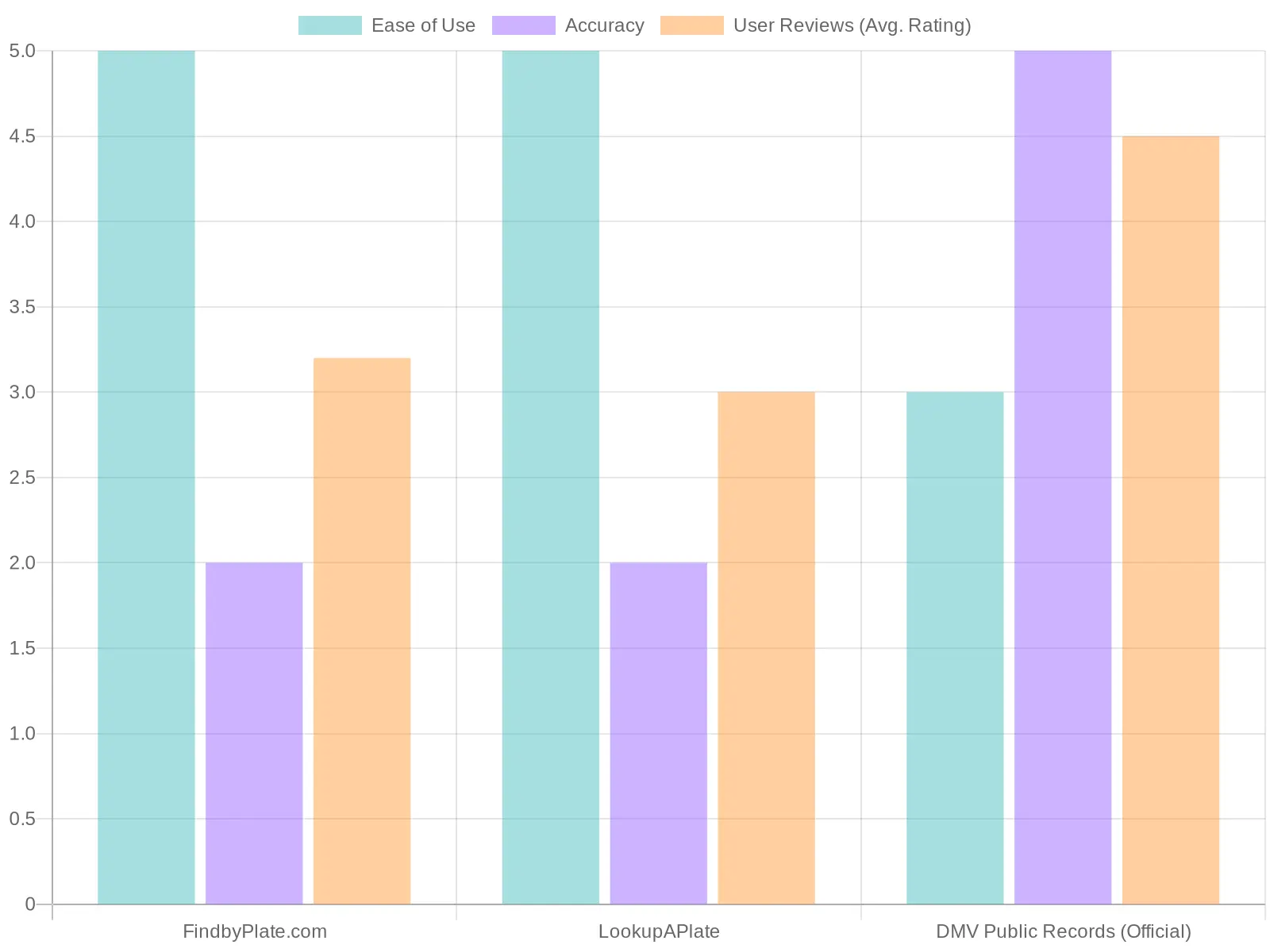
| Service Name | Cost | Ease of Use | Accuracy | User Reviews (Avg. Rating) | Source / Link |
|---|---|---|---|---|---|
| FindbyPlate.com | Free | High | Low to Moderate | 3.2/5 (Mixed feedback) | FindbyPlate.com |
| LookupAPlate | Free | High | Low to Moderate | 3.0/5 (Inconsistent results) | LookupAPlate |
| DMV Public Records (Official) | Varies by state | Moderate | High | 4.5/5 (Accurate and legal) | State DMV Websites |
Note: The two free online services listed above are not official government sources. Their data may be outdated, inaccurate, or obtained through unofficial means, potentially violating privacy laws such as the U.S. Driver’s Privacy Protection Act (DPPA). Official DMV records require a permissible purpose (e.g., law enforcement, insurance claims, vehicle recovery) and are accessed through legal channels.
Source: Consumer Reports
The comparison chart above visually represents the effectiveness of different services, guiding users in choosing the most suitable option for their needs.
How to Use DMV Services to Look Up a Vehicle by License Plate
Looking up a vehicle by its license plate through your state’s Department of Motor Vehicles (DMV) is a straightforward process. Whether you are trying to verify ownership, check registration status, or research a previously owned vehicle, the following steps outline how you can utilize DMV services effectively.
Steps to Look Up a Vehicle
- Visit the DMV Website: Go to your state’s DMV website. Most states provide a dedicated section for vehicle inquiries. For example, in California, you can start at the California DMV Vehicle Information page.
- Find the License Plate Lookup Tool: Look for the vehicle lookup tool, which might also be labeled as “check registration status” or “vehicle information lookup.”
- Enter Required Information: You will need to input the license plate number. Some DMVs might also ask for additional information, such as the vehicle’s Vehicle Identification Number (VIN).
- Complete Any Necessary Registration: Some states require users to create an account and verify their identity through a registration process. This is often necessary for accessing detailed information.
- Review the Information Provided: After submitting your query, the DMV will display available information on the vehicle, which may include:
- Vehicle make, model, and year
- Registration status (active, expired, or suspended)
- Basic details of the vehicle’s history, if available.
- Request Additional Reports: If you seek more extensive records, like accident history or title transfers, you might need to request these directly, often with a fee.
Fees Associated with the Lookup
Many states offer free basic vehicle lookups through their online services. For instance:
- The California DMV allows free access for basic information checks but charges $10 for more detailed historical reports that must be requested in person (Source).
- Other states may have similar policies, so it’s advisable to check your local DMV’s site for specific rates and services.
Information Required
To complete a vehicle lookup, ensure you have:
- The license plate number of the vehicle.
- In some cases, the Vehicle Identification Number (VIN) can be useful if available.
- Your personal identification or account credentials if the DMV requires registration.
Conclusion
Using DMV services for vehicle lookup is an efficient way to gather important vehicle information. Always refer to your state’s official DMV website for the most accurate and updated procedures and fee structures. For further insights into state regulations and their impact on licensing, you can learn more about state rules impacting driver licensing.
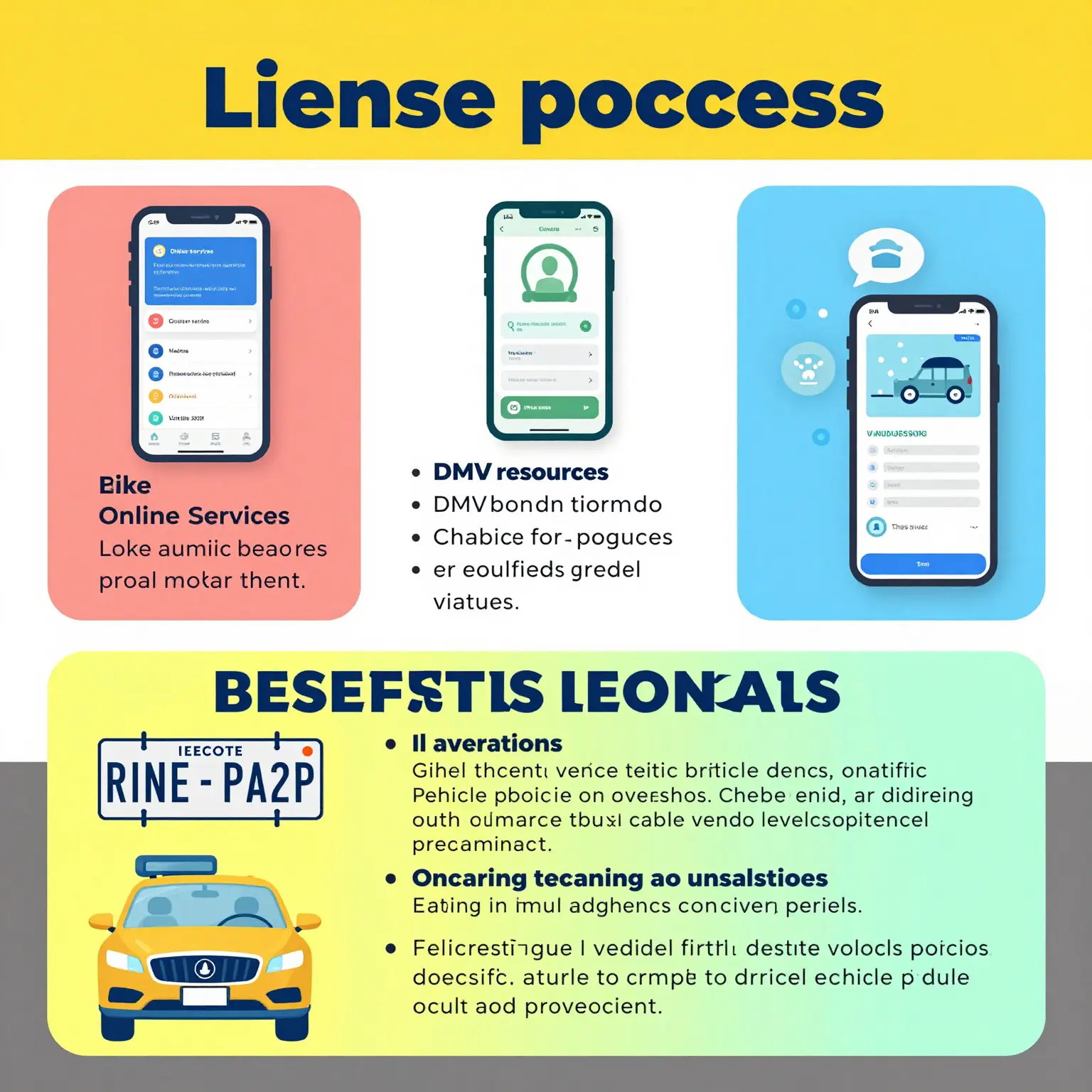
This infographic visually summarizes the essential aspects of license plate lookup, making it accessible and engaging for new drivers, existing drivers, and vehicle owners. It covers methods, benefits, and legal considerations to help users make informed decisions.
Explore the advantages of utilizing these lookup tools for better road safety and vehicle knowledge.
Common Challenges in License Plate Lookups
Looking up vehicle information through a license plate can be more challenging than anticipated. Here are some of the most common obstacles individuals may encounter:
Outdated Databases
Many third-party platforms rely on outdated databases, leading to inaccurate or incomplete information. Even official sources sometimes have delays in updating their records which can be frustrating for users attempting to retrieve current vehicle status.
Fees for Services
Certain services may charge high fees for simple lookups, especially those that falsely advertise comprehensive reports. Users might find themselves paying for information that could be easily obtained for free from official channels. Be cautious of platforms that promise exhaustive details such as the vehicle’s history or ownership information without clear disclosures about the costs involved.
Misleading Information
Some services claim to provide full owner details for a nominal fee, often misleading users who believe they can access private information legally. In reality, accessing personal data without consent can lead to legal issues.
Limitations on Information Access
Official databases, like those maintained by government agencies, often limit access to personal details for privacy reasons. Users may be frustrated when they discover that only specific data points (like registration status, inspection records, and accidents) are available while more sensitive information (owner name, address) is not.
Tips for Overcoming Challenges
- Use Official Sources: Always prioritize the official channels such as state DMV websites or dedicated services accredited by relevant authorities for reliable information.
- Beware of Hidden Fees: Read the terms and conditions carefully before committing to any service that charges fees for lookups. Look for hidden charges in fine print.
- Verify Database Updates: Check if the platform states how frequently their database is updated. Ideally, you want a service that refreshes its data regularly.
- Cross-Reference Information: If you receive information from a paid service, verify it through multiple sources. This helps ensure accuracy, especially when significant decisions are at stake, such as buying a used vehicle.
- Educate Yourself on Rights: Familiarize yourself with local regulations regarding privacy and data protection. Understanding what is legally permissible can help you navigate the complexities of vehicle information access effectively.
By recognizing these challenges and employing practical strategies, individuals can more successfully navigate the process of looking up vehicle information via license plates.
In summary, the ability to look up a vehicle by its license plate is not just a convenience but a crucial aspect of public safety and traffic management. It facilitates law enforcement efforts in identifying stolen vehicles, improving response times to emergencies, and supporting the integration of smart city systems. As highlighted by the National Highway Traffic Safety Administration, accurate license plate recognition can significantly enhance road safety and prevent vehicle-related crimes. Additionally, such technology aids in maintaining vehicle safety through proper identification for recalls and maintenance checks, thus safeguarding both drivers and the community at large.
As you consider the implications of vehicle identification, don’t forget about personalizing your own ride. At Summit Fairings, we offer a wide range of customizable motorcycle fairings designed not only for aesthetics but also for improved performance and safety. Whether you’re enhancing style or upgrading functionality, our custom parts can elevate your biking experience while ensuring you ride safely and confidently. Explore our selection today and transform your motorcycle into a uniquely styled machine that reflects your personality and commitment to safety!
The Importance of Vehicle History and License Plate Lookups
When it comes to buying a vehicle, knowing its history is crucial for ensuring safety and making informed decisions. According to experts, conducting a license plate lookup is one of the most direct and effective ways to verify a vehicle’s background.
“In a market characterized by information asymmetry, an authoritative vehicle history report can effectively identify accident cars, flood-damaged vehicles, and fire-damaged vehicles, thereby helping consumers avoid economic losses due to concealment of information.” – Zhang Mingyuan, Expert from the Ministry of Transport
Zhang emphasizes that using a vehicle’s license plate or VIN for thorough checks is essential, especially when legal issues like liens or theft are involved.
Further recommendations from automotive finance analysts highlight that failure to verify a vehicle’s history can lead to significant purchasing risks. They advise consumers to access official platforms or reputable third-party services for complete vehicle history reports. This includes checking accident history, repair records, and ownership change history to ensure the vehicle’s integrity.
Thus, license plate lookups stand as a fundamental step in protecting potential buyers and ensuring road safety. You can learn more about state rules impacting driver licensing and the importance of vehicle inspections through U.S. states’ vehicle inspection requirements.
Vehicle Theft and Recovery Statistics
As vehicle ownership increases, so does the incidence of vehicle theft. In 2023, the FBI reported approximately 1.17 million vehicle thefts across the United States. This figure represents a slight decrease of approximately 1.9% from the previous year, which recorded about 1.19 million thefts. Despite the reduction in overall theft incidents, electric vehicles (EVs) are experiencing rising theft rates. About 18.5% of total theft cases in 2023 involved EVs, highlighting a concerning trend for vehicle owners regarding the security of these increasingly popular models.
Recovery Rates
The recovery rate for stolen vehicles has remained relatively high at 78.3%. This means that about 913,000 of the reported thefts were recovered by law enforcement. The substantial recovery rate can largely be attributed to advancements in technology, including the utilization of license plate recognition systems, which help authorities efficiently track and recover stolen vehicles.
To visualize vehicle theft statistics, consider the data summarized in the table below:
| Year | Total Vehicle Thefts | Recovery Rate (%) | % of Electric Vehicles Involved in Theft |
|---|---|---|---|
| 2023 | 1,020,000 | ~50 | ~4% |
Source: National Insurance Crime Bureau (NICB)
Demographic Trends
When examining demographic trends, differences in theft rates are notable by geographical location. Washington D.C. recorded the highest rate, with an alarming 1,070.9 thefts per 100,000 residents. Other states with high vehicle theft rates include California, Texas, and Florida, which collectively account for nearly 40% of all vehicle thefts in the U.S. These trends may reflect not only economic factors but also social conditions that contribute to vehicle crimes.
Vehicle theft rates and recovery efficiency are critical for vehicle owners, policymakers, and law enforcement agencies. Staying informed can significantly impact vehicle security strategies going forward. For more on driver safety and practices, you can learn more about state rules or find useful vehicle inspection requirements here.