
In the realm of driving and vehicle ownership, clarity is paramount, especially for new drivers and vehicle owners navigating the complexities of regulations and requirements. This begs the question: Is vehicle registration the same as a license plate? At first glance, many may assume these terms are interchangeable, but they serve distinct purposes within the legal structure of motor vehicle operation. Understanding the difference between vehicle registration and a license plate not only ensures compliance with the law but also protects drivers from potential fines or penalties associated with misuse or misunderstanding of these essential components. Vehicle registration involves officially recording your vehicle with a government authority, which is crucial for legal identification and ownership verification. Conversely, a license plate serves as a unique identifier for the vehicle on the road. Hence, differentiating between the two is vital to ensure a seamless driving experience and to learn more about state-specific rules on driver licensing.
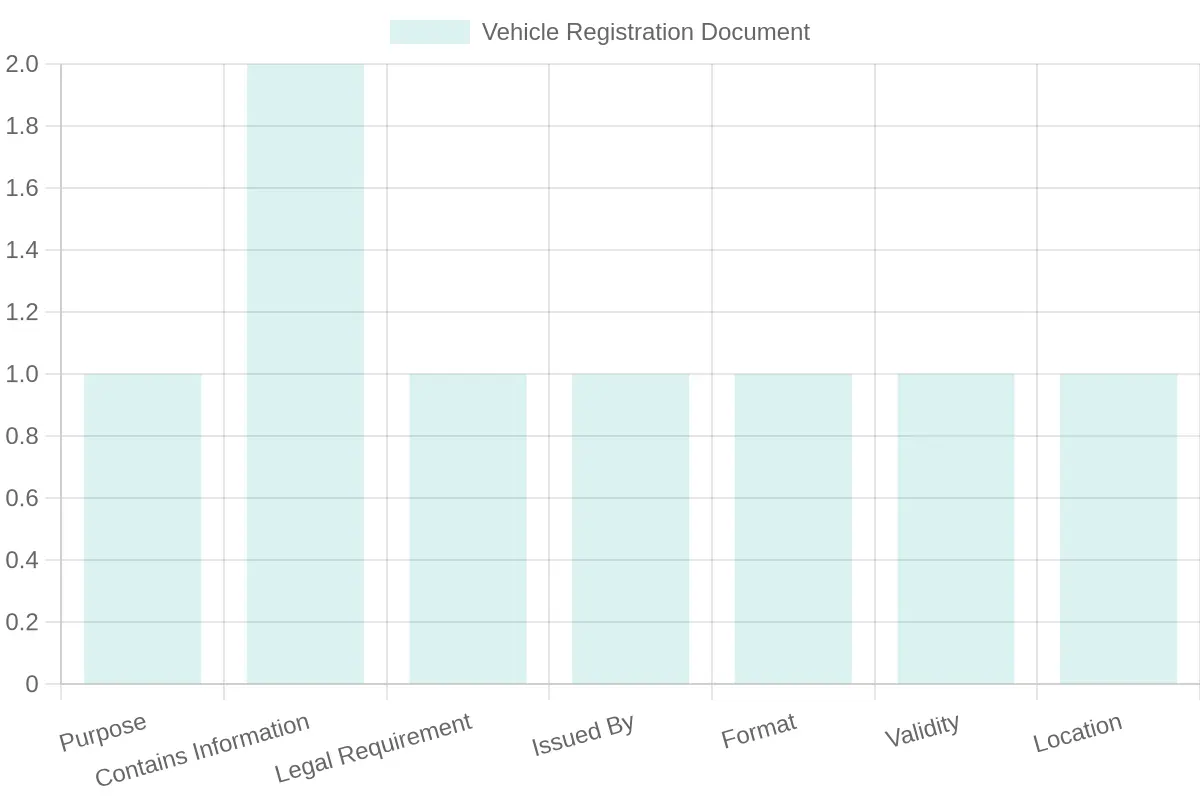
Common Misconceptions about Vehicle Registration and License Plates
As new drivers and vehicle owners familiarize themselves with vehicle-related legalities, it’s crucial to distinguish between vehicle registration and license plates and dispel prevalent misconceptions associated with both. Understanding these distinctions not only aids in compliance with the law but also helps in avoiding fines and ensuring that vehicles are legally operable on public roads.
Misconception 1: Registration and License Plates Are the Same Thing
One of the most common myths is that vehicle registration and license plates are identical concepts. In reality, vehicle registration is a legal process of recording a vehicle with the state’s Department of Motor Vehicles (DMV), permitting its use on public roads. A license plate, however, is simply a physical identifier issued to the vehicle, which displays its registration information. Hence, while one cannot operate a vehicle without a valid license plate, the registration is essential for identifying ownership. Learn more about the differences.
Misconception 2: You Don’t Need to Register Your Vehicle if You Have License Plates
Another frequent misconception is that possessing license plates negates the need for vehicle registration. This is incorrect, as license plates are a part of the registration process. Without registration, a vehicle remains technically unrecognized in legal terms and cannot legally operate on public roads. The registration links the vehicle to its owner and ensures compliance with state laws. It is essential that both registration and license plates are maintained and updated as required.
Misconception 3: Vehicle Registration Is Only Required When Purchasing a New Vehicle
Some might believe that vehicle registration is a one-time process required only when buying a new vehicle. In reality, vehicle registration must be renewed periodically, often annually or biannually, depending on the state. This ongoing requirement is in place to ensure that vehicle ownership records are up to date and that the vehicle meets current safety and environmental standards.
Misconception 4: Late Registration Comes with Minimal Consequences
Many individuals underestimate the consequences of late vehicle registration. Failing to register or renew on time can lead to significant fines and penalties, and in some cases, a legal citation. Moreover, driving a vehicle with an expired registration can result in traffic stops and further legal complications.
Importance of Understanding the Distinction
Understanding the differences between vehicle registration and license plates is critical for every vehicle owner. Not only does it promote adherence to legal requirements, but it also aids in ensuring road safety and efficiency. Misinterpretations of these terms can lead to unintended violations and fines, making it imperative for drivers to be well-informed.
By clarifying these common myths, new and existing drivers can better navigate the complexities of vehicle ownership. For further insights into regulatory practices and the impacts of state laws, check out this resource.
Comparison Table: Vehicle Registration vs. License Plates
| Feature | Vehicle Registration | License Plates |
|---|---|---|
| Purpose | Legally register a vehicle for road use | Identify the vehicle on public roads |
| Validity | Typically renewed annually; varies by state | Plates often issued for a set period; renewed as needed |
| Legal Requirements | Required to legally operate a vehicle; proof of ownership and insurance needed | Required to display on the vehicle; non-compliance can result in fines |
| Costs | Varies by state; includes taxes and fees (avg. $35 – $200) | Costs typically range from $20 – $100, depending on state and type of plate |
For further insights on vehicle registration procedures, learn more about state rules affecting driver licensing. Additionally, understand the vehicle inspection requirements across different states by visiting this comprehensive guide.
“Vehicle registration is not just a bureaucratic formality; it is a critical component of road safety and law enforcement. Proper understanding of vehicle registration regulations can prevent legal complications and ensure accountability on our roads.”
- Legal Expert from Legal Reader
This quote underlines the importance of distinguishing between vehicle registration and license plates, highlighting the legal implications and responsibilities tied to vehicle ownership. New drivers and vehicle owners alike should be aware that while license plates represent individual vehicles, registration provides essential oversight and regulatory compliance. Understanding this distinction is crucial for maintaining safety and legality on the roads. For a deeper dive into how state regulations affect driver licensing, you can learn more about state rules.
This information serves as a reminder that accurate vehicle registration not only establishes ownership but also plays a vital role in public safety and law enforcement.
Legal Implications of Improper Vehicle Registration and License Plates
Understanding the difference between vehicle registration and license plates is crucial for new drivers and vehicle owners. Improper vehicle registration or license plate misuse can lead to significant legal consequences.
Definitions and Importance
Vehicle registration is the verification and documentation of a vehicle’s ownership with the state, which is crucial for lawful driving. License plates, on the other hand, are the physical identifying tags displayed on the vehicle, signifying that registration is valid. Confusing these terms can lead to serious legal issues, especially if drivers fail to comply with their respective legal obligations.
Potential Legal Issues and Penalties
Legal implications of improper vehicle registration include:
- Fines and Fees: Most states impose fines for failing to keep vehicle registrations up to date. According to a resource from FindLaw, driving without valid vehicle registration can result in fines ranging from $25 to $200 depending on the specific violation and the jurisdiction. The fines are often accompanied by administrative fees that can quickly escalate, especially for repeat offenders.
- Points on Driving Record: In many states, not only do you face fines, but points may also be added to your driving record. This can affect insurance premiums and lead to increased scrutiny for future infractions. The chart below illustrates the points associated with various states for registration violations:
| State | Fine Range | Points on Record | Other Legal Consequences |
|---|---|---|---|
| General | $25 – $200 depending on violation | Varies by state | Potential registration suspension, misdemeanor charges |
| Idaho | Not specified | Not specified | Not specified |
| Florida | Not specified | Not specified | Not specified |
| Qatar | QR 3000 | 3 points | Must report loss or damage to Traffic Department |
| North Carolina | Not specified | Not specified | Must renew annually through DMV |
| Source 1 | |||
| Source 2 | |||
| Source 3 | |||
| Source 4 |
- Legal Action: In extreme cases, repeated violations for improper registration could be treated as registration fraud, which can lead to misdemeanor criminal charges. States like North Carolina require an annual renewal of vehicle registration. Failure to do so can hinder one’s ability to legally operate a vehicle.
Long-Term Consequences
A driving record cluttered with violations can lead to:
- Increased Insurance Costs: Insurers view registration issues as a risk factor, often leading to higher monthly premiums.
- Difficulty Obtaining Future Registration: Some jurisdictions might impose restrictions on registering new vehicles if a history of non-compliance exists.
- Administrative Burdens: Businesses relying on fleet vehicles may experience increased operational costs due to administrative challenges related to improper registrations.
Conclusion
To avoid these legal pitfalls, it is vital to be diligent about vehicle registration and to ensure that license plates are properly displayed and renewed. For a more comprehensive understanding of state rules and their impact on driver licensing, learn more here. Compliance not only saves money but also ensures peace of mind for every driver.
Vehicle Registration and License Plate Trends Over the Past Decade
The evolution of vehicle registrations and license plate issuance reflects significant changes in consumer behavior and vehicle ownership patterns. Over the past decade, we have witnessed a steady increase in both total vehicle registrations and the popularity of custom license plates.
Key Trends:
-
Total Vehicle Registrations: From 2013 to 2023, total vehicle registrations in the U.S. rose from 250 million to approximately 340 million. This growth is indicative of a consistent demand for vehicle ownership, correlating with various factors such as population growth and economic conditions.
-
Custom License Plates: The desire for personalized expression through vehicle licensing has also surged, with custom plate registrations increasing from 5 million to 10 million during the same period.
Statistics on Vehicle Registrations and License Plates:
| Year | Total Vehicle Registrations | Custom Plate Registrations | Growth Rate (%) |
|---|---|---|---|
| 2013 | 250 million | 5 million | – |
| 2014 | 255 million | 5.5 million | 2.0 |
| 2015 | 260 million | 6 million | 2.0 |
| 2016 | 270 million | 6.5 million | 3.8 |
| 2017 | 280 million | 7 million | 3.7 |
| 2018 | 290 million | 7.5 million | 3.6 |
| 2019 | 300 million | 8 million | 3.4 |
| 2020 | 310 million | 8.5 million | 3.3 |
| 2021 | 320 million | 9 million | 3.2 |
| 2022 | 330 million | 9.5 million | 3.1 |
| 2023 | 340 million | 10 million | 3.0 |
These trends offer insight not just into the numbers but also into changing societal attitudes towards vehicle ownership and the personalization of vehicles. The increase in custom license plates particularly emphasizes a cultural shift towards individual expression. For more details on the impact of licensing rules, learn more about state regulations and how they affect vehicle registration.
Chart Representation
Below is a chart displaying the trends in vehicle registrations and custom plate issuance across the past decade:
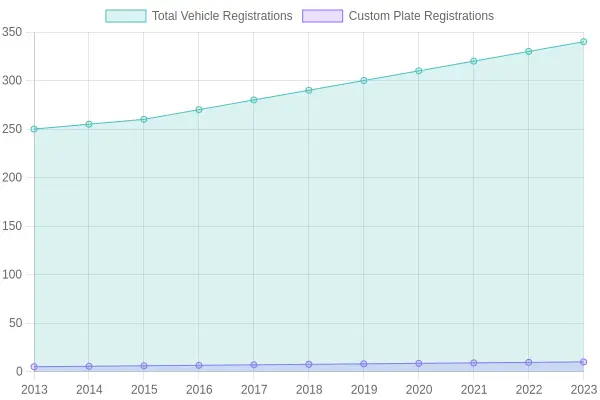
This visual representation not only summarizes the data but also highlights the significant growth in our car culture over the past ten years.
Frequently Asked Questions About Vehicle Registration and License Plates
1. What is the difference between vehicle registration and license plates?
Vehicle registration is the process of officially recording a vehicle with a governmental authority, usually a Department of Motor Vehicles (DMV) or similar entity. This process involves providing details about the vehicle, paying necessary fees, and showing proof of ownership and insurance. On the other hand, license plates, often called registration plates, are the physical tags that display a unique identification number for the vehicle. They are issued following registration and serve to identify the vehicle on public roads. For a deeper dive, see this source.
2. How do I register my vehicle?
To register your vehicle, you typically need to provide the following:
- Proof of ownership (like a bill of sale)
- Proof of identity
- Insurance documentation
- Payment for registration fees
The specific requirements may vary by state. For more information on state-specific requirements, visit FindLaw.
3. How often do I need to renew my vehicle registration?
Vehicle registration renewal frequency depends on your state. Most states require renewal annually, but some may allow biennial registrations. Check with your local DMV for specific rules.
4. What do I do if I lose my license plate?
If you lose your license plate, you should report it to your state’s motor vehicle department. They will provide instructions on how to obtain a replacement plate, which may include submitting a form and paying a replacement fee.
5. Can I drive with an expired registration or license plate?
No, driving with an expired registration or license plate is illegal in all states. If caught, you may face fines or penalties. It’s crucial to keep your registration current to avoid these issues.
6. Are there any exemptions for registration fees?
Some states offer exemptions or reduced fees for specific categories of vehicles, such as historic or classic cars, or for certain organizations. Always check your local DMV for details.
Summary of Key Points
Vehicle registration and license plates are vital components of vehicle ownership that serve distinct but interconnected functions. Vehicle registration is a legal process whereby an individual documents their ownership of a vehicle. This process is crucial for several reasons:
- Ownership Verification: Registration serves as proof of ownership, establishing legal rights over the vehicle.
- Regulatory Compliance: It ensures that vehicles comply with safety and environmental standards, aiding in the monitoring and management of road traffic.
- Taxation and Law Enforcement: Registered vehicles can be tracked by local governments for taxation and enforcement purposes, enhancing public safety while mitigating fraud.
On the other hand, license plates are the physical identifiers of registered vehicles. These plates not only display a unique number but also act as a visual acknowledgment of a vehicle’s registration status:
- Visibility and Identification: License plates allow law enforcement and other motorists to identify vehicles on the road, thus playing a crucial role in crime prevention and traffic control.
- Renewal and Transfer: License plates must be displayed on the vehicle and are subject to renewal when ownership changes or registration is updated.
In conclusion, while vehicle registration and license plates serve different purposes-ownership verification and vehicle identification, respectively-they work hand in hand to facilitate the lawful operation of vehicles on public roads. Understanding their roles emphasizes the importance of compliance with vehicle registration laws and highlights the significance of maintaining accurate license plate information. To delve deeper into related topics such as state rules affecting licensing, you can learn more about vehicle registration.
By remaining informed and compliant, vehicle owners contribute to road safety and the integrity of the transportation system.
Don’t Just Maintain – Elevate Your Ride!
Owning a motorcycle is about more than just getting from point A to B; it’s about the journey, the experience, and the pride of owning a finely-tuned machine. Your bike deserves the best, just like you do. That’s why investing in premium motorcycle fairings from summitfairings.com can be a game changer for your vehicle ownership experience.
Quality fairings not only enhance your motorcycle’s aesthetics but also protect it against the elements and improve performance. Imagine cruising down the highway with a sleek, custom look while feeling the wind around you. It’s not merely maintenance; it’s about enhancing your ride! So, whether you’re upgrading your bike or maintaining its glory, visit summitfairings.com today to explore how you can elevate your motorcycle experience.
Don’t settle for less when it comes to your ride. Choose quality, protection, and style; choose Summit Fairings!
Start your upgrade today!
Visit summitfairings.com and discover the difference premium fairings can make!