
Introduction
Understanding the intricacies of vehicle registration numbers and license plates is crucial for both new and existing drivers. A vehicle registration number is more than just a random combination of letters and numbers; it serves as a unique identifier for your vehicle, linking it to your ownership and providing essential information for law enforcement and traffic authorities. In this article, we will explore the relationship between a vehicle registration number and a license plate, diving into their definitions, functions, and the importance of properly understanding how these two elements interact in the context of vehicle ownership. Whether you are a new driver navigating the regulatory landscape for the first time or an experienced driver looking to brush up on the latest rules, this comprehensive guide aims to clarify any doubts and ensure you are fully informed. Additionally, we will touch on state-specific regulations and provide guidance to help you meet all requirements for vehicle registration, ensuring a smooth driving experience. So, buckle up and let’s delve into the essential world of vehicle registration numbers and license plates! For more information on how state rules impact driver licensing, check out our in-depth guide.
Definition of Vehicle Registration Number
A vehicle registration number is an alphanumeric code assigned to a vehicle by the state or country’s department of motor vehicles (DMV). This number is used to uniquely identify a vehicle and is recorded in the official registry maintained by government authorities. Vehicle registration is essential for ensuring that vehicles are legally allowed to operate on public roads, and it serves as a basis for vehicle ownership, taxation, and compliance with local laws. In some jurisdictions, this number can often be found both on the vehicle’s registration documents and on the license plates attached to the vehicle.
Definition of License Plate
A license plate, commonly known as a vehicle registration plate, is a metallic or plastic plate affixed to a vehicle that serves as its public identification. The license plate displays a unique sequence of numbers and letters that corresponds directly to the vehicle’s registration number in the state database. License plates are mandated by law and must be displayed at all times while the vehicle is in operation. They additionally provide a means of law enforcement to quickly identify vehicles on the road.
Similarities and Differences
Similarities
- Purpose: Both the vehicle registration number and license plate serve the primary purpose of identifying a vehicle in a legal context.
- Uniqueness: Each vehicle registration number is unique within its jurisdiction, and as such, each license plate reflects this uniqueness via the associated alphanumeric characters.
Differences
| Aspect | Vehicle Registration Number | License Plate |
|---|---|---|
| Definition | The official number assigned to register a vehicle with authorities. | The physical plate displaying the vehicle’s identifier. |
| Format | Typically alphanumeric and may vary by state/country. | Displays a print of the vehicle registration number. |
| Location | Found on vehicle documents and sometimes on the vehicle itself. | Permanently affixed to the vehicle’s exterior. |
| Primary Function | Used for legal registration and ownership proof. | Allows for registration visibility and enforcement. |
Understanding these distinctions is crucial for new drivers and vehicle owners to navigate legal regulations effectively. For more in-depth regulations and how different states handle vehicle registration, you can learn more about state rules impacting driver licensing.
Additionally, it’s important to keep abreast of vehicle inspection requirements, which can influence your registration status. For those interested, check out US states vehicle inspection requirements.
Importance of Vehicle Registration
Vehicle registration is not just a bureaucratic requirement; it plays a vital role in ensuring accountability and legality on the roads. As stated in a source from Carfax:
“Car registration helps states keep track of vehicles driven by residents, supports vehicle ownership verification, and can influence insurance claims during accidents.”
This highlights the importance of vehicle registration not only for legal compliance but also for financial and insurance-related aspects.
 This image illustrates the concept of a vehicle registration number in relation to a license plate, providing a clear visual for new drivers and learners.
Legal Requirements Surrounding Vehicle Registration Numbers and License Plates
Understanding the legal requirements for vehicle registration numbers and license plates is crucial for all drivers and vehicle owners. Incorrect compliance with these regulations can lead to fines, penalties, and potential legal issues. Here are the primary legal requirements that drivers should be aware of:
1. Identity Verification
When registering a vehicle, the driver must provide valid identification. This usually includes a driver’s license or a government-issued ID. Identity verification serves to ensure that the person registering the vehicle has legitimate ownership or the authority to register it.
2. Proof of Ownership
In addition to providing identification, drivers must show documentation proving their ownership of the vehicle. This can be in the form of a bill of sale, a manufacturer’s certificate of origin, or a title if the vehicle was previously registered. Without this proof, the registration process may be denied.
3. Insurance Proof
Most states require drivers to provide proof of insurance before they can legally register a vehicle. This is designed to protect both drivers and other road users from financial liabilities arising from accidents. The insurance policy must meet the state’s minimum coverage requirements.
4. Vehicle Inspection
Certain states mandate that the vehicle undergo a safety inspection or emissions test before registration. This ensures that the vehicle meets specific safety standards and is environmentally compliant. Requirements may vary significantly based on state laws, so it’s advisable for vehicle owners to check with their local Department of Motor Vehicles (DMV).
Visual Overview
To provide a clearer understanding of what varies across states, the following chart illustrates the key vehicle registration requirements:
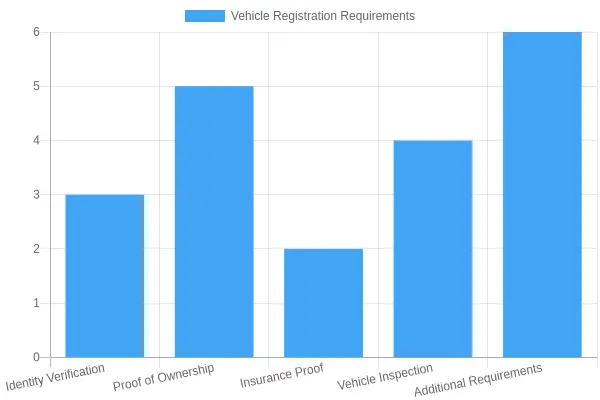
These categories highlight the minimal documentation needed during the vehicle registration process. As a new driver or vehicle owner, ensuring that you comply with these requirements will save you time and trouble. Be sure to check your state’s specific guidelines on vehicle registration by visiting your local DMV’s website. For instance, you can learn more about state rules impacting driver licensing.
Understanding these requirements ensures that you remain compliant and can enjoy the freedom of driving your vehicle without legal concerns.
Comparison of Vehicle Registration Processes
Vehicle registration is a crucial step for every vehicle owner, differing considerably across states in the USA and various countries globally. Below is a table representing key differences in vehicle registration processes in selected U.S. states and a comparison of international vehicle registration requirements.
U.S. States Vehicle Registration Process
| State | Registration Length | Required Documents | Fees | Special Notes |
|---|---|---|---|---|
| California | 12 months | Proof of ownership, ID, Smog check | $60 plus additional fees | May require vehicle inspection |
| Texas | 12 months | Proof of insurance, ID | $50-$70 | Registration can be done online |
| Florida | 12 months | Proof of identity, ownership | $14-$32 | Requires a VIN verification for used vehicles |
| New York | 12 months | ID, proof of insurance, fees | $26-$140 | May require inspection based on the vehicle type |
International Vehicle Registration Requirements
| Country | Registration Process | Required Documents | Registration Fee | Special Notes |
|---|---|---|---|---|
| Canada | Register with provincial authority | Proof of ownership, ID | Varies by province | Some provinces offer online registration |
| United Kingdom | Register with DVLA; must display registration plate | Proof of ID, vehicle details, insurance | £55 | New owners must pay road tax separately |
| Australia | Register with state authority | Proof of identity, ownership | Varies by state | Must undergo safety inspection in some regions |
| Germany | Must register within 7 days of acquiring a vehicle | ID, proof of insurance, tax ID | Varies by city | Registration territory impacts local fees |
This comparison provides a glimpse into the complexities of vehicle registration in different states and countries. For further details about state-specific rules affecting vehicle registration, learn more here. Additionally, if you’re interested in understanding the international standards, check the guidelines on vehicle inspections here.
The Importance of Vehicle Registration
Vehicle registration is a crucial aspect of vehicle ownership that serves multiple essential functions for both drivers and auto dealership owners. Understanding these functions is vital to ensuring compliance with legal and safety standards in the automotive industry.
Ownership Verification and Legal Requirement
A vehicle registration number acts as proof of ownership and links the owner to their vehicle. As stated in a complete guide for Canadian drivers, vehicle registration confirms the vehicle’s rightful owner, allowing for efficient identification and preventing ownership disputes. Furthermore, registration is a legal requirement; without it, driving on public roads can lead to fines and penalties, as described in various resources on the importance of vehicle registration and its legal implications.
Safety and Security
From a safety perspective, vehicle registration directly contributes to public safety. It allows authorities to track vehicles involved in accidents or criminal activities, thereby enhancing road security. Registration ensures that all vehicles meet specified safety standards, which reduces incidents of accidents resulting from mechanical failures. According to various reports, non-compliance with registration can also lead to vehicle impoundment, thus emphasizing its critical role in regulating road safety.
Implications for Auto Dealership Owners
For auto dealership owners, understanding the registration process is paramount. Registration impacts their operational efficiency and revenue generation. Dealerships must facilitate vehicle registration at the point of sale, sometimes requiring the collection of taxes (as noted by SAAQ) during the vehicle registration process. Any disruption in this process, such as issues with online registration portals, can directly affect their ability to finalize sales quickly, leading to customer dissatisfaction and financial losses, as reported in various news articles. Furthermore, the ability to provide immediate registration and license plates helps streamline the sales experience for customers, reducing administrative burdens on dealerships, as seen in practices adopted by several automobile dealers.
Conclusion
In conclusion, the significance of vehicle registration extends beyond mere bureaucratic processes; it encapsulates vehicle ownership, public safety, and operational efficiency for auto dealerships. For new drivers, understanding the importance of registration lays the foundation for responsible vehicle ownership, while for dealership owners, it represents an integral aspect of their business operations. By emphasizing vehicle registration, all stakeholders contribute to a safer and more efficient automotive environment.
Vehicle Registration Trends in the Last Five Years
Vehicle registration numbers have shown significant trends over the past five years, reflecting shifts in consumer behavior, economic factors, and the evolving automotive market. In particular, the registration data from the United States highlights contrasts between new and used vehicle registrations. The following table summarizes the numbers:
| Year | New Vehicle Registrations (millions) | Used Vehicle Registrations (millions) |
|---|---|---|
| 2019 | 10.2 | 28.0 |
| 2020 | 10.1 | 29.0 |
| 2021 | 11.4 | 30.0 |
| 2022 | 10.2 | 29.8 |
| 2023 | 11.5 | 29.3 |
As illustrated in the chart below, there has been a notable increase in new vehicle registrations in 2023, which are up by 12.7% year-over-year, culminating in a total of 11.5 million new vehicles registered compared to the previous trends. This increase contrasts with a slight decline in used vehicle registrations, which fell to 29.3 million in 2023.
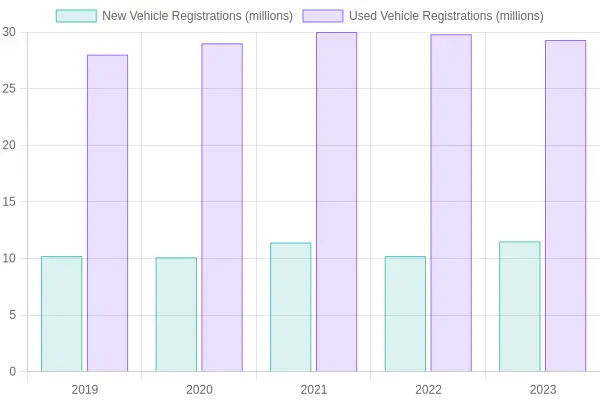
These data trends not only indicate changes in purchasing decisions among consumers but could also reflect broader economic conditions, such as availability of vehicles and financing options. Understanding these shifts can help dealerships and vehicle owners make informed decisions in a fluctuating market.
To continue exploring vehicle registrations and trends in related topics, visit our resources on vehicle inspection requirements.
In conclusion, distinguishing between a vehicle registration number and a license plate is crucial for both new drivers and seasoned vehicle owners. While a license plate is what others see on the road, that number often carries more than mere identification; it influences legal ownership and compliance with automotive laws. A vehicle registration number, on the other hand, is tied directly to your vehicle’s documentation and ensures that you maintain ownership and legal status in the eyes of the law.
Understanding the nuances between these two identifiers is essential for many reasons. Firstly, having knowledge about vehicle registration can prevent potential legal issues related to driving an unregistered vehicle, which may result in fines or penalties. With the changing rules and regulations surrounding vehicle ownership and usage, it’s vital for new drivers to familiarize themselves with their state’s specific requirements regarding registration and compliance. Learn more about state vehicle registration rules here.
Moreover, maintaining your vehicle registration documents ensures that vital information is always up to date, encouraging safer driving habits and reducing the chance of encountering problems during inspections or interacting with law enforcement. Not knowing the distinctions can lead to confusion, and being faced with a situation where you must clarify your legal standing with a police officer can be somewhat stressful, especially for new drivers.
As a call to action, we encourage all vehicle owners and new drivers to reflect on the importance of understanding both vehicle registration numbers and license plates. Take the time to educate yourself about your vehicle’s registration status and ensure that all documents are accurate and valid. This not only enhances your compliance with the law but also contributes to your safety and that of others on the road. Being well-informed on these matters can save you time, money, and lots of hassle in the long run. Don’t hesitate to seek clarification on any doubts you might have; knowledge is your strongest ally behind the wheel! Explore vehicle inspection requirements to keep your vehicle roadworthy.
Upgrade Your Ride with Summit Fairings!
As a motorcycle enthusiast, you understand the importance of quality and durability when it comes to your bike’s accessories. Whether you’re a new rider or an experienced motorcycle owner, shield your bike while enhancing its look and performance with premium motorcycle fairings from Summit Fairings.
Why Choose Summit Fairings?
- Quality Assurance: Our fairings are designed for maximum durability and aesthetic appeal, ensuring that they can withstand the rigors of the road while making your motorcycle stand out.
- Enhanced Aerodynamics: Improve your bike’s efficiency with fairings that reduce wind resistance, which not only assists in fuel economy but also enhances stability at high speeds.
- Protection Against Elements: With our fairings, protect yourself against the harsh elements. Enjoy your ride even in varying weather conditions without compromising your comfort.
- Customizable Options: Select from a wide variety of designs and specifications tailored to fit your unique riding style. At Summit Fairings, we believe your bike should reflect your personal identity.
Join the Motorcycle Revolution
The global motorcycle fairings market is projected to grow from $2.295 billion in 2025 to over $3.008 billion by 2035, reflecting a growing trend among riders to invest in high-quality accessories (Market Research Future). Join fellow enthusiasts in upgrading your ride and experience the many benefits of fairings firsthand.
Take Action Now!
Don’t wait until it’s too late! Head over to Summit Fairings today, and browse our extensive inventory of motorcycle fairings. Elevate your motorcycle’s performance and style – because you deserve the best ride possible!
Learn More About the Benefits of Motorcycle Fairings
If you’re curious about the industry, explore our article on the essential benefits and types of fairings available (learn more). Join us, and let your bike reflect who you are!