
Motorcycle fairing repair cost depends less on the size of the scrape than on what the panel is made of. The two materials used on most bikes, ABS panels and fiberglass fairings, fail in different ways after a low side, and that difference shows up in the quote. Here is how each one behaves, what repairs usually run, and how to tell whether a panel is worth fixing or replacing.
What “Motorcycle Fairing Repair Cost” Really Means
Fairing repair cost is what you pay to fix the plastic or composite bodywork covering a bike’s frame, engine, and lights after a tip-over or crash. The bill covers parts, labor, paint matching, and the fasteners and clips that tend to break along with the panel. Fairings sit on the outside of the bike, so they take the first hit in almost every low side.
Why ABS and Fiberglass Split the Bill
The two materials behind most fairings are ABS plastic and fiberglass. ABS panels flex on impact, and a shop can usually weld, sand, and repaint them, reinforcing broken mounts with tabs added to the inside of the panel. Fiberglass cracks, spiderwebs, and sheds resin when it hits the ground. Those behaviors produce very different repair bills.
ABS Usually Wins After a Low Side
After a low side, ABS panels usually cost less to bring back than fiberglass. Scuffs and gouges on ABS take less work to fix, while fiberglass tends to need more sanding, resin work, and paint blending.
Low Side Falls and Common Fairing Damage
A low side happens when a motorcycle loses grip and slides down onto its side, usually mid-corner. Instead of taking one hard hit, the bike drops and grinds along the pavement, so friction travels continuously along the flank. That sideways load is what spreads low side damage out instead of keeping it in one spot.
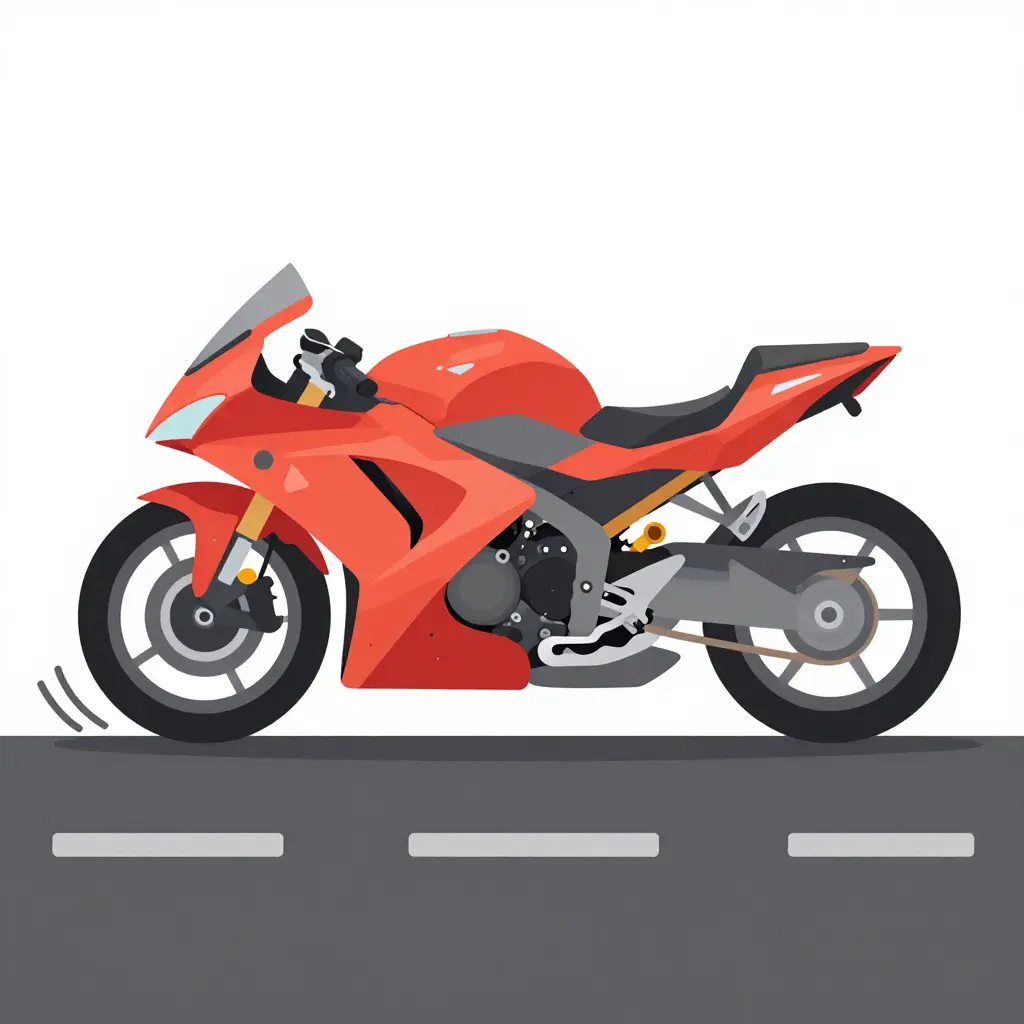
The panels that suffer worst are the ones mounted lowest and closest to the road: the lower cowl, the midsection side panels, the nose, and the edges near the engine cover and footpegs. They act almost like a sled, carrying the bike’s weight through the slide, and many of the same riding habits that raise your crash risk also stretch out how far that slide runs.
The way the plastic reacts matters more than the size of the mark:
-
Scuffing removes paint and clear coat but leaves the panel structurally intact.
-
Cracking fractures the material itself, often radiating from stress points or bolt holes.
-
Tab breakage breaks the small mounting tabs, which are often harder to fix than a visible split.
-
Panel deformation warps or distorts the shape, sometimes from heat or flex during the fall.
What happened to the plastic, not how big the scrape looks, decides whether fixing it makes financial sense. A scuffed panel may only need refinishing, while broken tabs or a deformed shell can push fairing repair above the cost of a replacement. The more structural the damage, the less likely a repair is worth the money.
ABS Panel Construction and Why It Repairs So Well
Most modern sportbikes, nakeds, and touring bikes use bodywork molded from ABS, short for acrylonitrile butadiene styrene. Manufacturers form these panels by thermoforming plastic sheet or injection molding, and the finished parts flex under impact instead of cracking into brittle shards.
How Thermoplastic ABS Behaves Under Stress
ABS is a thermoplastic. It softens when heated and hardens again as it cools, and that one property shapes every repair method used on it. When a low side scrapes or splits a panel, the plastic around the damage can be warmed and worked back toward its original shape instead of crumbling away.
Why That Beats Fiberglass
Fiberglass is a thermoset – once it cures, it cannot be reshaped. A cracked fiberglass fairing usually means resin layups, hours of sanding, and often a full replacement. ABS skips most of that work: because the material stays workable, a shop can fix the original panel instead of ordering a new one, which keeps the motorcycle fairing repair cost lower.
The Core Repair Capabilities
- Heat reshaping: Warming a panel lets a technician ease dents, warps, and bent mounting tabs back to their proper contour.
- Plastic welding: A hot-air welder melts matching ABS rod into cracks and gaps, fusing the plastic into one solid piece.
- Filling and refinishing: Flexible filler smooths the welded area, then primer and paint restore the factory look.
Restore, Don’t Replace
With these techniques, damaged ABS panels are often restored rather than replaced, which saves the price of a new fairing and the wait for parts. After the finish cures, some states still require a quick safety check before the bike goes back on the road – you can review your local vehicle inspection requirements to stay compliant.
The table below compares the two materials across the main cost and repair factors.
| Repair Dimension | ABS Panels | Fiberglass Fairings |
|---|---|---|
| Typical labor hours per panel | 1.5-3 hours | 2-4 hours |
| Typical material cost per panel | $25-$70 | $40-$120 |
| Repairability rating | High (about 4/5), forgiving of minor cracks | Moderate (about 3/5), strong but brittle |
| Replacement frequency | Lower, often reusable after light impacts | Higher, cracks tend to spread and force full swaps |
| Refinishing difficulty | Easy to moderate, bonds and primes cleanly | Moderate to high, needs gelcoat and pinhole work |
| Total estimated repair cost range (single panel) | $120-$350 | $180-$550 |
| Long-term durability after repair | Solid on flexible low-speed knocks, weaker at high-stress seams | Excellent once fully cured, though repair scars can reappear |
| Common failure mode | Stress whitening, tab breakage near mounts | Spider cracks, delamination, gelcoat chipping |
| Best suited for | Daily riders chasing low-cost, quick turnarounds | Riders wanting a stiff, show-quality finish |
ABS panels usually cost less in labor and materials for a low side repair, while fiberglass fairings cost more up front and return a stiffer finished surface. If you are weighing repair spend against insurance and compliance costs, price out both options before you commit.
What the Cross-Section Reveals
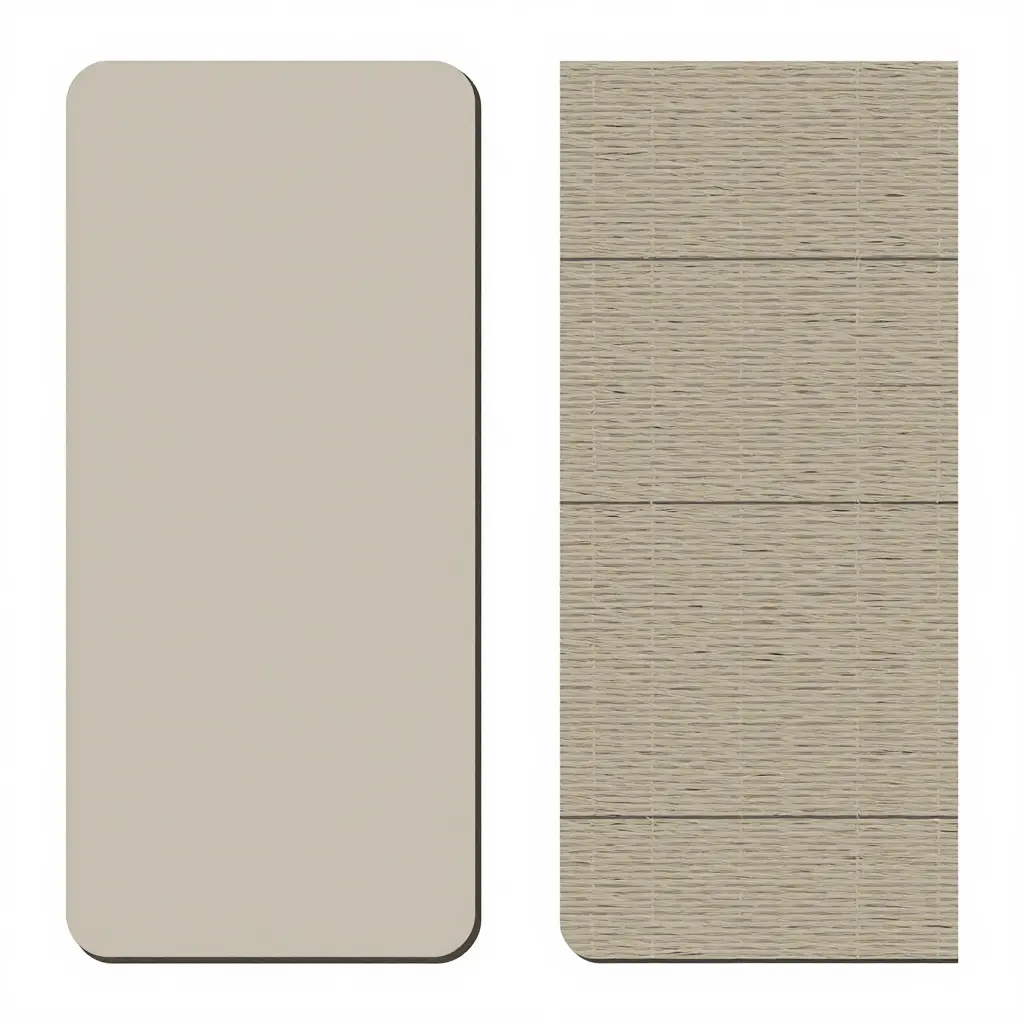
ABS and fiberglass panels look similar from the outside, but their cross-sections are built differently. The illustration below puts the two side by side.
ABS: A Single Homogeneous Layer
ABS (acrylonitrile butadiene styrene) is a thermoplastic, so the entire panel is one continuous, uniform material from surface to surface. There are no hidden layers, no resin, and no glass fibers to separate. When a section cracks, a shop can plastic-weld it, reshape it with heat, or replace just the damaged area. Because the panel has no layers, damage stays where it lands instead of traveling through the structure.
Fiberglass: Resin Plus Reinforcement
Fiberglass is a composite built up in thin layers – alternating strata of resin and woven glass fiber. That layered structure gives it good strength for its weight, but it also creates weak points. An impact can separate the layers, letting cracks creep outward, and a proper repair has to rebuild the whole stack rather than simply smooth the surface.
| Feature | ABS Panel | Fiberglass Panel |
|---|---|---|
| Structure | Single homogeneous layer | Layered resin plus fiber |
| Behavior under heat | Softens and becomes reworkable | Rigid, tends to crack |
| Typical repair | Plastic weld or localized patch | Rebuild layers, then refinish |
| Crack behavior | Stays localized | Can spread between layers |
Why This Matters at the Counter
The construction difference is why two similar-looking fairings can produce very different bills. A single-layer ABS panel usually takes a targeted, lower-cost fix, while a fiberglass panel demands more labor and materials to restore its structure. Knowing which one you own helps you judge whether a quote is fair.
The cheapest repair is the one you never need, and staying upright starts with the rider. Some surprising driving habits that get you ticketed are the same habits that lead to avoidable spills.
Average Motorcycle Fairing Repair Cost: ABS vs. Fiberglass
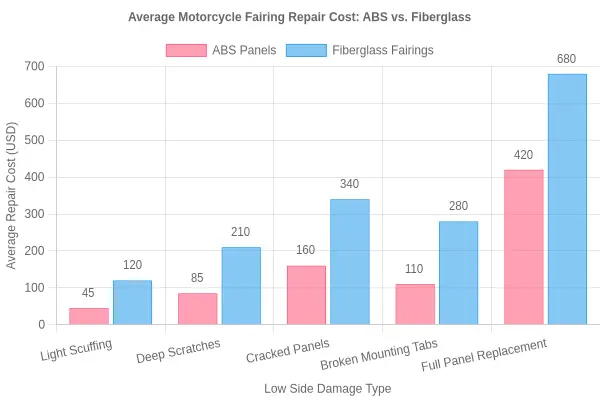
The chart below compares the average repair cost for ABS panels against fiberglass fairings across five of the most common low side damage categories.
Underlying Data Points
| Damage Type | ABS Panels (USD) | Fiberglass Fairings (USD) |
|---|---|---|
| Light Scuffing | 45 | 120 |
| Deep Scratches | 85 | 210 |
| Cracked Panels | 160 | 340 |
| Broken Mounting Tabs | 110 | 280 |
| Full Panel Replacement | 420 | 680 |
Note: Figures reflect average estimates and will vary by bike model, paint match, and local labor rates.
ABS panels cost less to repair in every category, roughly 40-60% less on most damage types and about 38% less on full panel replacements. In dollars, the gap is widest on full replacements, where a new ABS panel runs about $260 cheaper.
What Drives the Cost of Fairing Repair
What looks like a simple scuff at the scene can turn into a repair quote anywhere from pocket change to a serious expense. The final number depends on several factors, and knowing them makes an estimate easier to read.
- Panel material – ABS plastic flexes and often survives a slide with sanding and refinishing, while fiberglass tends to crack and demand structural layup work.
- Extent of damage – light surface scratches cost far less to fix than deep gouges, stress cracks, or shattered mounting tabs.
- Number of affected panels – a single side panel is a quick job, but a nose, both side fairings, and a belly pan add up fast.
- Paint-match difficulty – metallics, pearls, and factory tri-coat colors require more labor and materials to blend seamlessly.
- Decal or graphics damage – replacing OEM decals or custom graphics kits adds both parts cost and installation time.
- Labor rate – shop hourly rates vary widely by region and specialty, and plastic repair is often billed at a premium.
- Parts availability – discontinued or rare models can mean long waits, limited options, and higher prices.
- OEM versus aftermarket replacement pricing – genuine panels carry a premium, while aftermarket sets are cheaper but may need extra fitting and trimming.
Taken together, these factors explain why the same low side can produce two very different bills, and why it helps to understand how repair and compliance issues affect insurance costs at claim time. ABS panels tend to keep several of these costs low because they flex instead of cracking and can often be refinished rather than replaced. Fiberglass pushes up repair difficulty, labor hours, and paint work.
When ABS Panels Beat Fiberglass After a Low Side
A low side rarely destroys a fairing outright. It scrapes, cracks, and snaps mounting tabs. Whether you own the bike or repair them for a living, the deciding factor is not which material is “better” in theory, it is which one gets you back on the road for less money and less hassle.
Repairability
ABS is thermoplastic. It can be plastic-welded, heat-reshaped, and reinforced with new tabs made from the same material. Fiberglass is thermoset, so a crack means grinding back the resin and laminating fresh glass cloth, then sanding and curing. ABS repairs are faster and far more forgiving.
Total repair cost
Because ABS panels weld and reshape quickly, labor hours drop. Fiberglass demands more prep, resin, and finishing time, so even a small crack can push the total motorcycle fairing repair cost higher.
Downtime
A plastic-welded ABS panel is often back on the bike the same day. Fiberglass needs curing windows between layers and before paint, which stretches downtime across several days.
Weight and availability
ABS replacement panels are mass-produced, so a color-matched unit is usually available for current models. Fiberglass panels are often lighter but hand-laid or special-order, and they usually arrive unpainted. Check what is available for your bike and what it costs before settling on a material.
Long-term finish durability
With the right adhesion promoter, ABS holds paint and flexes without spider-cracking. Gelcoat on fiberglass chips and cracks over time.
One practical overlap: in many states a damaged or missing fairing can factor into a safety check, so it pays to review your state’s vehicle inspection requirements before you decide whether to repair now or later.
Decision criteria
- The panel cracks or loses mounting tabs rather than shattering.
- You want same-day or next-day turnaround.
- Replacement panels are still in production for your model.
- Cost, not concours-level originality, drives the call.
- You need to pass an inspection soon.
When all five line up, ABS wins.
Typical Fairing Repair Cost Breakdown After a Low Side
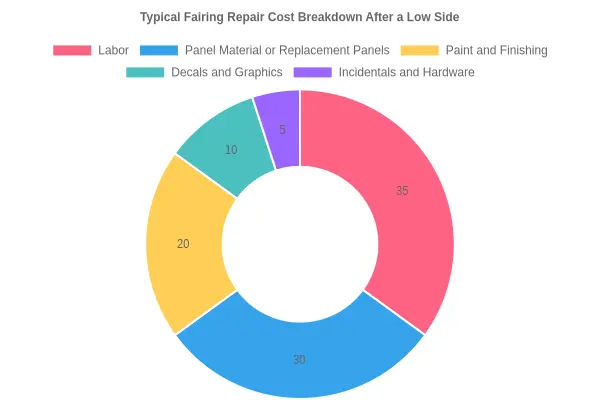
| Segment | Share of Bill |
|---|---|
| Labor | 35% |
| Panel Material or Replacement Panels | 30% |
| Paint and Finishing | 20% |
| Decals and Graphics | 10% |
| Incidentals and Hardware | 5% |
Labor is the single largest line item, at roughly 35% of the total. About a third of what you pay goes to the hands turning the wrenches, not the plastic itself. Repair costs also sit alongside wider compliance factors; compliance failures and their impact on insurance costs can influence how much of that bill you end up absorbing.
Repair Shop Workflow and Labor Pricing: From Assessment to Reassembly
When a bike rolls in after a low side, most shops follow the same path. Knowing that path helps owners read an estimate and helps shop owners defend every line item. Here is how the job unfolds.
Step 1: Damage Assessment
A tech photographs every cracked, scuffed, or missing panel and checks the hidden mounts, tabs, and inner brackets. The repair-or-replace call starts here, and assessment usually eats about half an hour of billable time.
Step 2: Repair or Replace
Small cracks and scuffs on ABS can be plastic-welded and refinished. Badly shattered or delaminated fiberglass usually means ordering a new panel instead. Replacement adds parts cost, repair adds labor, and the two rarely cancel out, so the shop weighs both.
Step 3: Paint Matching
Shops pull factory color codes, then use a camera or spectrophotometer to read the existing finish and blend a match. A test spray on a speed shape confirms the shade before anything touches the panel. Candy, pearl, and metallic colors take longer than flat solid shades.
Step 4: Reassembly
Bolting panels back on, aligning gap lines, and reconnecting lights, clips, and fasteners closes out the job. Misaligned gaps are the tell-tale sign of a rushed reassembly, so good shops give this step real time.
How Labor Hours Become Your Bill
Every estimate is simple math: labor hours multiplied by the shop rate, plus paint materials and parts. At a typical $85 per hour, a six-hour repair runs about $510 in labor before a single can of paint is opened. That is why shaving even one billable hour matters so much to the final number.
The chart below shows how the two panel materials stack up stage by stage.
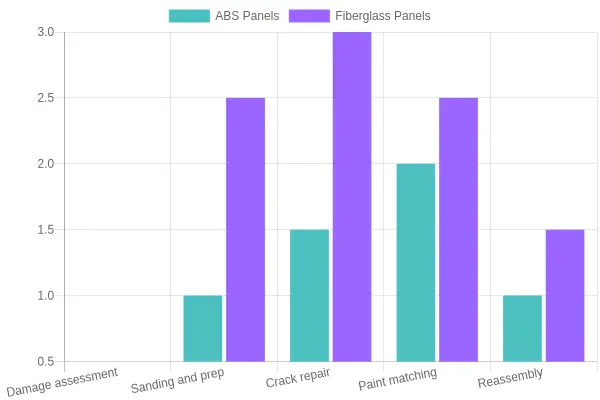
| Repair Stage | ABS Panels (hrs) | Fiberglass Panels (hrs) |
|---|---|---|
| Damage assessment | 0.5 | 0.5 |
| Sanding and prep | 1.0 | 2.5 |
| Crack repair | 1.5 | 3.0 |
| Paint matching | 2.0 | 2.5 |
| Reassembly | 1.0 | 1.5 |
| Total | 6.0 | 10.0 |
Why ABS Panels Cut Billable Hours
ABS is a thermoplastic, and that single fact rewrites the labor sheet. It can be welded, softened with heat, and sanded smooth without the resin-and-mat layup that fiberglass demands: no mixing, no curing delays, no sanding through layers of chopped strand.
On the table above, ABS saves roughly four labor hours versus fiberglass on the same hit. At $85 per hour, that is about $340 of work that never appears on the invoice. Owners pay less, and shops turn bays faster.
Insurance is a separate calculation. Claims are settled on documented repair time, so a lower labor estimate reduces what the shop bills, but it is the claim itself rather than the labor rate that typically affects future premiums. Our breakdown of how compliance problems drive up insurance costs explains why those numbers move the way they do.
Assessment sets the scope, the material sets the hours, and the hours set the bill.
The Repair-or-Replace Decision Path at a Glance
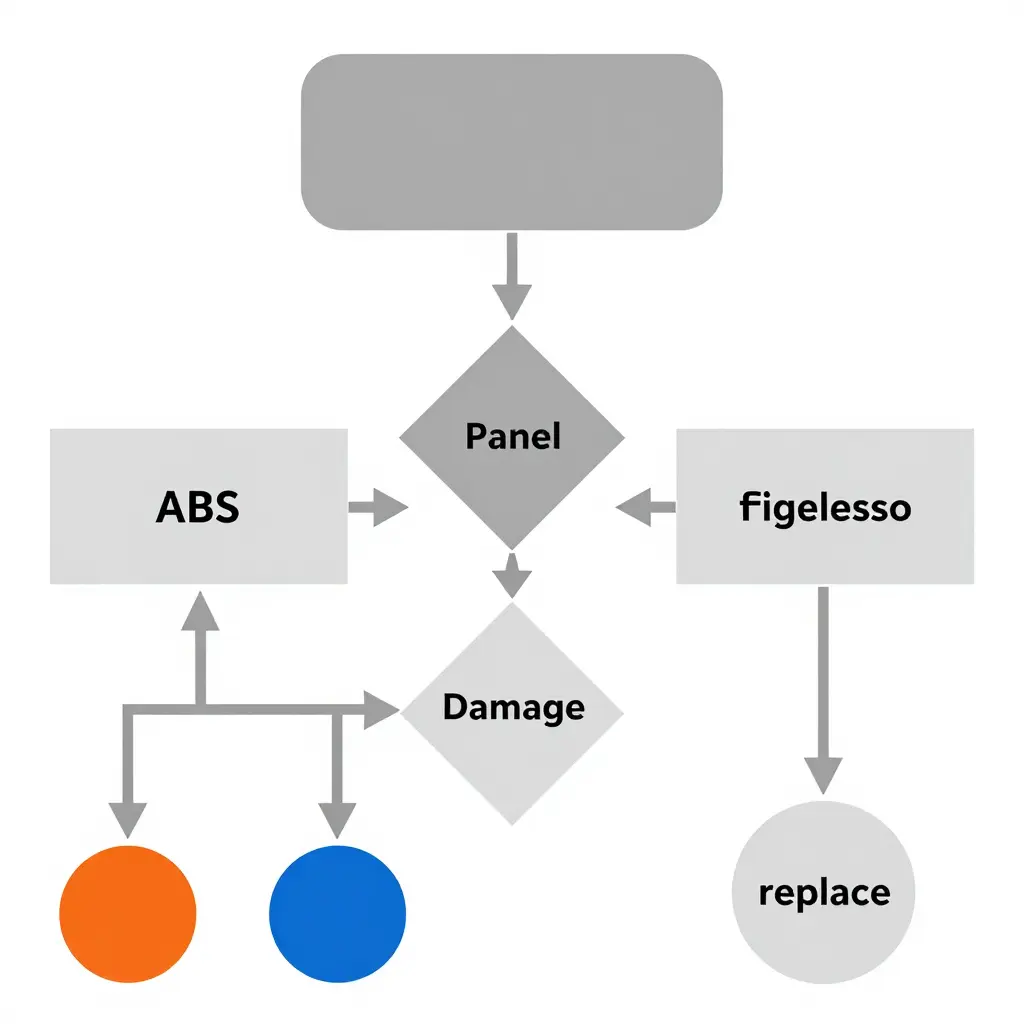
The chart below maps the general decision flow: it starts with the damaged panel, splits on panel material, and then splits again on damage severity once you are on the ABS branch. From there the path lands on either an affordable ABS repair route or a fiberglass replacement route.
Material decides which lane you enter, and severity decides whether you stay in the cheaper repair lane or get pushed into replacement.
How to Read the Flow
- Start node (rounded rectangle): Your damaged fairing after a low side.
- First decision (diamond): Is the panel ABS or fiberglass?
- ABS branch (rectangle): Leans toward a repair outcome.
- Fiberglass branch (rectangle): Leans toward replacement.
- Second decision (diamond): How severe is the damage on the ABS panel?
- Outcome nodes (circles): Either the ABS repair path or the fiberglass replacement path.
The same low-side spill can be a cheap fix or an expensive swap depending entirely on which branch your panel falls into. Keep this flow in mind as you compare quotes, and you will quickly spot when a shop is steering you toward replacement before a repair has even been considered.